Why Packaging Paper Treatment Is the Last Line of Defense in Leather Anti-Mold Solutions
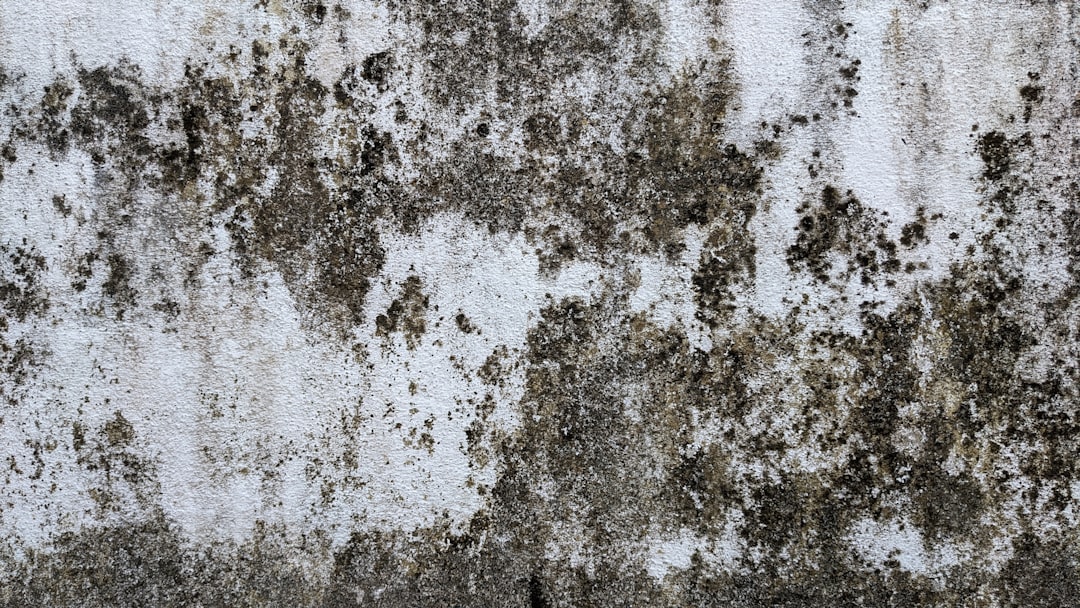
In the anti-mold practice of leather goods factories, we often encounter a contradiction: the leather itself has undergone multiple anti-mold treatments such as tanning, fatliquoring, and finishing, yet finished products still develop localized mold spots in warehouses or during sea transport. After hundreds of on-site investigations, we found that the source of these mold spots is often not the leather itself, but the packaging paper wrapping the leather. As the material that directly contacts the leather surface during storage and transportation, the moisture content and microbial load of packaging paper determine the final effectiveness of the anti-mold system.
Technical Reasons Why Packaging Paper Becomes a Mold Carrier
Packaging paper is mainly composed of plant fibers, which contain small amounts of hemicellulose and lignin. When the moisture content exceeds 12%, these components provide the carbon source needed for mold spore germination. More critically, during papermaking and storage, packaging paper adsorbs airborne spores. In the humid environment of paper mills, the initial microbial count at shipment often reaches 10³ CFU/g or higher. When packaging paper wraps leather products, residual oils and fatliquoring agents on the leather surface migrate to the paper through contact, further enriching the nutrient source, allowing mold to rapidly multiply on the paper surface and then contaminate the leather surface in reverse.
Quantitative Relationship Between Packaging Paper Moisture Content and Mold Germination Cycle
According to our laboratory accelerated test data, when the moisture content of packaging paper is controlled below 8%, the mold spore germination cycle can be extended to over 72 hours; when the moisture content rises to 12%, the germination cycle shortens to 48 hours; once it exceeds 15%, under conditions of 25°C and 85% relative humidity, obvious mycelial growth can be observed within 24 hours. This explains why in many factories during the rainy season or under condensation conditions in shipping containers, mold spots always appear first in the packaging paper area. The temperature difference between day and night in shipping containers can reach 15-20°C, causing frequent condensation on the packaging paper surface, with moisture content soaring from 8% to over 18% within a few hours.
Application Principle of Non-Release Anti-Mold Agents on Packaging Paper
The core solution to the secondary contamination problem of packaging paper is to transform it from a passive mold carrier into an active antimicrobial barrier. We recommend using the non-release anti-mold agent iHeir-3 for pretreatment of packaging paper. The active ingredient of iHeir-3 is an organic zinc complex with cationic groups. Through the impregnation process, the reactive groups on its molecules form covalent bonds with hydroxyl groups on paper fibers, firmly attaching to the fiber surface. This fixation method ensures that iHeir-3 does not migrate with moisture or volatilize like traditional release-type anti-mold agents, and its antimicrobial layer has a lifespan consistent with the paper’s service life. For impregnation parameters, it is recommended to fully immerse the packaging paper in the iHeir-3 working solution for 15-30 seconds, with the working solution concentration prepared at 5-6% by weight, then dried in an oven at 80-100°C to a moisture content of ≤8%. After this treatment, a permanent antimicrobial layer forms on the packaging paper surface, maintaining an inhibition zone diameter of over 15mm against common leather contaminating molds such as Aspergillus niger and Penicillium funiculosum even after 180 days.
Synergistic Relationship Between Packaging Paper Treatment and Leather Anti-Mold
Packaging paper anti-mold treatment cannot replace the anti-mold treatment of leather itself; they belong to different stages in the production line and are complementary rather than substitutive. Leather requires internal addition or surface spraying of anti-mold agents during tanning, fatliquoring, and finishing stages. For example, adding iHeir-PF during chrome tanning at 0.05-0.2% of leather weight can effectively prevent mold erosion during wet blue storage; after the finishing process, using iHeir-Spray to spray the finished leather surface at a dosage of 1L per 20-40 square meters forms a broad-spectrum antimicrobial protective film. However, these treatments only protect the leather itself and cannot prevent reverse contamination from mold on packaging paper. In other words, a leather anti-mold solution must cover two dimensions simultaneously: the leather itself achieves self-protection through internal addition and surface treatment, while packaging paper achieves an external barrier function through pretreatment. Only through synergy can a complete anti-mold closed loop be formed.
Three Easily Overlooked Technical Blind Spots
The first blind spot is the cut edges of packaging paper. During slitting and die-cutting, the fibers at the edges are cut, exposing more hydrophilic groups, making the moisture absorption rate 3-5 times faster than the middle of the paper. When wrapping leather products, these edges come into close contact with the leather surface, becoming priority channels for mold invasion. Therefore, for packaging paper that has undergone overall impregnation treatment, the cut edges are recommended to be secondarily sprayed with iHeir-Spray at a dosage of 0.5-1.0 g/m² to seal the exposed fiber cross-sections. The second blind spot is the area where packaging paper contacts glue. If the packaging paper needs to be pasted with labels or sealed, the glue layer becomes a new nutrient source. Glue itself contains organic components such as starch and PVA. Under conditions of high moisture content in the packaging paper, mold germination within the glue layer is faster than on the paper fibers. In this case, adding iHeir-JSTC to the glue at 1-2% by weight of the glue can effectively inhibit microbial growth within the glue layer. The third blind spot is secondary moisture absorption of packaging paper in the storage environment. Even if the moisture content of packaging paper is controlled below 8% at shipment, if the relative humidity of the finished product warehouse exceeds 70% for a long time, the packaging paper will still absorb moisture from the air. Our measurements show that in an environment with 85% relative humidity, the moisture content of untreated packaging paper can rise from 8% to over 14% within 7 days. Therefore, finished product warehouses must be equipped with dehumidification equipment to control relative humidity below 60%, and simultaneously use desiccants or anti-mold sheets, such as placing 150g of anti-mold desiccant per cubic meter of space, to significantly reduce the risk of moisture regain in packaging paper.
Summary
Packaging paper is the last line of defense in leather anti-mold solutions and the most easily overlooked weak point. By pretreating packaging paper with iHeir-3 impregnation to transform it into an active antimicrobial barrier, combined with iHeir-PF internal addition and iHeir-Spray surface treatment for the leather itself, as well as iHeir-JSTC addition in the glue stage, a complete anti-mold system can be built from leather to packaging materials, from production line to warehouse. If your factory is experiencing mold issues with finished leather products, it is recommended to start by checking the moisture content of packaging paper to identify secondary contamination sources. For specific solutions, contact our technical consultants to obtain free sample testing.