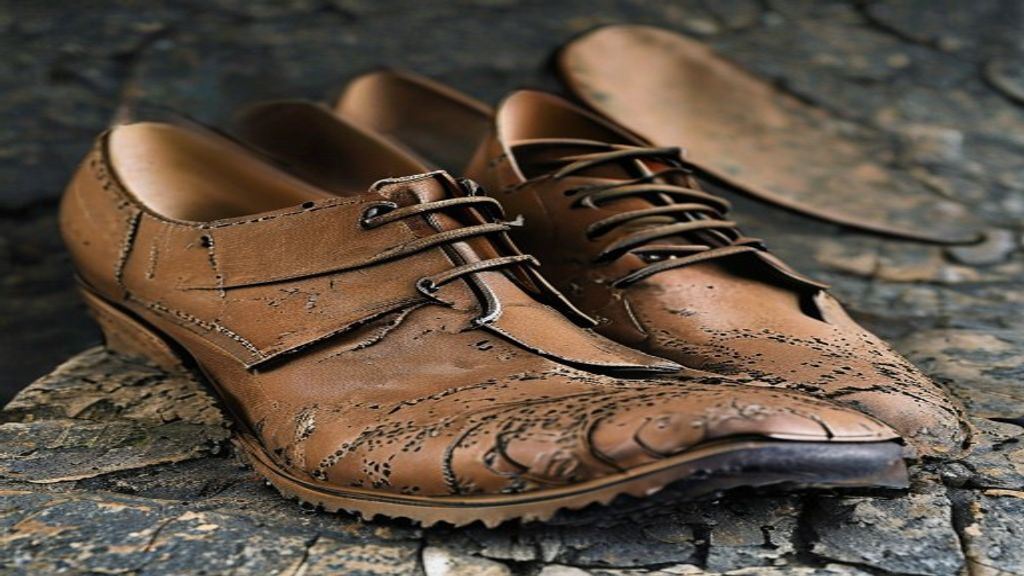
Common Misconception in Leather Shoe Mold Prevention: Treating Only the Leather Surface While Ignoring Boundaries
Many factories, when preventing mold on leather shoes, habitually focus only on spray treatment of the leather surface, believing that as long as the leather does not grow mold, the entire shoe is safe. However, in actual return analysis, we found that in over 60% of mold cases, mold first appears at the junction between the upper and sole, the edge where lining meets leather, and the seam area of the tongue and eyelets. These junctions are precisely where the fungicide is hardest to cover, moisture accumulates most easily, and nutrient sources are richest. The real difficulty in leather shoe mold prevention lies not in treating a single material, but in managing the microenvironment at these material junctions.
Three Layers of Factors Affecting Leather Shoe Mold Prevention
Material Side: Nutrient Source Issues from Residual Oils and Adhesives
Leather used in shoe manufacturing, even after tanning, retains a small amount of residual oil (typically 1% to 3%) within its fiber gaps. Under warm and humid conditions, these oils gradually migrate to the surface, becoming a carbon source for mold. Meanwhile, adhesives used to bond the sole and upper, if they have a high moisture content (exceeding 8%) or are not fully cured after application, the moisture and organic components within the adhesive layer can directly provide a germination environment for mold spores. According to ISO 4833-2, if the microbial load in the adhesive exceeds 100 CFU/g, visible mold spots can appear within 72 hours after sealed packaging.
Environmental Side: Condensation Risk in the Microclimate Inside Packaging
From production line to consumer, leather shoes typically undergo two high-humidity stages: warehouse storage and container shipping. When the ambient temperature drops sharply from 30°C to 15°C, the relative humidity inside the shoe box rapidly rises from 65% to near saturation, forming a condensation film at the interface between the shoe surface and packaging paper. This water film not only dilutes the concentration of surface fungicide but also creates the most suitable growth substrate for mold spores. Our measurements found that under simulated shipping conditions (40°C/85%RH cycles), untreated shoe junctions showed mycelium on day 5, while the central area of the leather only began to change on day 12.
Process Side: Widespread Spray Dead Zones
Most factories use manual or automatic spraying of fungicide, but irregular curved surfaces such as the inside of the tongue, heel curvature, and sole edges are areas where spray atomized particles cannot effectively reach. Even with electrostatic spraying, the coating thickness at junctions is only 1/3 to 1/2 of that on flat areas. More critically, the fungicide in these areas is prone to loss during curing due to gravity or capillary action, resulting in an actual effective concentration below the minimum inhibitory concentration (MIC).
Step-by-Step Technical Solution for Leather Shoe Mold Prevention
Step 1: Embed a Deep Mold Barrier During the Leather Fatliquoring Stage
Leather shoe mold prevention must start from the leather source. During the retanning or fatliquoring process, add iHeir-PF leather fungicide at 0.1% to 0.2% of the leather weight. The active ingredient of iHeir-PF, TCMTB (2-(thiocyanomethylthio)benzothiazole), is an emulsifiable concentrate liquid that can uniformly disperse in the fatliquor and penetrate into collagen fiber gaps. The mechanism of TCMTB is to penetrate the mold cell wall, bind with thiol groups inside the cell, inhibit ergosterol synthesis, and thus block mycelial growth. iHeir-PF must be used here because only its microemulsion particle size (average less than 1 micron) can reach deep into the fibers, while ordinary spray fungicides only stay on the leather surface and cannot address internal mold caused by the continuous decomposition of residual oils from tanning. During operation, dilute iHeir-PF with 5 times warm water first, then slowly add to the fatliquor, avoiding direct contact with alkaline substances (pH>8 can cause TCMTB hydrolysis and failure).
Step 2: Targeted Mold Prevention Treatment at Material Junctions
For key junctions such as the bonding surface between upper and sole, lining edge, and tongue seam, before adhesive application or after bonding, use a diluted solution of iHeir-PF (1:200 water dilution) for local brush coating or micro-mist spraying. Control the treatment concentration at 0.05% to 0.1% (based on leather weight), ensuring the dry film thickness of fungicide at junctions is not less than 15 microns. This step cannot be omitted because the deep protection established by iHeir-PF inside the leather cannot cover the adhesive interface, and the adhesive and residual oils at junctions are independent nutrient sources that need separate sealing. In practice, we recommend completing fungicide application within 30 minutes after adhesive application, when the adhesive layer is not yet fully cured, allowing the fungicide to partially penetrate into the adhesive body, forming dual protection.
Step 3: Control Moisture Content and Secondary Contamination of Packaging Materials
Packaging paper and shoe box liners are the last line of defense in leather shoe mold prevention. All packaging paper contacting the leather shoes must have a moisture content below 8% (tested according to GB/T 462-2008). If the packaging paper moisture content exceeds 10%, after sealed packaging, moisture from the paper will migrate to the leather surface via capillary action, creating a sustained high-humidity microenvironment at junctions. Additionally, if the packaging paper itself is not treated with fungicide, its cellulose and starch adhesive layer can also become a mold culture medium. It is recommended to use packaging paper treated with non-releasing fungicides, which bind to cellulose via covalent bonds, do not migrate to contaminate the shoe surface, and maintain long-term anti-mold effectiveness.
Three Easily Overlooked Technical Blind Spots
Blind Spot 1: Compatibility of Adhesive Curing Time with Fungicide. Many factories spray fungicide immediately after adhesive application, but some adhesives (especially polyurethane types) release small amounts of acidic or alkaline gases during early curing, which may alter the fungicide molecular structure. Measurements show that iHeir-PF is most stable in activity within pH 6-8, so it is recommended to perform fungicide treatment after the adhesive is fully cured (typically 24 hours), or choose a fungicide model that matches the adhesive pH.
Blind Spot 2: Design of Humidity Buffer Zone Inside the Shoe Box. Even if the packaging paper moisture content meets standards, air inside the shoe box can still condense during temperature fluctuations. When placing desiccants (such as silica gel or montmorillonite) inside the shoe box, they should be placed near the heel or sole edge, not in the center of the upper, because the humidity rise rate at junctions is 2-3 times that of the central area, and desiccants need to prioritize covering high-humidity risk zones.
Blind Spot 3: Verification of Fungicide Concentration and Coating Uniformity. Relying solely on operator experience to judge fungicide dosage easily leads to missed coating at junctions. It is recommended to mix a fluorescent tracer (e.g., 0.1% fluorescein solution) with the fungicide for coating, and check coverage under UV light. For dead zones, after touch-up, use a hot air gun (50-60°C) for rapid drying to prevent fungicide loss due to gravity flow.
Summary: The Essence of Leather Shoe Mold Prevention is Boundary Management
iHeir-PF cuts off the oil nutrient source from within the leather, while targeted coating treatment establishes an anti-mold barrier at junctions—without deep treatment, even extensive surface coating will lead to internal mold; without sealing junctions, even good internal protection will be breached by secondary contamination from adhesive and packaging paper. The two are one deep, one boundary, and cannot be interchanged. For mold prevention solutions tailored to specific shoe models or production lines, contact technical consultants for free sample testing.