




 View Count:45
 Date:2026-08-27
Why do stainless steel knives grow mold? The blade is stainless, but a knife is never “just a piece of steel” – the handle, riveted seams, knife block and packaging can all become mold breeding grounds. For cookware exporters, moldy knives during sea freight are a frequent loss; one rejected container can wipe out an entire batch’s profit. This article covers mold locations, removal methods and a zero-mold export plan.
1. Three High-Risk Mold Locations on Knives
- Handle-to-blade seams: 0.5-2mm gaps between wood/injection-molded handles and blades trap water after washing that never dries; residual juice and moisture form a micro culture chamber;
- Wooden knife blocks: blocks absorb water up to 15%-20% moisture (safe line is ≤12%); blades resting against damp wood pick up mold transferred from the block;
- Sealed packaging: export knives ship in blister/carton packaging that traps humidity; damp cartons (moisture can rise to 12%+) mold and transfer spots to blades – the main sea freight loss cause.
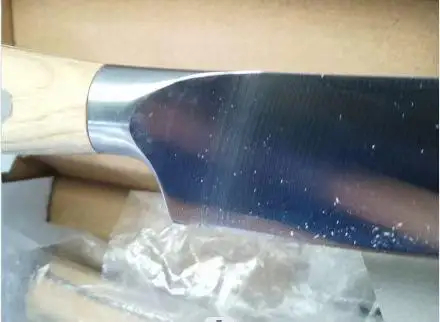
▲ Mold on stainless steel knives
2. Knife Mold Removal
- Isolate: separate moldy knives from clean stock immediately – spores spread through the air, and mixed storage contaminates the whole batch;
- Remover dwell: wipe blades and handle gaps with iHeir-QF anti-mold cream, let key areas sit 5-10 minutes before wiping so actives penetrate the gaps and break the mold root;
- Rinse and dry: rinse, then wipe dry immediately – steel left wet develops water spots that become the next mold anchor point;
- Reinforce: spray anti-mold agent into handle gaps with a small brush after drying – treating only the blade while ignoring gaps is wasted effort.
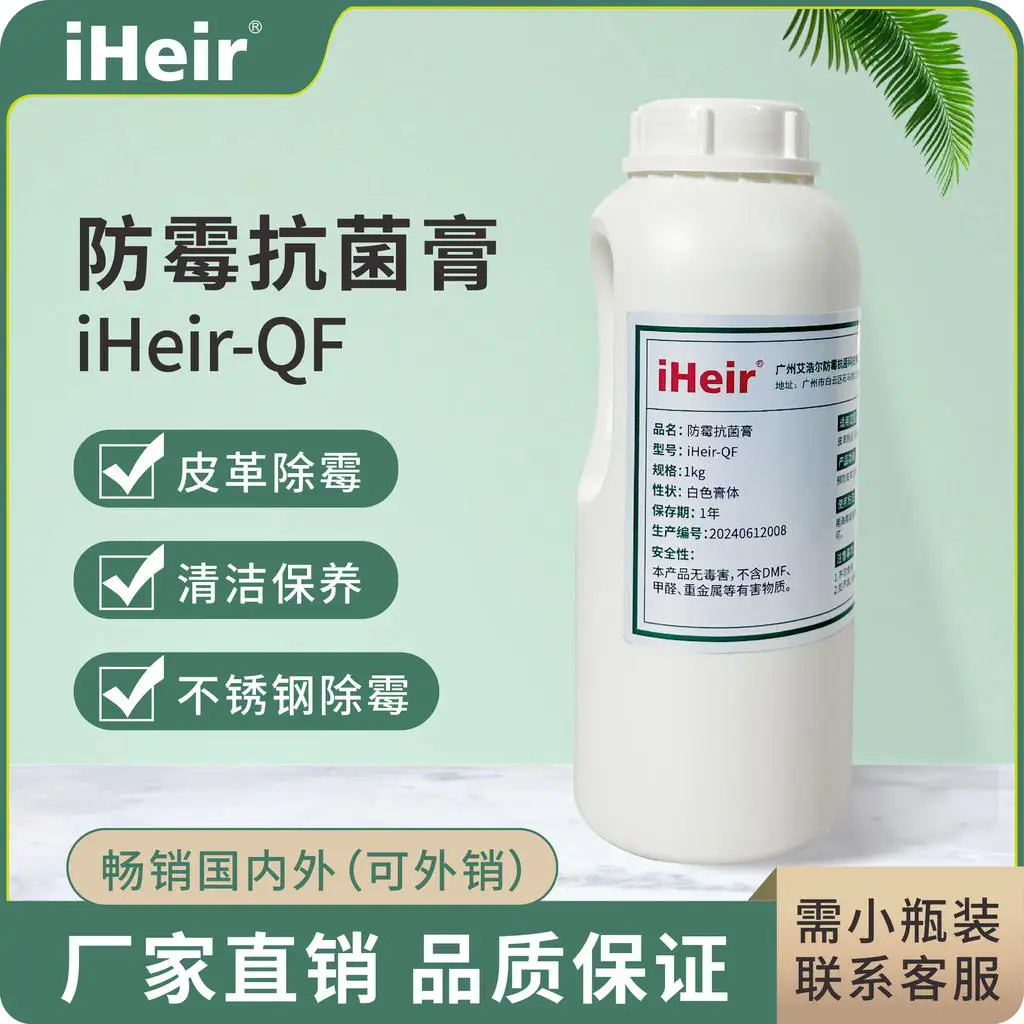
▲ iHeir-QF knife mold remover cream
3. Zero-Mold Export Plan (Four Stages)
| Stage | Measure | Why |
|---|---|---|
| Production | Spray anti-mold on handle gaps; soak-treat wooden blocks (15-30 min) | Gaps and wood blocks are the two mold sources – treating at production is cheapest |
| Packaging | Add 1 anti-mold sachet per set; line cartons with moisture barrier | The sachet’s vapor-phase action covers sealed space; the barrier isolates carton moisture |
| Container | 4-6kg desiccant + 8-12 rods for a 40ft container, hung from the ceiling | Condensation forms at the ceiling – rods must be in the high-risk zone |
| Arrival | Pick up within 7 days; check desiccants and blades on opening | Longer dock exposure in heat and humidity raises mold risk linearly |

▲ Metal mold remover application
4. Common Mistakes
- Mistake 1: Stainless knives cannot mold. The handle, gaps, block and packaging mold – the blade is just the victim;
- Mistake 2: No protection after cleaning. Cleaning only solves today; without anti-mold treatment after drying, residual spores regerminate within 48 hours;
- Mistake 3: Treating knives only, ignoring packaging. During 30-60 days at sea, damp cartons are the contamination source – treat both together.
Conclusion
Stainless knife mold comes from gaps, wood blocks and packaging moisture. Exporters executing all four stages – production treatment, packaging sachets, container desiccants and fast pickup – can achieve zero mold at sea. For a cookware export anti-mold plan, contact us or browse the anti-mold product range.