




 View Count:4
 Date:2026-11-12
Where does snowboard mould control start? The growth is not on the printed top sheet, it pushes out from the wooden core: a core over its moisture spec, bonded before it is dry, seals the water inside, and two months after shipment the board blisters and moulds. The routine is a dip in iHeir-M5 immersion-type bamboo and wood fungicide diluted 1:40 to a 15%-20% weight gain, drying to the moisture spec, and bonding dry top sheets with iHeir-JS glue mildew inhibitor at 1%-2% of glue weight. This article gives the soak, drying and bonding parameters.
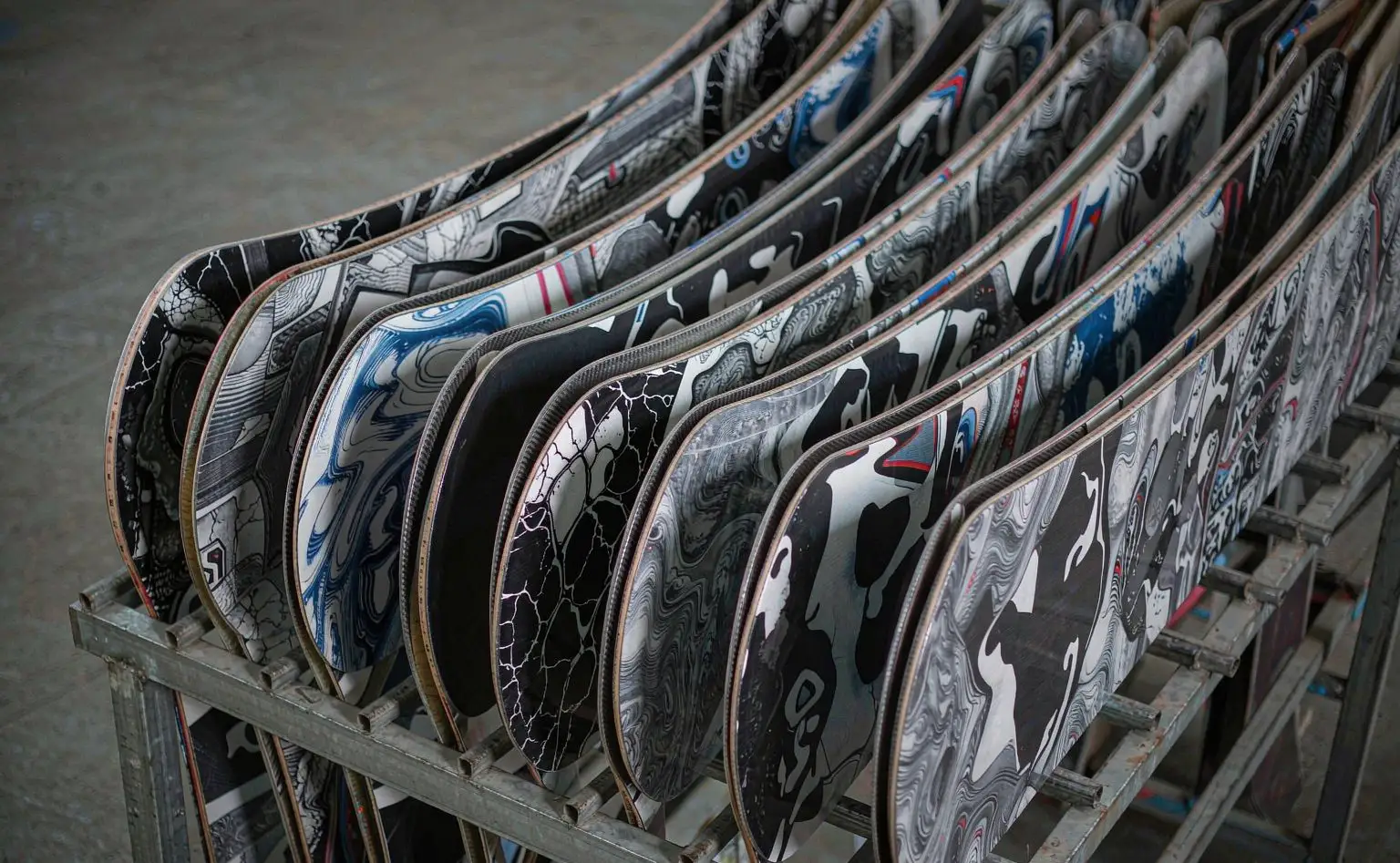
1. The mould starts in the core, the top sheet is only a lid
Take a board apart: top sheet (nylon, ABS or wood veneer), glass and carbon layers, wooden core (paulownia, poplar, ash or bamboo), steel edge, base, bonding glue. The top sheet and the base are dense and micro-organisms cannot feed on them; what fails is the core, the glue line between core and fibre layers, and the ring of core exposed at the sidewall.
The core is a sponge. Paulownia and poplar have large cell cavities, and once moisture goes past spec the water is sealed in when the sheets go on. In a 30°C shop at 80%RH, boards stacked on a pallet show spots at the sidewall within two weeks, and then the whole board blisters.
The glue line is the channel. Bonding glues are waterborne or alcohol-borne and carry water themselves, and the glue line is the only continuous interface between core and sheet, so moisture travels along it. With no inhibitor in the glue, that band moulds first.
The sidewall is an open edge. Sanding exposes the core end grain, and the gap between edge and body holds water and glue dust. Ship without sealing that ring and it fails first in a sea container.
2. Core, top sheet and glue are counted on two different bases
The table lines up the core, the sheets, the glue and the packing. The core is counted on weight gain from soaking, the glue as a percentage of glue weight, and one does not convert into the other.
| Part | Material | Product and level | Stage | Control point |
|---|---|---|---|---|
| Core | Paulownia, poplar, bamboo | iHeir-M5 1:40, 15%-20% gain | After edge-gluing, before bonding | Soaked through, end grain too |
| Top sheet and veneer | Nylon, ABS, veneer | Dry material only | Before gluing | Moisture checked, no damp sheet |
| Bonding glue | Waterborne, alcohol-borne | iHeir-JS 1%-2% | Glue make-up | Of glue weight, trial batch first |
| Sidewall and packing | Core end grain, sleeve | Seal, dry then pack | After sanding, before boxing | Ring sealed, board dry |
One boundary. iHeir-M5 soaks into the core and deals with growth in the wood itself, still working once the board is built; iHeir-JS sits in the glue and covers that band. A core not soaked through cannot be rescued by any dose in the glue.
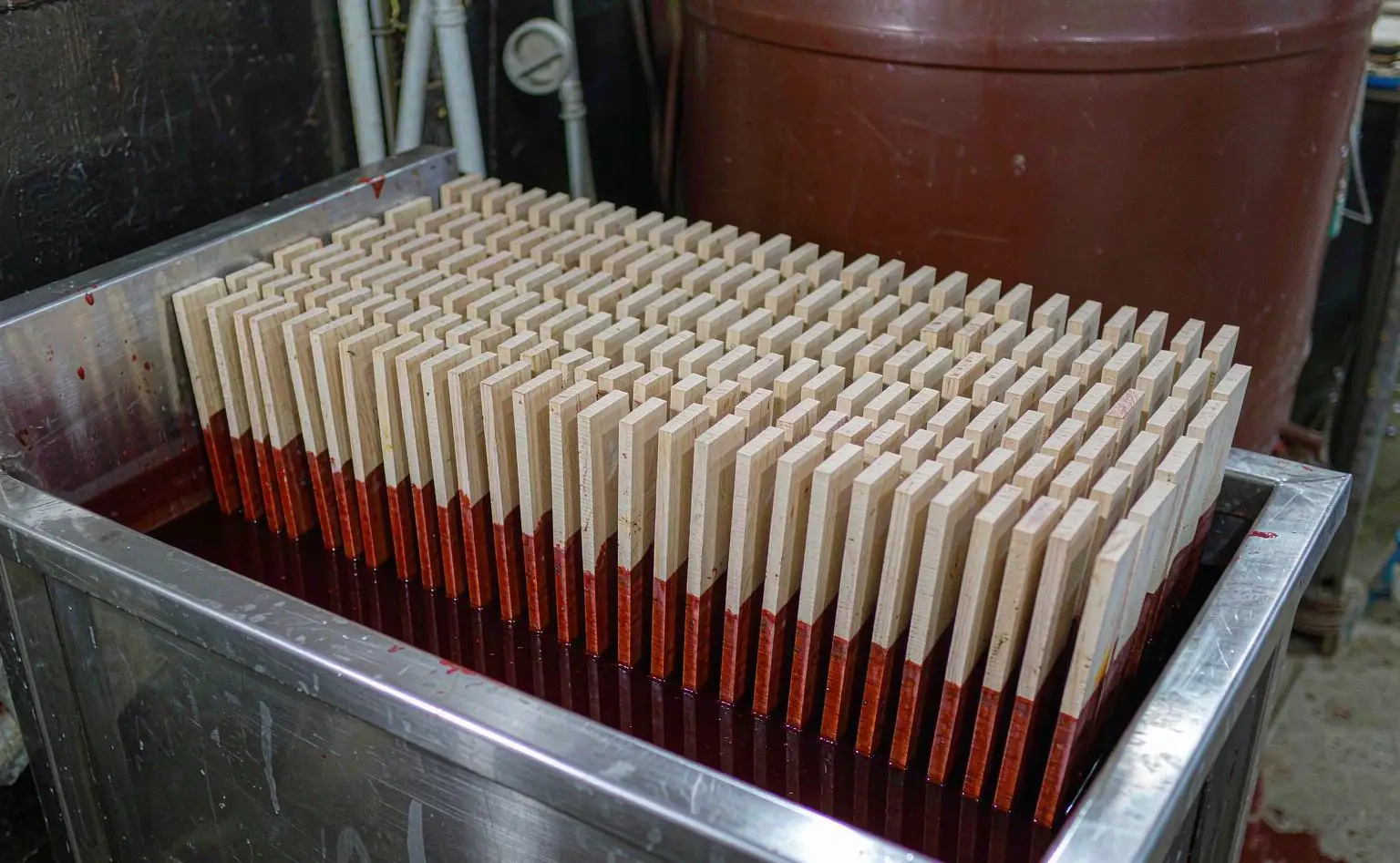
3. Soaking the core at 1:40 to a 15%-20% weight gain
Dilution. iHeir-M5 at 1:40 in water, water first then concentrate, stirred even. Use the bath the same day; left open overnight both concentration and level drift.
How much is enough. Judge by weight gain of 15%-20%, not the clock. Weigh three cores before and after and average. Thin cores and bamboo take up fast, thick cores and knotty stock need longer, and running on minutes alone always leaves a few blocks dry in a mixed batch.
How to soak. Stand cores upright or stack in layers with the liquid above the wood and a weight on top to stop floating; edge-glued cores must take liquid into the joints too. iHeir-M5 is a red-brown liquid with strong penetration and resistance to leaching, and the end grain darkens after the dip, which is normal.
Drain before drying. Rack the cores until they stop dripping, then move them to the drying room. Stacking straight out of the bath keeps the lower courses in liquid, which over-soaks them and makes drying harder.
4. Drying and moisture content break more boards than the additive
This section carries no product, and it is where board plants rework the most.
Dry the soaked core through. The water carried in by the dip has to come back out and the core has to return to the bonding spec, which most plants hold at 8%-12%. Bond it wet and the water stays inside; an inhibitor can hold the growth down but it cannot stop the blister.
Dry the sheets too. Nylon sheets and veneer from a cold store or winter yard condense on the surface, so let them stand in the shop 24 hours before unrolling. Measure veneer moisture too: glue onto damp veneer and the bond cures incompletely, leaving the weakest glue line.
Shop conditions. Hold edge-gluing, soaking and bonding at 45%-65%RH and 18-30°C, run a dehumidifier in the humid season and never leave the drying-room exit open to the bonding bay overnight.
5. Dose the glue with iHeir-JS at 1%-2%, then seal and pack
The bonding glue takes iHeir-JS glue mildew inhibitor at 1%-2% of glue weight. It is a liquid for waterborne systems with 45% active content, pH 6-7 and a viscosity of 3 cps at 25°C, fully miscible with water, so it stirs straight in with no extra solvent.
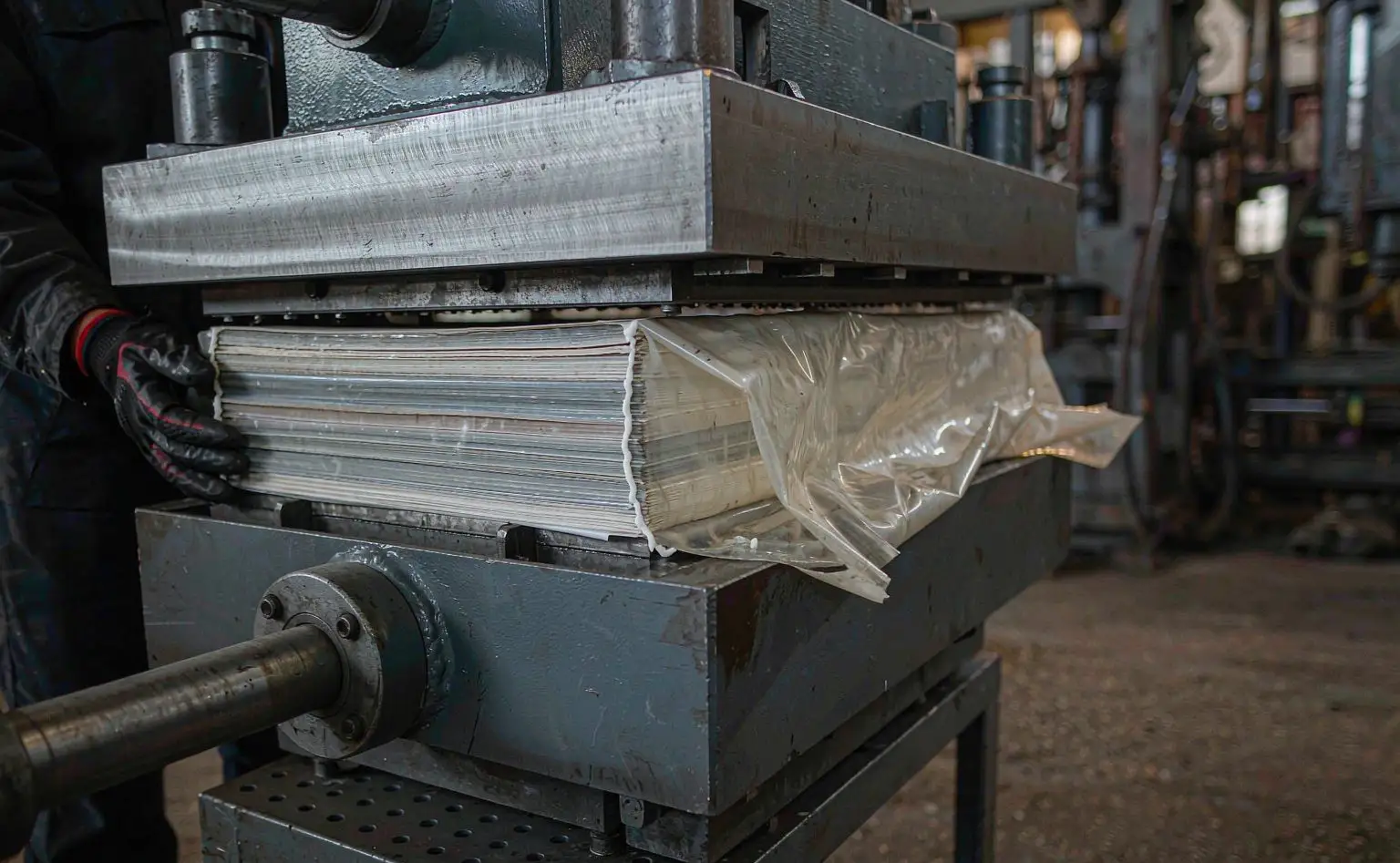
Where it goes. Into the glue at make-up while stirring, then mixed 10-15 minutes before it reaches the machine. Do not top up the trough: the glue there is circulating, the dose lands unevenly and half the boards come out treated. Use each batch within its pot life.
Trial batch first. Make up 5 kg at 1% and 5 kg at 2%, bond two test panels and run peel and shear tests (in the manner of GB/T 7124) to check bond strength and cure time. The usual problems with an inhibitor in a waterborne glue are slower cure and a tacky glue film, so prove it on a small batch before scaling.
Seal the sidewall. After sanding, coat the exposed core end grain with edge sealer or sealing glue and clean the glue dust out of the edge gap. That ring fails first in a sea container, and sealing beats spraying afterwards.
Packing and export. Confirm the face and sidewall are dry before sleeving, since a wet board in a sleeve is a small greenhouse; two vent holes are steadier than a full seal. Hold the store below 60%RH with boards upright, line the container and hang desiccant sticks, and check every sidewall for spots at loading. Comparable wood work is covered in door core soaking and lock-hole brushing, and the choice between dipping, spraying and powder is set out in three ways to apply a wood fungicide.
6. Questions from the line
Q: The core is soaked, do we still need the glue additive?
A: Yes. Soaking covers the wood itself and the glue line is a second channel; only doing one leaves the other to fail first.
Q: Does 15% against 20% really matter?
A: It is five percentage points of liquid uptake. Thin cores in a dry season are covered at 15%, while thick cores, bamboo and humid-season production need 20%. Set it by core type and season and write it on the process card.
Q: The core darkens after soaking, will the buyer object?
A: iHeir-M5 is a red-brown liquid and the end grain darkens, which is normal. The core is not visible once the sheets and the sidewall seal are on; for natural-finish sidewalls, confirm on a colour sample first.
Q: A board has already spotted, can it be saved?
A: Surface spots wipe off, but a blister means water inside and it comes back. Downgrade or scrap the lot rather than shipping it as first quality.
Four closing points: soak the core in iHeir-M5 at 1:40 to a 15%-20% weight gain, judged by weight rather than time, drain on racks and dry back to 8%-12% before bonding; let sheets and veneer stand 24 hours and confirm moisture, holding the shop at 45%-65%RH; add iHeir-JS at 1%-2% of glue weight at make-up, and trial 5 kg at each level with peel and shear panels; seal the sidewall ring, sleeve only dry boards with vent holes and line the container for export. Performance can be verified to GB/T 24346 or ASTM G21, a one-kilogram sample can be sent ahead, and lead times are on the iHeir-M5 product page.


