




 View Count:35
 Date:2026-10-13
On small home appliance mould, should the shell take a masterbatch or a coating? The two routes carry the additive in different places, and picking the wrong one shows up in the dosing figure. Shell parts run on the masterbatch route, taking iHeir-ECO plastic antimicrobial agent at 0.3%-1.0% on part weight so the protection arrives with the moulding; a metal inner liner has no masterbatch stage at all and can only run on the coating route, taking iHeir-TQ coating mould inhibitor at 2%-3% of the system weight. This article covers the choice, the figures and how the sample is verified.
1. Two carriers, and the order of the decision
The additive itself is not fussy about the part, but the carrier it travels in is. On the masterbatch route the carrier is the resin: the additive feeds into the barrel with the plastic pellets at mixing or plastification and ends up spread through the wall thickness of the whole part, which is body protection. On the coating route the carrier is the coating system: the additive goes into the paint or coating liquid first and then rides on the substrate surface with the film, which is surface protection. Service life, resistance to wiping and the dosing basis all differ between the two.
There are only two steps to the decision. First, does the part have a coating? Where there is one, the protection belongs in the coating; where there is not, the protection can only go into the material. Second, does the part hold out damp through its body or through its surface? A part wet for years and wiped often is safer with body protection; one that carries appearance and rarely meets water is served by a surface layer.
Run those two steps and the shells and seals land on the masterbatch route while the inner liner lands on the coating route. The real risk is not the choice itself but converting the figure of one route into the figure of the other.
2. The two routes side by side
The table lines up the route, the parts it suits, the recommended product, the basis for the figure and the main limits, as a selection card for the parts on hand.
| Route | Parts it suits | Product | Figure basis | Main limits |
|---|---|---|---|---|
| Masterbatch | Shells, structural parts, TPE and TPU seals | iHeir-ECO plastic antimicrobial agent | Total part weight (0.3%-1.0%) | Passes through plastification and moulding, so heat history costs activity; sample first where colour and light transmission matter |
| Coating | Metal inner liners, coated panels | iHeir-TQ coating mould inhibitor | Total coating system weight (2%-3%) | The additive sits only in the film, so a damaged area loses its protection; avoid unlined metal containers |
| Masterbatch | Dark or structural parts needing no extra coating | Same as above (ECO) | Total part weight (0.3%-0.5%) | Protection arrives with the moulding, so it saves the most downstream work; the figure steps by polymer |
| No dosing | Bought-in seals and standard fasteners | — | Incoming inspection plus dry storage | Dosing happens outside the plant, so the receiving spec and dry storage carry the risk |
Read the four rows: parts that carry the additive from the moulding go the masterbatch way, parts where a coating is the protective face go the coating way, and parts dosed outside the plant are held by receiving inspection and dry storage.
3. Shells on the masterbatch route
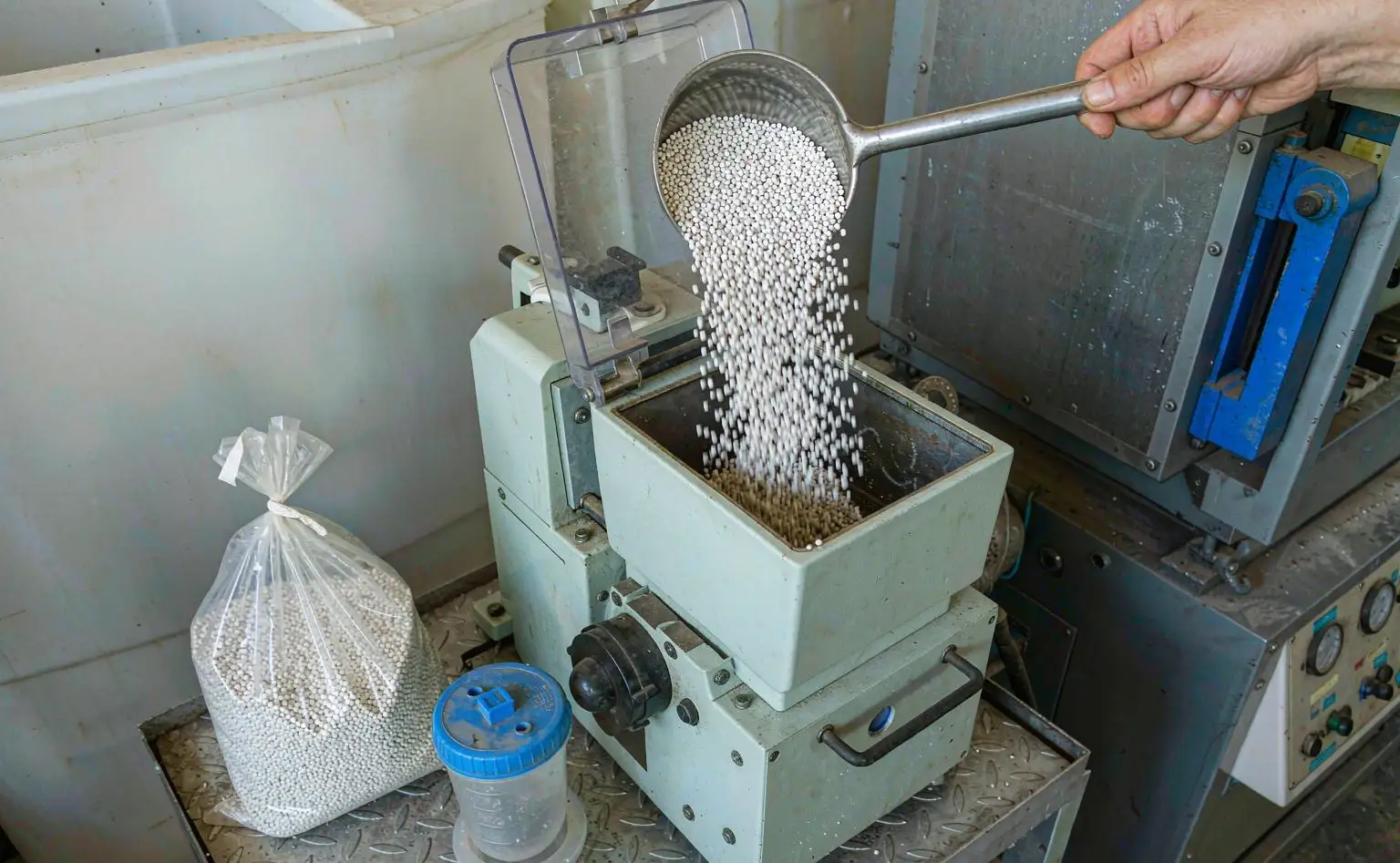
Shell parts take iHeir-ECO plastic antimicrobial agent at 0.3%-1.0% on total part weight, stepping by polymer: polyolefins such as PP and LDPE/HDPE at 0.3%-0.5%, PU together with PMMA and unsaturated polyester at 0.3%-1.0%, TPU at 0.3%-0.5% and PVC at 0.5%-1.0%, with ABS sampled before it is fixed. ECO is supplied in masterbatch form and blends straight with the resin pellets.
Three advantages are concrete. No extra process step is added, because the protection arrives with the moulded part. The additive is distributed through the wall thickness, so wiping and washing cannot take it away. And the basis is a single one, total part weight, which is recalculated once whenever a process changes. Two costs come with them: the part passes through plastification and moulding, so a hot barrel or a long residence time takes activity out first, and ECO is heat stable to 240℃ with processing kept below 320℃; and parts with tight colour or light-transmission requirements need a sample run for colour and haze before anything is moulded in production.
4. The inner liner has only the coating route
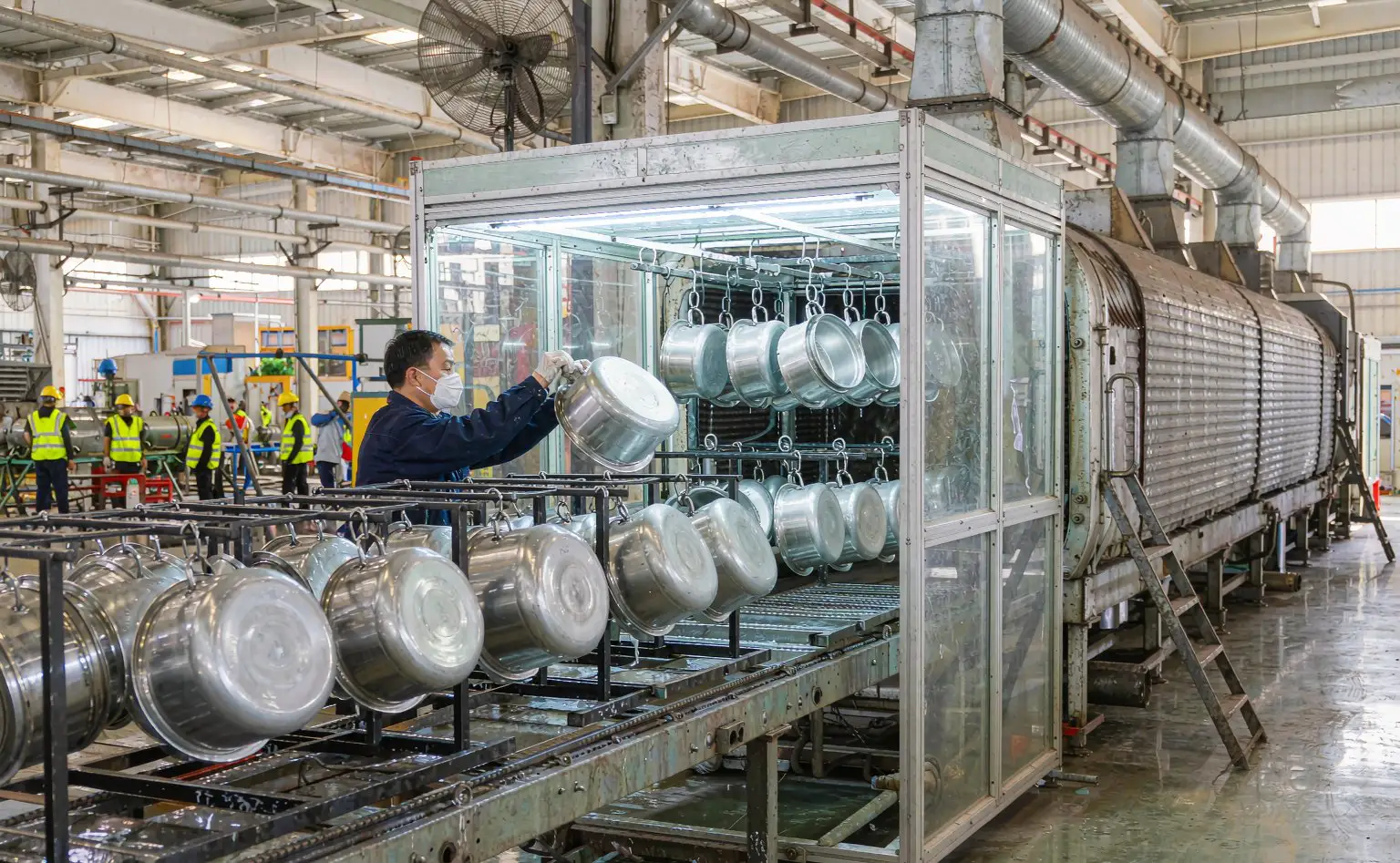
The inner liner is metal under a coating. Metal does not grow mould and cannot take an additive the way plastic does, so the coating route is the only one, dosed with iHeir-TQ coating mould inhibitor at 2%-3% of total coating system weight. TQ is a clear, colourless liquid with 45% active content, a viscosity around 3cps and a pH of 6-7; it mixes with water in any proportion and needs thorough stirring.
Add it at the grinding or paint-mixing stage, before grinding, so the shear does the dispersing. Topping up at let-down disperses poorly and can disturb appearance. One misunderstanding recurs here: because the film is thin, should the figure be pushed up? No. The coating figure is counted on total system weight, and going past the range shows up in adhesion and appearance first rather than in protection. What deserves attention is film continuity. Once the rolled edge, the rim or the area around a weld is cut through, that spot has no protection at all.
5. Counting the figure, and the conversion trap
The two bases cannot be swapped, and this is where most mistakes start. The masterbatch figure is counted on total part weight, so the denominator is the weight of the whole part. The coating figure is counted on total coating system weight, so the denominator is the weight of the paint or coating liquid and excludes the metal substrate. Applying a liner’s coating figure to a shell, or working backwards from a shell figure to a coating liquid, produces a number that looks reasonable and is out by a wide margin.
Count and report them separately. Engineering keeps two figures, and the tooling, jigs and process parameters are checked on their own lines: for plastic parts the feed position, barrel temperature and residence time, and for coated parts the addition stage, stirring method and curing conditions. Once both lines are set, a colour sample and an adhesion check are run before the batch goes to production. For a comparison of the two routes, the same logic is set out in antimicrobial agents for appliances.
6. Questions that come up: using both, and changing resin
Can a shell run on both a masterbatch and a coating? There is no need. One route is enough, and stacking the two does not add service life, it adds a process step and a cost line. Where the masterbatch already delivers the colour and transmission needed, the coating is not required.
Does a change of resin grade mean recalculating? Yes. The ECO figures step by polymer family, and polyolefins, PU, TPU and PVC each sit in a different band; after a material change the band is rechecked and the colour and appearance sample is repeated.
Can a coated part be fixed by spraying afterwards? It is not advisable. A spray-on additive stays on the surface and wipes off within a few passes. Protection on a coated part belongs in the coating formulation, where it cures with the film. A touch-up spray is a temporary measure and no substitute for the layer in the formulation.
Two routes carry the work. Shells and TPE or TPU seals run on the masterbatch route, taking iHeir-ECO plastic antimicrobial agent at 0.3%-1.0% on part weight, polyolefins at 0.3%-0.5%, TPU at 0.3%-0.5% and PVC at 0.5%-1.0%. Metal inner liners and coated panels run on the coating route, taking iHeir-TQ coating mould inhibitor at 2%-3% of the coating system at grinding or paint mixing, pH 6-7. The two figures are counted and reported separately. Samples and TDS sheets are available to check the selection against your part types and processes.


