




 View Count:5
 Date:2026-11-12
Can desk lamp mould be prevented? The outside of the shade can always be wiped, but growth starts on the inside of the shade, in the hollow base and around the cable entry. A lamp containerised for a month arrives with a musty smell and a film of white spots on the inner face. The routine is iHeir-JS117 plastic anti-mould powder at 0.5%-1.0% of finished weight at the pelletising stage, plus one iHeir-D vapour sheet at 0.1-0.2 g of active in the base cavity and in the colour box. This article covers dosing, moulding and packing parameters.
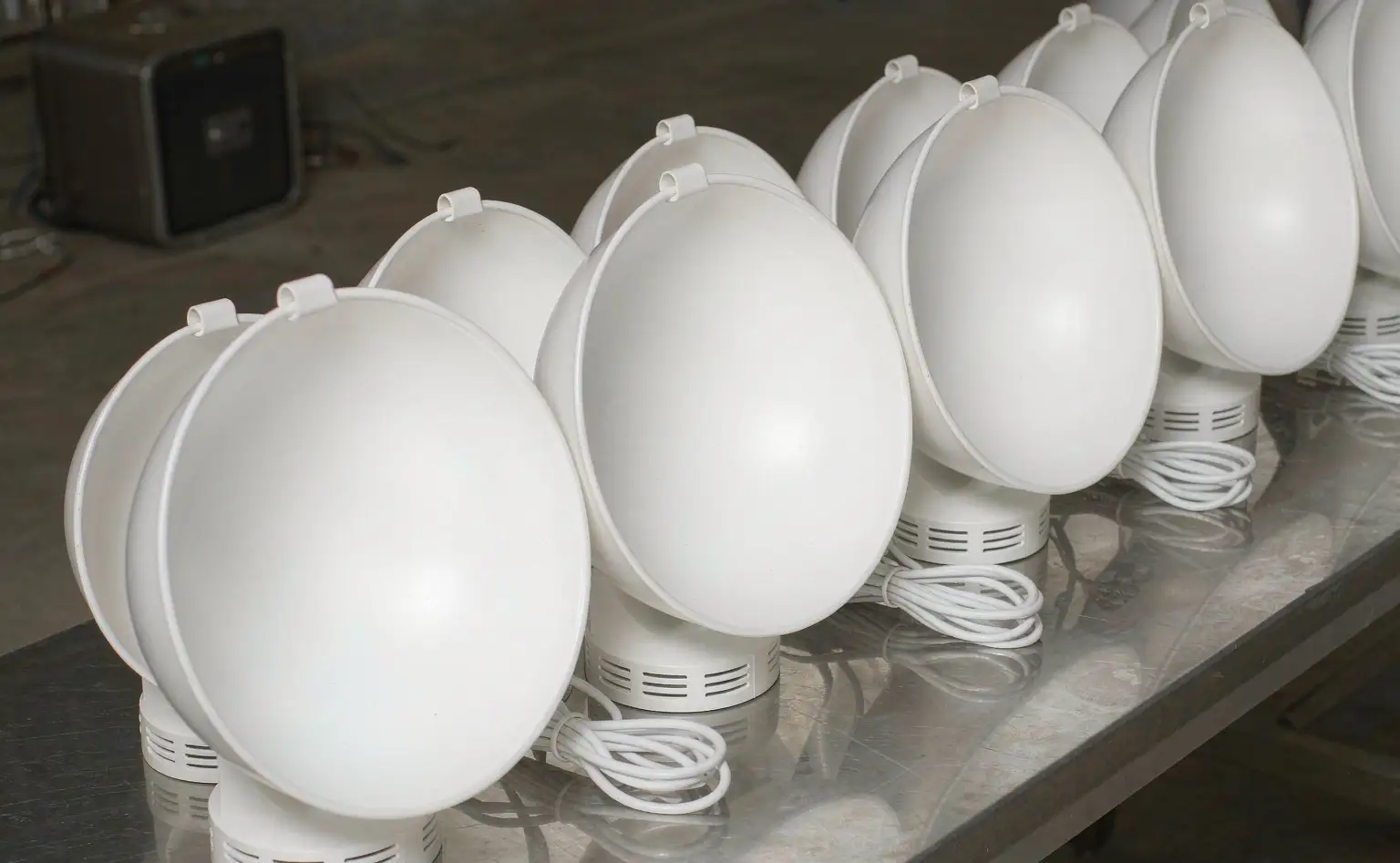
1. Growth sits inside the shade, in the base cavity and at the cable entry
Take a lamp apart: shade (PP, PS or PC), lamp holder and base (ABS, PP), aluminium board and driver, power cable, colour box. The outside is wiped daily and stays clean; what fails is the inner shade face, the sealed base cavity and the holes the cable passes through.
The inner shade is the stuffiest place on the lamp. The bulb heats the shade, and switching it off condenses water on the frosted inner face. Nobody wipes the inside, so white spots build up month after month.
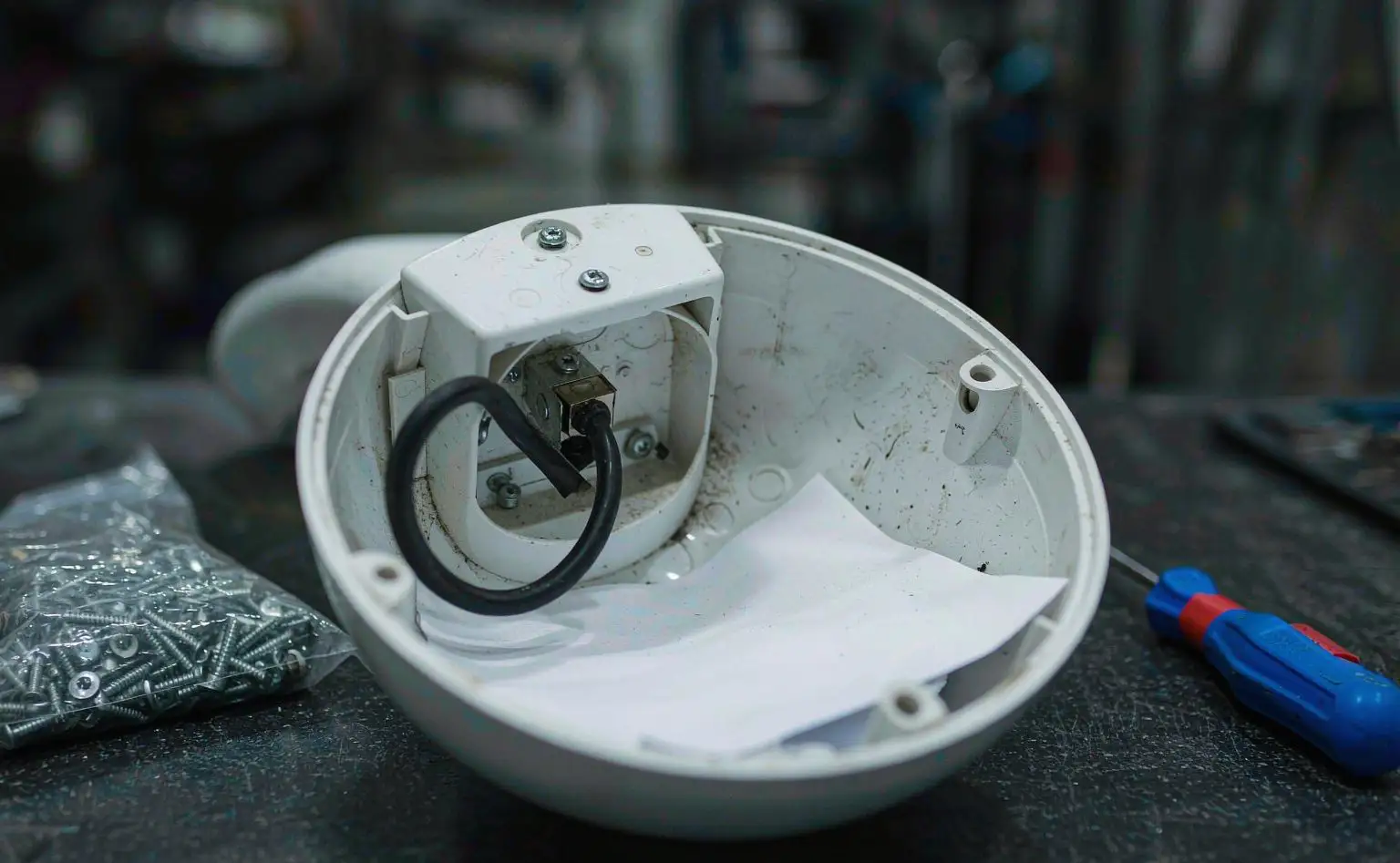
The base cavity is a dark room. Driver, terminals and ballast weights sit in a closed, unventilated space, and moulding heat plus shop humidity are sealed in together, so the cavity sweats in the humid season. Metal terminals oxidise first and the growth follows.
Cable entry and colour box. The cable hole is the only breathing path, and talc and grease collect at that collar; the pulp tray takes up water, moulds first in a sea container and lets the mycelium climb onto the shade.
2. Shade compound and base cavity are counted on two different bases
The table lines up the shade, the base parts, the cavity and the colour box. Plastics are counted as a percentage of finished weight, vapour paper in sheets, and one does not convert into the other.
| Part | Material | Product and level | Stage | Control point |
|---|---|---|---|---|
| Shade | PP, PS, PC | iHeir-JS117 0.5%-1.0% | Pelletising | Of finished weight, well dispersed |
| Base and holder | ABS, PP | iHeir-JS117 same lot | Mixing | Calculated on its own weight |
| Base cavity | Sealed cavity, terminals | iHeir-D 1 sheet, 0.1-0.2 g | After wiring, before the bottom cover | On the cavity wall, off the terminals |
| Colour box and tray | Corrugated, pulp tray | iHeir-D 1 sheet, 0.1-0.2 g | Boxing | Under the tray, not on the shade |
One boundary. iHeir-JS117 sits in the plastic and deals with what grows on the shade and the base; the vapour sheet deals with the air in the cavity and the box and is finished when the box is opened. Skip the compound and paper in the cavity will not hold back growth on the inner face.
3. Dosing the shade with iHeir-JS117 at 0.5%-1.0%
The level is 0.5%-1.0% of finished weight. White and off-white shades take the high end, dark and clear shades the low end, and orders that will be tested for anti-mould performance are dosed at the top of the range with a sample lot kept aside.
iHeir-JS117 is a nitrogen-heterocycle phenol-alcohol complex with more than 97% active content, a specific gravity of 1.21, a bulk density of 380 kg/m³ and a median particle size of 110 µm. The particles are coarse, so the mix needs time to wet them out.
Where it goes. Plants with a compounding line dose at pelletising, first as a masterbatch and then diluted to the final ratio; plants that mould directly pre-blend for 10-15 minutes. Shades are mostly PP or PS, both within the product’s stated scope.
Do not try to dissolve it in water. iHeir-JS117 is insoluble in water and in aliphatic compounds and soluble in aromatics, ketones and alcohols. A water slurry sprays powder, not a dispersion, and the moulded shade comes out with white streaks. If a pre-dispersion is needed, use an alcohol or ketone carrier and strip the solvent completely before pelletising.
Run a sample and check four things. Transmission and haze on a 2 mm plaque, since frosted and clear shades are the most sensitive; colour against a plaque on white parts; tensile to GB/T 1040, watching the brittleness of the shade clips; and the inner surface for unmelted specks. If any fails, step the level down and make up the difference in the cavity and the box.
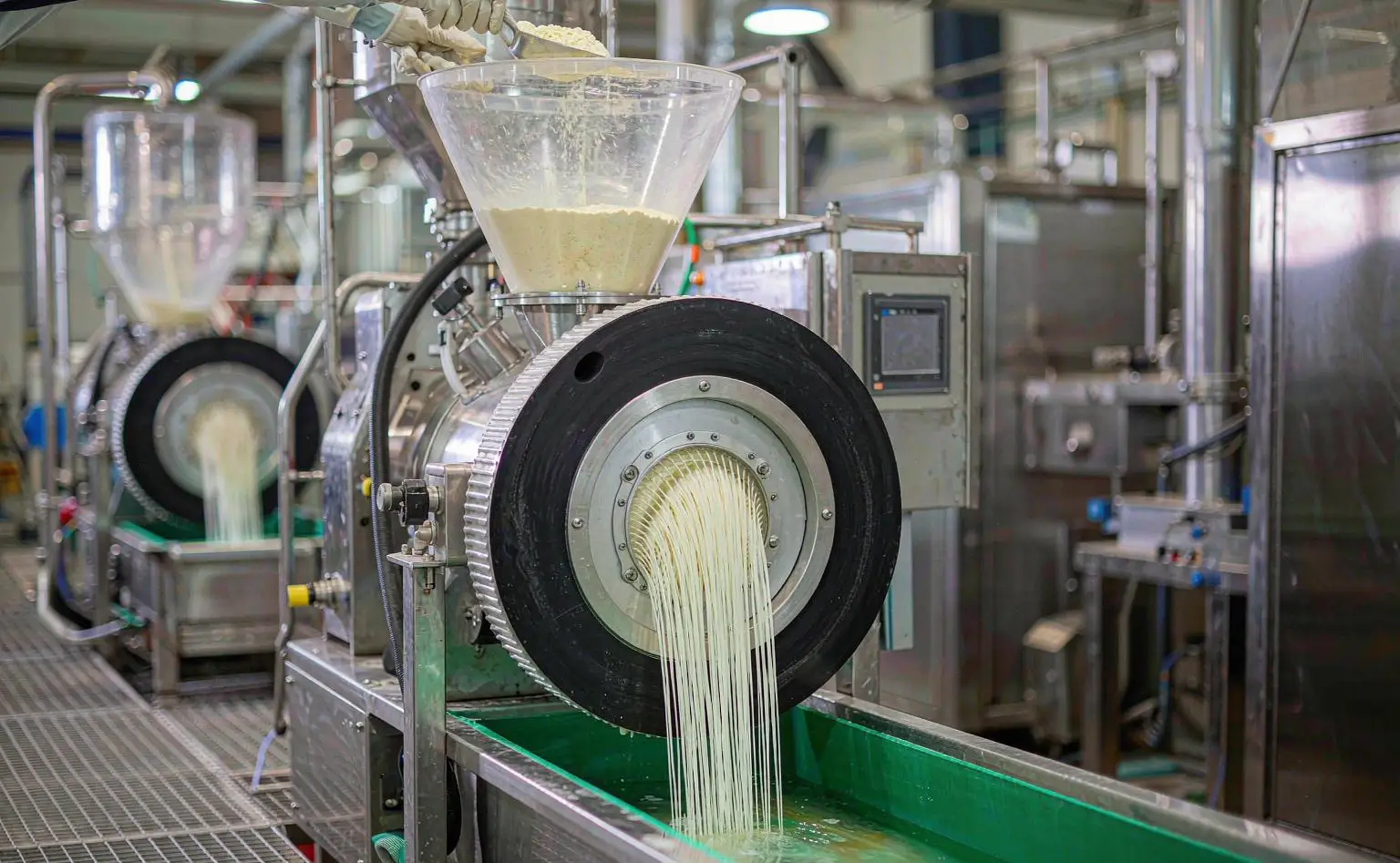
4. Moulding temperature and drying break more lots than the additive
This section carries no product, and it is where lamp plants lose the most lots.
Dry the resin. PP picks up little moisture, PS and PC pick up a lot. A hopper left open overnight gives silver streaks and bubbles on the inner face, and those voids release water once the lamp runs hot, so growth starts inside. Set the dryer by resin and keep hoppers lidded.
Do not run the temperature to the ceiling. The active in iHeir-JS117 is an organic complex, so stay inside the material’s process window rather than pushing melt temperature for flow, and keep residence time short. Purge the barrel between colours.
Mould temperature and cooling. A cold tool leaves flow marks and built-in stress in thin walls, and the clips crack at assembly. Run the cooling circuits and let parts cool before stacking.
Assembly area. Hold assembly, light testing and packing at 45%-60%RH with a dehumidifier, and keep bare hands off the inner shade face, where a fingerprint is a food source.
5. One sheet in the base cavity, before the cover goes on
The cavity and the colour box take iHeir-D vapour paper at 0.1-0.2 g of active per sheet, laid on the cavity wall or under the pulp tray, never pressed onto the terminals and never stuck to the inner shade.
Run a compatibility test. Seal one finished lamp with three times the normal amount of paper, mist a little water, keep paper between sheet and part and leave it a few days. Check the inner shade for haze, white shades for staining, the terminals for dulling and the driver board for oil marks. iHeir-D has 70%±5 solids and can corrode poor-quality metal under damp conditions, so bases with terminals and screws must be tested first.
Get the order right. Fit the driver and wiring, then the sheet, then the bottom cover. Done the other way the sheet ends up under the terminals and does nothing. Seal the base properly afterwards, because a leaking cavity dilutes the vapour.
Storage and export. Hold the store below 60%RH with cartons 10 cm off the floor and wall; for full containers, line them, hang desiccant sticks and check cartons for soft corners. Comparable lighting work is covered in moulded shades and coated lamp bases, and export packing in lamp export foam and container conditions.
6. Questions from the line
Q: With powder in the shade, does the base still need anything?
A: Yes. The powder sits in the plastic and cannot reach the air in the cavity or stop terminal oxidation. The sheet in the cavity is not optional.
Q: Can clear shades take it?
A: Yes, but check haze. It is a pale yellow powder, so a clear part at 1% may show a yellow cast; press a 2 mm plaque and drop to 0.5% if the cast is visible.
Q: Why is the range as wide as 0.5% to 1.0%?
A: Wall thickness and service conditions vary a lot. Thin indoor shades are covered at the low end, while thick walls, humid export markets and tested orders need the top of the range. Fix it by structure and write it on the batch card.
Four closing points: dose the shade at 0.5%-1.0% of finished weight with iHeir-JS117 at pelletising through a masterbatch, check colour and haze and re-test clip strength to GB/T 1040; calculate base and holder on their own weight; dry PS and PC before moulding and hold assembly at 45%-60%RH; put one iHeir-D vapour sheet at 0.1-0.2 g of active into the cavity before the cover goes on and one under the pulp tray, run the three-times compatibility test and line the container for export. Performance can be verified to GB/T 24346 or ASTM G21, a one-kilogram sample can be sent ahead, and lead times are on the iHeir-JS117 product page.


