




 View Count:29
 Date:2026-09-22
How do you deal with netting mould? PP and PE nets do not feed mould themselves; what grows is the film of spinning oils, starch fillers and seawater organics left on the surface, which turns into a slippery biofilm in damp storage and leaves fishing nets reeking. Compound iHeir-ECO plastic antimicrobial agent into the plasticising step at 0.3-0.5% of part weight, wipe finished nets with iHeir-Clean, and hold the container with CH-10. This article covers the dosing and test methods for all three steps.
1. Why nets grow mould: not the net, the film on it
Polypropylene and polyethylene are inert polymers that mould cannot digest, so netting mould is almost always caused by brought-in food: spinning oils and antistatic agents left from drawing and weaving, and the starch-based fillers some plants blend into the masterbatch, all leave a thin organic layer on the surface. Once warehouse humidity rises, that layer takes up water, spores land and colonise within days, and the net face turns into a slick grey-green biofilm.
Fishing and aquaculture nets have a second route. Algae, shell fragments and fish mucus cling to the mesh, and if the net is stored without a proper rinse and dry, the leftover organic nitrogen becomes a culture medium for mould and bacteria. The net goes tacky and foul-smelling and loses strength as well. Netting protection therefore needs two fronts: compound the antimicrobial into the material at the plasticising step, and clean and dehumidify the finished goods.
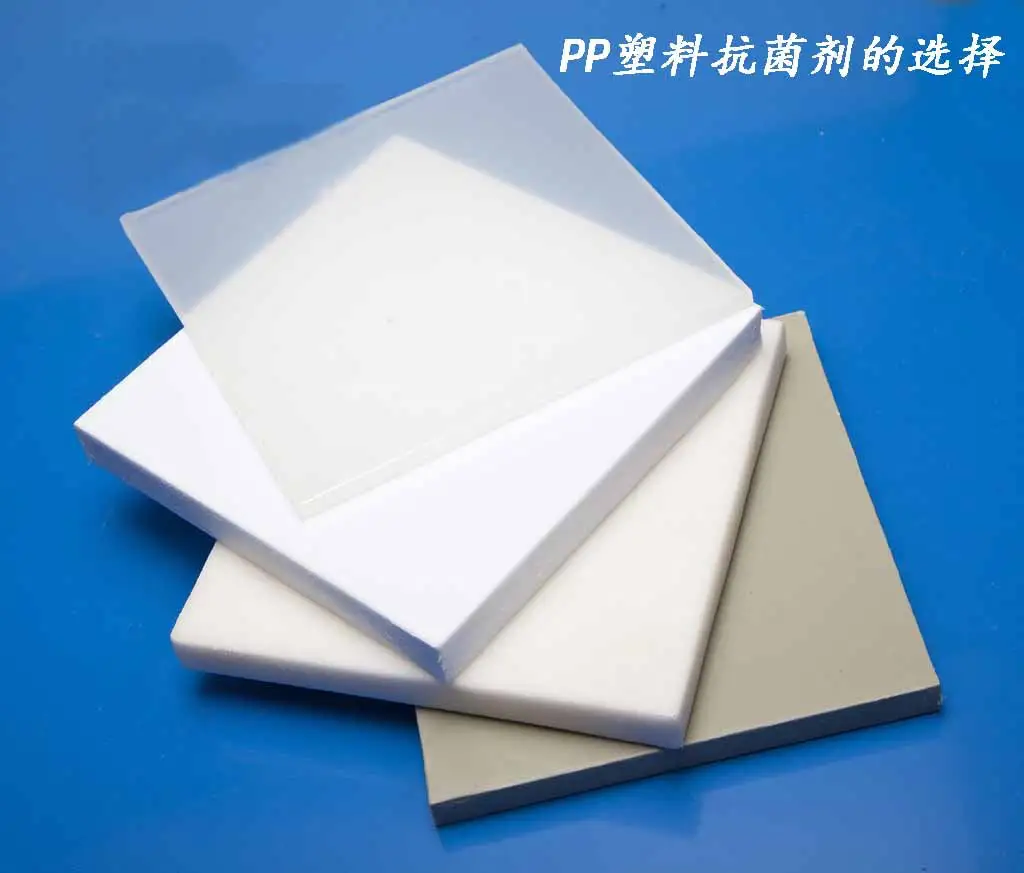
2. The plasticising step: dose the masterbatch by polymer
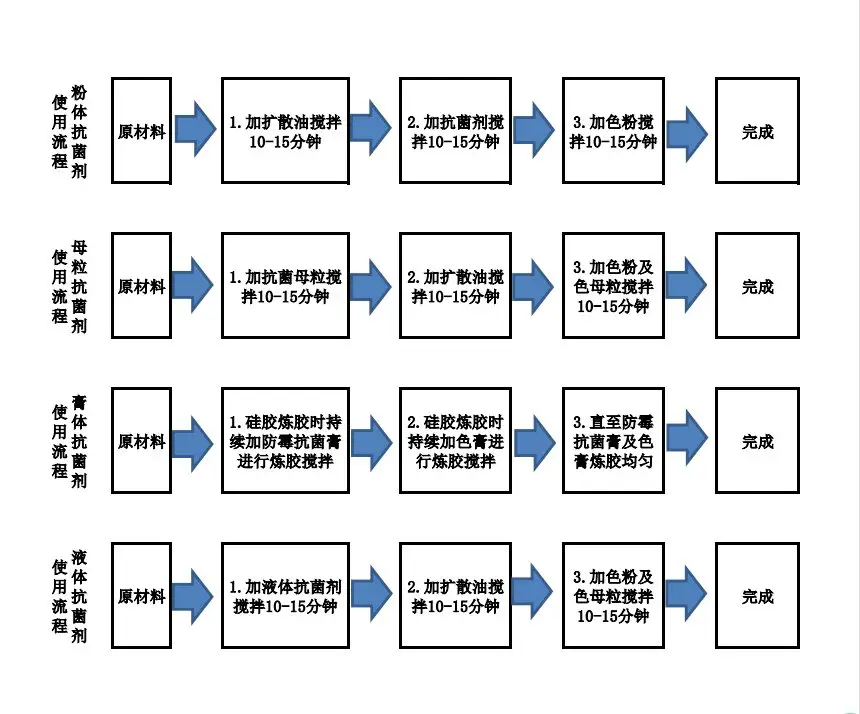
The route we recommend is internal addition with iHeir-ECO plastic antimicrobial agent. It is supplied as a masterbatch that blends fully into the plastic, so the active is distributed through the whole part rather than sprayed on the surface. Nets are drawn, woven and sun-exposed for years; a surface coating would wear through, while a compounded active keeps working inside.
Dose by polymer rather than one flat number: PE and PP systems take 0.3-0.5% of part weight, PVC moves up to 0.5-1.0%, PU, unsaturated polyester and PMMA take 0.3-1.0%, TPU takes 0.3-0.5%. Netting is mostly PP and PE, so it sits in the 0.3-0.5% band, converted through the masterbatch’s active content and blended with the resin. Watch the process temperature: iHeir-ECO holds up to a 240°C processing temperature, and the line should avoid exceeding 320°C, because prolonged heat carries the active off; fine-tune the actual level against your equipment and cycle.
The performance data is straightforward. iHeir-ECO suppresses both gram-positive and gram-negative bacteria at very low minimum inhibitory concentrations: 0.02-0.5 ppm against E. coli and 0.01-0.1 ppm against Staphylococcus aureus, with activity against the bacteria behind odour as well. The chemistry is registered in Australia, Canada, China, Europe, Japan, Korea and the United States. Store it sealed, dry and dark above 0°C; shelf life is one year.
3. The finished-goods step: cleaning and rework
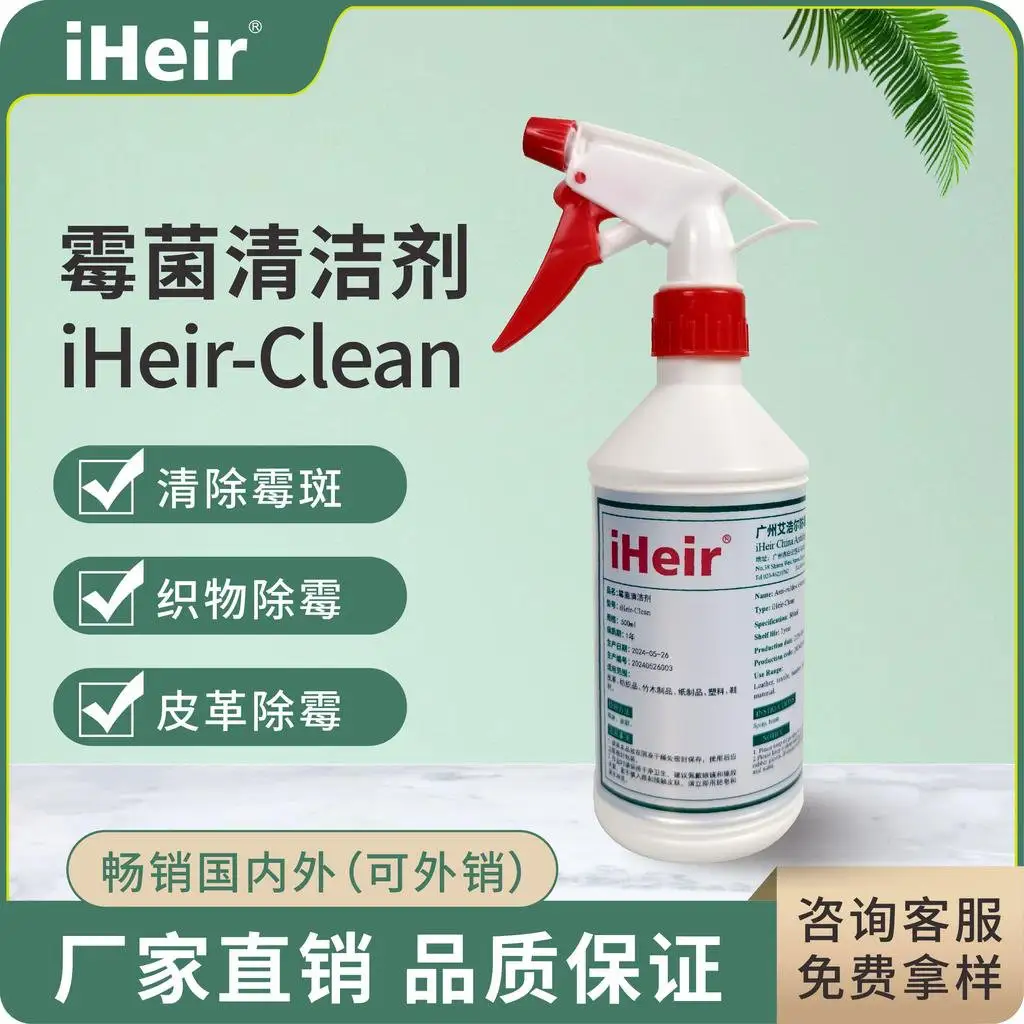
Nets that have already grown mould cannot be fixed by sun exposure, because UV only kills surface spores while the biofilm and its food remain, and the mould returns days after the goods go back into store. Rework runs clean first, dry second: wipe the affected face with a soft cloth or brush carrying a little iHeir-Clean mould spot cleaner, lift the mildew and stains, then air-dry. It is a clear liquid, soluble in water, ethanol, ketones and esters, and can be diluted to stretch it over large areas.
Two rules on the floor. First, iHeir-Clean is classified as flammable under DOT, so the work area needs fire and static precautions and extraction; run a production-scale trial before committing a whole batch, and fix the wipe pressure and drying time rather than learning on live orders. Second, test the dried net with bromophenol blue (BPB) to confirm the antimicrobial layer is present before the goods are packed. The safety file is solid too, with a guinea-pig oral LD50 of 12.27 g/kg; the product carries US EPA recognition and meets FDA and European safety standards.
4. Storage and sea freight: do not skip humidity control
Nets are bulky and stack high, so the core of a stack holds far more moisture than the surface, and a coastal plant in the rainy season is the worst case. For full-container loads, add CH-10 drying and deodorizing packs, built on a natural montmorillonite mineral carrier with an antimicrobial and odour beads. At 25°C and 80% RH they absorb more than 200% of their own weight, up to 300% at saturation, and hold a container stable for 270-300 days, well over ten times a plain silica gel. They break down fully, contain no acid, do not bleed back and will not corrode metal fittings.
The warehouse routine is cheaper still: keep stacks off the floor, leave a fan gap between them, store nothing along the wall or the damp floor line, and run a dehumidifier through the wet season. Sample one net from the top, middle and bottom of each stack, rest a hand on the mesh for ten seconds, and a cold tacky feel means the unit goes on. Source control at the plasticising step, cleaning at the finished-goods step, environment control in the warehouse: three layers together are what hold a product that is inert inside but always fouled outside.
5. Dosing at a glance
Three steps, three products, one sheet to run the line and the rework bay by:
| Product | Step on the line | Recommended dose | Key points |
|---|---|---|---|
| iHeir-ECO plastic antimicrobial agent | Plasticising, internal addition | PE/PP 0.3-0.5% (PVC 0.5-1.0%) | Holds 240°C, avoid over 320°C; blend with resin before forming |
| iHeir-Clean mould spot cleaner | Finished-goods rework | Wipe a little on, air-dry | Flammable under DOT; run a BPB check after rework |
| CH-10 drying and deodorizing packs | Container and warehouse humidity | Absorbs 200%+ of own weight | Holds 270-300 days; degradable, no bleed-back, metal-safe |
The order never changes: compound the agent into the material first, then clean the surface film and mildew off finished nets, then hold the humidity down through storage and the sea leg. For a new resin grade, a new oil supplier or an off-season product switch, re-mix a lab sample against these ranges before running the line.
6. FAQ
Q: With the antimicrobial added, will the net stay mould-free?
Not automatically. Internal addition removes the material as a food source, but a face still carrying heavy spinning oil or seawater organics will grow mould on that film. The agent is the base layer; cleaning and humidity control are the rest.
Q: How do I choose between 0.3% and 0.5%?
By polymer and exposure. PP and PE netting normally runs 0.3-0.5%, with the top of the band for outdoor sun exposure or damp-region storage; after any formulation change, verify a sample by MIC or antibacterial rate before full dosing.
Q: Can the smell on fishing nets be handled at the same time?
The odour comes from attached organics and microbial growth, so work in order: rinse off salt and debris, dry, wipe with iHeir-Clean where needed, and pack with CH-10 to absorb moisture and odour. Three steps clear both the smell and the spots.
Q: How do samples and minimum order work?
iHeir-ECO, iHeir-Clean and CH-10 all ship as samples first. Send us the polymer type, processing temperature range and storage and transit cycle, and we return the addition level and the supporting plan; the order then runs by the drum. Contact us for a sample.