




 View Count:24
 Date:2026-10-19
How should bamboo mat mould be dealt with so it does not come back? The spots show on the face, but the root sits in the weave and in the roll: mats are stored rolled, the water inside cannot escape, and one humid spell sends mould out along the seams. Semi-finished mats take iHeir-M5 immersion type bamboo and wood fungicide at 1:40 across the full width for 5-10 minutes to a 15%-20% weight gain, and mats already bound and finished take iHeir-M8 bamboo and wood fungicide sprayed at 1:20. This article gives the figures and the drying criterion for both.
1. Where the mould sits: the face, the weave and the core of the roll
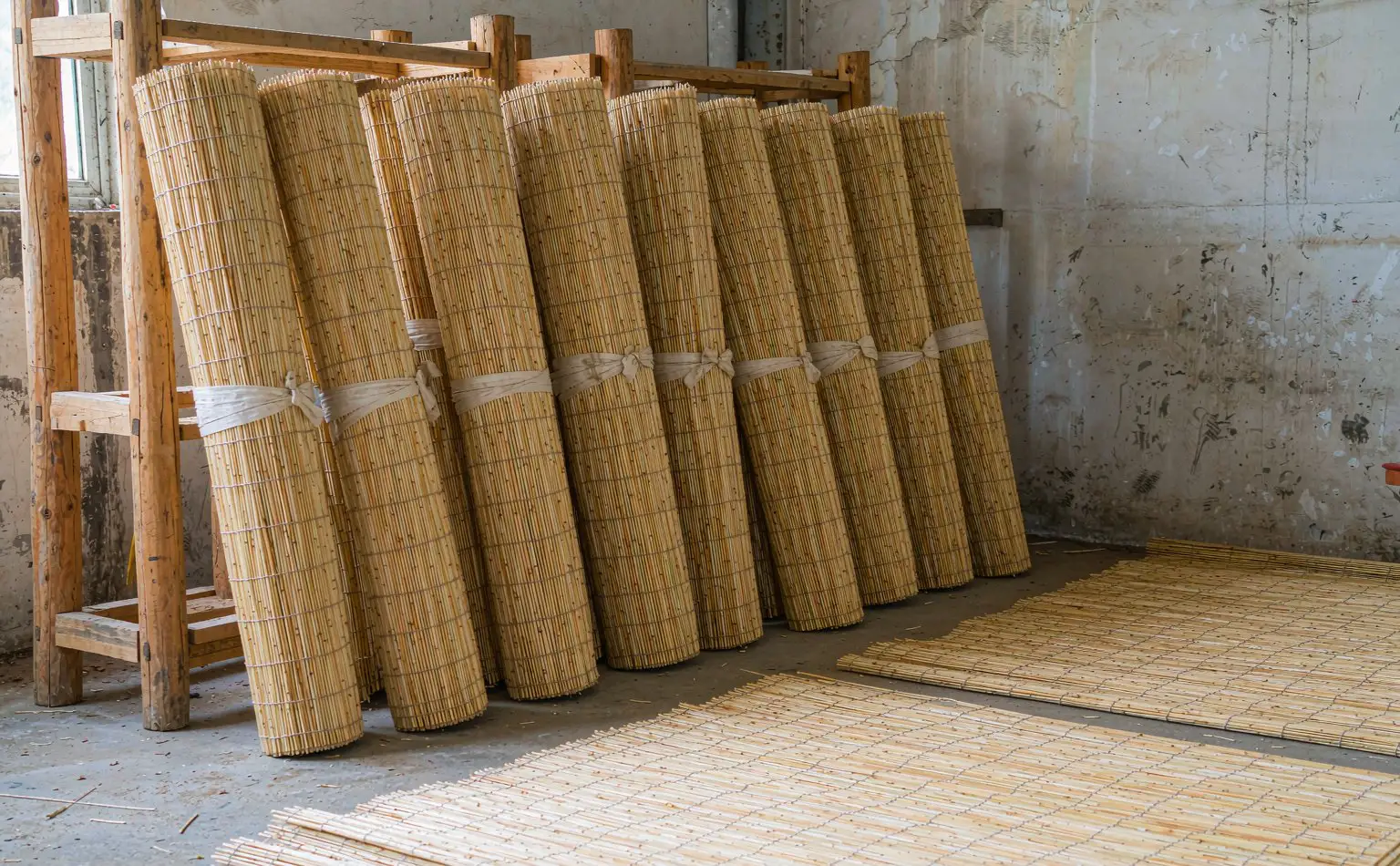
A bamboo mat is woven from split strips or filaments: large in area, thin in section, bound at the edges and then rolled. Three places fail first. The face is the side against skin and moisture; the weave is where strips cross, with gaps and dust in the seam that hold water once it gets in; the core of the roll is the innermost turns, the least ventilated and the slowest to dry, which is where mould usually starts – by the time the mat is opened it has run a full turn along the seams.
In the factory the risk concentrates in storage and export. Mats are bulky and usually rolled into tubes and stacked upright, tube against tube with no gap; once store humidity rises, or the day-night swing in a hold starts condensing water, the core of the roll cycles between wet and damp and two months is enough for spots to show.
2. Full-width dip against spray on finished stock
The table sets out the two routes, ratio, criterion and points to watch, chosen by the state of the piece.
| Route | Which stock | Ratio and time | Criterion | Points to watch |
|---|---|---|---|---|
| Full-width dip | Unbound or freshly woven mat | iHeir-M5 at 1:40, 5-10 minutes | 15%-20% weight gain | Fully submerged; acidic, so no contact with metal or alkali |
| Spray on finished stock | Bound and rolled mats | iHeir-M8 at 1:20, one thin even pass | Full coverage, liquor into the seams | Extra sweep along seams and binding; air dry, never stack wet |
| Drying | Both routes | Spread full width, face up | Moisture down before rolling | M8 data: below 25% moisture, protection is rated at more than a year |
| Rolling and store | Finished mats | – | Store below 60% relative humidity | Stand clear of the wall, core up; desiccant sticks in the container |
The first two rows pick one route by the state of the mat, the third is the drying both share, the fourth is rolling and storage. Without the third, the first two are wasted.
3. Full-width dip: M5 at 1:40, five to ten minutes
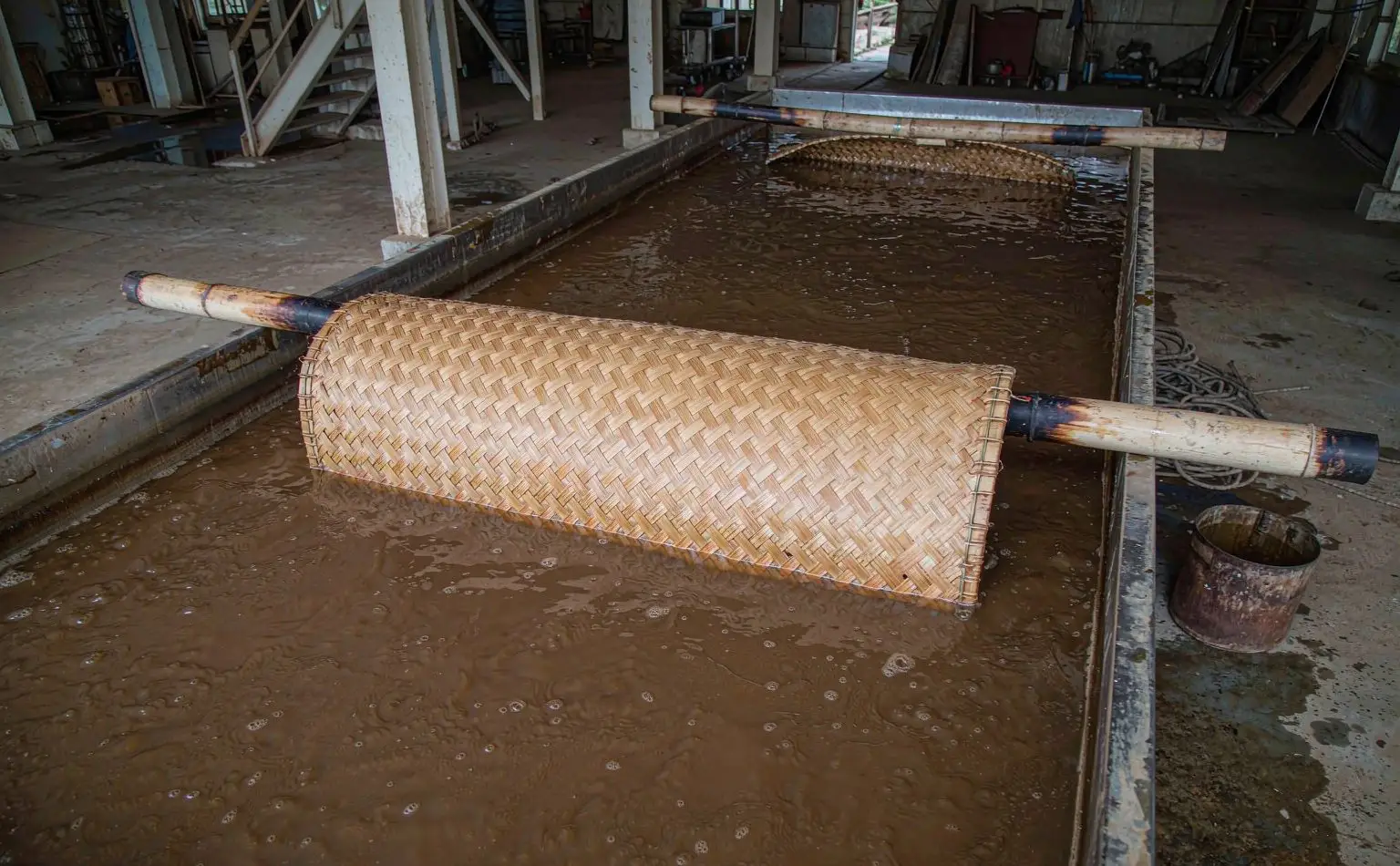
iHeir-M5 immersion type bamboo and wood fungicide is a red-brown liquid and the bath is made at 1:40 (5kg of product to 200kg of water). Lay the whole mat into the liquor, fully submerged, for 5-10 minutes to a 15%-20% weight gain; drain, air or sun dry, and roll only when dry. Packing is 25kg to the drum, stored away from damp and light, one-year shelf life.
A full dip needs a long trough and weights at each end so the mat does not float above the surface. Load one mat at a time rather than several together – stacked, the middle mats never see the liquor and only the outer two are treated. Lift with two people and keep the mat level; a wet mat is heavy, and carrying it by one corner pulls it out of shape.
M5 is acidic and must not touch metal or alkaline material: use a plastic or plastic-lined trough, plastic or rubber-covered lifting poles, and dry the mat on a plastic sheet rather than over a steel frame. Control weight gain between 15% and 20% – under 15% means the mat did not take it up, over 20% puts too much water back in and the drying area becomes the bottleneck.
4. Finished mats: M8 sprayed at 1:20
A mat that is bound and saleable should not go back into a dip: it would need re-shaping, the binding would loosen, and the moisture would have to be dried out again. This route uses iHeir-M8 bamboo and wood fungicide at 1:20 (1kg of product to 20kg of water), stirred and sprayed evenly over the face and the binding, then air dried. It ships 25kg to the drum and keeps three years, and the maximum use level is capped at 15ppm active substance.
Spraying has to reach the weave. Lying flat, the liquor sits on the surface and never enters the seam; stand the mat at an angle against a frame, or run a soft roller along the weave after spraying to work the liquor in. The binding is the second point – binding tape is textile and takes water faster than bamboo, so give it an extra sweep, but do not spray until it runs.
5. Drying to the right moisture before rolling decides the outcome
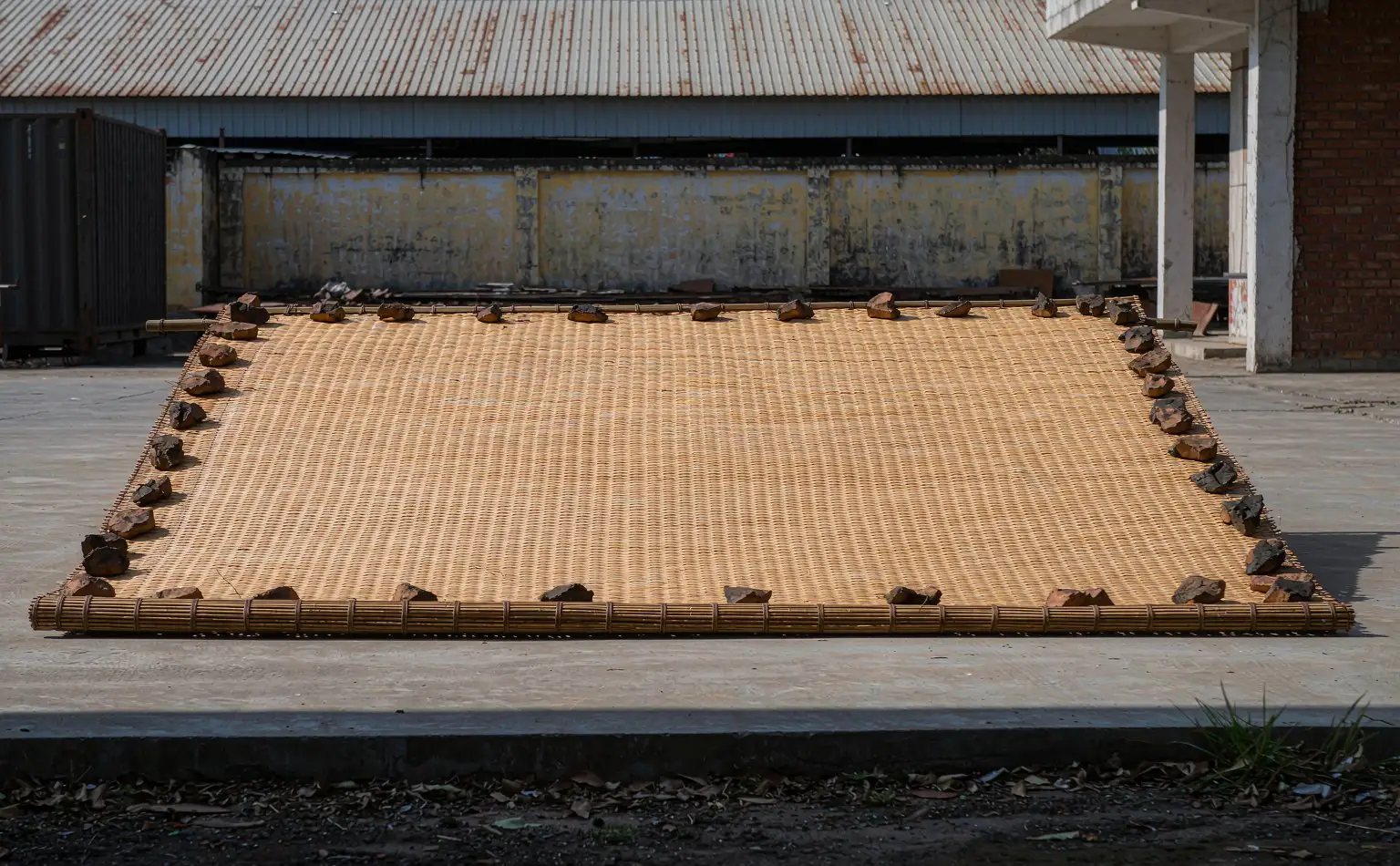
Both routes end in drying. Spread the mat full width, face up, weight the four edges against the wind, and choose a ventilated spot with sun if possible; turn it once around midday so the water in the weave can come out too. The M8 data gives a clear figure – below 25% moisture, protection is rated at more than a year – and read the other way, above that figure the effect is discounted.
How to judge dry? With a meter, take three to five points and test the turns near the binding separately. Without one, go by feel and time: the face feels crisp, it crackles slightly when flexed, and no water sheen is left in the seams. On a grey day or in the rainy season do not rely on outdoor drying – use the drying room with moderate heat and good airflow, because a thin mat heats quickly and cups when pushed.
Rolling and storage come down to three things: let the mat cool completely before rolling, because rolling warm condenses water in the core; stand the rolls clear of the wall with the core up so air can move; and hold the store below 60% relative humidity, with desiccant sticks in the export container. Do not try to cover mould that has already started with another spray pass – the stain stays in the fibre and the colour dries uneven, so sorting it out as a downgrade is cheaper. The wider rules for bamboo and wood storage are in our note on reworking mouldy bamboo and wood in the finished-goods store.
6. Questions: can the spots be washed off, and can an old mat still be dipped
Can a mat that has already spotted be washed and used? It depends how deep the mould went. Surface bloom can be cleaned off, dried and given a spray pass; where the stain has gone into the fibre and turned black or green, cleaning only fades it and the fibre has lost strength, so pull those mats out as a downgrade or rework rather than mixing them into a good batch. Avoid strongly alkaline cleaners on the way – bamboo fibre does not take them and the surface fuzzes.
Can a mat woven long ago still go through a full dip? Not advisable. The binding and the weave have set, a full dip makes the mat swell, and after drying the weave loosens and the binding wrinkles; spraying is the safer route for that stock. A freshly woven, unbound mat is the right subject for a dip, because the seams are still open and the liquor can get in. Samples and a TDS are available for both products so the figures can be checked against your bamboo and your weave.
Four closing figures: unbound mats at iHeir-M5 1:40 across the full width for 5-10 minutes to a 15%-20% weight gain, acidic and clear of metal and alkali; bound stock at iHeir-M8 1:20 sprayed, with an extra sweep along the seams and the binding; both routes followed by full-width drying below 25% moisture, never rolled warm and never stacked wet; and rolls standing clear of the wall, the store below 60% relative humidity


