




 View Count:26
 Date:2026-09-22
How do you stop knitwear mould in storage? Wool and cashmere blends take up moisture and then grow mould and attract insects, pale sweaters take grey spots that no wash removes, and fast-turn sweater programmes leave no window for rework. Run the finish line with iHeir-BJ textile anti-mould agent at 2-3% o.w.f., pack with iHeir-D gas-phase paper at 0.1-0.2 g of active per sheet, and add Power Pak tablets against insects. This article covers the finish, drying and packing steps with the dosing to copy.
1. Why wool moulds faster than cotton
Wool fibre carries a scaly surface and open gaps between fibres, with a moisture regain around 15%, well above cotton; cashmere is finer still and takes up water faster. The absorbed moisture does not escape easily from inside a yarn or a folded garment, so when warehouse humidity rises the fibre surface wets first and spores settle. Wool is also keratin, ready food for carpet beetle and clothes moth larvae, which is why mould and insect damage usually appear on the same batch.
Sweater output is dominated by pale shades, natural white and beige, which are the least forgiving: a grey bloom reads as a colour fault at first inspection. Worse, mould pigment penetrates the fibre and survives ordinary washing and dry cleaning, so the goods are downgraded or scrapped. Prevention has to sit in the finish line, before the goods ever reach the store.
2. The finish line: mixing the pad-dry bath
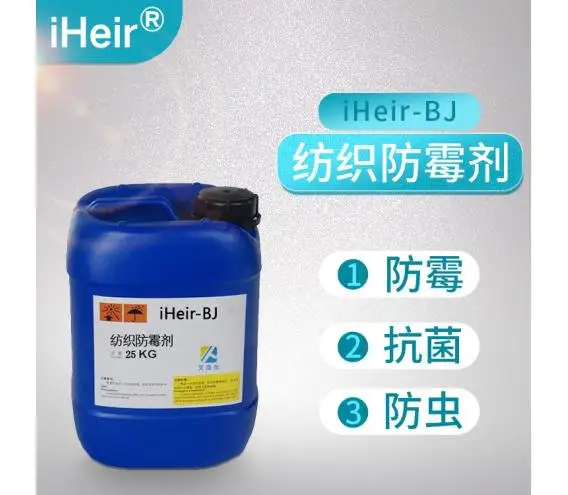
The process we recommend is pad-dry with iHeir-BJ, slotted into the finishing bath around softening and setting and running with the normal wet process. It is a non-leaching bound antimicrobial: the molecules bond chemically at the fibre surface, so they do not bleed or migrate, the effect lasts as long as the garment, and washing and abrasion do not strip it.
Copy the bath card: dose 2-3% o.w.f. on dry fabric weight, so 2-3 kg of stock for 100 kg of knitwear; bath temperature 21-50°C, ideally under 48°C, which matters more on sweaters because heat shrinks them; pH 4.5-8.5, ideally about 6, in soft water. Pre-mix the iHeir-BJ with 9-13 times its weight of water before it enters the bath, squeeze to a 70% pick-up, then dry and set.
Two rules are absolute. First, iHeir-BJ is cationic and must never share a bath with an anionic auxiliary, or the liquor flocculates and the tank is lost; the anionic softeners and antistatic agents common on a sweater line have to run as a second pass, iHeir-BJ first, dry, then the anionic. Second, it contains silicone, so a garment sold on next-to-skin moisture management needs 0.1% cationic hydrophilic agent to bring the regain back. Dose drives life: at 2% o.w.f. protection holds over one year, at 3% it runs two or three, and export orders with long sea and channel time run at 3%.
3. Drying and setting: moisture is the hidden spec
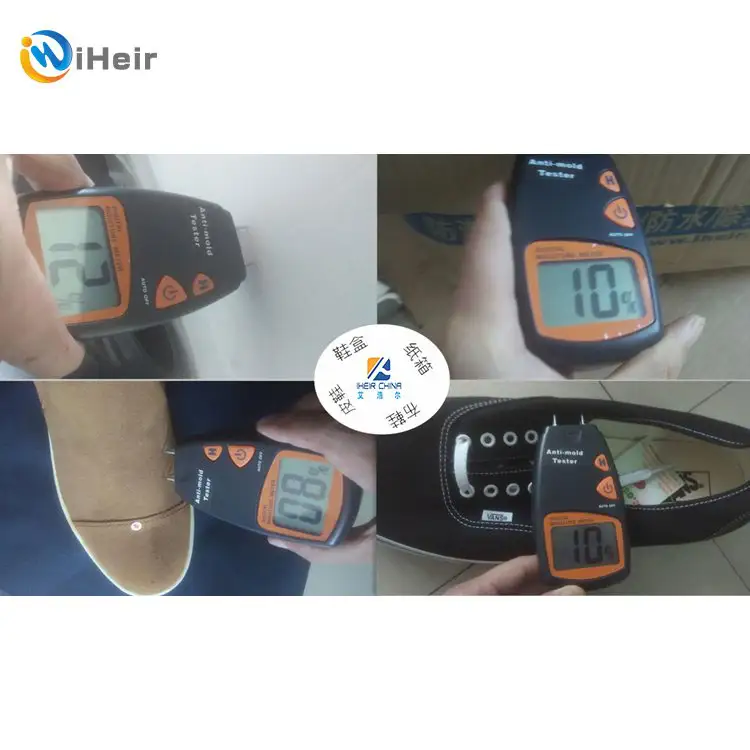
After the finish comes dry-and-set, and the acceptance number is moisture content, not minutes. Knitwear panels are thin, so the surface dries fast while the inside still holds water; fold it under-dried into store and the trapped moisture returns as mould within days of a wet spell. We check moisture regain after drying and move goods to the finished store only when they balance with workshop air, and setting temperatures follow the fibre type, since cashmere and wool blends should not be flash-dried.
The fold-and-press line is where spots start: let garments cool and shed moisture flat before stacking, rather than stacking warm, then bag by size. Keep the store off the floor with fan gaps between stacks, hold humidity down with a dehumidifier in the wet season, and sample two garments each from the top, middle and bottom of a stack. Read the moisture meter on each; anything over spec goes back to the dryer rather than into the bulk lot.
4. Storage and sea freight: paper for the box, tablets against insects
Once packed, the carton is a closed microclimate, and day-night temperature swings in transit condense moisture on the inner walls. Add iHeir-D gas-phase anti-mould paper at the packing step: a printed ink layer carrying particles under 5 microns releases its active slowly into the air and catches spores no sheet touches, at 0.1-0.2 g of active per sheet, scaled to carton size. Poor dyes can bleed and cheap metal fittings can corrode under damp, so a dark-print sweater order runs a compatibility trial first: three times the normal quantity in a closed box, with the paper separated from the sample, checked after several days for colour change and corrosion.

Insects are the biggest risk on wool and cashmere, so the carton also takes Power Pak anti-mould and deodorizing tablets. The active is allyl isothiocyanate drawn from wasabi and mustard, released by sublimation to kill penicillium and aspergillus, and the black grade adds a natural insect repellent for the beetle side. Drop the tablet in as the goods enter the box and seal at once: sterilisation completes within 72 hours. The green grade holds six months, blue and black twelve, so match the grade to the transit cycle. The vapour is pungent, so ventilate the packing area and wear rubber gloves; any box opened more than 15 days after sealing must take a fresh tablet. The logic on the garment and yarn lines echoes our garment mould piece and yarn mould piece.
5. Dosing at a glance
Three steps, three products, one sheet to run the finish line and the packing bay by:
| Product | Step on the line | Recommended dose | Key points |
|---|---|---|---|
| iHeir-BJ textile anti-mould agent | Finish, pad-dry | 2-3% o.w.f., 70% pick-up | Bath 21-50°C, pH 4.5-8.5; cationic, never with anionic auxiliaries |
| iHeir-D gas-phase paper | Packing | 0.1-0.2 g of active per sheet | Dark-print goods run a 3x dosage compatibility trial first |
| Power Pak tablets | Packing (insect control) | In the box as goods are packed, sealed at once | Kills within 72 h; green 6 months, blue/black 12; re-tablet after a 15-day opening |
The order never changes: finish first to bind the agent into the fibre, then paper to protect the air in the box, then tablets to close the insect gap. For a new yarn supplier, a new colourway or an off-season reorder, re-mix a lab sample against these ranges before running the line.
6. FAQ
Q: The sweaters already have spots. Can they be saved?
It depends whether the pigment has struck. Surface bloom wipes off with an iHeir-Clean type spot cleaner and dries back to saleable; where pigment has entered the fibre and survives washing, the goods are downgraded or scrapped, which is exactly why the finish line carries the prevention.
Q: How do I choose between 2% and 3%?
By transit and turnover. Domestic orders that clear within six months run at 2%; exports to Europe or the US with a year or more of sea and channel time run at 3%, which stretches protection to two or three years, with tablets covering the insect side.
Q: Will the finish change the hand of the knit?
iHeir-BJ bonds at the fibre surface and leaves the hand and shade unchanged. The silicone-related drop in moisture regain only matters for next-to-skin styles, which take 0.1% cationic hydrophilic agent; outerwear and cardigans need nothing.
Q: How do samples and minimum order work?
iHeir-BJ, iHeir-D and Power Pak all ship as samples first. Send us the fibre blend, target transit cycle and storage method, and we return the bath recipe, sheet count and grade advice; the order then runs by the drum. Contact us for a sample.