




 View Count:23
 Date:2026-10-19
How is bamboo chopstick holder mould dealt with, on the body and on the inner wall? The spots show on the outside, but the root is at the base: water carried in on wet chopsticks collects there, the wall blocks the airflow, and spots appear within days. The body is built from bamboo strips and the inner wall is bored out, so both have to be dipped – iHeir-M5 immersion type bamboo and wood fungicide at 1:40 for 5-10 minutes to a 15%-20% weight gain, or iHeir-FT bamboo and wood anti-mildew powder at 1:200 for open stock. This article gives the figures, the drying rules and the storage limits.
1. Where the mould starts: the body, the inner wall and water standing at the base
A chopstick holder is more complicated than it looks. The outer body is built from bamboo strips with glue lines between them; the inner wall is bored or turned out of one piece with an uneven wall thickness; the base is a separate plate with a ring of joint where it meets the body. The three take water at very different rates – the bored inner wall exposes cross-cut fibre and takes water fastest, the glue lines in the body take it slowly but do not give it up, and the base joint is the worst of the three because water that enters through that seam can only leave through the same seam.
The way the holder is used makes it worse. It stands on a kitchen counter, wet chopsticks go in, water runs down and collects at the base, and where there is no drain hole it simply sits there. The wall blocks the draught, the air inside barely moves, the temperature is right, and mould starts at the base and the lower part of the inner wall.
2. Body and inner wall: two dip routes compared
A chopstick holder is a food-contact item, so the choice has to stay inside the food-contact grades. The table sets out ratio, time and the points to watch for both routes, as a draft for the line card.
| Route | Product | Ratio and time | Weight gain or criterion | Points to watch |
|---|---|---|---|---|
| Whole-piece dip (liquid) | iHeir-M5 | 1:40 (5kg to 200kg water), dipped 5-10 minutes | 15%-20% weight gain | Fully submerged, never above the liquor line; drain, then air or sun dry |
| Whole-piece dip (powder) | iHeir-FT | 1:200 for open stock, above 45C | Section fully penetrated | Only slightly soluble in cold water; rain washing the additive off defeats the pass |
| Base and joint | – | Dip with the opening facing down so the air escapes | Inner wall and base top both wetted | Opening up traps air and the lower inner wall never touches the liquor |
| Drying and store | – | Drain upside down, dry in a drying room | Moisture down before cartoning | Store below 60% relative humidity; anti-mould sheet inside the carton |
The first two rows are the two alternative routes, the third is how the piece sits in the tank, the fourth is drying and storage. Row three is missed most often – with the opening up, trapped air keeps the lower inner wall dry.
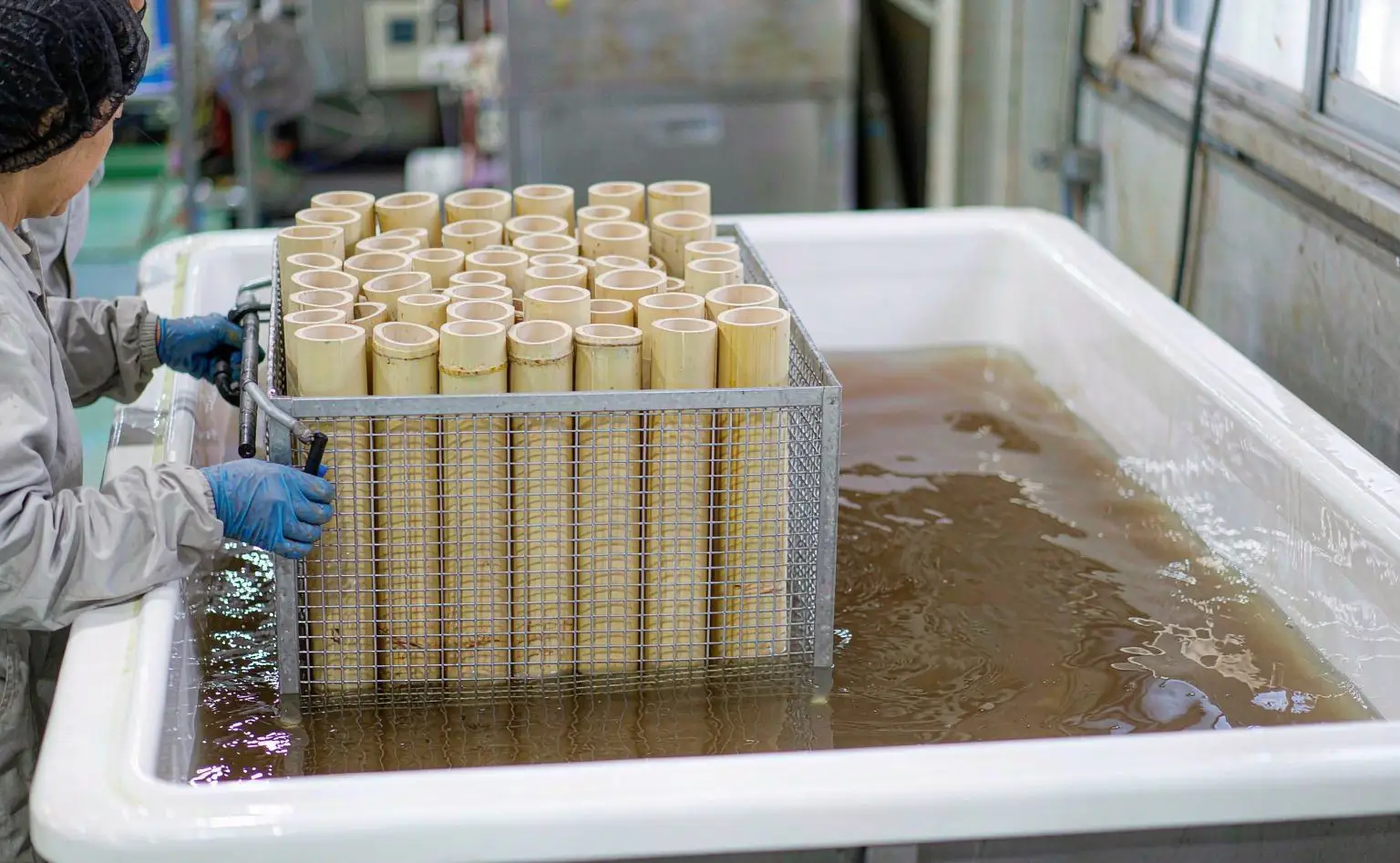
3. M5 at 1:40: five to ten minutes, to a 15%-20% weight gain
iHeir-M5 immersion type bamboo and wood fungicide is a red-brown liquid mixed at 1:40 (5kg to 200kg of water). Submerge the whole holder, never letting it sit above the liquor line, dip for 5-10 minutes to a 15%-20% weight gain, drain, then air or sun dry and pack when dry. It ships 25kg to the drum, stores away from damp and light, and keeps one year.
Position in the tank matters. Put the holder in opening up and the trapped air keeps the liquor just below the rim, so the lower inner wall and the base are not treated at all; put it in opening down and slightly tilted so the air escapes and the cavity fills, then turn it to confirm the outside is wetted too.
M5 is acidic and must not touch metal or alkaline material, so tanks, baskets and hooks should be plastic or plastic-lined; keep the draining area clear of steel as well, because drips corrode a steel frame. Weight gain is the hard criterion on this pass: under 15% means the piece did not take it up, over 20% puts too much water back in, which lengthens drying and can split the thin wall.
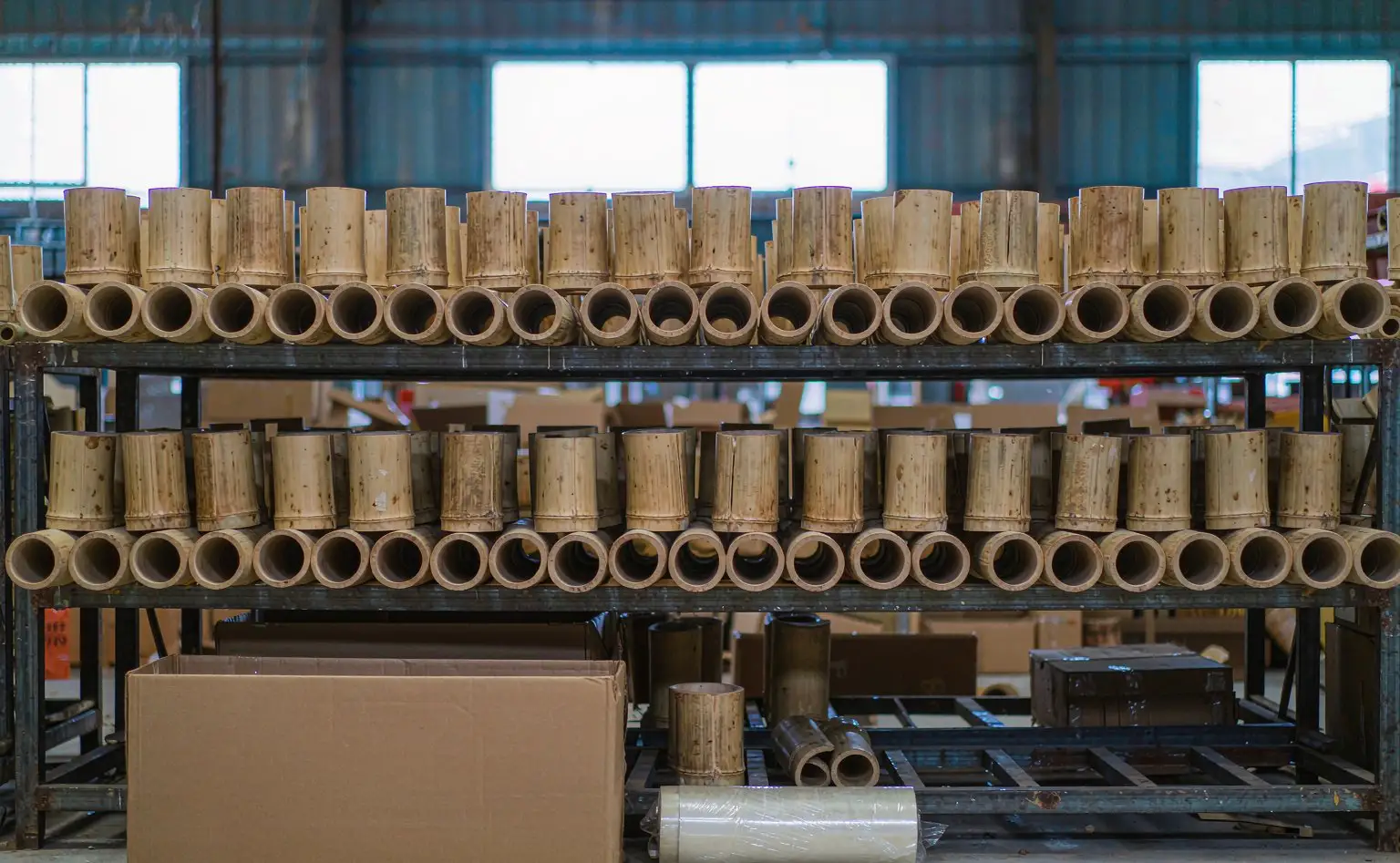
4. FT by material: 1:200 for open bamboo stock
iHeir-FT bamboo and wood anti-mildew powder is a pale yellow crystalline powder with a slight sharp odour, only slightly soluble in cold water and much more soluble in hot water, best above 65C. Concentration is set by material: 1:200 for open stock, 1:100 for hard stock, 1:500 for food-contact chopsticks, all of them most effective above 45C. A chopstick holder is split bamboo on the body and a bored face inside, so it belongs in the open-stock bracket at 1:200; any hard or densified part in the same batch should be run separately at 1:100.
Dissolve the powder before loading. Sprinkle it into water above 45C while stirring, and only put pieces in once it is clear – powder dumped onto the holder settles in the base and sets into lumps, leaving one spot far stronger than the rest. Drain after the dip, air or sun dry, then pack, and keep the rain off: additive washed out is additive wasted. The bath is stable and can be reused, topped up to ratio as the level drops; packing is 30kg to the drum with a three-year shelf life.
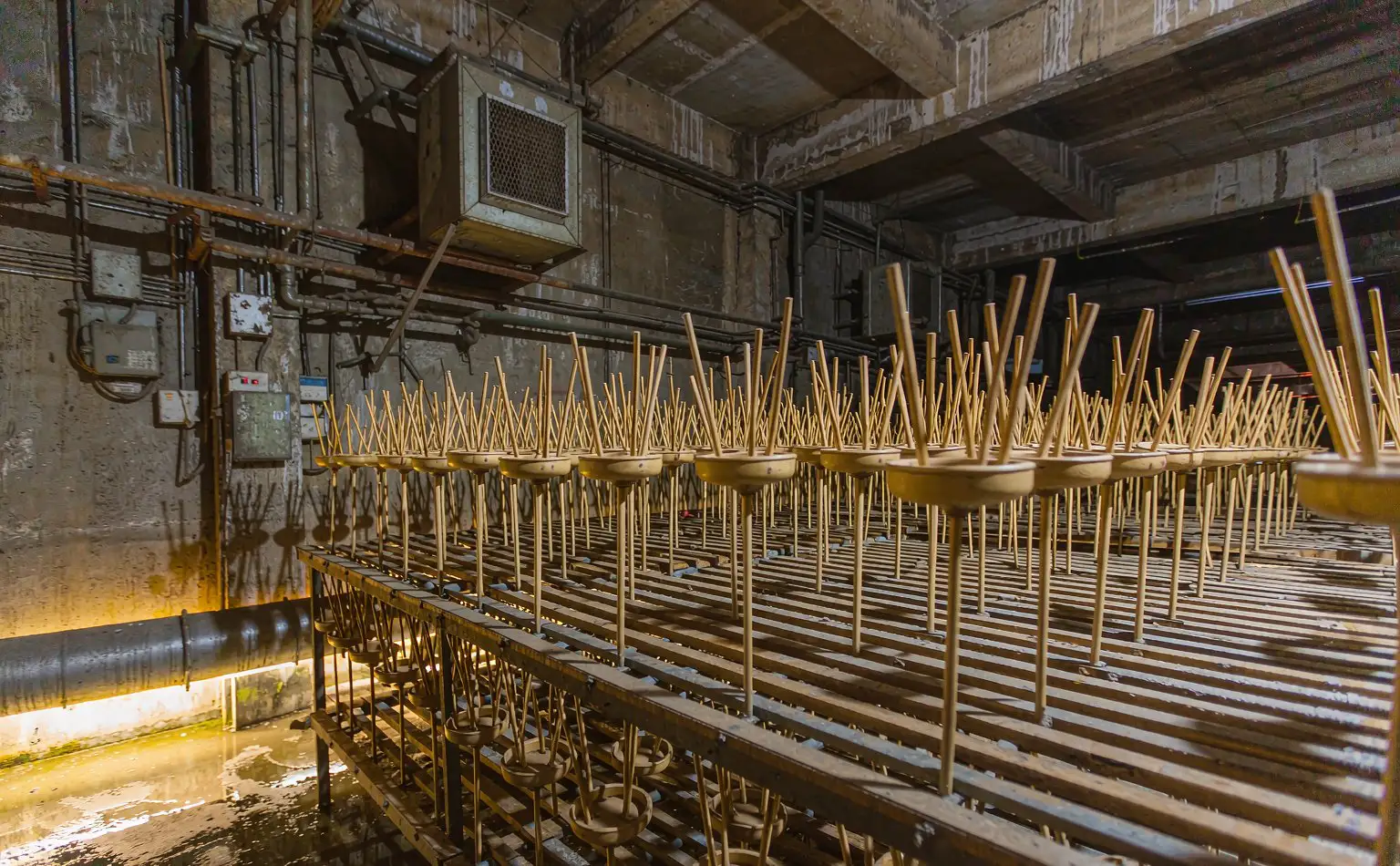
5. Drying and storage: a dip without drying is a wasted dip
The dip puts the additive in; drying decides whether it stays. The wall is thin and the cavity is closed, so hot air does not easily reach inside, and the classic failure is a dry outside over a damp interior. Drain the cavity first, then stand the holders upside down on the drying rack so the air enters through the opening; load a single layer rather than stacking, set the drying time by wall thickness and moisture, and check the moisture before the batch leaves the room instead of judging by colour.
Storage comes down to three things: hold the store below 60% relative humidity; stand the holders upright or keep the cartons single-layer rather than compressing them; and put an anti-mould sheet or desiccant inside each carton, with desiccant sticks added in the export container. Before and after the rainy season, open the cartons against the wall and re-dry anything that has picked up moisture. The general rules for bamboo and wood storage are covered in our note on reworking mouldy bamboo and wood in the finished-goods store.
6. Questions: is an outside-only dip enough, and can they be bagged straight away
Is dipping only the outside of the body enough? No. The mould on a chopstick holder starts at the base and the lower inner wall, exactly the places an outside treatment cannot reach, and an outside-only dip gives a black base within two weeks of use. Whole-piece immersion with the opening down to release the air is the only posture that works.
Can the holder be wiped and bagged straight after the dip? No. Wiping takes water off the surface while the water inside the wall and the joint stays; once bagged, that moisture sits in the bag. Drain, dry, cool to room temperature, then bag, with an anti-mould sheet in the carton. Samples and a TDS are available for both products so the figures can be checked against your bamboo and your drying setup.
Four closing figures: whole-piece immersion with the opening down to release the air; iHeir-M5 at 1:40 for 5-10 minutes to a 15%-20% weight gain, or iHeir-FT at 1:200 for open stock above 45C; M5 is acidic, so keep it away from metal and alkali; drain upside down before the drying rack and check moisture before packing; store below 60% relative humidity with an anti-mould sheet in the carton and desiccant in the container.


