




 View Count:28
 Date:2026-10-17
Can bamboo steamer mould be prevented by soaking the strips separately and keeping the warehouse dry? A steamer meets steam all year round, and once mould starts between the strips the rim cannot be saved by rework. Soak the split strips through before weaving, because soaking an assembled steamer makes it swell and leaves the rim loose: iHeir-M5 immersion type bamboo and wood fungicide at 1:40 for 5-10 minutes, or iHeir-FT bamboo and wood anti-mildew powder at the loose-material grade of 1:200, best above 45℃. This article covers the figures and the drying rules for the finished warehouse.
1. Where bamboo steamer mould comes from: strips, weave gaps and steam residue
A steamer is a ring woven from bamboo strips plus a base, two or three layers thick in places and held by rattan or pins with gaps between them. Three places fail first. First the strips themselves: a split strip has a dense green skin on one side and loose fibre on the other, so the two faces take up water very differently, and once woven the loose face turns inwards where it dries least. Second the weave gaps and the rim: the edge stacks several layers of strip, and the space between holds vapour. Third the residue after use: a steamer meets steam as a matter of course, and if it is not stood up to dry through, water sits between the strips.
Then there is storage. A steamer is bulky and stacked high, so the rings in the middle get almost no air, and the damp season brings spotting out first in the middle of the pile. Many plants put all their effort into treatment and leave storage alone, yet a month or two in the pile brings the problem back.
2. Soak the strips before weaving: the two routes compared
A steamer is a woven assembly rather than a single piece, and that changes the question: the strip has to be treated, and the assembly has to survive being treated. Soaking a finished ring swells it as one piece and dries it unevenly, which is why the work is done on loose strips and the ring is woven only after they are dry.
| Route | Product | Dilution and time | Pickup | Points to watch |
|---|---|---|---|---|
| Strip soak, standard | iHeir-M5 | 1:40 in water (5kg to 100kg), soak 5-10 minutes | 15%-20% | Load the strips loose and fully submerged; drain, then air or sun dry |
| Strip soak, loose grade | iHeir-FT | 1:200 in water, best above 45℃ | 10%-15% | Slightly soluble in water, easier in hot water; the liquor is reusable, top up at 1:180 or stronger |
| Weaving the ring | — | Weave only dry strips, and do not crush the edge | — | Weaving while damp shrinks the ring loose after drying |
| Finished store | — | Stand on end with an air gap, below 60% relative humidity | — | The middle of the pile fails first; pallets off wall and floor, first in first out |
Rows one and two are the two routes on loose strips; three is the weaving, where the strip must be dry; four is storage, which decides whether a treated steamer still looks treated after a damp season. The failure that costs most is not a weak bath but a ring woven from strips that were still damp.
3. M5 at 1:40: soak single strips, not the assembled steamer
iHeir-M5 immersion type bamboo and wood fungicide is a red-brown liquid diluted 1:40, that is 5kg of the agent to 100kg of water. Load the split strips loose and fully submerged, and lift them out at 15%-20% pickup, about 5-10 minutes; drain, then air or sun dry, and weave only when fully dry. The product comes in 25kg drums, kept from moisture and light, with a one-year shelf life.
Why insist on soaking separately? An assembled steamer is one piece, so once it goes into the tank the stacked strips at the rim take up water slowest and the inner layers slower still; when it comes out to dry, the outer ring dries while the inside stays damp, and water trapped in the stack cannot escape. Worse, an assembled ring swells as it soaks and shrinks unevenly as it dries, so the rim loosens and the strips shift, and the base no longer seats. Soaking separately treats every strip fully and keeps the drying under control.
The liquor is acidic and must not meet metal or alkaline substances, so use acid-resistant plastic or lined tanks. The strips are thin with a large surface area, so do not grab them in armfuls when loading and lifting; use a basket and keep them flat.
4. FT at the loose grade of 1:200: thin strips take water quickly
With iHeir-FT bamboo and wood anti-mildew powder, pick the grade by material: loose material 1:200, hard material 1:100 and food-contact chopsticks 1:500, all best above 45℃. Steamer strips are split, open bamboo, so they take 1:200. It is a pale yellow crystalline powder, slightly soluble in water and much easier in hot water, so make it up hot and stir until dissolved. Hold the pickup at 10%-15%, drain, then air or sun dry before packing, and keep the batch out of the rain so the agent is not washed off.
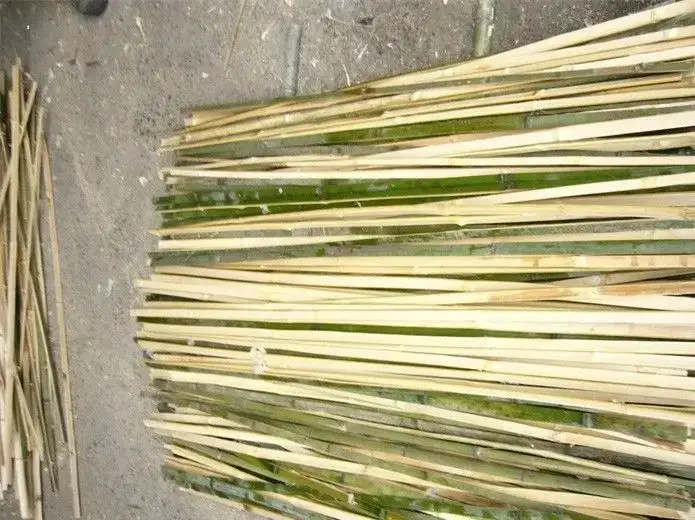
Thin strips take water quickly, so watch the pickup: lift at 10%-15%, because over-soaking swells the strip and it splits while being woven; once lifted, spread them in a single layer so both the green skin and the fibre face see air. The FT liquor is stable and reusable, topped up at 1:180 or stronger whenever the level no longer covers the ware; it comes in 30kg drums, three-year shelf life. It is acidic and must not meet metal or alkaline substances. For the finished warehouse stage on bamboo and wood, see mouldy bamboo and wood in the warehouse.
5. After weaving and in the warehouse: drying matters more than the treatment
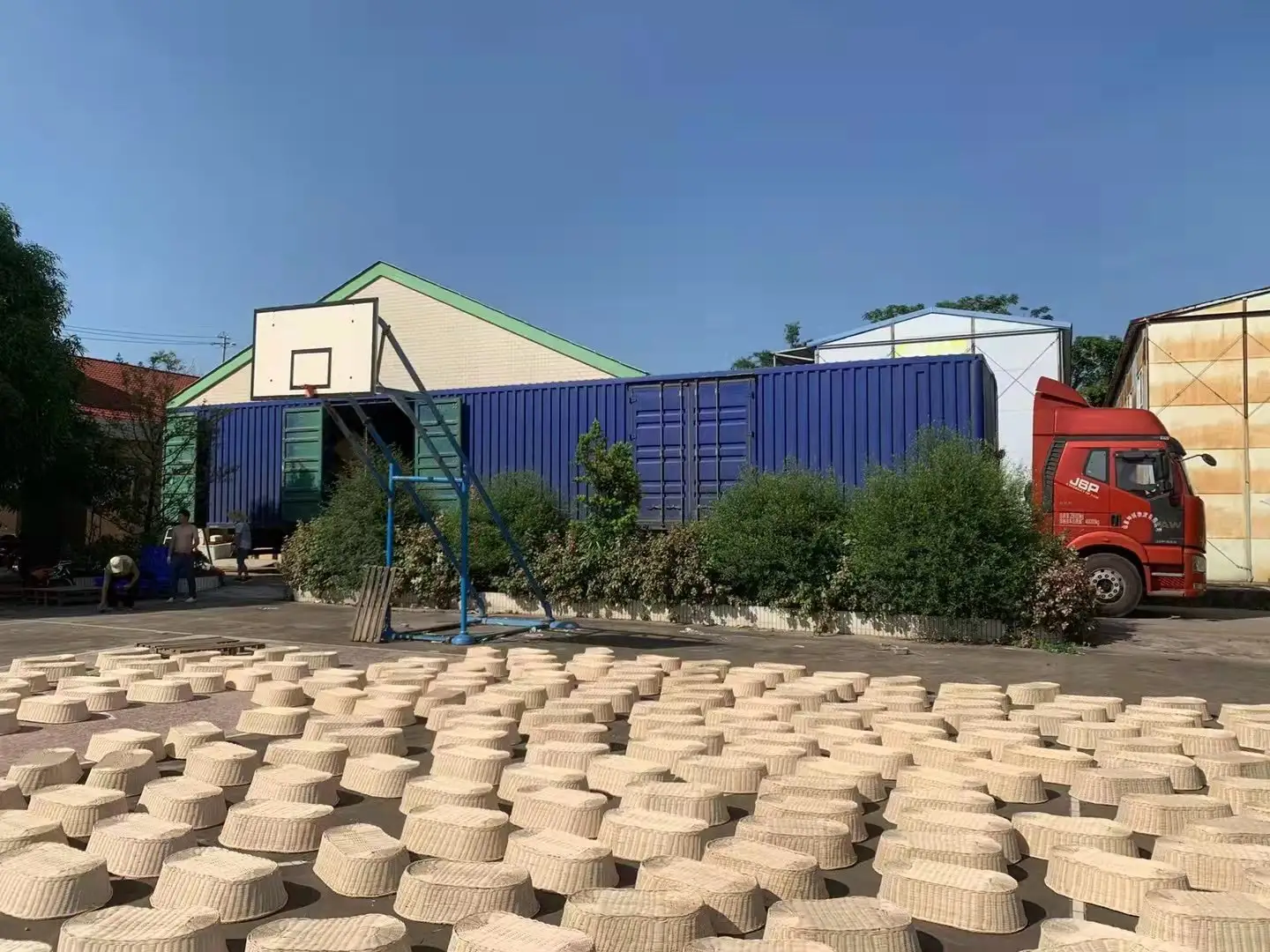
Once the ring is woven, three things need attention. First, the strips must be dry before weaving, otherwise the ring shrinks loose as it dries. Second, the rattan or pins along the edge need the same treatment, or that ring becomes the weak point. Third, the finished steamer should get one more drying pass before it leaves the shop, so no vapour is left in the rim. In yard drying, rims up and a single layer beats a stacked pile.
Storage runs on three rules: hold the store below 60% relative humidity; stand the steamers on end with an air gap between rings, pallets off wall and floor; and work first in first out, clearing stock before the damp season and pulling stacks away from the wall. A dehumidifier and a humidity log help, because however thorough the treatment was, a stack in high humidity will spot again.
6. Ring, base and the binding: three parts, three different jobs
A steamer is not uniform, and neither is its risk. The ring is woven from thin split strips with the loose fibre facing inwards, so it is the part that holds water and dries slowest. The base is a flat panel, usually thicker stock, where the risk sits in the seam between panel and ring rather than in the panel. The binding is third: rattan and bamboo take treatment with the strips, a metal binding does not, and metal is the one thing that must stay out of an acid bath.
Weaving tension is the variable nobody records. Strips woven damp shrink as they dry and the ring pulls tight, which looks right for a week and then splits at the rim; strips woven too dry leave gaps that collect steam residue. The practical rule is to weave at the moisture level you dry to, and to keep the drying of the strips even, because a batch with mixed moisture gives a ring with mixed tension.
Two points carry over from the bath. The strips are thin with a large surface, so pickup climbs fast: lift at the figure rather than at the clock, and never leave a basket standing in the tank while the next lot is prepared. The acid warning applies to the whole line, not just the tank: acid-resistant plastic or lined baskets, no metal hooks, and no alkaline auxiliary in the following stage.
7. Questions: can a finished steamer be re-soaked, and is sun drying enough
Can a steamer that is already woven, or already in store, be re-soaked? It can, but test a small batch first. Dipping an assembled ring swells it, so it has to be re-dried and set, otherwise the rim loosens and the strips shift. Take a few rings, soak them briefly in iHeir-M5 at 1:40 or iHeir-FT at 1:200, dry and set them, and check that the rim dimensions have not moved before committing the batch. Where patches have appeared and the strips have gone soft or black, the fibre is damaged and the piece should be downgraded.
Is sun drying alone enough, without soaking? No. Drying only takes the water out, while nutrients stay in the fibre and the mould returns as soon as shop or warehouse humidity rises; drying drives off the water the treatment carried in, not replace the treatment. The order is: soak through, weave, dry, then store to the humidity rules. Samples and TDS are available, and a trial against your own bamboo and line conditions is the safest way to fix the figures.
No single figure holds this job together. The strip is soaked loose at 1:40 in M5 for 5-10 minutes to 15%-20% pickup, or at the loose grade of 1:200 in FT above 45℃ to 10%-15%, and woven only when dry; the ring gets a second drying pass before it leaves the shop; finished steamers stand on end with an air gap and the store is held under 60% relative humidity.


