




 View Count:35
 Date:2026-10-17
Bamboo skewer mould: how the cut ends are sealed and how far the drying should go? The moment a skewer is cut, the ends expose the loose bamboo fibre, and moisture travels in through the cut face and the nodes, so a few spotted sticks condemn a whole bundle to sorting and rework. Pick the route by volume: iHeir-FT bamboo and wood anti-mildew powder at 1:500 for the food-contact grade, best above 45℃, to 10%-15% pickup, or iHeir-M5 immersion type bamboo and wood fungicide at 1:40 for 5-10 minutes. This article covers the figures, the flat drying and the drying test.
1. Where bamboo skewer mould starts: the cut ends and the nodes
A skewer is made by splitting, drawing and cutting to length. The shaft is sanded, so the fibre is tight; the two ends are cut faces where the vascular bundles are sliced open, a direct channel for water into the interior. That is why spotting starts near an end or a node while the middle stays clean. When store humidity rises, the cut ends pull moisture from the air first and the hyphae run along the fibre; by the time spots show on the shaft, the inside is already saturated.
The other point that gets missed is that moisture does not only come from the air. Drawing and cutting to length are often wet processes, and if the sticks are bundled and bagged before the shafts are dried through after dyeing and rinsing, the inner layers of the bundle are sitting in their own vapour. The tighter the bundle and the closer the bag, the less vapour escapes, which is why the problem shows up inside the bundle.
2. The two routes compared: FT powder and M5 immersion
Skewer selection turns on diameter first and volume second. The thinner the stock, the greater the surface per unit of weight, so a five-minute soak puts a higher proportion into a thin stick than into a thick one, and over-soaking shows up as softness and bowing. Thin stock is therefore run at the lower end of the pickup range, and time is never stretched to make up for a weak bath: a weak bath gets more powder, not more minutes.
| Route | Product | Dilution and time | Pickup | Points to watch |
|---|---|---|---|---|
| Immersion, food grade | iHeir-FT | 1:500 in water, best above 45℃ | 10%-15% | Slightly soluble in water, easier in hot water; keep the ware fully submerged |
| Immersion, standard | iHeir-M5 | 1:40 in water (5kg to 100kg), soak 5-10 minutes | 15%-20% | Drain, then air or sun dry; the liquor is acidic, so no contact with metal or alkaline substances |
| Flat drying | — | Single layer, no stacking, turn once | — | Slender sticks bend and break, and a stacked pile dries unevenly and goes tacky |
| Bundling and storage | — | Bundle after cooling, store below 60% relative humidity | — | Leave an air gap in the bundle and do not cinch the band tight |
Rows one and two are the routes; row three, drying, and row four, bundling, decide the outcome. Most rejected skewer batches were soaked correctly and then bundled damp, so the sticks in the middle of the bundle sat in their own vapour. The last two rows deserve the same discipline as the bath.
3. FT at 1:500 for food-contact skewers: the cut ends take liquor, not a coating
For food-contact work, use iHeir-FT bamboo and wood anti-mildew powder at 1:500 in water, best above 45℃. It is a pale yellow crystalline powder with a slight odour, slightly soluble in water and much easier in hot water, so make it up with hot water and stir until fully dissolved before loading, otherwise undissolved grains settle on the tank floor and stick to the sticks. Submerge the skewers completely, with nothing above the surface, and lift them out at 10%-15% pickup, drain, then air or sun dry.
On the cut ends, be clear about the mechanism. Many plants try to seal the ends with wax or oil, and the coating traps moisture inside while also interfering with later dyeing. The right approach is to let the liquor travel in through the cut: the end face is open fibre cut across, so it takes up liquid faster than the shaft, and as long as the ware stays submerged it picks up more than the shaft does. The liquor is stable and reusable, topped up at 1:180 or stronger when the level no longer covers the ware; it comes in 30kg drums with a three-year shelf life, and being acidic it must not meet metal or alkaline substances.
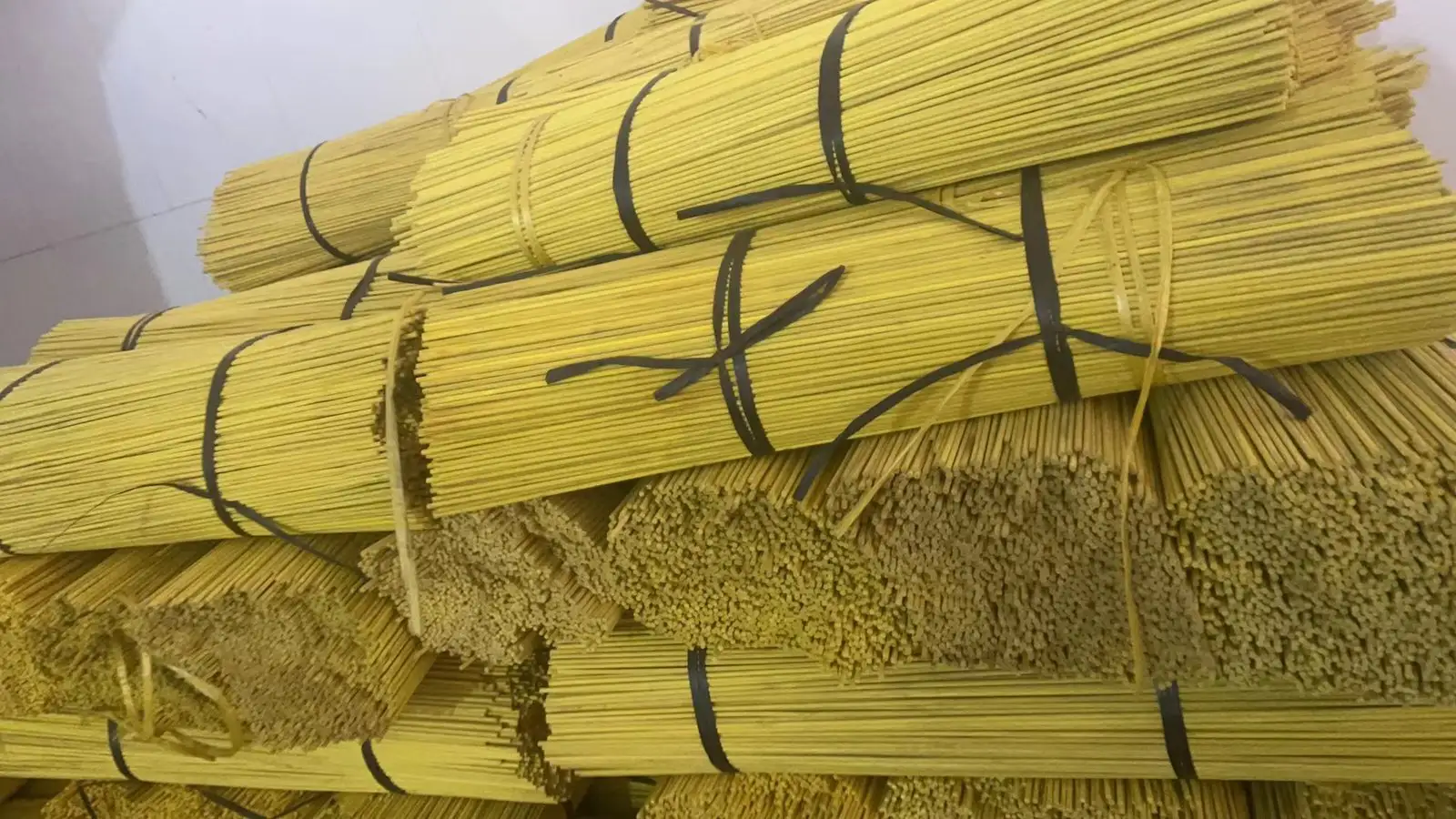
4. M5 at 1:40: slender sticks break, so dry them flat
Where volumes are small or there is no hot water, iHeir-M5 immersion type bamboo and wood fungicide is the simpler option: dilute 1:40, that is 5kg of the agent to 100kg of water, submerge the skewers completely, and lift them out at 15%-20% pickup, which takes about 5-10 minutes, then drain and air or sun dry. The product is a red-brown liquid in 25kg drums, kept away from moisture and light, with a one-year shelf life.
Two habits have to change for a slender part. First, do not load whole bundles: the middle of a bundle never sees the liquor, so split them into small loose handfuls and let the liquid get between every stick. Second, lay them out in a single layer after lifting, because slender sticks bend and break under load, and a stacked pile dries unevenly and goes tacky, so the sticks stick to one another and disturb bundling and packing later. Turn the layer once so the two cut ends dry first. For the general approach to bamboo and wood, see bamboo and wood chopsticks that got mouldy.
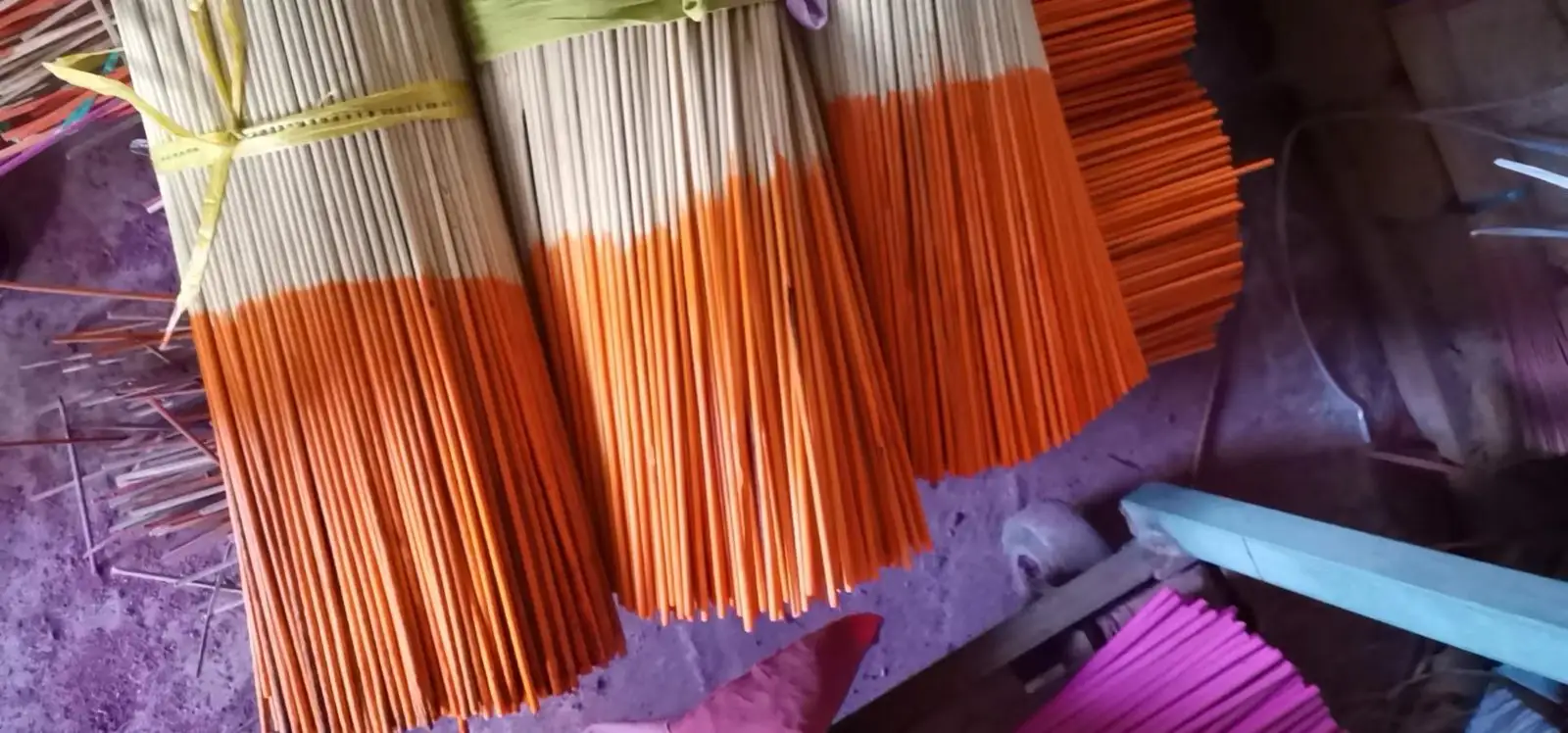
5. How dry is dry enough: cool before bundling
The drying test for skewers is not the same as for a bored cup, and “no water visible on the surface” does not settle it. Weigh a small handful, dry until the weight stops falling, then let them stand in the shop; if the weight holds steady and the shafts are not tacky to the touch, they are dry. Because a stick is thin with a large surface area, raising the temperature too fast cracks the ends and makes the shafts brittle, so step it up; keep the drying temperature inside what the dyed layer can take so the colour does not shift.
Two habits matter at bundling. First, cool before tying: sticks straight out of the dryer still hold heat, and bagging them tight condenses moisture inside the bag, putting the water back. Second, do not cinch the band tight and leave an air gap in the bundle so residual vapour can escape. Store below 60% relative humidity, keep pallets off wall and floor, first in first out, and when sampling a bag look at the middle of the bundle, where the batch fails first.
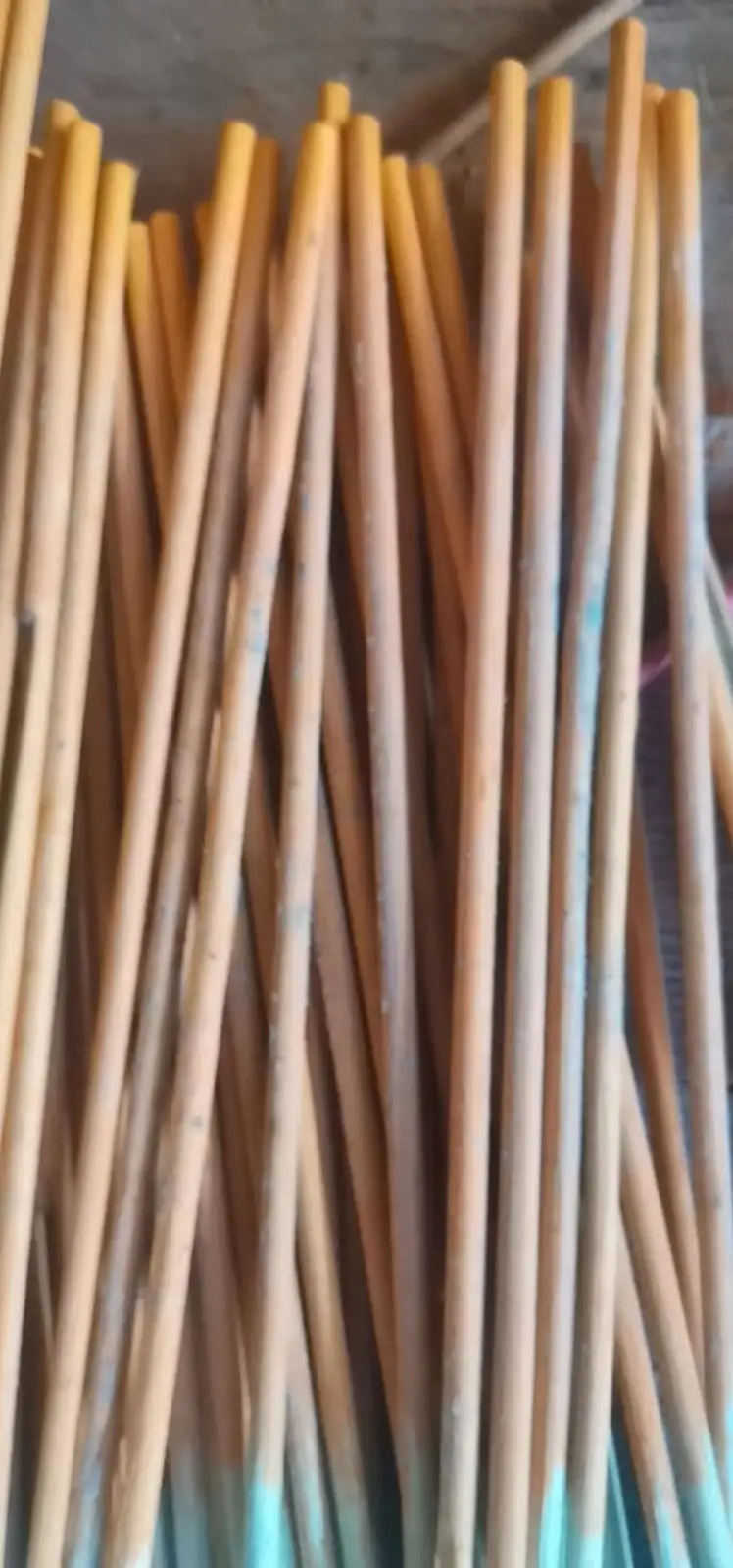
6. Thin stock: breakage, bowing and the ceiling on soak time
The hard part with fine skewers is not the mould, it is staying straight afterwards. Drawing the stick straightens the fibre; water swells it and drying shrinks it, and the two movements are not symmetrical, so the stick bows. The longer the soak and the higher the pickup, the more bow you get, which is why thin stock stops at the figure instead of soaking longer.
Breakage comes from handling, not from the chemistry. Lifting a bundle by hand and dropping it in a heap concentrates load at the middle, exactly where wet strength is lowest. Lift and drain in a perforated basket, spread in one layer, and turn as little as possible. A bowed stick should not be pressed flat when dry: the fibres crush and fur up, so sort it out and downgrade it to a shorter length instead.
One more separation worth keeping: dyed and natural sticks do not share a bath. Dye carries in water and consumes liquor, so the concentration in a mixed tank is hard to hold, and when something goes wrong you cannot tell which lot caused it. Run them in separate tanks with separate logs. The drying test also differs from a bored cup: a cup is judged on steady weight, a skewer on steady weight plus a non-tacky feel after cooling. The cup case is set out in bamboo cup mould.
7. Questions: can the cut ends be waxed, and are tacky sticks still usable
Can the cut ends be sealed with wax or oil instead of soaking? Not advisable. Sealing only covers the cut face while the water and the nutrients stay in the fibre, and once the coating is broken the inside dries even less readily; the wax or oil layer also affects later dyeing and appearance, which the customer may reject. The cut ends need the liquor to travel in, guaranteed by submersion and time, not by a surface seal.
Are skewers that have gone tacky still usable? First separate damp from mouldy. If they are only picking up moisture and the shaft shows no patches, drying them flat again and repeating a short soak will usually recover them. If patches have appeared, with an odour or a soft feel, the fibre is already damaged, so downgrade them rather than mixing them into the good batch. Test a small handful before committing a batch. Samples and TDS are available, and a trial against your own bamboo and hot water supply is the safest way to fix the figures.
For the line, three steps: make up FT at 1:500 above 45℃ or M5 at 1:40, load the sticks in small loose lots fully submerged; lift at 10%-15% pickup for FT or 15%-20% for M5, without soaking longer to compensate; dry flat in a single layer, let them cool, then bundle with a vent gap rather than a tight tie.


