




 View Count:36
 Date:2026-10-13
Car headliner mould is handled in order rather than by dose alone: drive the interlayer damp out first, then pad the fabric. A headliner is nonwoven or knit composite fabric, so pad it with iHeir-PG composite nonwoven fabric antimicrobial agent at 20-40 g/L (pH 6-8, 70% pick-up, dry 100-170℃), or add iHeir-BJ textile mildew inhibitor at 2%-3% o.w.f. on dry fabric weight in the setting bath. This article covers why the interlayer is dried first and what to watch at the lamination and storage stage.
1. Why a headliner holds damp: a cavity with no airflow
Where a headliner sits decides the problem. It hangs under the steel roof with a cavity between them that barely moves air; the roof heats in the sun and cools at night, and the air in the cavity condenses again and again on the back of the steel and the back of the headliner, with the dew running down the steel and wetting the headliner’s back and its sandwich first.
The headliner is a composite: a nonwoven or knit face with a backing and a glue layer. Once that build takes up moisture it dries slowly, because the cavity does not ventilate and the face keeps the air out, so the moisture moves back and forth inside. Mould usually starts on the back and the edges; the face still looks clean, and by the time a spot shows through, the sandwich has long held damp.
So two things are kept apart. Padding the fabric is about the anti-mould capacity of the face itself; drying the interlayer is about the air trapped in a cavity that does not ventilate. Get the order wrong, padding before drying, and the treatment liquid goes onto wet material whose effect the interlayer moisture cancels.
2. Drying and padding, and the order they run in
The table lines up the step, what it covers, the main practice, the figure or criterion and the points to watch, as a work-card draft against the lamination line on hand.
| Step | What it covers | Main practice | Figure or criterion | Points to watch |
|---|---|---|---|---|
| Step one: dry out | Laminated sandwich and fabric rolls | Loosen and air the rolls, cure the laminated part before drying, control the shop | Relative humidity below 60% | Never roll a freshly laminated part tight; do not pad until the interlayer moisture content has come down |
| Step two: pad the fabric | Nonwoven/knit composite fabric | iHeir-PG by padding or exhaustion | Padding 20-40 g/L; exhaustion 2-4% o.w.f. | pH 6-8, cold; 70% pick-up, dry 100-170℃; can also be diluted 25-50 times and sprayed |
| Option: setting bath | Polyester/blended face | iHeir-BJ added to the finishing bath | 2%-3% o.w.f. on dry fabric weight | Bath 21-50℃, pH 4.5-8.5; premix with 9-13 times its weight of water; cationic, never with an anionic auxiliary in the same bath |
| Lamination and storage | Glue layer and finished headliner | Humidity control, no agent | Relative humidity below 60% | Hold the laminating glue and the finished store together, so the fabric passes and the glue does not mould first |
Four rows make one thing clear: drying comes first, padding is the main step, the setting bath is an option, and lamination and storage hold the line. Get the order wrong and the last three steps are eaten by the moisture in the sandwich.
3. Step one: driving the interlayer damp out
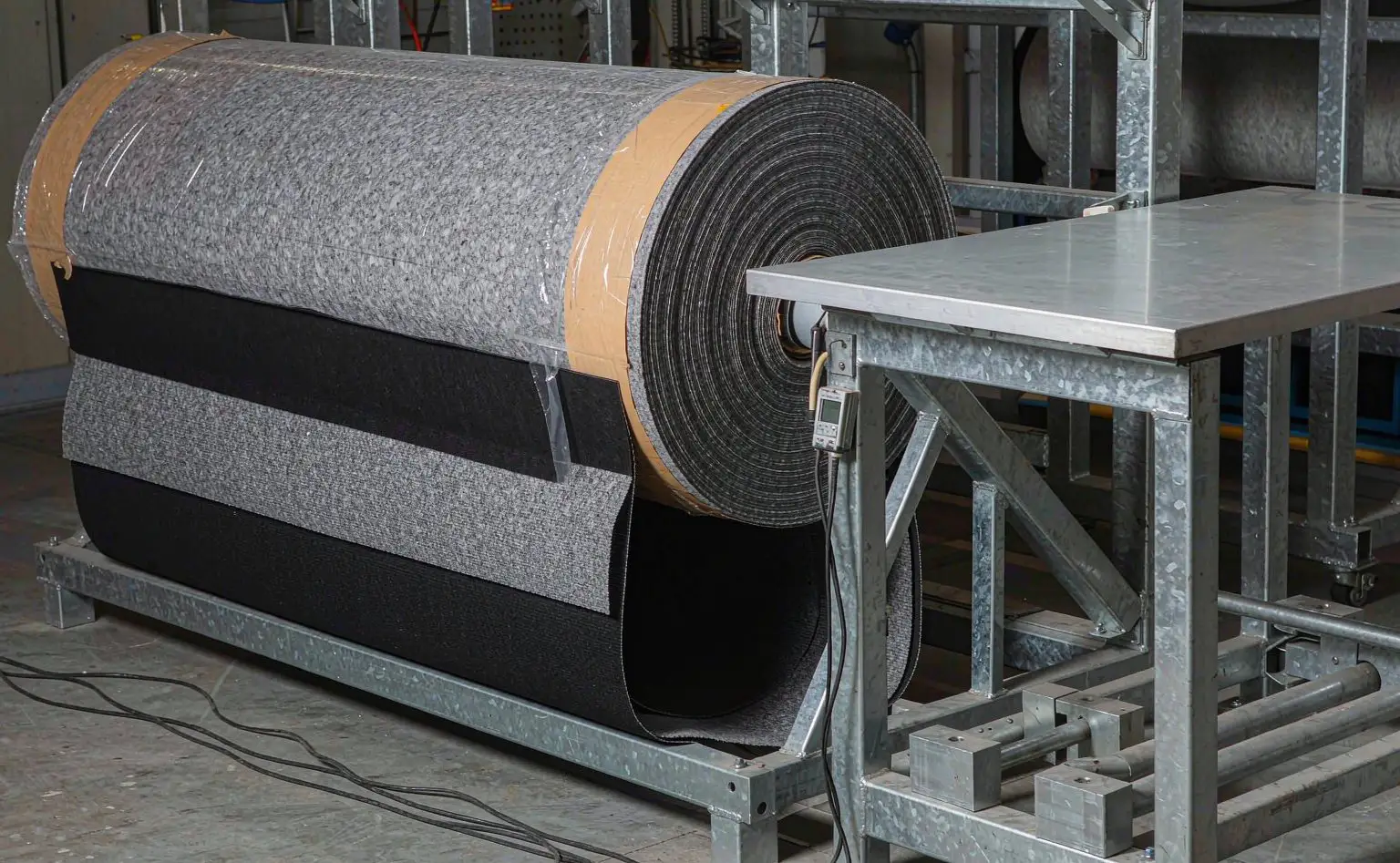
Drying comes down to three actions. Fabric rolls are loosened and aired on arrival, not left for hours against the floor or a wall, since the core of a roll takes damp first. A laminated part gets its full curing and drying time, and a freshly made part is not rolled tight or stacked at once, so the moisture in the glue and backing can leave. The shop and the half-finished store hold relative humidity below 60%, with dehumidification stepped up in the wet season.
Whether it is dry is judged on moisture content rather than on feel. Rolls and laminated parts are sampled by batch and the readings are logged; entering the next step before the figure has come down seals the water into the fabric, the liquid cannot get in, and no later padding can put it right. How an already mouldy headliner is sorted, and whether it can be reworked, is set out in padding antimicrobial treatment and wet pick-up.
4. Step two: one padding pass, by concentration or dry weight
The main route on the face is iHeir-PG composite nonwoven fabric antimicrobial agent. For padding, use 20-40 g/L at pH 6-8, cold, 70% pick-up, drying at 100-170℃. For exhaustion, use 2-4% o.w.f. at 50℃ for 20-30 minutes, then dewater and dry. PG bonds through covalent links with the hydroxyl and amino groups on the fibre, so it withstands washing and has no adverse effect on whiteness, shade, strength, hand or air permeability, and it can also be diluted 25-50 times and sprayed evenly onto the composite surface.
Where the face is polyester or blended and the line already has a setting bath, the BJ route is open too: dilute iHeir-BJ textile mildew inhibitor with pure water and add it at 2%-3% o.w.f. on dry fabric weight, where it bonds to the fibre surface and does not rub off or leach. Two details: add in portions, since tipping it in at once gives an uneven take-up, and the bath is cationic and must not be shared with an anionic auxiliary, so check the ionic nature of the other auxiliaries first.
5. Lamination and storage: the glue layer can mould too
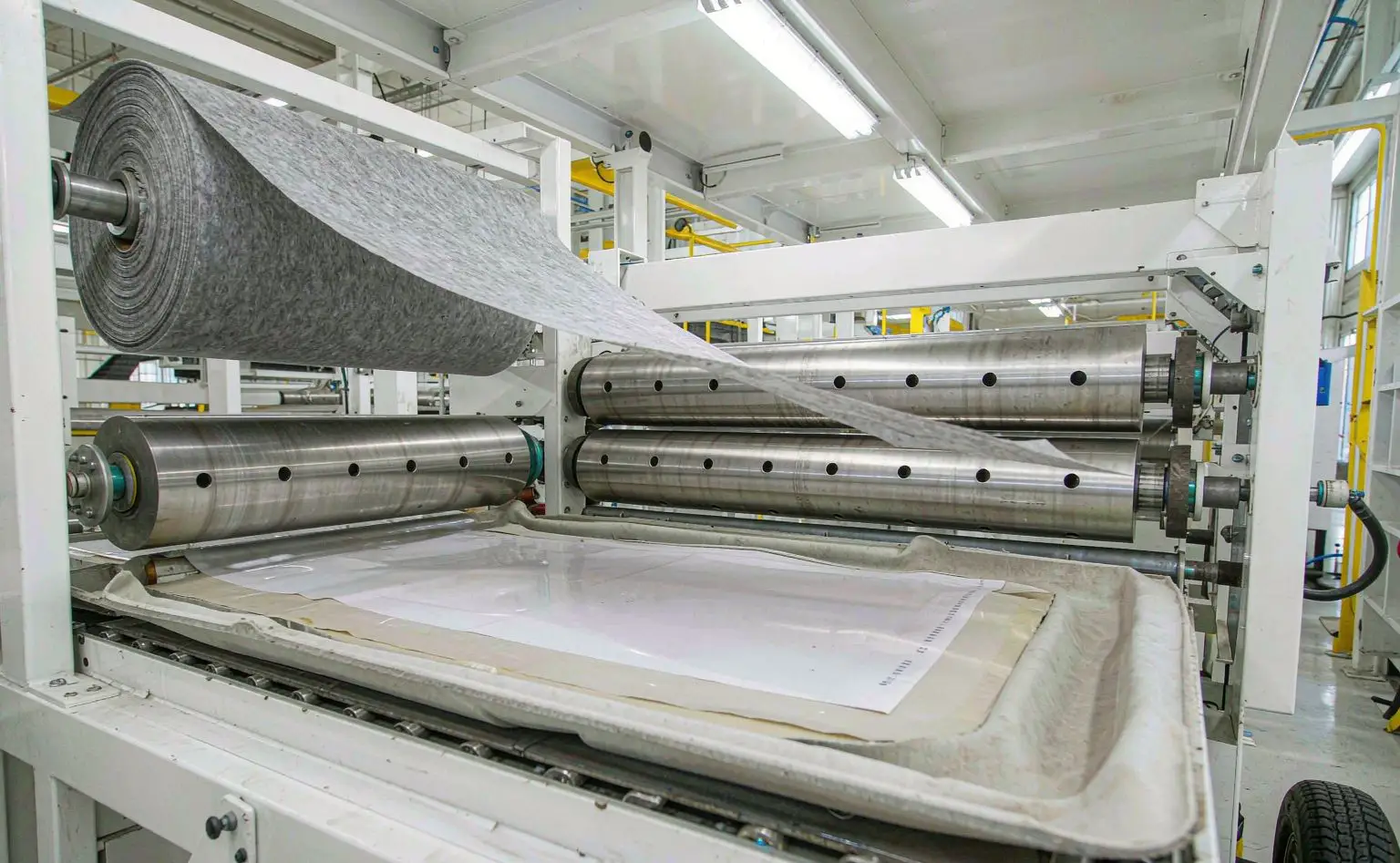
Once the fabric step is done, lamination and storage still need the humidity held down. The laminating glue takes no anti-mould agent itself, but the glue layer is the easiest place in the sandwich to overlook: a batch where the fabric passes and the glue goes mouldy first is not rare. Hold the lamination area below 60% relative humidity and move the finished roll into a dry store promptly.
Finished headliners are stacked off the wall and off the floor and shipped first-in first-out. Export batches add a layer, since a container swings more in temperature than any store, the dew on its wall runs down, and headliners stacked against it take moisture first. Export loads get moisture-control items sized to the container type.
6. Questions that come up: one pass, the face alone, and washing
Is one padding pass on the fabric enough? It depends which layer the mould is in. Where the mould has stayed on the face and the sandwich is dry, one padding pass puts the protection into the face. Where the sandwich has already taken moisture, dry it first and then pad: do the face alone and the inside still goes mouldy.
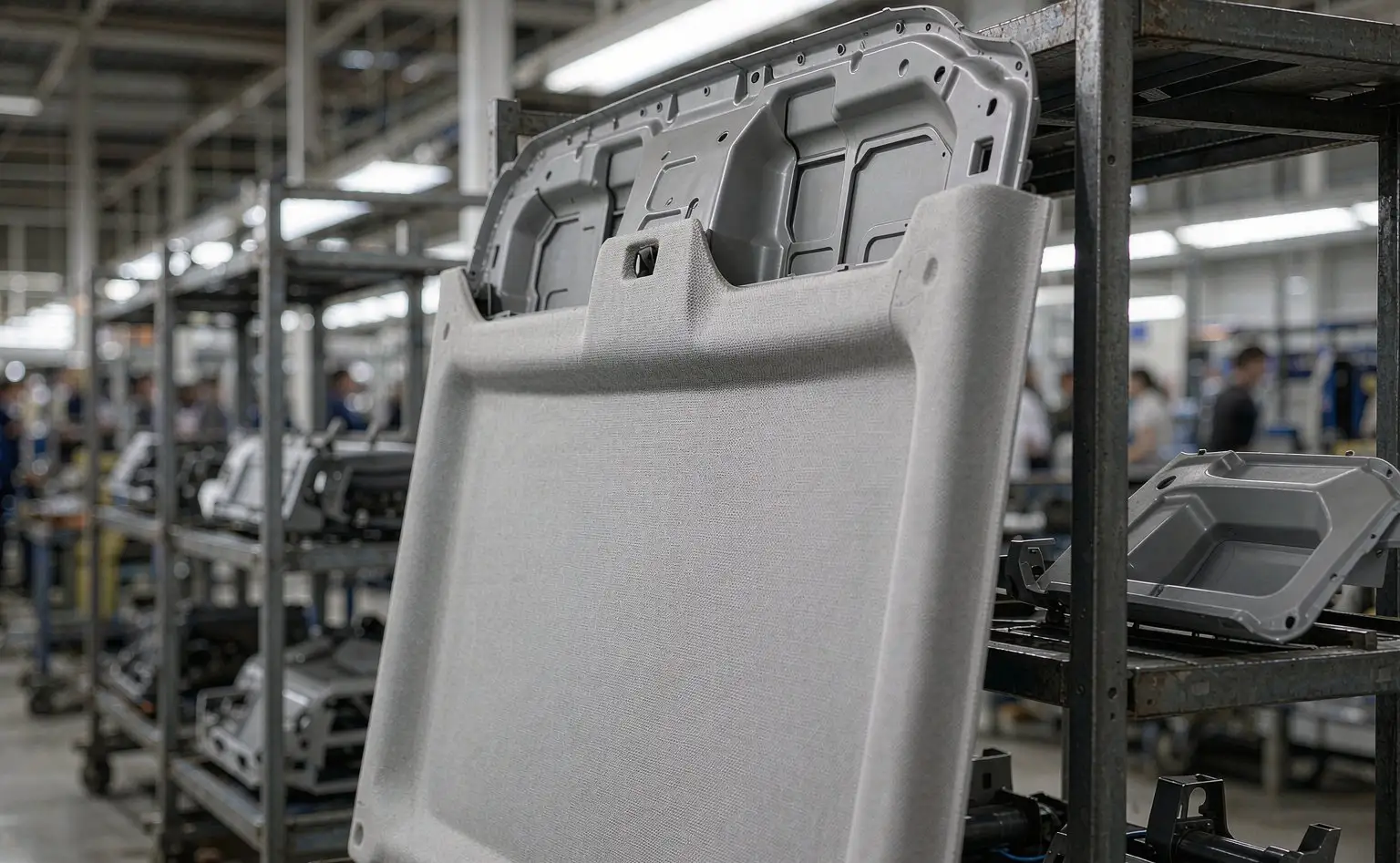
Can the treatment be done on the finished panel? It is not advisable. A headliner is a laminated part, so a spray stays on the outer layer, rubbing and assembly carry it off quickly, and the panel is large enough that an uneven spray shows in the appearance. The anti-mould work belongs in the padding or finishing stage, inside the fibre.
Does washing take the treatment off? No. PG links covalently to the fibre and BJ is bonded, so neither works by leaching out and ordinary washing does not carry the active ingredient away. Washing conditions and cycle counts still differ, so run a wash-durability test before a large run.
The order carries the work. Dry the interlayer first, airing the fabric rolls, giving the laminated part its curing time, and holding the shop and half-finished store below 60% relative humidity with moisture content checked by sampling. Then pad the fabric once, with iHeir-PG composite nonwoven fabric antimicrobial agent at 20-40 g/L (pH 6-8, 70% pick-up, dry 100-170℃), or with iHeir-BJ textile mildew inhibitor at 2%-3% o.w.f. on dry fabric weight in the setting bath. Lamination and storage hold the value in with humidity control. Samples and TDS are available to run a trial against your face material and line.


