




 View Count:42
 Date:2026-09-03
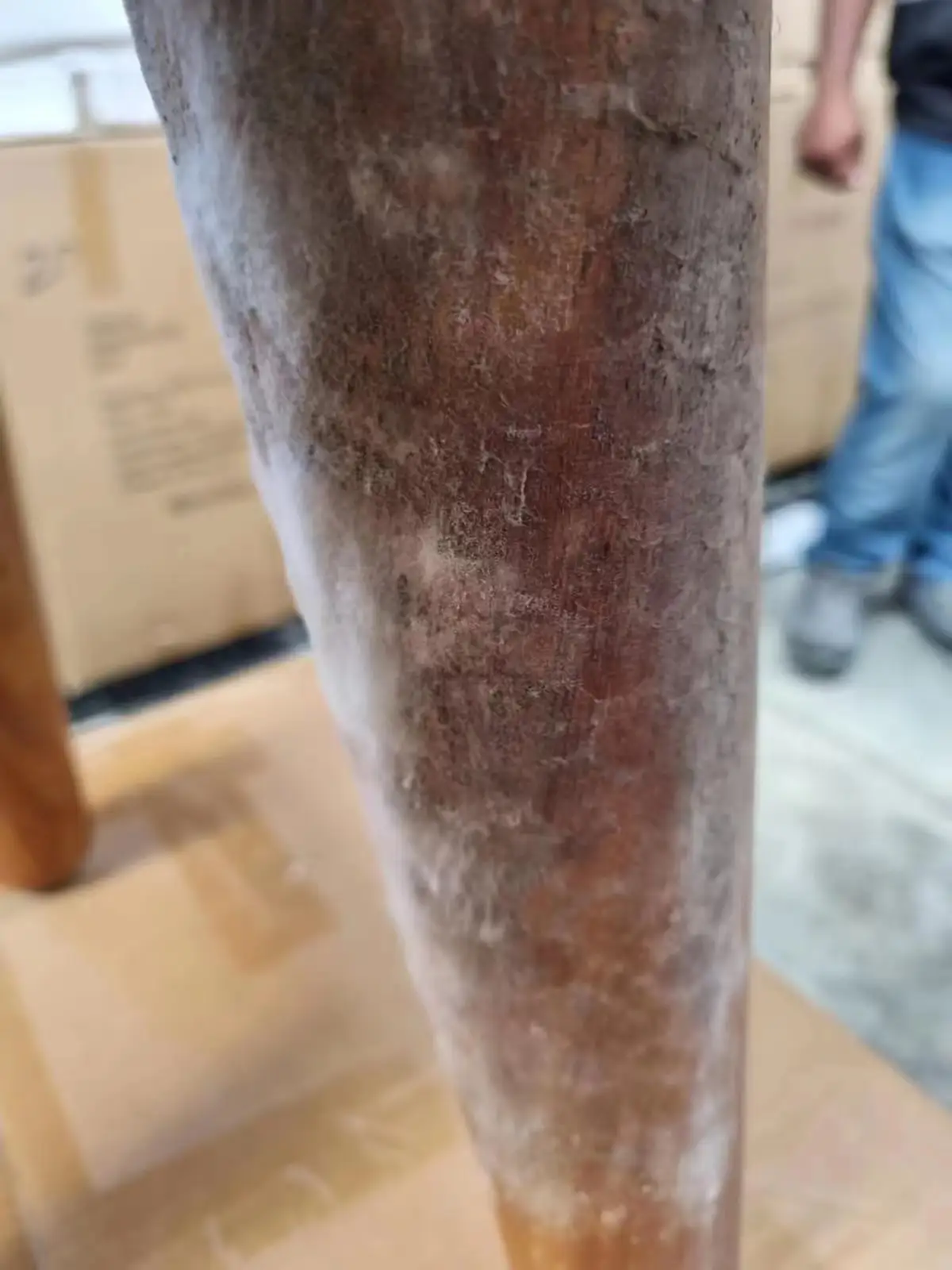
Industry research on the two major incense production regions of Fujian and Hebei in 2025 shows 25%-40% mold rate for Southeast Asia shipments, and up to 50% in high-humidity tropical orders (Vietnam, Indonesia, Philippines rainy season). Incense mold isn’t simply “the material molded” — it involves bamboo-stick moisture, wood-flour starch, fragrance volatility, PE packaging permeability, and shipping temperature/humidity all stacking up. One Fujian incense factory’s 200 boxes of bamboo-stick incense shipped to Vietnam in 2024 arrived covered in gray-green mold; the factory paid nearly RMB 500,000 in compensation — a classic case of “invisible mold.”
1 Four Root Causes of Incense Mold
Main incense raw materials are bamboo sticks (bamboo/wood) + wood flour (camphor/cypress) + binders (elm bark powder) + fragrance (sandalwood/agarwood/TCM powder). Each category of raw material can be a mold source:
- Bamboo stick moisture excess: Bamboo sticks from forest to factory are typically stored outdoors with 15%-22% moisture. If incense factories don’t dry them before use (to ≤10% MC), the bamboo continuously releases water inside sealed packaging, making surrounding wood flour and fragrance absorb moisture.
- Wood flour is starch-rich: Camphor, cypress and nanmu wood flours all contain abundant starch, cellulose and hemicellulose — premium carbon sources for mold. At RH 70%+ and 25°C+, mold can grow on wood flour surface in 3-5 days.
- Elm bark binder carries spores: Traditional incense uses elm bark powder as binder. Elm bark processed outdoors is highly prone to spore contamination, plus its high sugar content makes mold probability 3-5× higher than ordinary wood flour.
- Gas-phase mold spores: Residual mold spores (Aspergillus niger, Penicillium, Mucor) inside shipping containers diffuse through air into incense packaging. Once temperature and humidity fit, spores landing on incense surface germinate in 24 hours, form visible mold in 72.
Consequences of skipping incense anti-mold: Southeast Asian customers are extremely averse to mold — moldy incense is considered “disrespectful” in temple/home worship scenarios, and rejection rates are very high. At the same time, VOC and total microbial counts of moldy incense fail Vietnam, Indonesia, Philippines food/religious article import testing.
2 Complete Incense Anti-Mold Solution
Incense anti-mold must work simultaneously on four fronts: raw material, processing, packaging, and shipping:
2.1 Raw Material: Bamboo Stick + Wood Flour Drying & Anti-Mold Pretreatment
- Bamboo stick drying: Bamboo sticks must be hot-air-dried at 80°C for 4-6 hours before use to bring moisture ≤10%. This step seems simple but is the weak link in 80% of incense factories — if moisture isn’t controlled, all downstream anti-mold measures are discounted.
- Wood flour anti-mold pretreatment: During wood flour mixing stage, add iHeir-MF incense dedicated anti-mildew agent at 2%-3% by weight (formulated for incense wood flour/bamboo-wood characteristics, does not affect burning or smoke). Mix uniformly before sending into incense machine. MF anti-mildew agent is heat-stable above 200°C and won’t break down during incense production.
- Fragrance and binder anti-mold: Fragrance powders (sandalwood, agarwood) typically have 8%-12% moisture, recommended MF anti-mildew 1.5%-2% pretreatment; binder elm bark powder MF 1%-1.5% pretreatment.
2.2 Processing: Anti-Mold Craft in Incense Production
Key parameters during incense production affecting mold:
- Molding pressure: Recommend incense machine pressure ≥2.5 MPa to achieve incense density 0.8-1.0 g/cm³ — too low density leaves internal pores large and easy for moisture penetration.
- Drying temperature and time: After molding, wet incense dries in 60-80°C drying room for 8-12 hours, moisture ≤10% before packaging. Less than 8 hours or below 60°C leaves incense “surface dry, inside wet” — internal mold after packaging.
- Workshop hygiene: Incense workshop RH ≤65%, floor daily disinfection (use iHeir-CM mold remover 1:50 dilution for mopping), raw material storage area separated from finished goods area.
2.3 Packaging: PE Inner Bag + Power Pak Gas-Phase Anti-Mold
- PE inner bag vacuum: Each bundle/box of incense goes into PE composite bag (thickness ≥0.08mm), vacuum then heat-seal. Vacuum environment removes the oxygen mold spores need to germinate.
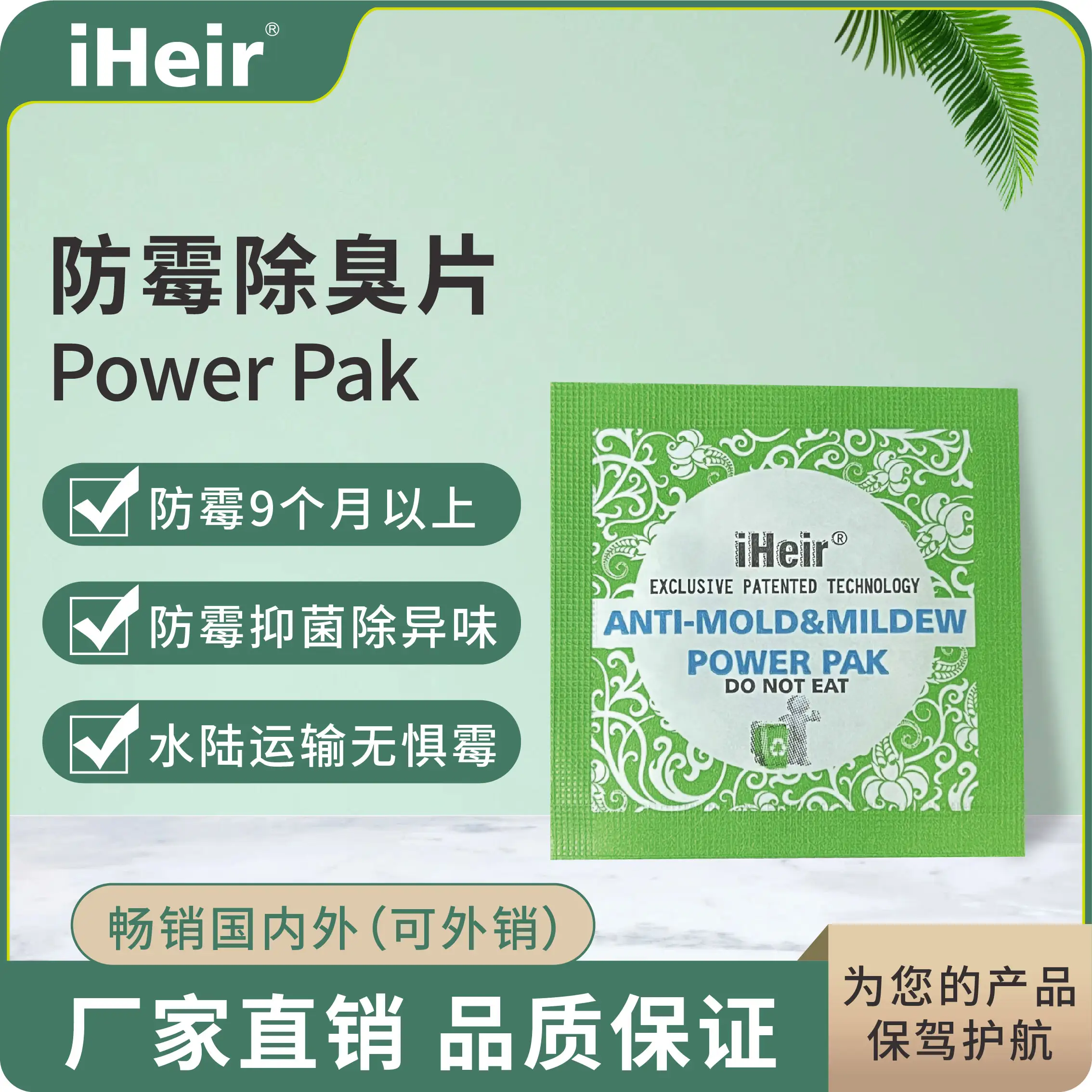
- Power Pak anti-mold tablets: Each carton (12-24 bundles) of incense gets 2-3 Power Pak tablets, gas-phase slow-release antimicrobial diffuses through every bundle’s packaging space, covering incense surface + corners + gaps. Each Power Pak tablet effective 9-12 months, covering sea transit + overseas warehouse + shelf full chain.
- Outer carton desiccant: Inside corrugated outer carton place silica gel desiccant 50-100 g/carton (absorb residual moisture). Carton itself recommended moisture-proof treatment (lamination or varnish).
- Power Pak alternative for bulk: iHeir-D gas-phase antimicrobial: iHeir-D gas-phase anti-mildew agent for bulk incense warehouse/container centralized anti-mold, hung on container wall grooves, 1 strip covers 10-15 m³, effective 6-9 months.
2.4 Sea Freight: Loading SOP
- Container check: Pre-loading measure interior RH (≤60%), temperature (≤30°C), check seal strips, floor dry.
- Desiccant + gas-phase anti-mold: Hang 10-12 T-1000 strips per container (moisture absorption) + 10 Power Pak tablets (anti-microbial), dual protection.
- Avoid mixed loading with high-moisture goods: Don’t load incense with ceramics, glass-bottled liquids, or high-moisture agricultural products (like dried mushrooms) — cross-absorption risk.
3 Real Case & Common Mistakes
3.1 Case: Fujian Yongchun Incense Factory Cut Vietnam Claims by 90%
A Yongchun County (Quanzhou, Fujian) incense factory exported 200 boxes of bamboo-stick incense to Vietnam in 2023, with 38% on-arrival mold rate and nearly RMB 500,000 in customer claims. In 2024 the improvements were: ① raw bamboo-stick drying (moisture ≤10%); ② 2.5% iHeir-MF anti-mildew added to wood flour + binder; ③ drying time extended from 6 to 10 hours; ④ 2 Power Pak tablets per carton; ⑤ 10 T-1000 strips + 8 Power Pak tablets per container. In H2 2024, exporting 1500 boxes, on-arrival mold rate dropped to under 2%, claim rate nearly zero.
3.2 Top 5 Common Mistakes
- Mistake 1: “Incense doesn’t need anti-mold, it’s going to be burned anyway” — wrong. VOC and mycotoxins (aflatoxin etc.) generated when moldy incense burns are carcinogenic, severely threatening religious-site air quality and human health. EU RASFF has recalled moldy incense multiple times.
- Mistake 2: “Just air-dry bamboo sticks naturally” — natural drying is weather-dependent; southern plum-rain season may not dry them in 30 days. Hot-air equipment is mandatory.
- Mistake 3: “Strong fragrance prevents mold” — fragrance itself doesn’t inhibit mold, instead it’s mold food. Anti-mold needs dedicated agents, not fragrance.
- Mistake 4: “PE inner bag vacuum is enough” — vacuum solves oxygen, but the moisture in incense remains, mold can still slowly reproduce in low oxygen. Must combine with anti-mildew agent.
- Mistake 5: “Power Pak works like any other anti-mold product” — Power Pak is gas-phase slow-release, covers whole carton; ordinary anti-mold packets only absorb locally or contact-kill, different coverage.
4 FAQ — Common Questions
Q1: Does iHeir-MF anti-mildew affect incense burning and smoke?
A: No. MF is specifically formulated for incense wood flour/bamboo-wood characteristics, colorless and odorless, stable above 200°C during production, no odor or harmful gas when burned. Burning tests at factories show flame color, burn time and smoke density are identical to non-MF incense.
Q2: Which countries have special testing for incense exports?
A: Southeast Asia (Vietnam, Indonesia, Philippines) has food/religious article microbial testing; EU requires REACH registration; Japan requires Food Sanitation Law testing; US requires CPSIA. Send for testing before export.
Q3: Can moldy incense be de-molded and resold?
A: Light mold (surface gray-green) can be wiped with iHeir-CM mold remover, air-dried, then surface anti-mildew treated. Moderate-plus mold (internal mold, musty smell) recommend scrapping — mycotoxins can’t be removed by wiping.
Q4: Is Power Pak safe inside incense cartons?
A: Power Pak passes SGS acute oral LD50 >5000 mg/kg, REACH-registered in EU, no acute toxicity. Not edible; wear gloves when opening carton, keep away from children.
Q5: How to manage anti-mold in incense warehouse?
A: Warehouse temperature ≤25°C, RH ≤65%, daily ventilation 1-2 hours; floor and shelves monthly disinfection with iHeir-CM dilution; separate raw material from finished goods; desiccant 100-200 g/m² in raw material area.
Q6: Last-minute export order — quick anti-mold?
A: Without changing raw material MF pretreatment, focus on packaging: 2-3 Power Pak per carton + 50 g silica gel + PE inner bag vacuum. Even without raw pretreatment, mold rate drops from 30% to 8%-10%.
Incense anti-mold looks “niche” but is actually a complete raw-material/process/packaging/shipping/warehouse chain issue. Any break can mean order loss. If your incense factory or craft exporter wants systematic mold solutions, check our humid-environment bamboo wood mold guide or contact the iHeir incense industry anti-mold team for customized solutions and export-country standard support tailored to your incense type (bamboo-stick/stick/sandalwood/coil).