




 View Count:35
 Date:2026-08-31
Custom furniture got moldy? Wardrobes, tatami and desks from full-home customization develop mold on backing boards, edges and bases within a year or two. For homeowners it is thousands of RMB of damaged furniture; for mills it is complaints, rework, compensation and a damaged reputation. This article explains why custom furniture molds, which parts are most vulnerable, how to treat it, and how mills prevent it at the source.
1. Why Does Custom Furniture Mold? Four Causes
- Board moisture too high: particleboard, MDF and plywood are the main materials. Moisture content (the water inside the board) above 12% activates mold; some low-cost mills use damp boards, planting a time bomb;
- Edge sealing fails: panel furniture relies on edge banding to seal board cross-sections; once banding cracks or lifts, moisture enters the core and mold grows from inside – the most hidden and common cause;
- Backing boards against walls: backing panels touch the wall; wall dampness transfers directly and they absorb moisture and mold, often discovered only by smell;
- Kitchen and bathroom humidity: cabinet units sit in water-use areas with poor airflow – mold grows several times faster there.
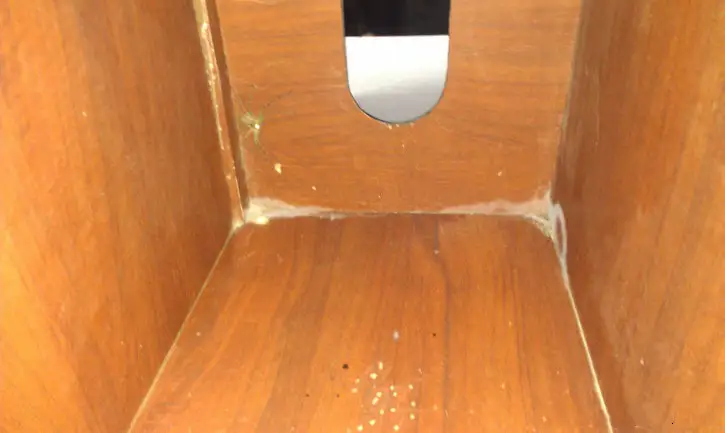
▲ Mold on custom furniture
2. Most Vulnerable Parts (Self-Check Table)
| Part | Why It Molds | How to Check |
|---|---|---|
| Backing board | Wall dampness transfers directly | Open the cabinet and feel the back – damp and soft is a warning |
| Bottom base | Mop water and ground moisture rise | Crouch and inspect the baseboard for dark spots |
| Edge seams | Lifted banding lets moisture enter | Check for warping or discoloration |
| Sink/bathroom cabinets | Constant humidity plus pipe condensation | Inspect under the sink especially |

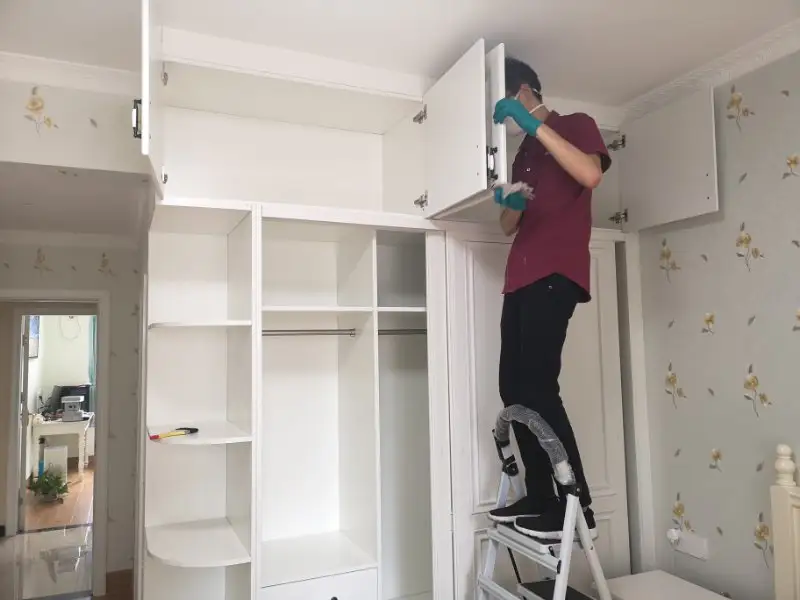
▲ Custom furniture mold treatment
3. How to Treat Moldy Cabinets?
- Find the water source first: check whether it is wall dampness, pipe leakage or plain high humidity – without fixing the source, removal is temporary;
- Treat: spray light spots with a bamboo/wood mold remover (e.g. iHeir-CM), let sit 5-10 minutes, wipe clean; re-seal lifted banding to stop further moisture entry;
- Dry thoroughly: air-dry the cabinet and confirm board moisture below 12% with a meter before restocking – damp cores regrow mold from inside;
- Scrap severe damage: boards that are blackened and soft (mycelium degraded the structure) must be replaced – strength is compromised and they pose a safety risk.
4. How Do Custom Furniture Mills Prevent Mold at the Source? (Key)
| Stage | Action | Why |
|---|---|---|
| Board intake | Test moisture per batch (reject or re-dry above 12%) | Stop moisture at the source so later steps work |
| Anti-mold treatment | Treat boards with bamboo/wood agents (e.g. iHeir-JP soak or iHeir-M8 spray, 2%-5%) | Forms a protective layer inside the board – a backup if banding ever fails |
| Edge banding | Use quality banding; apply moisture barrier to cross-sections first | Banding is the first water door, section coating the second |
| Storage and shipping | RH below 60%; 1-2 anti-mold sachets (e.g. Power Pak) + desiccant per carton | Protect products during warehousing and delivery to the home |
▲ Full-process furniture mold prevention
Last year a full-home customization mill kept receiving complaints from South China customers about moldy backing boards. Investigation showed the plywood used was 15% moisture with no anti-mold treatment. After writing “board moisture below 12% + section moisture barrier + finished-goods sachets” into their process standards, complaints dropped by 90%. For the general bamboo/wood principle, see Why Do Bamboo and Wood Mold?
5. Advice for Homeowners
- Check materials: ask for board moisture records (below 12%) and edge banding specs when ordering;
- Wall damp-proofing: treat walls with waterproofing before installing cabinets against exterior or bathroom walls;
- Usage habits: do not store wet items in cabinets, ventilate periodically; add desiccants in bathroom cabinet bases;
- Regular checks: inspect backing, base and edges around the rainy season every year – early detection, early treatment.
6. FAQ
Q1: Does cabinet mold mean poor board quality?
A: Not necessarily – even compliant boards mold from wall dampness or environment humidity. Distinguish “board problem” vs “environment problem” to treat correctly.
Q2: Does anti-mold treatment affect environmental grade?
A: Water-based bamboo/wood agents add no formaldehyde; E0 boards keep their grade after treatment (verify with test reports).
Conclusion
Custom furniture prevention is three phrases: board moisture below 12%, moisture barrier on edge sections, sachets in storage. For furniture solutions, contact us or browse the anti-mold product range; related: Genuine Leather Sofa Got Moldy?