




 View Count:39
 Date:2026-09-05
“My tent or jacket fabric got moldy — what should I do?” Outdoors people know this complaint well: a tent used for two or three seasons starts showing black spots on the inner tent and coated fabric; a shell jacket left in the wardrobe for one season comes out with a musty lining. For fabric mills and outdoor brands the harder question is different — customers ask for water-repellent/durable water repellency (DWR) and mold resistance on the same fabric. Can the two finishes be combined? This guide clarifies the relationship between waterproofing, DWR and anti-mold, then gives fabric mills a practical finishing and testing route that outdoor brands and tent/jacket factories can also use.
1 Why do tents and jackets mold? Four causes
Outdoor textiles mold for four common reasons. The location of the mold often tells you which cause it is:
- Cause 1 — coating hydrolysis feeds mold. Tents often use PU or PVC coated fabric. PU coatings slowly hydrolyze in hot, humid conditions, releasing plasticizers and additives that are ideal nutrients for mold. That is why some tents mold from the coated side even after little use.
- Cause 2 — sweat, skin oils and dirt. Jacket linings touch the skin directly; sweat and oils stay in the fibers. Tents packed away without drying, with mud spots, food crumbs and moisture sealed in the stuff sack, become mold cultures.
- Cause 3 — damp storage. A folded tent is layered, tight and unventilated; internal moisture cannot escape. In a warehouse above 70%RH, oxford and coated fabrics absorb moisture and mold within days.
- Cause 4 — failed DWR leaves fibers exposed. When the water-repellent layer fails, water wets the fibers directly, absorption rises, drying slows and mold risk increases. Water repellency and mold resistance affect each other.
Keep this relationship in mind: waterproofing controls whether water gets in; mold resistance controls whether mold grows once it gets damp — you need both.
2 First, separate three ideas: waterproofing, DWR and mold resistance
The most common mistake in fabric mills is treating “water repellent” as if it were “anti-mold.” Let us align the terms:
| Finish type | What it does | Typical route | Evaluation |
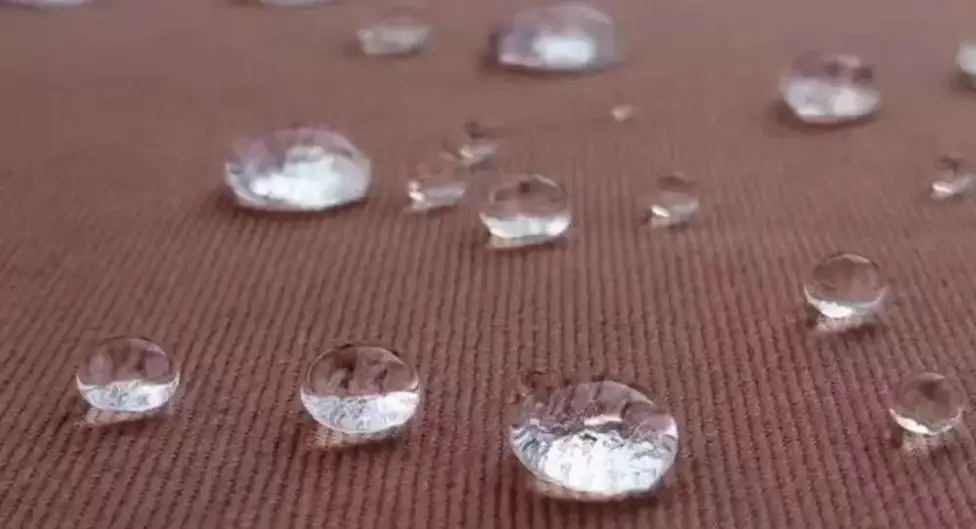
| DWR | Water beads and rolls off the surface | Water-based repellent (e.g., iHeir-666), pad or spray | Spray rating (AATCC 22 / ISO 4920) |
| Waterproofing | Blocks water pressure (tents, rainwear) | PU/PVC coating, lamination + taped seams | Hydrostatic head (AATCC 127) |
| Oil/stain repellency | Oil does not soak in; easy to clean | 3-in-1 finish (fluorinated or C0/non-fluorinated) | Oil rating (AATCC 118) |
| Anti-mold/anti-microbial | Inhibits mold and bacteria growth | Textile anti-mold/anti-bacterial finish (pad or spray) | Mold (GB/T 24346, AATCC 30); bacteria (GB/T 20944, ISO 20743) |
In one sentence: “3-in-1 / DWR” means water-oil-stain repellency on the surface; “anti-mold” means microbial inhibition for long-term cleanliness. Export orders often put both in one spec sheet, so finishing must combine them well.
3 How to run the finish: one bath or two steps
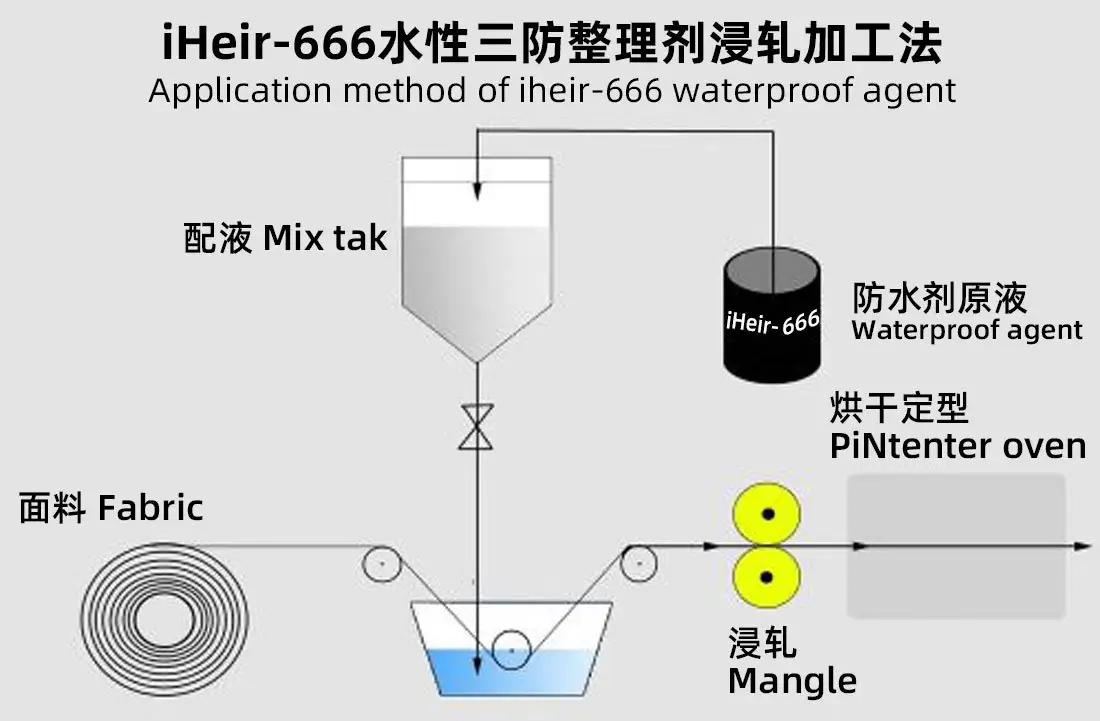
Can DWR and anti-mold finish be combined in a single bath? The answer: it can be tried, but it must be validated on samples first — most mills test one-bath, then fall back to two steps if needed. Four process points:
- ① Compatibility first. DWR agents are usually emulsions/dispersions; anti-mold agents are active dispersions. Different pH and ionic character can break the emulsion or cause flocculation. First test on the target fabric: mix both products in the working liquor ratio, rest for 30 minutes, and check for no separation or sediment before running.
- ② Addition order and bath temperature. Generally add the anti-mold agent first, then the DWR agent, with stirring. Keep the working liquor at 25-35°C to protect the dispersion. After padding, set at the DWR agent’s recommended temperature (commonly 150-170°C) — and verify that the anti-mold agent survives that setting temperature. Do not assume; measure.
- ③ A two-step route is more reliable. If the one-bath sample is not ideal (anti-mold hurts spray rating, or DWR hurts mold durability), split the process: apply the anti-mold finish (pad or spray), dry, then apply DWR. Two steps cost a little more but make both targets easier to meet on export volumes.
- ④ Dry thoroughly and check finished moisture. Whichever route, dry the fabric completely. Rolls with high moisture content that go straight into the warehouse carry mold in with them — a hidden reason why “we treated it and it still molded.”
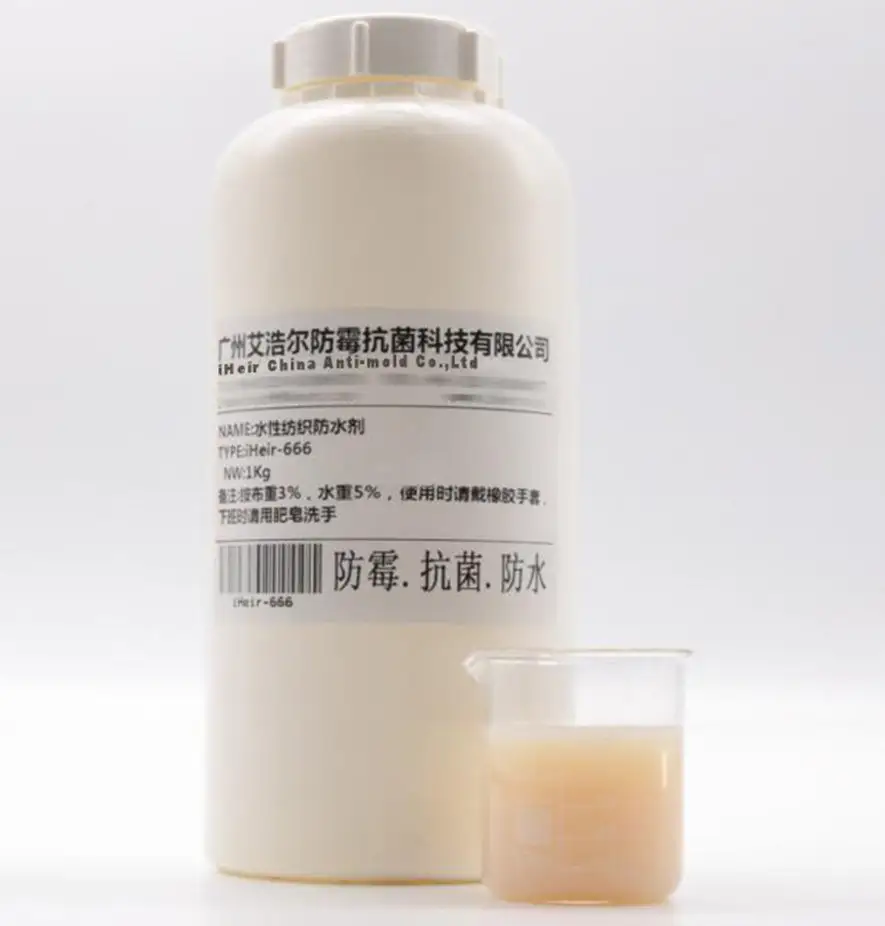
For water-based DWR on tent and shell fabrics, iHeir-666 water-based water-repellent agent is the common choice; for leather/leatherette or higher hydrostatic-head needs, compare iHeir-M300 odorless oily waterproofing agent and iHeir-600 oily waterproofing agent. Selection logic is in our how to choose a waterproofing agent guide.
4 Textile anti-mold finishing: oxford vs. coated fabric
Anti-mold treatment has two landing points: the material (fabric) and the finished product (tent, garment). Fabric mills focus on the first.
At the fabric stage: Oxford, canvas and tent base fabric can take an anti-mold pad before setting, or a surface spray followed by drying. The right textile anti-mold agent depends on fiber type and downstream steps — cotton vs. synthetic, and whether coating follows. A detailed comparison is in our textile anti-mold agent buying guide. For coated fabric mills: apply the anti-mold treatment before or integrated with coating, so the active ingredient sits inside the coating system rather than being sprayed on afterwards — far more durable. Evaluate PU coating hydrolysis resistance and mold resistance together.
At the finished-product stage: The “last kilometer” for tents and jackets before shipment is moisture-safe packing: wrap each unit in a breathable non-woven bag before cartoning (never seal damp goods in plastic), add food-contact-compliant moisture-absorbing packs if the customer asks, and control container humidity with desiccant sticks. Full garment storage guidance is in our garments got moldy guide.
5 Export compliance: declare DWR + anti-mold, check the market first
When an outdoor fabric or tent/jacket order lists both DWR and anti-mold requirements, sort out compliance before production:
- PFAS in fluorinated DWR. The EU keeps tightening regulation of per- and polyfluoroalkyl substances (PFAS is a priority in the REACH restriction roadmap); some US states are following. Confirm in writing whether the customer requires C6, C0 or non-fluorinated systems before quoting. Confirm the chemistry and test standards in writing before accepting the order.
- Target-market rules for anti-mold/anti-bacterial finishes. Textile anti-mold treatments can involve biocide regulation — the EU BPR and US EPA manage “anti-mold/anti-bacterial” textile claims differently. For functional claims on export textiles, provide the agent MSDS and confirm registration status; use a third-party compliance consultant when needed.
- Put test standards in the contract. Spray rating (AATCC 22 / ISO 4920), hydrostatic head (AATCC 127), oil rating (AATCC 118), mold (AATCC 30 / GB/T 24346), antimicrobial (ISO 20743 / GB/T 20944) — which test, which standard, and who issues the report must all be written into the order to avoid disputes after arrival.
6 Outdoor fabric FAQ
Q1: How do I clean a moldy tent? First brush off surface mold with a dry cloth or soft brush (do not wipe wet — that spreads spores), then clean locally with diluted neutral detergent, dry completely, and restore DWR with a spray-on repellent. If mold has penetrated the coating, the fabric is brittle, or taped seams are lifting, the material is aging — replace it rather than forcing a clean.
Q2: Can I still wear a jacket with a moldy lining? If the shell and lamination are intact, cleaning and mold removal can restore it; if the musty smell has soaked into the lining or mold keeps returning, replace it. The simplest effective rule: dry shell jackets completely before storing.
Q3: Will anti-mold finishing reduce DWR spray rating? It may — or may not — depending on compatibility. That is exactly why you run samples first: measure both spray rating and mold rating on the one-bath sample; if both pass, scale; if not, switch to a two-step process.
Q4: Why does a “treated” tent still mold? Check three things: ① was it dried thoroughly (high re-moisture makes the treatment pointless); ② was the anti-mold agent destroyed by downstream washing or high-temperature setting (process window not verified); ③ is the storage environment damp (above 70%RH, no finish survives constant moisture). Most “failed anti-mold” cases are one of these three.
Q5: What should exporters of DWR + anti-mold fabric to Europe watch? Beyond the PFAS and BPR compliance above, confirm which test reports the order requires and the issuing lab’s accreditation. Run mold-resistance tests to the agreed standard (AATCC 30 or GB/T 24346, etc.) and ship reports with the goods — do not wait for the customer to ask after arrival.
Waterproofing and mold resistance on outdoor textiles are not an either/or — both process lines must run well. If your mill is validating one-bath DWR + anti-mold, or your outdoor brand is fighting tent and jacket mold complaints, contact us with your fabric specs and target market — we discuss the process first, then agree on a solution.