




 View Count:3
 Date:2026-11-12
Can cat tree mould be prevented? The plush looks like the part that gets dirty, but the growth comes from the sisal core and from the layer between the plush and the board: the rope takes up water and moulds from the inside, nothing shows on the surface, and by the time the buyer opens the carton the post has gone soft. The routine is sisal rope and paper tubes soaked in iHeir-M5 immersion-type bamboo and wood fungicide at 1:40 to a 15%-20% weight gain, and plush finished with iHeir-BJ textile mildew inhibitor at 2%-3% o.w.f. This article covers the dip, the bath and the packing parameters.
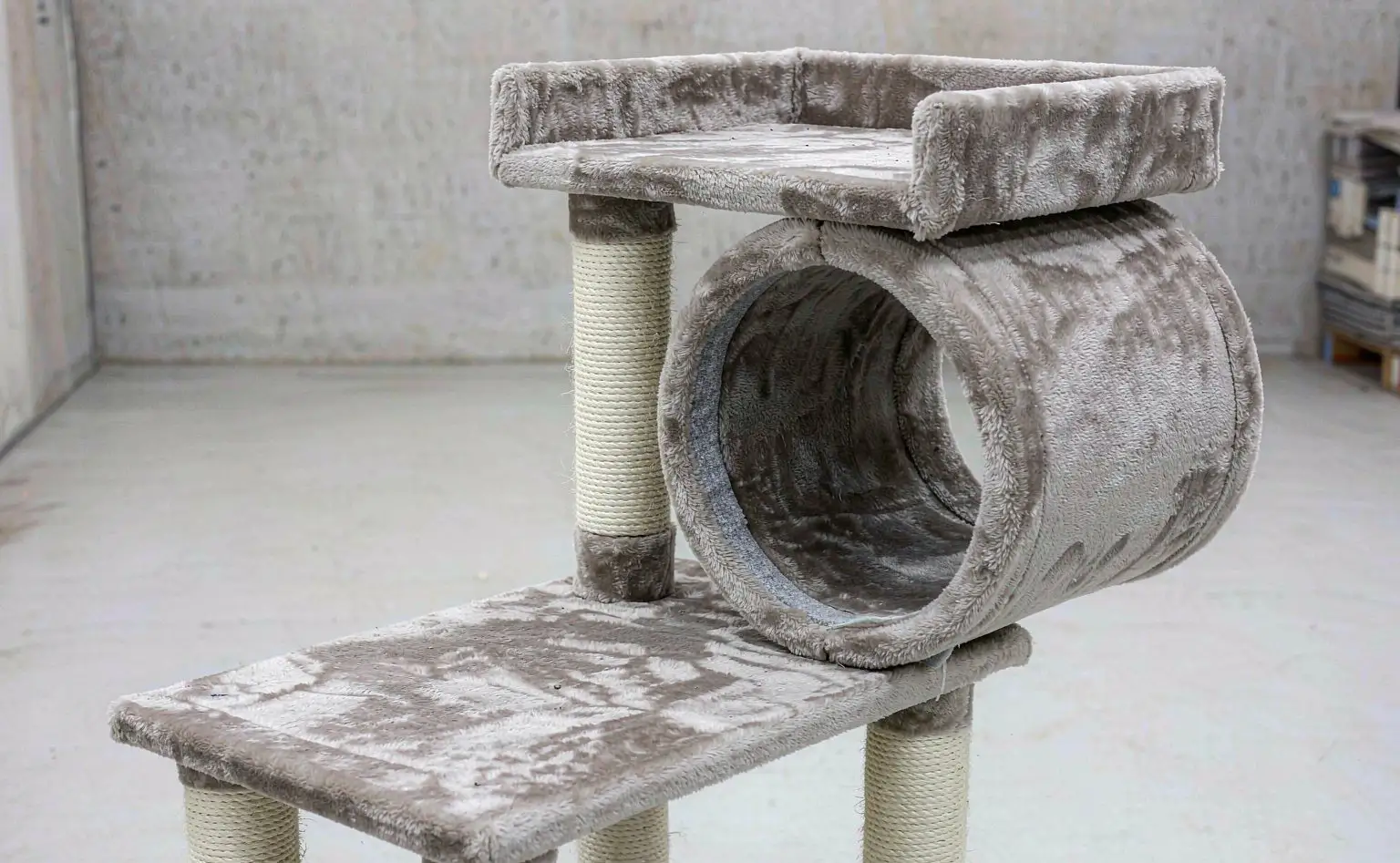
1. The mould is in the sisal core and the lining, not on the plush
Take a cat tree apart: sisal rope, paper tube or particleboard post, plush-covered panels, base board and fixings. The plush face is visible and gets wiped; what fails is the core of the sisal rope and the layer between the plush and the board.
The rope core moulds from inside out. Sisal is a plant fibre that wets quickly and dries slowly. Wound onto a paper tube in overlapping layers, the middle has almost no air movement; in a sea container condensation runs down the rope gaps, the core moulds first and the surface still looks clean. By the time spots appear on the outside, the inside has gone soft.
The lining is a dead corner. Plush is spray-glued onto the panel, the glue carries water, and the finished wrap traps a thin layer of still air against an organic adhesive. Made in the humid season, a tree can smell at the seams within two weeks.
Paper tubes and base boards take up moisture as well. Tube walls are thin, and particleboard or plywood base boards drink at the unsealed end grain. Treat the plush alone and only half the job is done.
2. Rope, board and fabric are counted on two different bases
The table lines up the rope, the tube and board parts and the plush. Rope and wood take weight gain from soaking, plush takes a percentage of dry fabric weight, and one does not convert into the other.
| Part | Material | Product and level | Stage | Control point |
|---|---|---|---|---|
| Sisal rope | Sisal fibre rope | iHeir-M5 1:40, 15%-20% gain | Dip before winding | Core soaked, drained before winding |
| Tubes and base | Paper tube, particleboard | iHeir-M5 same bath | Before assembly | End grain wetted, dried before use |
| Plush | Polyester pile fabric | iHeir-BJ 2%-3% o.w.f. | Finishing bath | 21-50°C, pH 4.5-8.5 |
| Packing | Carton, liner | Pack only when dry | Boxing | Fabric and wood both dry |
One boundary. iHeir-M5 goes into the rope and the wood and deals with growth inside the material; iHeir-BJ sits on the plush fibres and covers the face. Each dose is calculated on its own basis, never with one percentage applied to both materials. A rope that was not soaked through cannot be saved by any fabric treatment.
3. Soak the sisal rope at 1:40 to a 15%-20% gain
Dilution. iHeir-M5 at 1:40 in water, water first then concentrate, stirred even, and the bath used the same day.
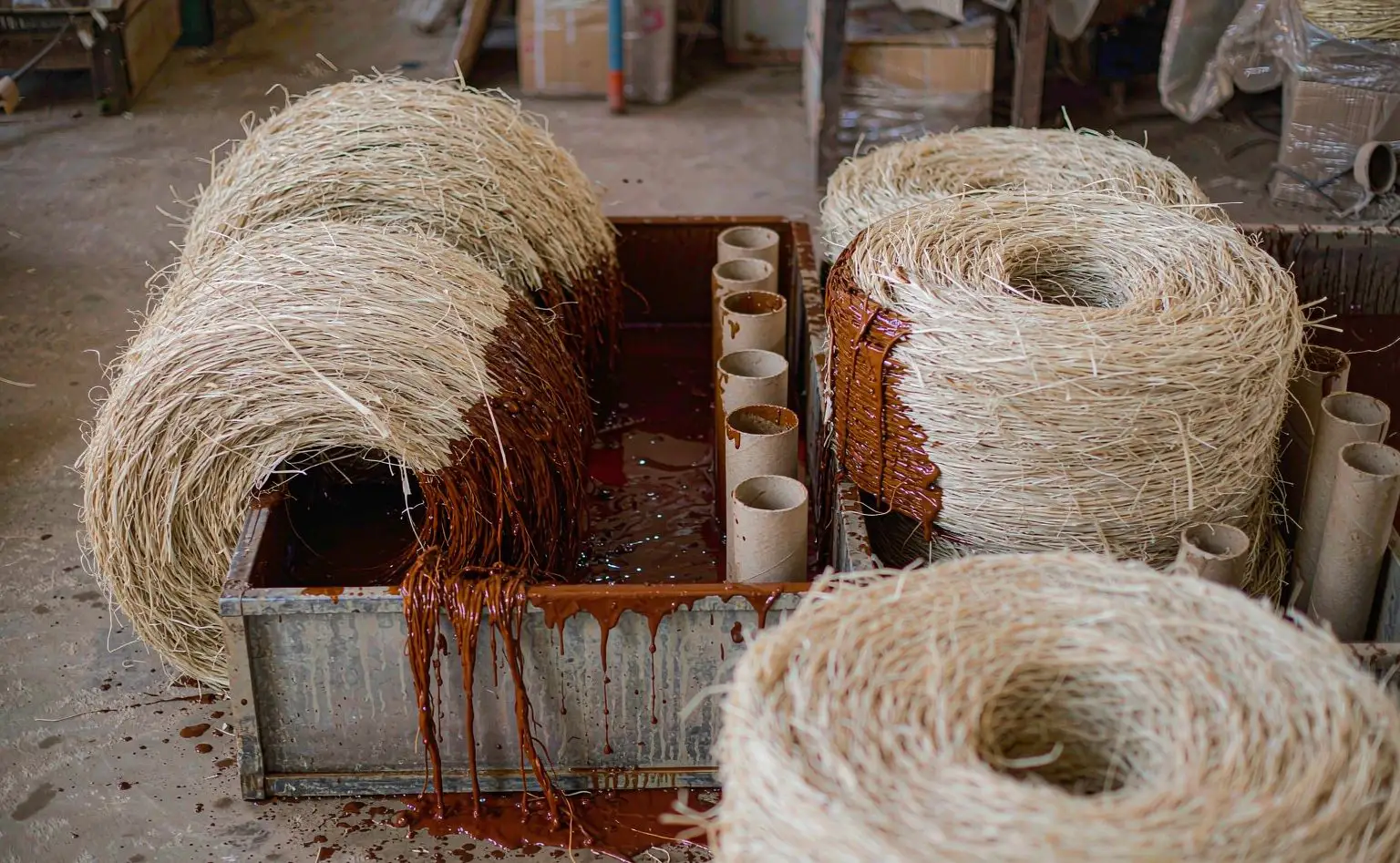
How far to soak. Go by weight gain of 15%-20%, not by the clock. Rope is soaked in coils, so the outer turns saturate while the inner turns stay dry: loosen the coil first, turn it twice in the bath, and afterwards cut a short length and look at the cross-section, because the core has to darken to show it has taken liquid. Paper tubes go in the same way, end grain down, so the wall wets through.
Drain before winding. Wind wet rope onto a tube and the water is trapped between the layers; an inhibitor holds the growth down but it cannot stop the post going soft. Rack the rope until it stops dripping, then dry it in the drying room or on racks to the moisture spec before winding.
Watch the tube strength. Paper tubes soften once they take liquid, so control the dip time and the bath temperature, drain immediately and lay them flat to dry. Stack them upright while wet and they deform, which scraps the post.
4. Run the plush through the finishing bath with iHeir-BJ at 2%-3% o.w.f.
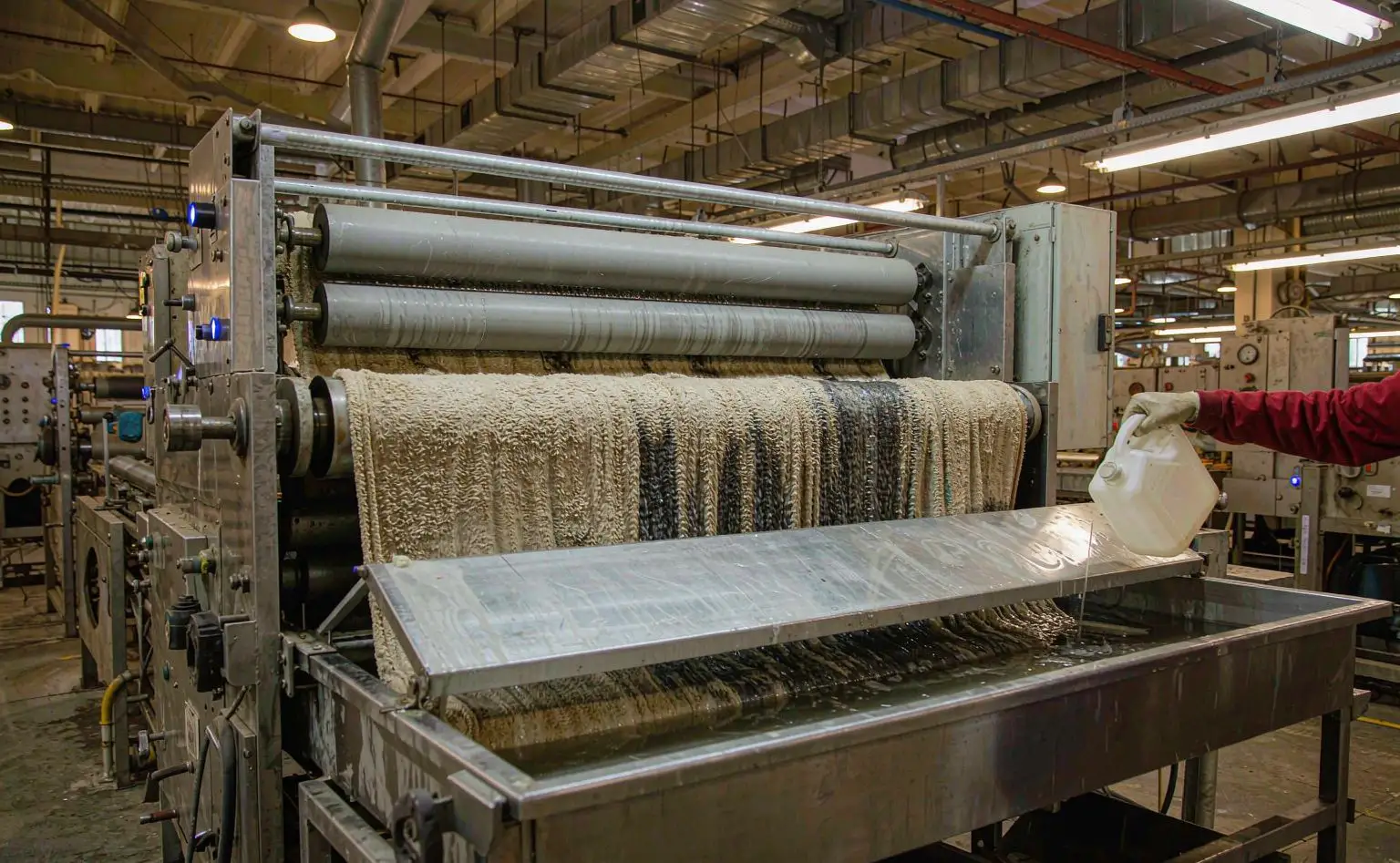
The plush takes iHeir-BJ textile mildew inhibitor at 2%-3% of dry fabric weight. Hold the bath at 21-50°C and pH 4.5-8.5, with wet pickup around 70%.
Making up the bath. Add a cationic hydrophilic agent at 0.1% first, then pre-mix iHeir-BJ with 9-13 times its volume of water and add it to the trough in two or three portions while circulating. Poured in at once, the local concentration is too high and the pile comes out speckled. Scale the whole bath from the ratio of 3 kg of iHeir-BJ to 100 kg of fabric.
Trial first. Run two metres of fabric at 2% and at 3%, dry both and check three things: whether the hand has stiffened, whether the pile has flattened and whether the colour has shifted. Plush is sensitive to hand, so if 2% is enough, do not go to 3%.
Watch compatibility. iHeir-BJ is a cationic system, so do not run anionic auxiliaries or anionic softeners in the same bath; they flocculate and leave oily spots on the pile. Use a non-ionic softener or a separate bath.
5. Assembly, drying and packing
Glue onto dry fabric. Plush must be dried before it is wrapped, because gluing damp fabric leaves the adhesive under-cured and the lining becomes a wet zone. Hold the bonding area at 45%-60%RH with a dehumidifier in the humid season.
Do not seal plush flat against the board. Leave a little slack at the seam so the air layer can move, and drill two small vents in the back of the panel where the design allows; that is steadier than a full seal.
Incoming inspection catches most of it. Open a post and look at the rope colour, press it to feel for softness, press the seam and smell for a musty note, and check the base board end grain for raised fibre. Those three checks tell you more than the plush face.
Store and export. Hold the finished-goods store below 60%RH, stand trees upright with pallets 10 cm off the floor, line the container and hang desiccant sticks, and squeeze the rope layer on each post before loading. Comparable pet-textile work is in rattan cat beds and damp control, and needle-punched pet pads in pet pad fabric and store humidity.
6. Questions from buyers
Q: Rope and fabric are both treated, do we still need a sheet in the carton?
A: Recommended. The treatments cover the materials, but nothing covers the air in the carton, and one vapour sheet makes a container load steadier.
Q: Can the rope simply be sprayed instead of dipped?
A: No. Rope is twisted in strands, so spraying reaches the outside only and the core stays dry, which is exactly where the growth starts. Shorten the dip if cost is tight, but the weight gain still has to be met.
Q: Is the finished plush safe around the animal?
A: iHeir-BJ is a textile auxiliary applied at 2%-3% o.w.f. and dried onto the fibre, which is normal for finished fabric; supply the usual documentation for export orders.
Q: How much difference does 2% against 3% make?
A: It is a 50% difference in active content. Indoor ranges are covered at 2%, while humid export markets and tested orders need 3%. Set it by order and write it on the process sheet.
Four closing points: loosen the sisal coil, soak in iHeir-M5 at 1:40 to a 15%-20% weight gain, check the core colour on a cut length, and dip paper tubes end grain down before draining them flat; dry rope and wood to spec before winding and assembly, holding the bonding area at 45%-60%RH; run the plush at 2%-3% o.w.f. iHeir-BJ at 21-50°C and pH 4.5-8.5, adding 0.1% cationic hydrophilic agent first and pre-mixing the inhibitor with 9-13 times water, never with anionic auxiliaries; pack only dry goods, add a vapour sheet, keep the store below 60%RH and line the container for export. A one-kilogram sample can be sent ahead, and lead times are on the iHeir-M5 product page.


