




 View Count:3
 Date:2026-11-12
Where should shower head mould control start? The chrome shell is wiped every day, but the growth sits on the ring of rubber at the nozzle, and three months after installation the gasket edge goes black and cannot be wiped or removed. The routine is iHeir-IPL inorganic plastic antimicrobial at 0.8%-1.0% of compound weight on the mill or at pelletising, plated parts dried before assembly, and one iHeir-D vapour sheet at 0.1-0.2 g of active in the colour box. This article gives the dosing, assembly and packing parameters.
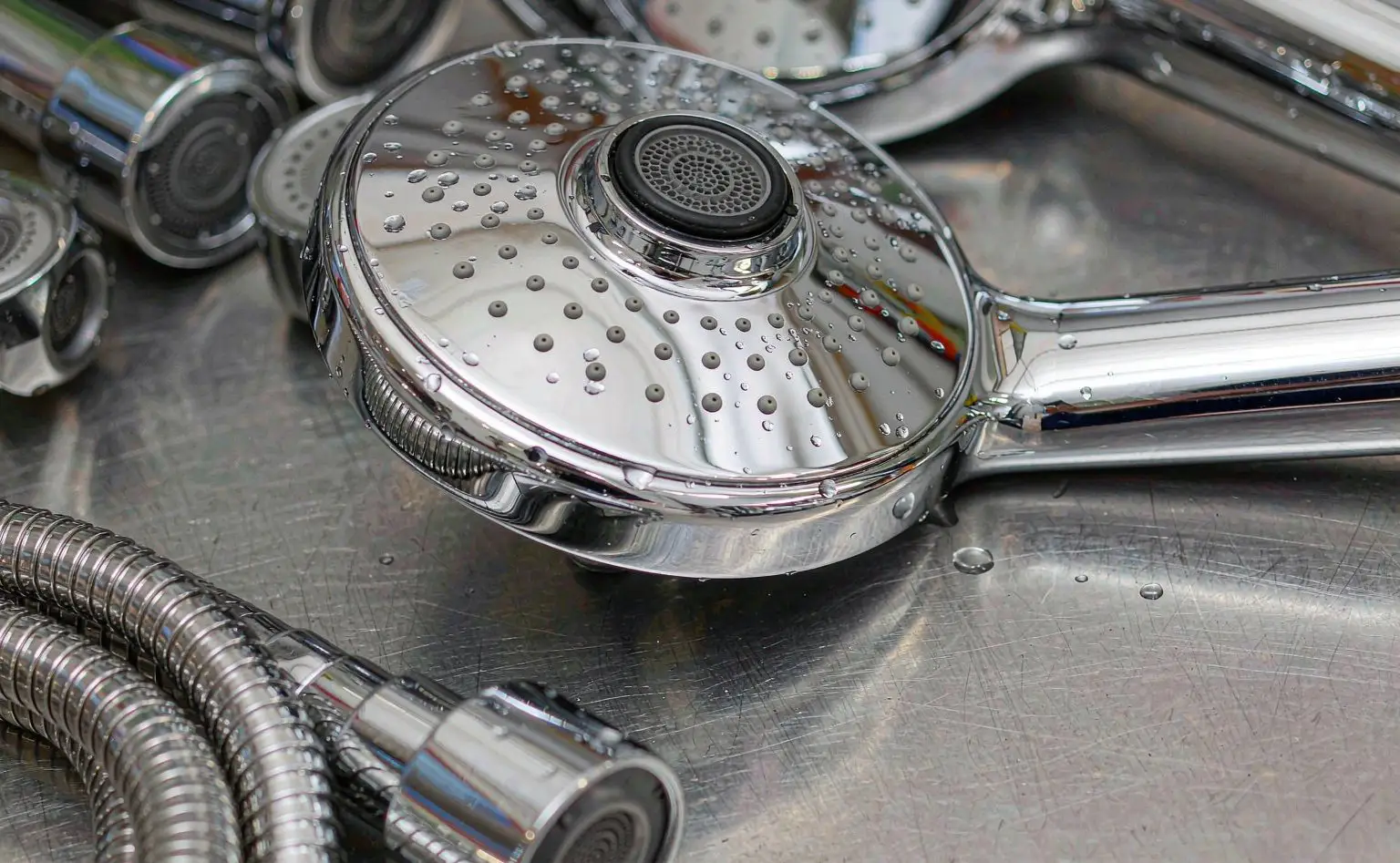
1. The nozzle gasket blackens first, the plating stays clean
Take a shower head apart: chrome shell, diverter, nozzle gasket, handle liner, hose, sealing washers, colour box. Plating is metal and cannot be eaten by micro-organisms; what fails is the nozzle gasket, the washers at the handle and hose joints, and the box lining.
The gasket holds water all the time. The nozzle gasket is the only part of the head that carries a water film permanently: small holes, narrow gaps, slow drying, and the soap and skin oils carried in the water stay in the gap as a continuous food supply. With no antimicrobial in the compound, the black rubber first goes shiny and tacky, and then a ring of black spots appears.
The joint washers go the same way. Two washers at the handle and hose joint are greased at assembly, and grease is organic as well; water sits at the joint, so the spots work in from the washer edge.
Plated parts assembled wet. Plate, then assemble without drying, and water is sealed between plating and substrate: the plating blisters first, and once a blister breaks the vapour escapes and growth follows its edge. The box lining takes up water, moulds first in a sea container, and the paper tray goes before the product.
2. Gasket, plated parts and box are counted on two different bases
The table lines up the gasket compound, the washers, the plated parts and the colour box. Compound is counted as a percentage of material weight, vapour paper in sheets, and one does not convert into the other.
| Part | Material | Product and level | Stage | Control point |
|---|---|---|---|---|
| Nozzle gasket | TPE, silicone | iHeir-IPL 0.8%-1.0% | Milling or pelletising | Of compound weight, dispersed |
| Joint washers | TPE, rubber | iHeir-IPL same lot | Same batch | Calculated on its own weight |
| Plated parts | Brass, chrome plated | Dry before assembly | After plating | Plating and gaps both dry |
| Colour box and tray | Corrugated, pulp tray | iHeir-D 1 sheet, 0.1-0.2 g | Boxing | On the box wall, off the plating |
One boundary. iHeir-IPL sits in the compound and deals with growth on the gasket itself, still working once the head is on the wall; the vapour sheet deals with the air in the box and is finished when the box is opened. Skip the compound and paper in the box will not hold back mycelium already running on the gasket.
3. Dosing the gasket compound at 0.8%-1.0%
The level is 0.8%-1.0% of compound weight. Dark gaskets take the low end, light and clear gaskets the high end, and orders with an antimicrobial test are dosed at the top of the range with a sample lot kept aside.
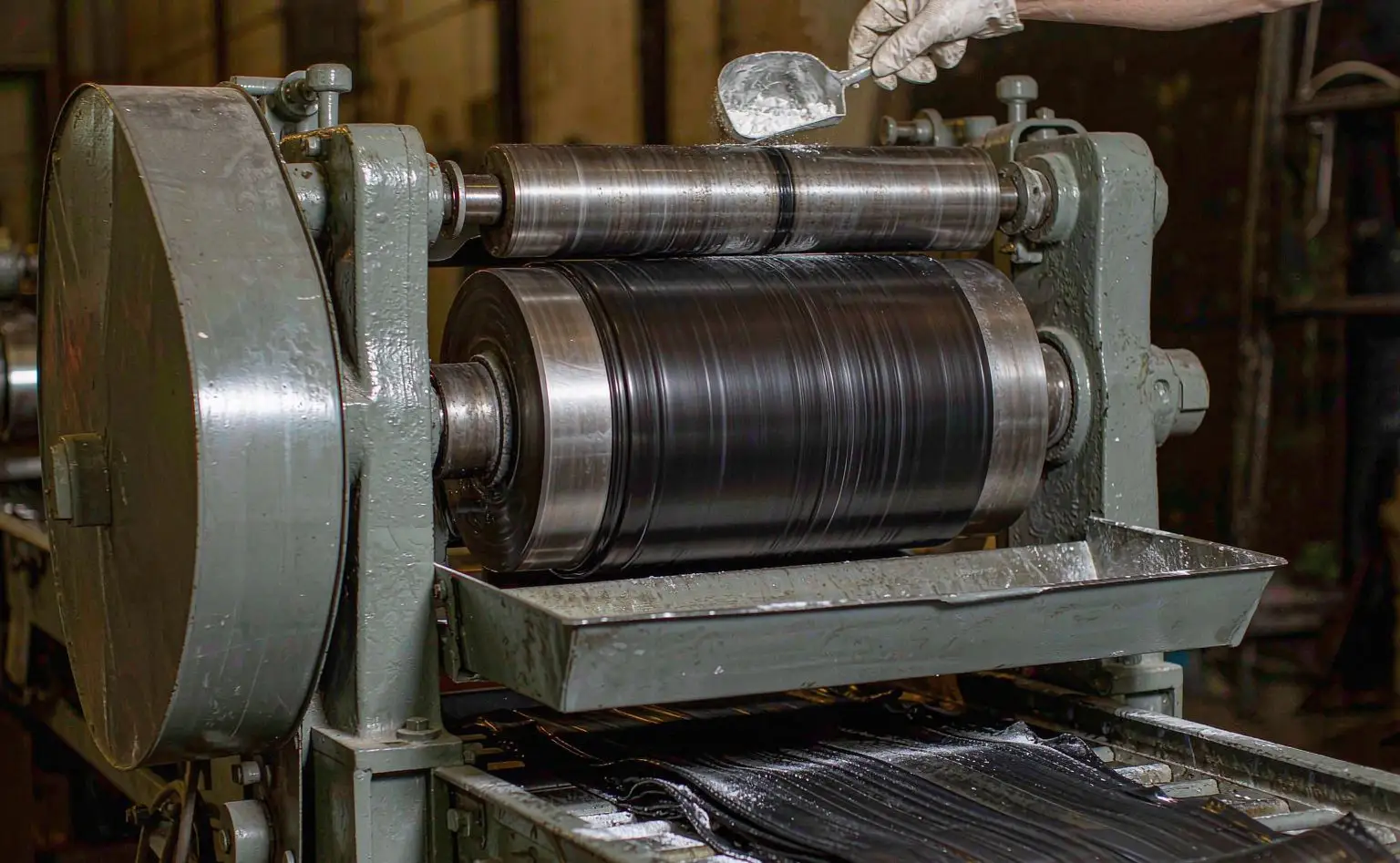
Where it goes. TPE and rubber compounds take it in the internal mixer or on the mill, charged in portions together with the filler and mixed even before sheeting out; injection-grade TPE can also be dosed at pelletising. Never dust powder onto finished compound, because it will not distribute in the screw and the mouldings come out with white specks.
The process window is wide enough. iHeir-IPL is an inorganic antimicrobial stable to 300-320°C and does not discolour, and TPE processing and silicone curing both sit below that, so there is no decomposition risk in the process. Silicone grades cure hotter, so confirm the formulation and cure system and go by the trial result.
Run a sample and check three things. Colour, since light and clear gaskets are the most sensitive: press a rubber plaque and compare. Mechanicals to GB/T 528 for tensile and GB/T 531.1 for hardness, watching resilience and compression set. And sealing: build two heads and run a pressure test to see whether the compressed gasket weeps. If any of the three fails, step the level down and make up the difference at assembly and packing.
4. Dry the plated parts before assembly, do not seal water under the plating
This section carries no product, and it is where sanitary ware plants take the most returns.
Dry through after plating. A part off the plating dryer that is cool to the touch is not necessarily dry: threaded holes, the inside of the diverter and the gaps at the plating edge all hold water. Press a few parts against filter paper before assembly and re-dry any that leave a mark. Assemble wet and the plating blisters, and the blister edge becomes the entry point for growth.
Do not over-grease. A thin film of grease at the joint washers is there for smooth assembly, but too much collects dust and moisture. Apply per the assembly instruction and wipe off the excess.
Assembly area. Hold assembly and packing at 45%-60%RH with a dehumidifier in the humid season, keep plated parts in lidded tote bins rather than bare on a bench overnight, and keep sweaty gloves off the plated surfaces.
5. One sheet in the colour box, then storage and export
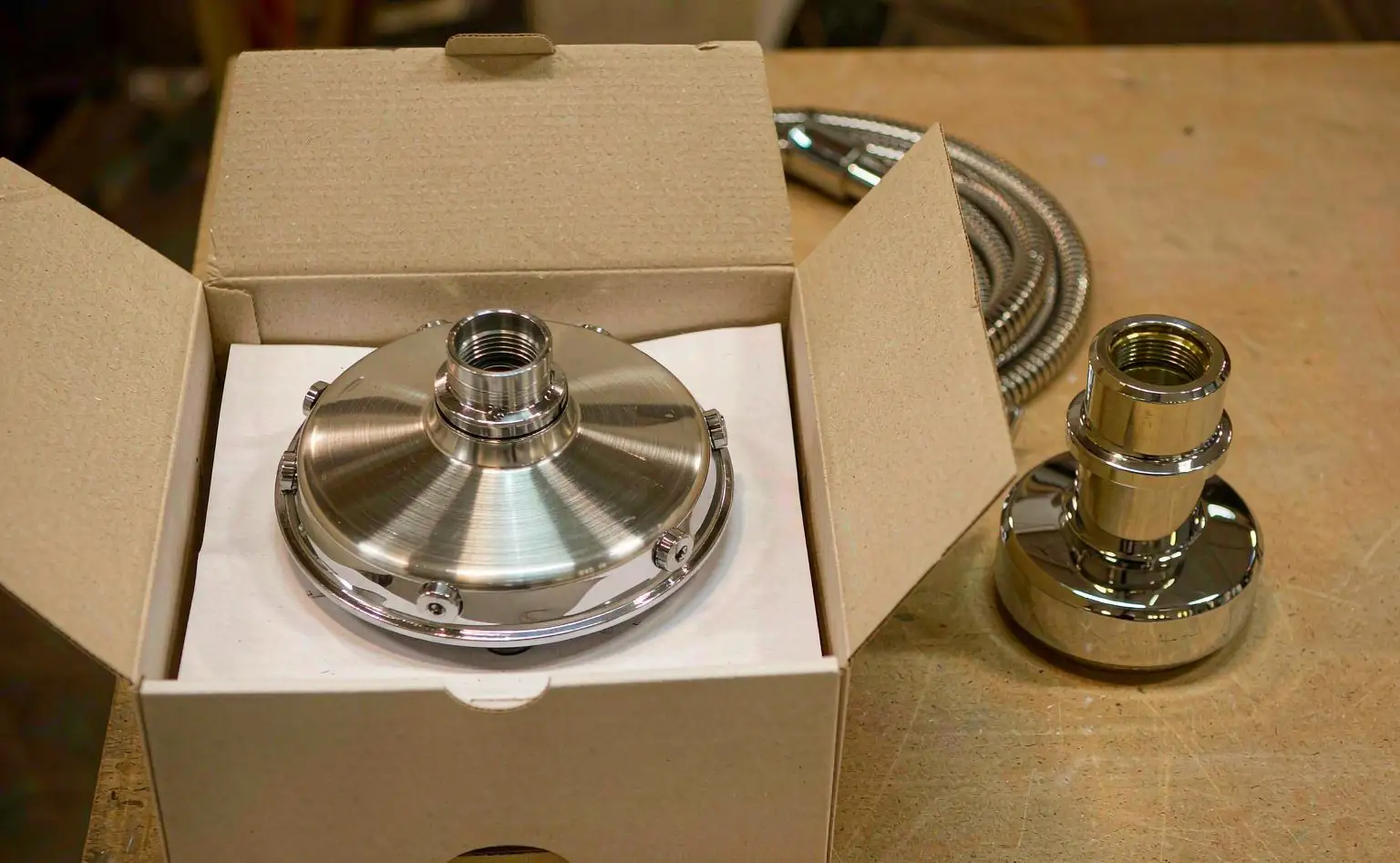
Boxing takes one iHeir-D vapour sheet at 0.1-0.2 g of active, laid on the box wall or under the pulp tray, never stuck onto the plated surface.
Run a compatibility test. Seal one finished head with three times the normal amount of paper, mist a little water, keep paper between sheet and part and leave it a few days. Check the plating for dulling, the gasket for hardening and the box print for staining. iHeir-D has 70%±5 solids and can corrode poor-quality metal under damp conditions, so thinly plated versions must be tested first.
Store and export. Hold the finished-goods store below 60%RH with cartons 10 cm off the floor and wall, line the container and hang desiccant sticks, and check cartons for soft corners at loading. Comparable sanitary work is in ceramic, stone and plastic sanitary parts, and gasket drying on a lidded vessel in flask liners and lid gaskets.
6. Questions from buyers
Q: With the gasket treated, do the hose and shell need anything?
A: The shell is metal, so drying and packing matter more than any additive; a PVC or TPE hose that holds water will also mould, but it is secondary to the gasket, so do the gasket first.
Q: Will clear gaskets haze up with iHeir-IPL?
A: Somewhat. It is a white powder, so a clear compound at 1% may show haze; press a rubber plaque first and drop to 0.8% or use a finer powder if it shows.
Q: 0.8% and 1.0% are close, can the line pick either?
A: No. That is a 25% difference in active content, which decides pass or fail on a tested order. Fix it by gasket colour and customer requirement and write it on the batch card.
Q: The gasket has already blackened, does replacing it solve the problem?
A: Only for that batch. Untreated compound blackens again within three months in service, so add the dosing step first and then talk about replacement.
Four closing points: charge iHeir-IPL at 0.8%-1.0% of compound weight with the filler in the internal mixer or on the mill, dose injection-grade TPE at pelletising, compare a rubber plaque on light and clear parts and re-test to GB/T 528 and GB/T 531.1; calculate joint washers on their own weight; dry plated parts through before assembly, check threaded holes and the diverter with filter paper, grease thinly and hold assembly at 45%-60%RH; put one iHeir-D vapour sheet at 0.1-0.2 g of active in the box, run the three-times compatibility test, keep the store below 60%RH and line the container for export. Performance can be verified to ISO 22196 or GB/T 31402, a one-kilogram sample can be sent ahead, and lead times are on the iHeir-IPL product page.


