




 View Count:36
 Date:2026-10-13
Seat belt mould is treated at the webbing. The belt is high-strength polyester webbing, and once mould has followed moisture into the fibre it cannot be wiped away, so the anti-mould work belongs in the webbing finishing stage. Add iHeir-BJ textile mildew inhibitor at 2%-3% o.w.f. on dry fabric weight (bath 21-50℃, pH 4.5-8.5), or pad iHeir-PG composite nonwoven fabric antimicrobial agent at 20-40 g/L (pH 6-8, 70% pick-up, dry 100-170℃). This article covers whether one padding pass is enough and how strength retention is checked afterwards.
1. Why seat belt mould is awkward: the webbing is high-strength polyester
A seat belt is not an ordinary decorative fabric. Its body is high-strength polyester webbing, tightly woven and heavily sized, and once moisture is taken up it sits between the fibres for a long time. The mould usually does not start on the face but at the edge of the webbing, along the stitching and between the coiled layers. By the time a black spot shows outside, the fibre inside is often already damaged.
What matters more is that a seat belt is a safety part, so no treatment may cost strength. That rules out the casual surface finishing or spraying used on ordinary cloth: change the hand, stiffen the face or pull down the breaking strength and the belt is affected. Anti-mould work therefore belongs in the webbing finishing process, bonded to the fibre rather than sitting on the surface.
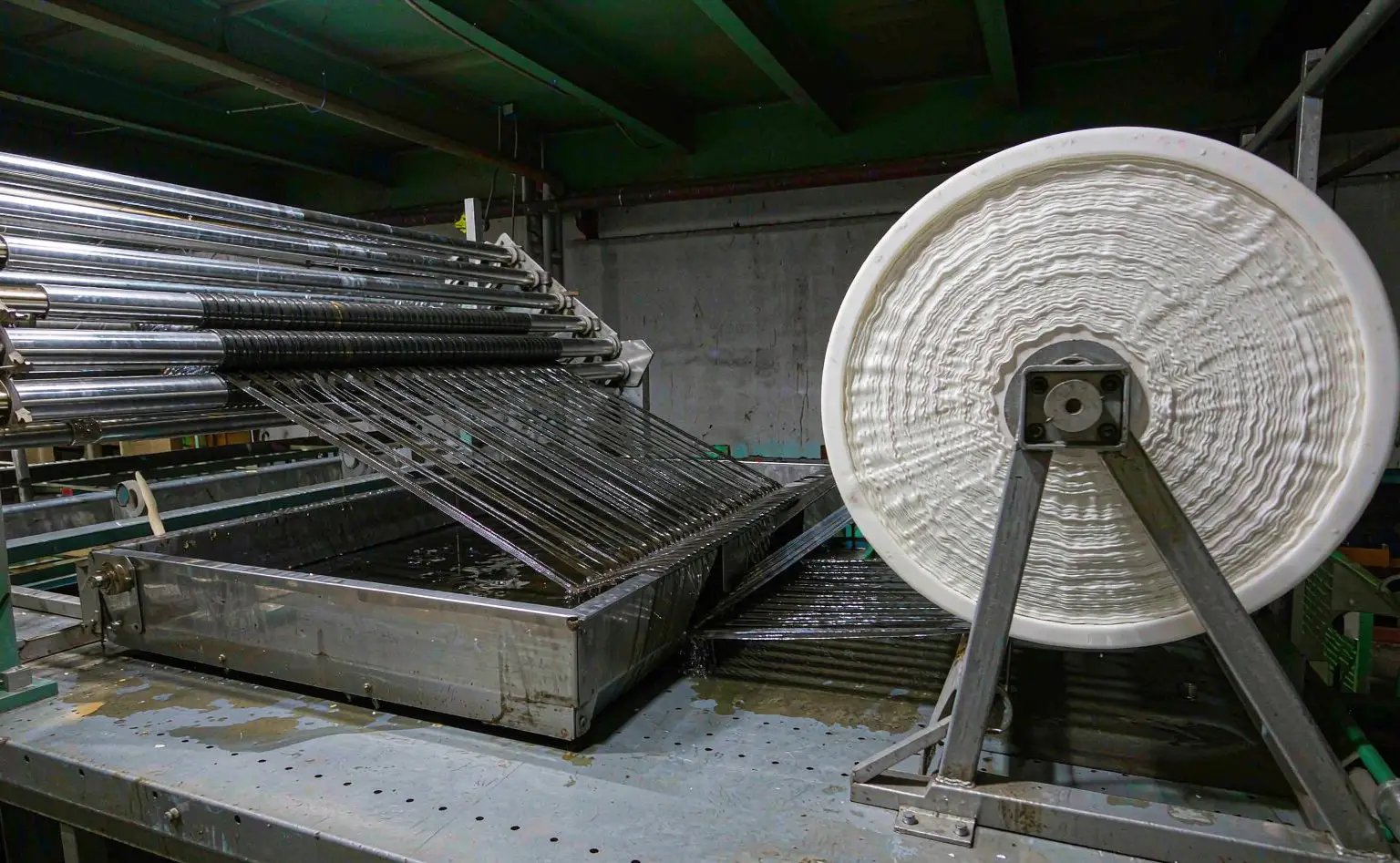
Two entry points are common in webbing finishing. One is the setting bath, where the treatment liquid enters the fibre with the finish; the other is a separate padding line, where the webbing takes up the liquid under the squeeze rollers and is then dried. The two routes call for different agents and dosing figures.
2. The two webbing padding routes side by side
The table lines up the route, where it suits, the recommended product, the dosing basis and the points to watch, so it can serve as a process-card draft against the finishing line on hand.
| Route | Where it suits | Product | Dosing basis | Points to watch |
|---|---|---|---|---|
| Added in the setting bath | Polyester webbing, industrial cloth | iHeir-BJ textile mildew inhibitor | 2%-3% o.w.f. on dry fabric weight | Bath 21-50℃, pH 4.5-8.5; premix with 9-13 times its weight of water and add in portions; cationic, never in the same bath as an anionic auxiliary |
| Cold padding or exhaustion | Composite fabric, nonwoven interlining | iHeir-PG composite nonwoven fabric antimicrobial agent | 20-40 g/L, or 2-4% o.w.f. | pH 6-8; 70% pick-up, dry 100-170℃; can also be diluted 25-50 times and sprayed |
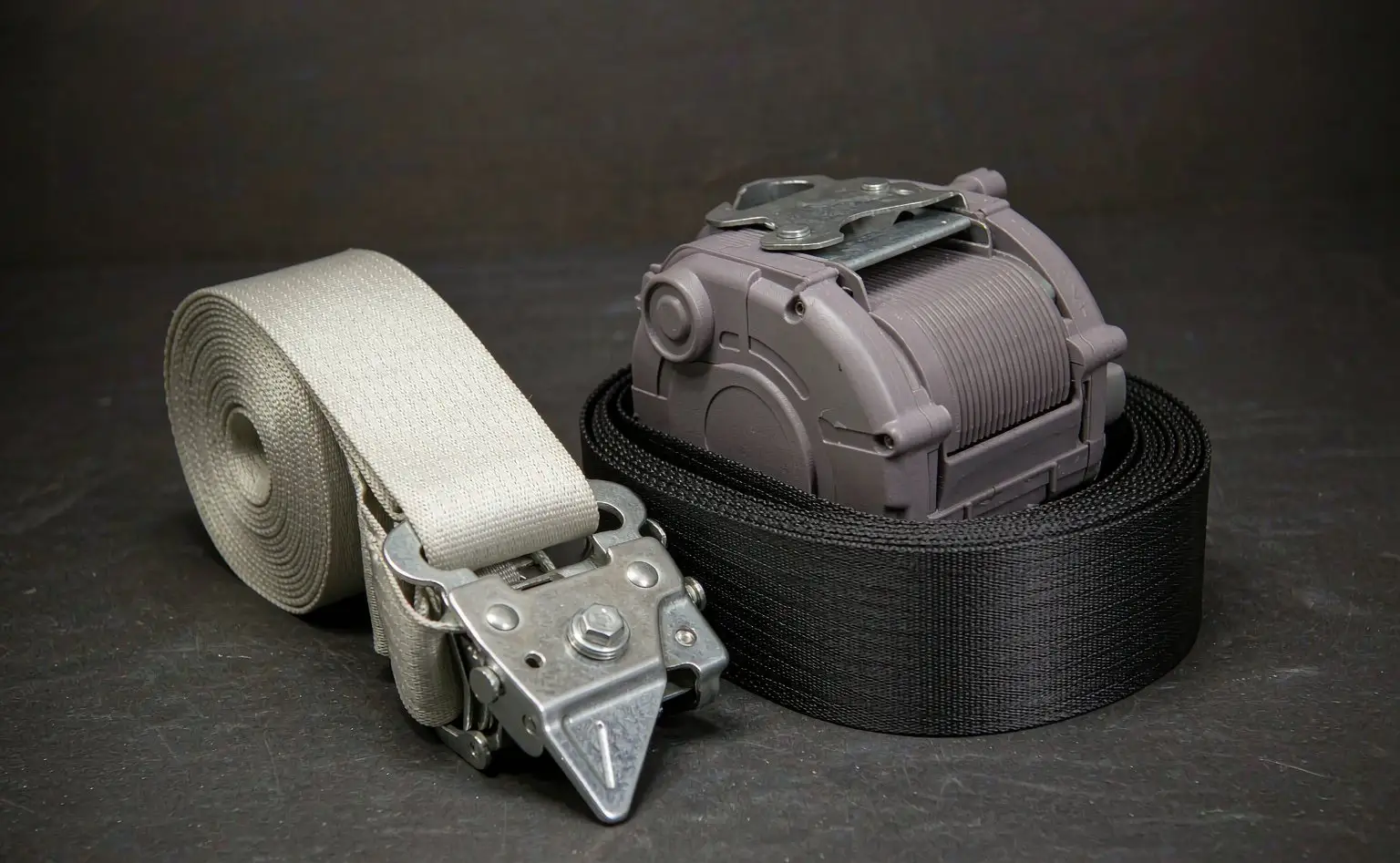
| Metal buckles and ends | Metal parts | No agent | Humidity control in assembly and storage | Metal takes up no moisture, so the weight falls on the assembly environment and the store |
Three rows make the division clear: two dosing routes, one on dry fabric weight and one on bath concentration, and a metal row carried by humidity control. The real question, whether one pass is enough, comes down to which layer the mould is in.
3. Route one: BJ in the setting bath, on dry fabric weight
BJ goes into the setting bath: dilute iHeir-BJ textile mildew inhibitor with pure water and add it to the finishing bath at 2%-3% o.w.f. on dry fabric weight. BJ is a bonded, non-releasing treatment, so the active ingredient is held firmly on the fibre surface, is not consumed as it works, and does not rub off or leach out; in theory the protection lasts as long as the belt itself. The bath runs at 21-50℃ and pH 4.5-8.5. At 2%-3%, three kilograms of BJ will treat roughly one hundred kilograms of fibre.
Three details. First, dilute and add in portions so BJ has time to adsorb onto the fibre; tipping it in at once gives a local over-dose and an uneven take-up. Second, the bath is cationic and must not be shared with an anionic auxiliary, which would flocculate the active ingredient, so check the ionic nature of the other auxiliaries first. Third, work out dry fabric weight and pick-up before converting the 2%-3% figure, since 70% and 50% pick-up give very different bath concentrations, and a wrong bath figure is the commonest way padding fails.
4. Route two: PG by cold padding or exhaustion, on a bath figure
PG runs by cold padding or exhaustion after dilution. For padding, use 20-40 g/L at pH 6-8, cold, 70% pick-up, drying at 100-170℃. For exhaustion, use 2-4% o.w.f. at 50℃ for 20-30 minutes, then dewater and dry. PG bonds through covalent links with the hydroxyl and amino groups on the fibre, so it withstands washing and has no adverse effect on whiteness, shade, strength, hand or air permeability. It can also be diluted 25-50 times and sprayed evenly onto composite fabric or an interlining surface.
The difference between the routes is the basis for the figure. BJ is counted on dry fabric weight and PG on the bath concentration, and the two numbers cannot be swapped for the same batch of webbing. Choose by the equipment on the finishing line: with a setting bath where the liquid runs with the finish, use BJ; with a stand-alone padding or exhaustion tank worked out by concentration, use PG. A wider comparison of textile finishing choices is set out in padding antimicrobial treatment and wet pick-up.
5. What to check after padding: strength retention and shade
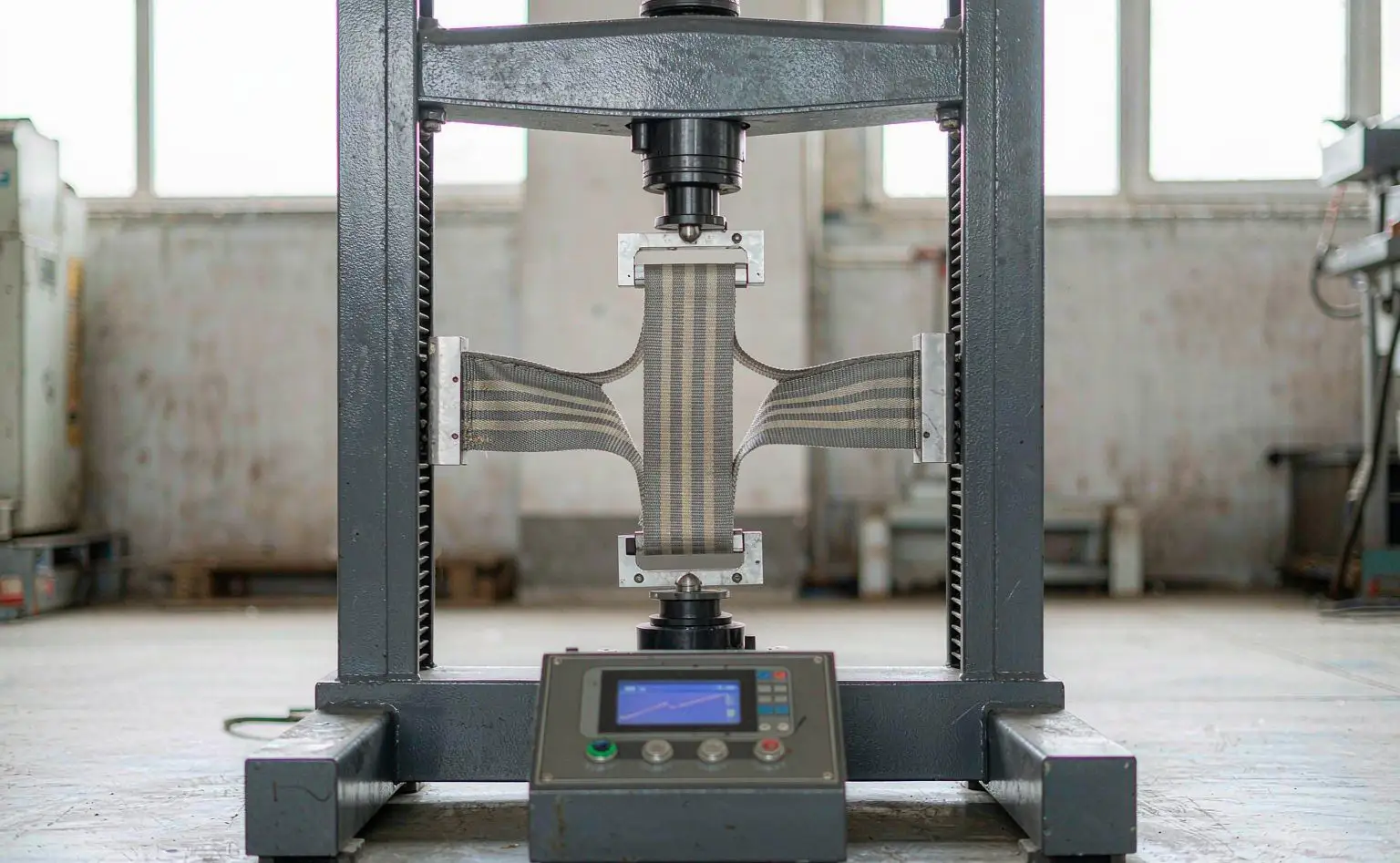
A seat belt is a safety part, so the treatment has to be retested. The first check is breaking-strength retention: sample by batch, pull, and compare with an untreated control to confirm strength has not gone outside the permitted band. The second is appearance: no shade shift, no stiffening, no odour. The third is the mould effect itself: keep a sample for a mould test to confirm the treated face holds the mould down.
One acceptance point is easy to miss: consistency of the treatment bath from batch to batch. When one lot runs through several bath make-ups, log the concentration and temperature of each; if a roll comes out with the wrong colour or hand, read the log for that roll first. How an already mouldy batch is sorted, and whether it can be reworked, is set out in mould in the car interior and its treatment.
6. Questions that come up: one pass, spraying at the end, and washing
Is one padding pass enough? It depends which layer the mould is in. Where it has stayed on the surface and the fibre is sound, one finishing pass puts the protection in. Where the webbing has taken moisture between the coiled layers, or the interlining is already damp, the interlayer damp has to be driven out before padding, otherwise the liquid cannot get in and the inside still goes mouldy.
Can it be sprayed on at the end instead? It is not advisable. A seat belt is high-strength webbing, and a spray stays on the outer layer, where rubbing and coiling carry it off quickly, and an uneven spray spoils the appearance. The anti-mould work belongs in the webbing finishing stage, inside the fibre.
Does it survive washing once treated? Yes. BJ is bonded and PG links covalently to the fibre, so neither works by leaching out and ordinary washing does not carry the active ingredient away. Washing conditions and cycle counts still differ, so run a wash-durability test before a large run.
Three points. Add iHeir-BJ textile mildew inhibitor at 2%-3% o.w.f. on dry fabric weight in the setting bath (21-50℃, pH 4.5-8.5, never with an anionic auxiliary in the same bath), or use iHeir-PG composite nonwoven fabric antimicrobial agent by cold padding at 20-40 g/L (pH 6-8, 70% pick-up, dry 100-170℃). Metal buckles and ends take no agent and are carried by humidity control in assembly and the finished store. Retest breaking-strength retention and shade after treatment. Samples and TDS sheets are available to run a trial against your webbing width and finishing line.


