




 View Count:22
 Date:2026-10-28
Can rattan basket mould be prevented? Yes, but rattan and lining need separate treatment, because water reaches them differently. Rattan is a hollow, porous cane in which water trapped in the gaps dries last; the lining is sewn in afterwards, so its finish has to be done before stitching. The rattan takes iHeir-M5 at 1:40 to a 15%-20% weight gain and is then spun dry; the lining runs in its own bath with iHeir-BJ at 2%-3% o.w.f. This article covers both doses, spinning and drying, and export packing.
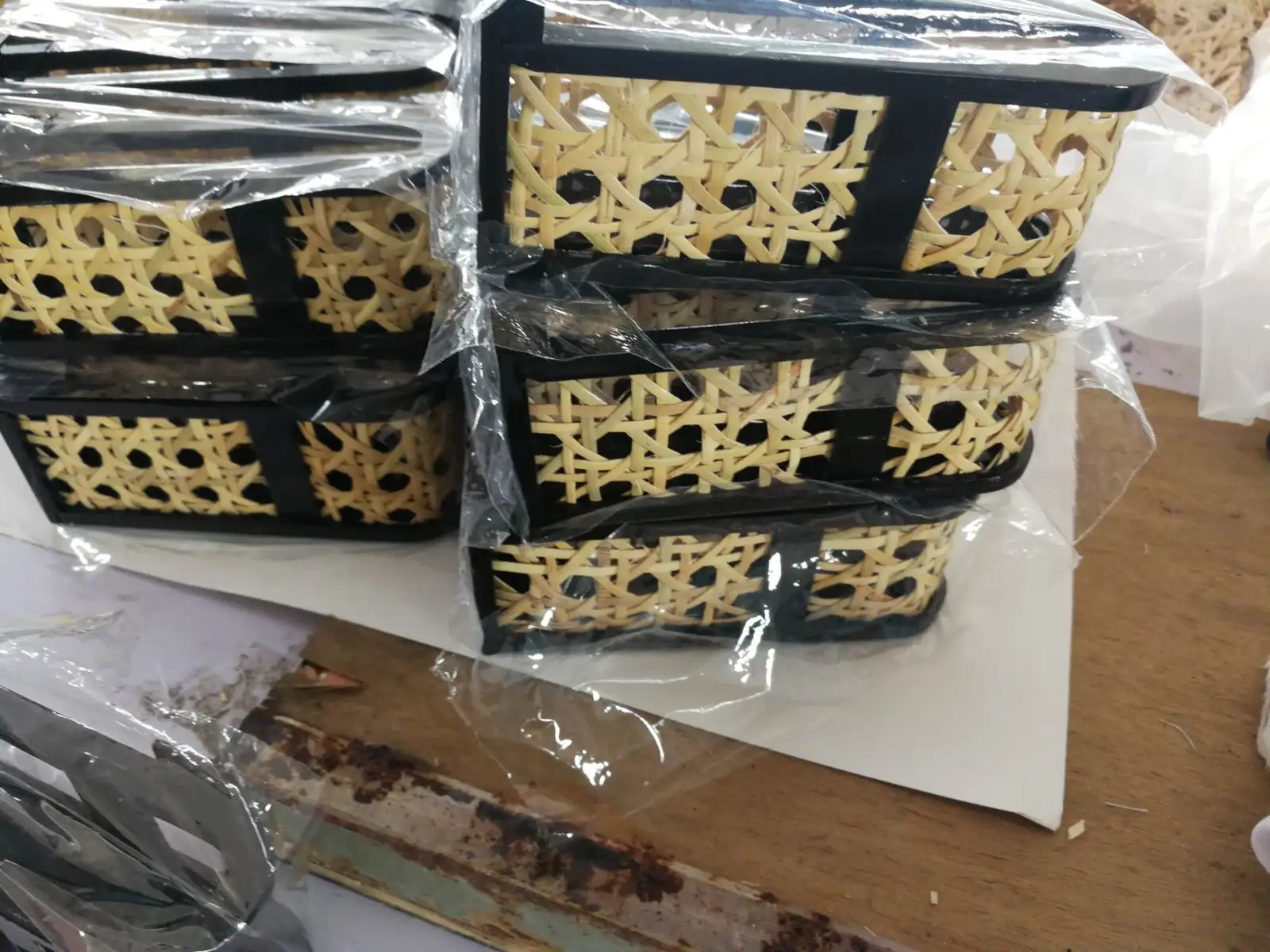
1. The mould sits in the gaps
Rattan is a natural cane: a smooth skin over a porous core, and it is soaked to soften before weaving. That soak and that bend put water into the core; the surface looks dry afterwards while the gaps and the core are still wet. Mould starts at the weave crossings and the base seam, where ventilation is worst and the water sits longest.
The second place is the lining fabric. Storage baskets, wash baskets and lined hampers mostly carry a cotton or poly-cotton lining, and fabric takes up water quickly and gives it up slowly. The lining is also sewn in late, so once it is inside the basket there is no way to finish it — the treatment belongs before stitching.
The third is packing and storage. A basket is bulky, so a carton holds a lot of air; over a sea leg the day-night swing condenses water on the carton wall and it lands on the basket. Stacked with the mouth up in a warehouse, dust and damp collect inside.
So there are two stages: the rattan is dipped before weaving, the lining is finished before stitching, and packing relies on drying and humidity control. Rattan only, and the lining still fails; lining only, and mould grows out from inside the cane.
2. Rattan and lining are dosed separately
The table lines up rattan, lining, stitching and packing. Rattan is measured by weight gain from soaking, the lining in o.w.f. on fabric weight, and the two bases cannot be swapped.
| Location | Material and stage | Product and level | Addition point | Basis |
|---|---|---|---|---|
| Rattan, basket body | Natural cane, dipped before weaving | iHeir-M5 at 1:40 | Dip tank, before weaving | 15%-20% weight gain |
| Lining fabric | Cotton or poly-cotton, finished before stitching | iHeir-BJ 2%-3% o.w.f. | Finishing bath, padded then dried | Fabric weight (o.w.f.) |
| Thread, zips | Stitching, assembly | No additive; humidity control | Stitching station | Station cycle |
| Packing and storage | Bagging, cartoning, stacking | Desiccant plus store humidity control | Packing and intake | Carton volume and store volume |
Two boundaries. First, the lining never goes into the rattan tank: M5 is a red-brown acidic liquid, and a pale fabric comes out with a stripe that will not wash out; the two systems also behave differently, so a shared bath is neither safe nor controllable. Second, rattan is never brushed with a textile finish: a water-based finish wets the skin only, never reaches the gaps, and leaves a tacky feel on the surface.
3. Dipping the rattan: how long, and how to spin it
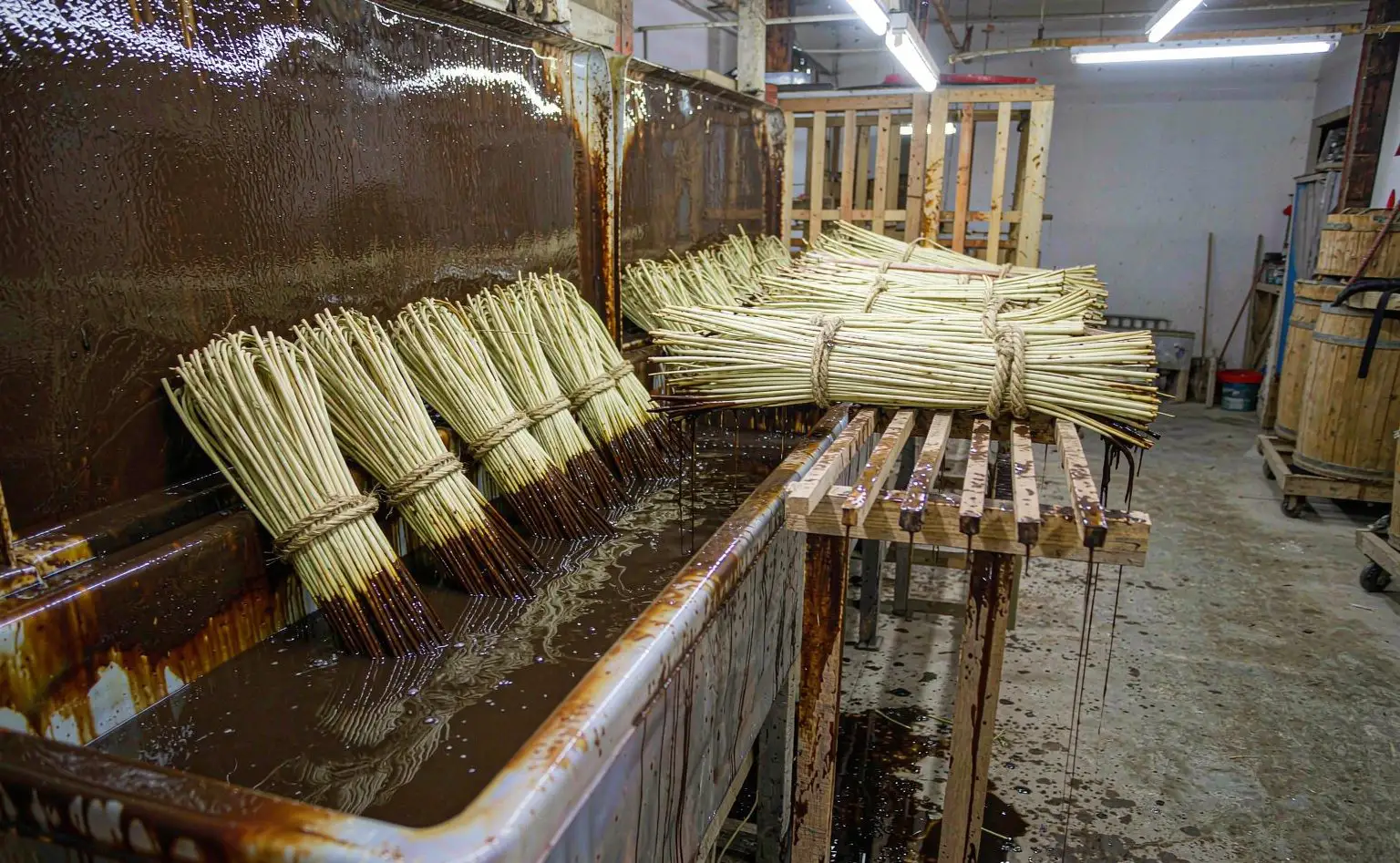
The rattan uses iHeir-M5 immersion-type bamboo and wood fungicide. Mix at 1:40 (5kg of product to 100kg of water), submerge whole bundles without letting them break the surface, and soak to a 15%-20% weight gain — about 5-10 minutes — then lift, spin dry and lay out.
The spin cannot be skipped. Rattan is hollow, and when a bundle leaves the bath the cane still holds water inside. Left to drain on its own, the surface dries while the core stays wet. Drain for 2-3 minutes, spin at low speed in a centrifuge to throw the liquor out of the cane, then lay the rattan out in a single layer on racks — never in bundles, because the middle of a bundle is the dampest place in the shop.
Three operating points. Tank material: M5 is acidic as supplied and must not touch metal or be mixed with alkaline material, so use plastic or FRP — an iron tank corrodes and neutralises the bath. Shake before use: a floating layer is normal, and pouring unshaken leaves the active content at the bottom. Top up in proportion: liquor carried out on the cane is replaced at 1:40, because water alone dilutes the bath run by run.
4. The lining: its own bath, before stitching
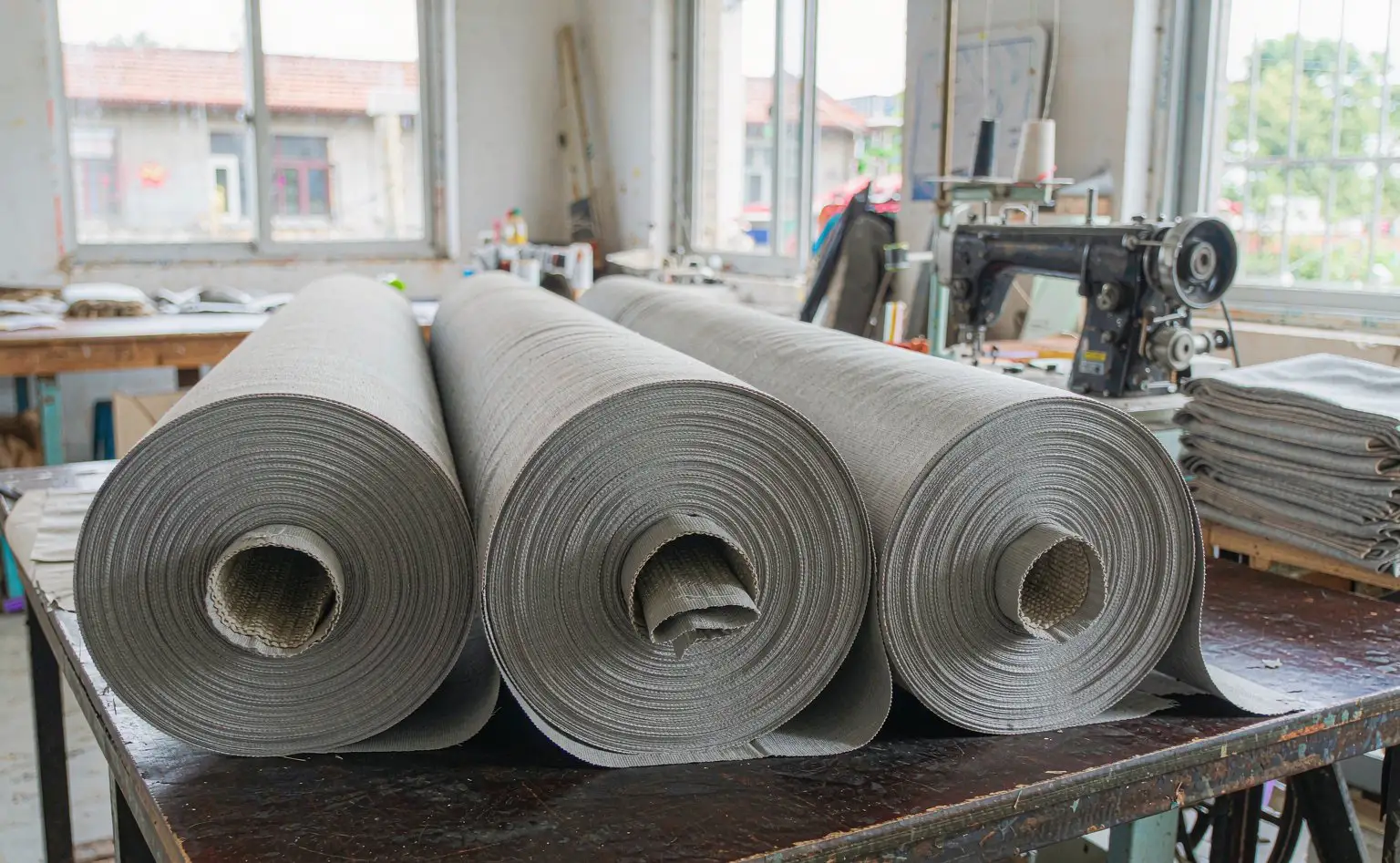
The lining uses iHeir-BJ textile mildew inhibitor at 2%-3% o.w.f. on fabric weight, bath 21-50℃, pH 4.5-8.5 with 6 as the target, in soft water. Premix BJ with 9-13 times its volume of water, add 0.1% wetting agent, then make the bath up; pouring concentrate straight in gives local over-concentration and marks on the fabric.
The scheduling point is decisive: finishing comes before cutting and stitching. Once the lining is sewn into the basket, the bath and the dryer are both out of reach and all that is left is a spray, which is far weaker. The sequence is roll finishing, drying, cutting, stitching, assembly.
The one that catches most plants: BJ is cationic and must not share a bath with anionic auxiliaries. Fabric finishing usually also runs softeners and antistats; where those are anionic the two flocculate, scum forms in the bath, the fabric stops picking up the agent and protection drops to zero. Schedule cationic and anionic auxiliaries on separate runs, or run a compatibility sample first.
Dose follows the storage period: 2% gives roughly a year, 3% gives two to three. Before the line runs, a drop of bromophenol blue shows in two minutes whether the finish is on the fabric.
5. Stitching, packing and export
Three things at stitching: lining moisture below 8% before it goes on the machine; adhesive, where it is used to hold the lining, chosen low in water and dried to a tack-free surface after pressing; shop humidity at 60% RH or below, with dehumidifiers in the wet season. Do not bag a finished basket immediately — leave it a shift in a ventilated area so the internal moisture escapes.
At packing, check the basket surface for condensation before bagging, and leave micro-perforations in the bag; add desiccant in a non-woven bag inside the mouth of the basket rather than pressed against the cane. Stack with the mouth down or on its side so dust and damp do not collect inside.
Leave an air path in the container: no carton against the wall or under the ceiling. a rattan basket does not show moisture immediately, and by the time spots appear the whole container is usually affected. The mechanism is the one described in condensation in sea freight containers.
Verify at three levels: rattan on a mould resistance test to GB/T 18261, sampling the base seam and the crossings; lining to a mould resistance grade under GB/T 24346 plus a bromophenol blue check; finished basket for 30 days at 30℃/85% RH, then inspect the base, the gaps and the back of the lining.
6. Questions on stiffness, shade and baskets that already have mould
Q: Shade varies across one lot — did the soak time differ? Check the bath first: topping up with water only leaves later baths weaker and the baskets paler. Then check drying conditions, because direct sun and shade produce visibly different shades and one lot should be dried one way.
Q: Can a basket that already has mould be saved? Surface bloom can be brushed off, dried and given another dip. Where filaments have gone into the cane core and a black line remains after brushing, the basket is a downgrade. Any rescued batch needs both the dip and the lining finish again; brushing alone and the mould is back within a month.
Four points to take away: rattan with iHeir-M5 at 1:40, whole bundles submerged to a 15%-20% gain in about 5-10 minutes, drained, spun and laid out in a single layer, dipped and woven the same day; the lining in its own bath at 2%-3% o.w.f. iHeir-BJ, 21-50℃, pH 4.5-8.5, cationic agent on a separate run; finishing scheduled before cutting and stitching, and the fabric below 8% moisture before sewing; desiccant in the carton, an air path in the container, and 30 days at 30℃/85% RH before release.


