




 View Count:52
 Date:2026-09-03
If you’ve ever opened a shipping container and been hit by that musty smell, you’re not imagining things. Industry surveys of 60+ exporters across the Yangtze River Delta shipping to Europe and North America in 2025 show 28%-32% on-arrival mold rate, with over 60% directly tied to “container rain.” Container rain isn’t actual rain — it’s condensation that forms on the container ceiling during sea transit, then drips down onto cargo like real rain, soaking cartons, peeling labels, molding furniture and shorting electronics. A single 40ft container of USD 30,000-worth of furniture scrapped because a few desiccant strips were missing happens every single year.
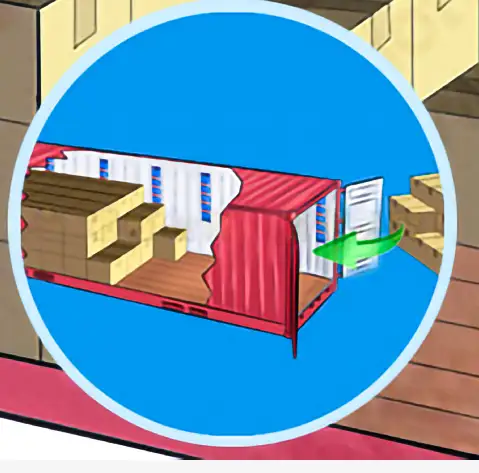
1 What Exactly Causes Container Rain? Three Mechanisms Working Together
Most people assume container rain is “a leaking container.” The real cause is a physical cycle of temperature and humidity:
- Day-night temperature swing + cold metal wall condensation: A container crossing 40-60 days at sea passes equatorial, temperate and cold climate zones. Daytime sun heats the box interior to 50-60°C; nighttime sea breeze and cold air drop metal walls to around 25°C. When wall temperature falls below the dew point of the air inside, water vapor condenses on the ceiling — that’s the physics behind container rain.
- Cargo carries its own moisture (respiration): Wood pallets often have 18%-25% moisture content (vs. safe threshold 12%), cartons 10%-15%, textiles like cotton/hemp 8%-12%. During heating phases this moisture evaporates into the air cycle, then condenses on cold walls. Every 5% rise in cargo moisture roughly doubles the mold probability.
- Poor ventilation + mold spore amplification: Containers are sealed steel boxes with limited air circulation. Sea transit temperatures 25-50°C and relative humidity often 85%-95% hit the sweet spot for Aspergillus niger, Penicillium and Mucor. Spores germinate in 24 hours, visible mold appears in 72.
Consequences of ignoring container rain: On arrival cartons are soft, labels dissolved, cargo molded — light cases mean 30%-100% customer claims, severe cases mean entire container rejected. A Zhejiang furniture exporter shipping to Los Angeles in 2024 had 5 high-cube 40ft containers with no desiccant strips; on-arrival mold rate was 41%, claims exceeded RMB 1.8 million.
2 The 3-Step Container Rain Protocol
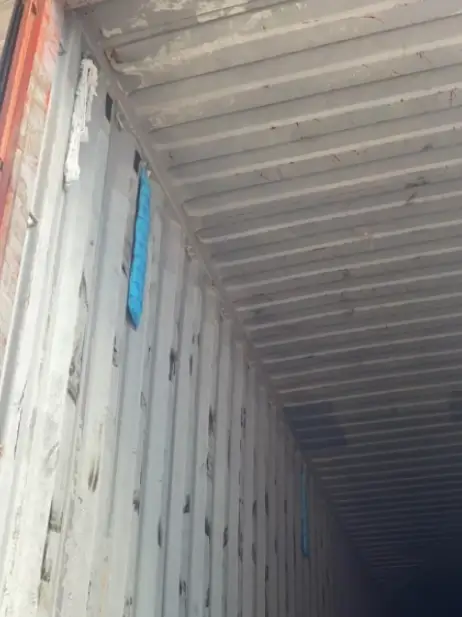
Container rain isn’t solved by throwing in some desiccant and hoping. You need a coordinated three-step protocol before, during and after loading:
2.1 Before Loading: Get the Water Out of Your Cargo
- Wood pallet moisture content ≤12% — this is a hard threshold. Fumigation-free plywood pallets must be kiln-dried to ≤12% MC before shipping, otherwise you’re putting a “water tap” inside the container that keeps releasing moisture. If you skip this: even non-molding pallets deform and crush cargo.
- Carton and buffer material moisture ≤10% — carton factory output is usually 8%-12%, but for export we recommend asking suppliers for an MC report or letting cartons sit 24-48 hours to equilibrate.
- Surface anti-mold for wood products: spray or dip with iHeir-JP bamboo-wood anti-mildew agent (1.5%-2%) in the warehouse, dry before packing. This knocks out residual spores inside wood fibers and reduces 70%+ of wood mold.
- Vacuum or PE inner-bag packaging for textiles: Cotton, linen and plush finished goods should be sealed in PE bags + vacuum to block moisture penetration.
2.2 During Loading: Desiccant + Gas-Phase Anti-Mold Dual Deployment
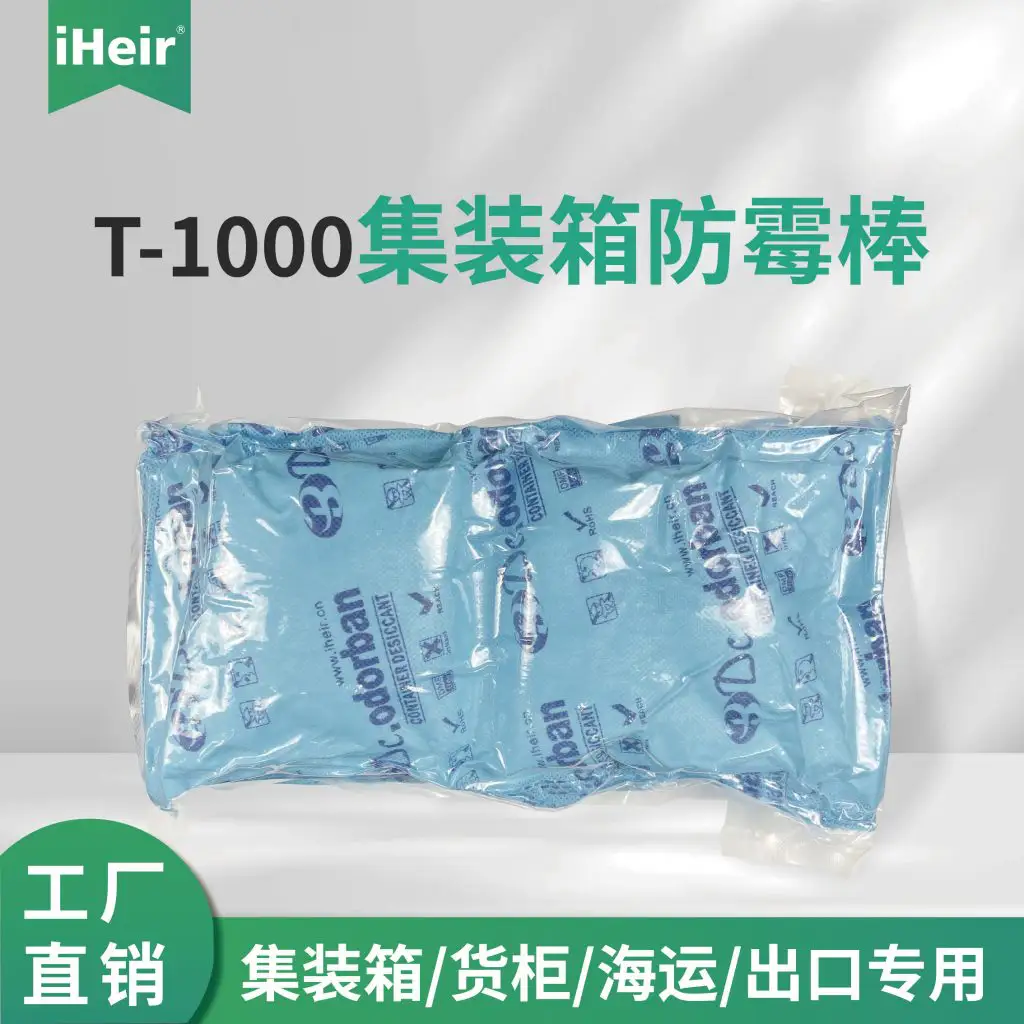
- T-1000 container desiccant strips: Calcium-chloride-based composite desiccant, each strip absorbs up to 3× its own weight (about 1.5-2 kg), ideal for 20-60 day long-haul routes. 20ft containers need 5-8 strips; 40ft high-cube 10-14, hung evenly along wall grooves, at least 5 cm from cargo to avoid direct contact with seepage.
- Power Pak gas-phase anti-mold tablets: Traditional desiccant only absorbs moisture; it doesn’t kill mold spores. Power Pak uses controlled gas-phase release to spread anti-mold actives throughout container air, covering every cargo surface, gap and corner. 20ft container needs 8-10 tablets spread across four corners and center. Gas-phase tablets and traditional desiccant are complementary — combined use is 3-5× more effective than either alone. Each tablet covers 1-1.5 m³, effective 9-12 months.
2.3 After Loading: Compliance Check + Arrival Monitoring
- Container itself check: Before loading, measure interior RH with a hygrometer; if >60%, ventilate empty for 1-2 hours first. Check for holes, seal aging, floor water.
- Temperature data logger (optional): USD 5-10 per container USB temperature logger records full-route temperature; on arrival it serves as quality traceability (for claims against shipping line or freight forwarder).
- Container-opening SOP: On arrival, open the leeward side first to avoid direct sea wind blowing damp air onto cargo. Visual inspection + photo + humidity measurement immediately; report issues to forwarder and insurer instantly.
3 Case Study & Common Mistakes
3.1 Real Case: Guangdong Electronics Exporter Cut Claims to Zero
A Dongguan PCB exporter shipping 8-10 containers monthly to Southeast Asia had 25%-35% on-arrival mold rates and constant customer claims in early 2024. Improvements: ① vacuum packaging PCB + small desiccant pouches; ② 12 T-1000 strips per container; ③ 10 Power Pak tablets per container; ④ USB temperature loggers installed. Three months later mold rate dropped to under 0.5%, claim rate to zero.
3.2 Top 5 Common Mistakes
- Mistake 1: “More desiccant is always better” — too much steals cargo space, crushes items, and excess-saturated calcium chloride strips leak brine onto cargo. 5-8 strips are enough for a 20ft container.
- Mistake 2: “Container rain is just a leak” — it’s condensation, not infiltration. Leaks come from container damage and need different fixes.
- Mistake 3: “Air-drying in warehouse a few days is enough” — pallet/carton moisture is hard to drop quickly; control at source.
- Mistake 4: “Power Pak equals camphor tablets” — camphor is anti-moth only, no anti-mold effect. Power Pak is gas-phase anti-mold antimicrobial, completely different mechanism.
- Mistake 5: “Just prevent mold, not moisture” — mold needs humidity + temperature + spores. Suppressing spores without dropping humidity has limited effect.
4 FAQ — Common Questions
Q1: When is container rain season?
A: October through April — Northern Hemisphere autumn/winter has the biggest temperature swings and frequent cold front activity. Strengthen prevention in this period.
Q2: T-1000 calcium chloride strips vs silica gel desiccant?
A: Silica gel absorbs ~30% of its weight, good for short-haul + inland transport. T-1000 calcium chloride absorbs 200%-300% of its weight, better for long sea routes.
Q3: Is Power Pak safe for humans?
A: SGS-tested acute oral toxicity LD50 >5000 mg/kg, REACH-registered in EU. Not edible; remove before opening. Wear gloves during opening.
Q4: Do wood pallets themselves need anti-mold?
A: Yes. Pallets have high moisture and touch the floor, a primary mold source. Use fumigation-free plywood pallets + spray iHeir-JP 1.5%-2% on the surface.
Q5: Do refrigerated containers (reefer) also need container rain prevention?
A: Yes. Reefers run 0-5°C but door-opening cycles cause condensation, and chilled cargo (food/pharma) has stricter hygiene requirements.
Q6: How to write container rain prevention into the sales contract?
A: Add a “moisture & anti-mold clause” to FOB/CIF terms specifying desiccant type/quantity/brand, whether gas-phase tablets are required, pre/post-loading humidity requirements — this serves as quality acceptance evidence.
Container rain prevention is a systems engineering problem — source moisture control, dual in-container protection, and journey monitoring. Skip any one of the three and your container opening could turn into a loss. If your factory or forwarder keeps running into container mold issues, check our container desiccant quantity guide or contact the iHeir anti-mold team for a tailored plan based on your product, route and season.