




 View Count:48
 Date:2026-10-08
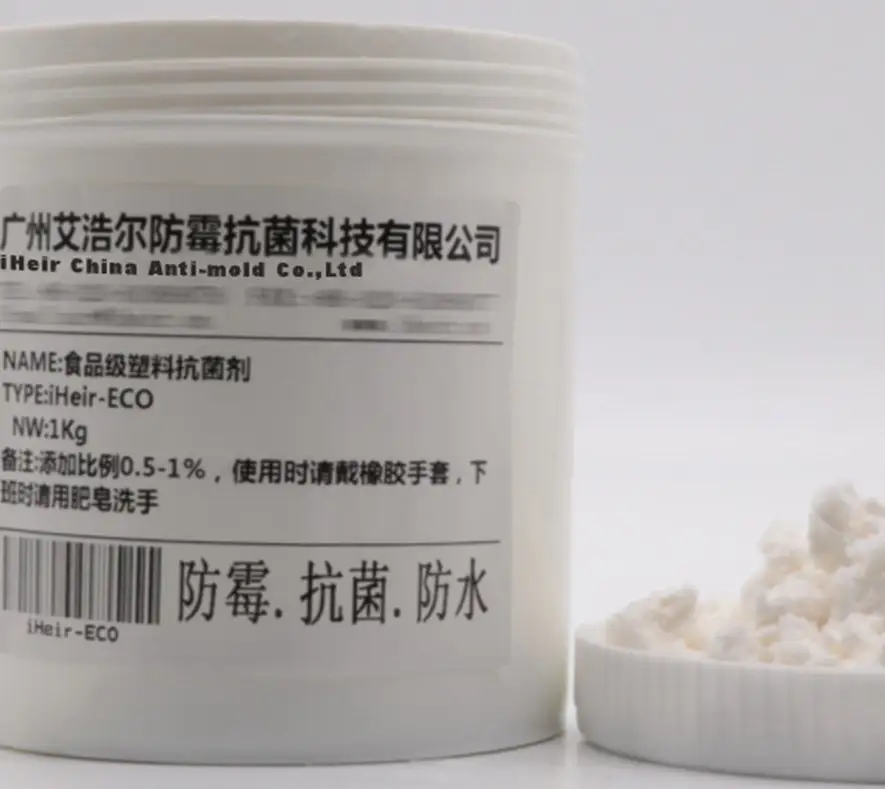
Which layer of a wall sticker should be treated first? A wall sticker is a PVC film, an adhesive and a release paper laminated together, and the mould starts on the release paper and the curled edge, so a pass on the film alone never covers the paper side. The PVC film takes iHeir-ECO plastic antimicrobial agent at 0.5%-1.0% on PVC resin weight at the compounding stage, and the release paper runs with iHeir-D gas-phase antimicrobial and mould inhibitor at the packing stage, at 0.1-0.2 g of active content per sheet. This article covers the two points and the figures.
1. Where the mould comes from: film, adhesive and release paper are three layers
A roll of wall sticker opens into three materials. The PVC film is the face layer, calendered or coated, and it carries the printed pattern; the adhesive in the middle sticks the film to the wall; the release paper on the back protects the glue until dispatch. Mould rarely starts on the film: PVC does not absorb water, while the release paper is paper and takes up damp fastest, and stood in a roll it has no air movement, so once it damps the paper face and the curled edge mould first and the back is already spoiled when the roll is opened.
The three layers pick up damp at different times. The film takes in the humidity of the plant at calendering and printing, but its surface is dense, so it damps slowly; the release paper records the ambient humidity at silicon coating and slitting; and once the rolls are stacked, the airless core leaves the paper layer in the middle as the hardest part to dry. A long spell in store, plus a temperature swing at sea, makes the paper side fail first.
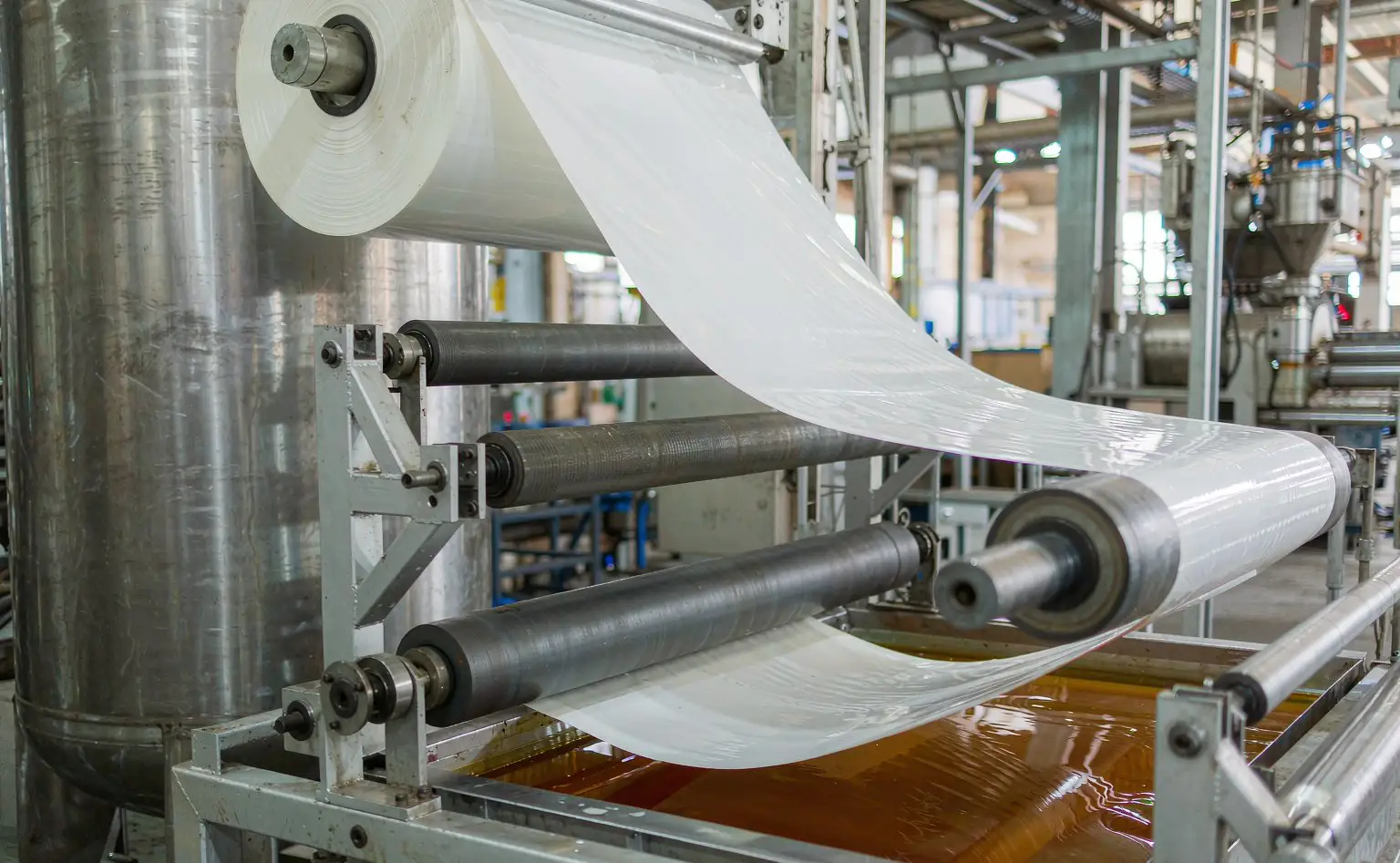
On the line, a sticker plant calenders or coats the PVC film, prints the pattern, coats the adhesive, laminates the release paper and slits to rolls. Both treatments are done on their own lines: the film goes in with the masterbatch at compounding and calendering, and the release paper runs with gas-phase paper at packing. Treat it after lamination and slitting and only the outside of the roll is covered.
2. The two points at a glance: PVC film and release paper
The table lines up the part, the stage, what is treated, the product, the figures and the points to watch, so it can serve as the first draft of a process card.
| Part | Stage | Treated item | Product | Figures | Points to watch |
|---|---|---|---|---|---|
| PVC film | Compounding / calendering | PVC resin | iHeir-ECO plastic antimicrobial agent | 0.5%-1.0% on resin weight | In with the masterbatch or a premix; thermal stability 240 degrees, clear of 320 degrees |
| Release paper | Packing | Paper | iHeir-D gas-phase antimicrobial and mould inhibitor | 0.1-0.2 g per sheet | Gas-phase paper printed with a special ink, placed by roll and kept apart from the paper layer |
| Adhesive layer | Adhesive coating | Glue film | Control (with the film batch) | On the film figure | The closed film is the mould point; dry the paper layer before laminating |
| Finished roll store | Rolls in store | Air in the core | Humidity control only | Below 60% relative humidity | Rolls stood upright and the core sealed; sheets by stack, and damp works out from the paper |
Four rows, one conclusion: the PVC film is figured on resin weight and the release paper by sheet, one on material weight and the other by count, so the two cannot be converted, and the adhesive layer and the roll store take no agent at all.
3. The PVC film: ECO in the masterbatch at 0.5%-1.0%
The film line is completed at compounding and calendering. Add iHeir-ECO plastic antimicrobial agent at 0.5%-1.0% on PVC resin weight, made up first as a masterbatch in a matching carrier or premixed with the pellets before the hopper. The additive bonds with the material and is distributed through the whole part rather than sitting on the surface, so calendering, printing, slitting and wiping after the sticker is on the wall will not rub it off. Thermal stability reaches 240 degrees, and the process temperature should stay clear of 320 degrees.
Three details. First, the figure is on total resin weight, regrind included, so any change in the regrind ratio means recalculating, and high-regrind batches belong at the top of the range. Second, a PVC formulation carries many plasticisers and stabilisers, so premix with the resin for even dispersion before calendering, since powder fed straight in agglomerates locally. Third, when the film is printed with pale patterns, run a small sample to check the shade and whiteness before a full batch.
4. The release paper: iHeir-D gas-phase paper at 0.1-0.2 g per sheet
The paper side is handled at the packing stage, with gas-phase paper. Paper or sachets made with iHeir-D gas-phase antimicrobial and mould inhibitor carry 0.1-0.2 g of active content per sheet; place them in the roll packing and keep them apart from the paper layer, and the active content releases slowly into the space inside the pack to hold down the humidity and the mould on that side. It is a product printed with a special ink and works by gas-phase diffusion, not by spraying the paper surface.
Three details. First, the quantity is by sheet, not by paper weight: a bigger roll takes more sheets and a smaller one fewer, and it does not convert into grams per square metre. Second, leave a gap between the gas-phase paper and the paper layer it protects; pressed flat against the core, the gas cannot spread and the sheet is wasted. Third, release paper takes up damp fastest, so the packaging paper should also be an anti-mould grade; see how to choose anti-mould packaging paper.
5. Adhesive layer and roll store: the stages no agent is dosed
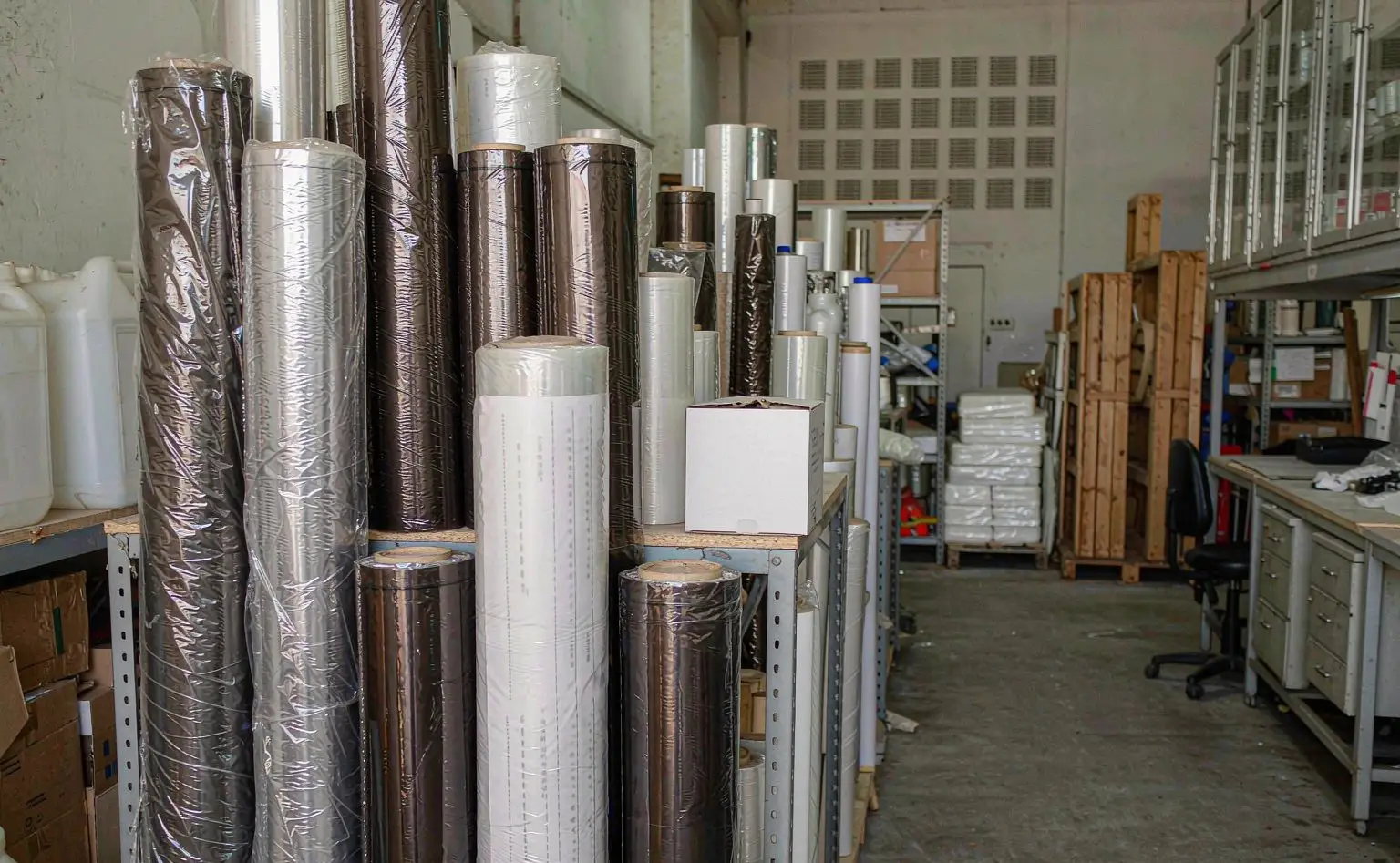
The key at the adhesive layer is not the additive but the moisture. Dry the film and the release paper before they are laminated, because once the glue film closes the damp inside cannot get out and mould starts at the paper layer and the curled edge. The roll store matters just as much: finished rolls are stood upright with an airless core, so place gas-phase sheets by stack and hold the store below 60% relative humidity.
Packing can also use desiccants by carton type, since a sea voyage is long and condensation inside a box is harder to control than in a warehouse. Test the long-term growth by ASTM G21 and hold a whole-roll sample per batch; testing the film alone does not count.
6. Questions that come up: one figure for both, or a pass after laminating
Can the film and the release paper share one figure? No. The film is figured at 0.5%-1.0% on resin weight and the paper at 0.1-0.2 g per sheet, one on material weight and the other by count, so the two do not convert and copying a number either wastes material or falls short.
Can a pass after laminating and slitting make up for it? No. With the roll stood upright and the core airless, a spray reaches the outer wrap only, leaving the paper layer and the curled edge untouched.
Can extra loading cover a long spell in store? No. Damp in storage is an environment problem, not a concentration problem, and extra loading only raises cost. Hold the store below 60% relative humidity, place sheets by stack, and dry the goods before packing.
Two points carry the work: the PVC film goes in with the masterbatch at compounding and calendering (iHeir-ECO at 0.5%-1.0% on PVC resin weight, thermal stability 240 degrees, clear of 320 degrees), and the release paper runs with gas-phase paper at the packing stage (iHeir-D at 0.1-0.2 g of active content per sheet, placed by roll with a gap to spread), while the adhesive layer and the roll store preserve both by drying, humidity control and gas-phase sheets. Samples and TDS sheets are available for a trial on your line.


