




 View Count:38
 Date:2026-08-29
Cutting board got moldy? Bamboo and wood boards develop black-green mold spots on the cutting surface over time, and washing does not make them go away – the mold has already penetrated the wood grain. This article explains in plain language why boards mold, how to treat them, and how to prevent it.
1. Why Do Cutting Boards Grow Mold? Three Easy-to-Understand Reasons
Mold grows on a cutting board the way moss grows on damp bark – give it water, nutrients and warmth, and it thrives. Cutting boards meet all three conditions:
- Knife marks trap water: every cut leaves grooves like tiny channels that hold rinse water for hours;
- Wood absorbs moisture: bamboo and wood fibers act like a sponge. In rainy seasons with 80%+ humidity, boards absorb water even when unused – when moisture content (the water held inside the material) exceeds 12%, mold appears within 3-5 days;
- Food residue feeds mold: leftover oils and starch are mold’s favorite food. Residue + water + warmth = the complete recipe for mold.
In one sentence: knife marks hold water + wood absorbs moisture + residue feeds mold = moldy board.
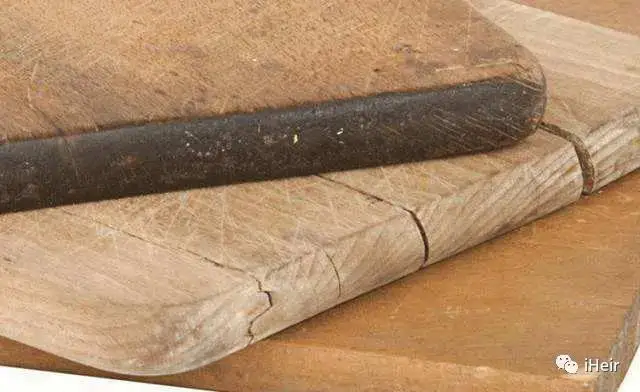
▲ Mold on a bamboo cutting board
2. How to Treat a Moldy Board? Five-Step Removal
Do not throw the board away yet. Follow these five steps and most boards can be saved:
- Dry brush: brush off surface mold with a dry brush or cloth (do this outdoors to prevent spore spread), then rinse with water;
- Apply mold remover: spray a bamboo/wood mold remover (e.g. iHeir-CM) on the spots and let it sit 5-10 minutes – do not rush this step: under 5 minutes only removes the black surface while the mold roots stay in the wood and regrow within 1-2 weeks;
- Scald with boiling water: pour boiling water over the whole board to kill most remaining spores, then drain immediately;
- Dry in airflow: stand the board upright (not flat against a wall) in a ventilated area for at least 24 hours – this is the most critical step: if the inside stays damp, mold returns like clockwork;
- Oil the surface: once fully dry, apply a thin coat of food-grade mineral oil to fill knife marks and gaps, so water cannot pool there again.
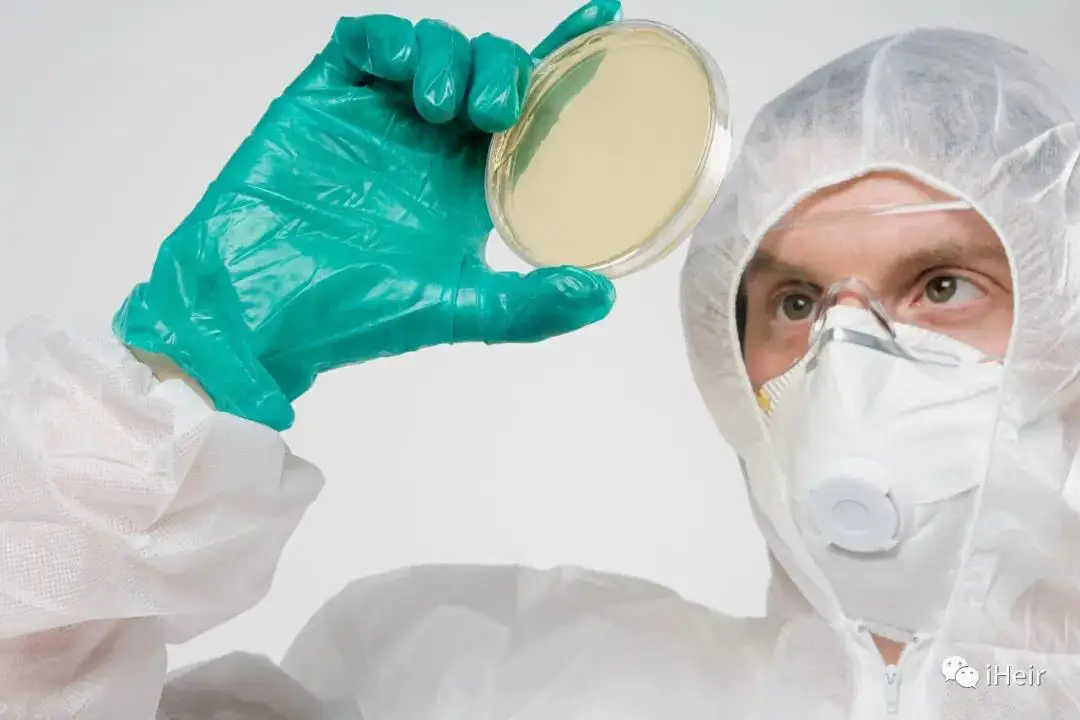
▲ Bamboo cutting board treatment
How to check if a board is fully dry: place a paper tissue flat on the surface before bed, cover with plastic wrap, and check in the morning – if the tissue is damp, keep drying.
3. Daily Prevention: Three Habits + One Table
Treating mold is firefighting; daily prevention is fireproofing. Remember three habits:
- Wipe dry and stand upright after use: dry with a cloth and store upright on a drainer (not flat, not against the wall) so both faces ventilate;
- Sanitize weekly: scald with boiling water or sun-dry for 1-2 hours (UV kills spores);
- Separate raw and cooked: use two boards for raw meat and cooked food – cleaner and less residue buildup.
| Scenario | Action | Why |
|---|---|---|
| After daily use | Wipe dry + stand upright | No standing water, no mold conditions |
| Weekly | Boiling water / sun-dry 1-2h | Heat and UV kill accumulated spores |
| Rainy season | Dehumidifier (RH below 60%) or desiccant | Lower air humidity stops wood absorption |
| Long idle | Wash, fully dry, wrap in moisture barrier | Isolates moisture during storage |
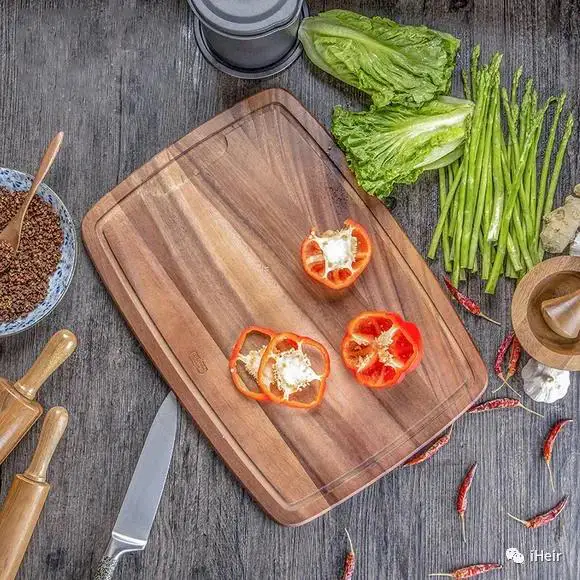
▲ Daily cleaning of cutting boards
4. What Should Bamboo Board Factories / Exporters Do?
Home boards are easy, but if you are a bamboo board factory or exporter, boards go into containers for 30-40 hot, humid days at sea – without treatment, the whole container arrives moldy and customers reject it. Factories should follow three steps:
- Soak raw material: treat boards with a soak-type bamboo/wood anti-mold agent (e.g. iHeir-MA) at 2%-5% concentration for 15-30 minutes so the actives penetrate the wood – surface spraying alone is destroyed by cutting and sanding;
- Protect finished goods: after boards dry (moisture below 12%), add 1-2 anti-mold sachets (e.g. Power Pak) plus desiccant in each carton to hold humidity down;
- Protect the container: 4-6kg desiccant + 8-12 anti-mold rods per 40ft for the whole voyage. See our container desiccant dosage guide for details.
Last year a bamboo cutting board exporter in South China had a full container rejected at a European port due to edge mold and lost part of the payment. After our rework and repackaging, the second shipment followed “soak + in-carton sachets + container rods” and arrived with zero mold – the customer renewed for the full year.
For more general bamboo/wood mold methods, see How to Use Wood Anti-Mold Agents? and Bamboo & Wood Chopsticks Got Moldy?
5. FAQ
Q1: Can a moldy board still be used?
A: Light spots (surface darkening, wood still firm) are fine after the five-step treatment; if mold penetrated deep, the wood is soft and smells musty, replace it – such a board contaminates food and is not worth the risk.
Q2: Does dish soap remove mold?
A: Dish soap only removes surface oil and floating mold; it cannot kill spores inside the wood, so mold returns in days. Use a penetrating mold remover plus boiling water.
Q3: Do plastic boards mold?
A: Less than bamboo/wood (the surface does not absorb water), but residue in knife grooves can still grow mold over time. Choose antimicrobial masterbatch boards or scald regularly.
Conclusion
Cutting board prevention is three sentences: wipe dry and stand upright after use, sanitize weekly, control humidity in rainy seasons. For bamboo anti-mold products, contact us or browse the anti-mold product range.