




 View Count:22
 Date:2026-10-20
How do you rescue wooden bowl and spoon mould, and why does food-contact ware need a longer soak? Most of it never soaked through in the first place: a bowl wall is thick and hardwood is tight, so the fibre takes water far more slowly than a chopstick does, and a chopstick-length dip leaves the core dry. Food-contact ware takes iHeir-FT bamboo and wood anti-mildew powder at 1:500 with the bath above 45C, dipped to a 10%-15% weight gain. This article covers the ratio, the soak time, the drying rule and what to do with a bowl that has already spotted.
1. Why a wooden bowl and spoon mould more easily than a chopstick
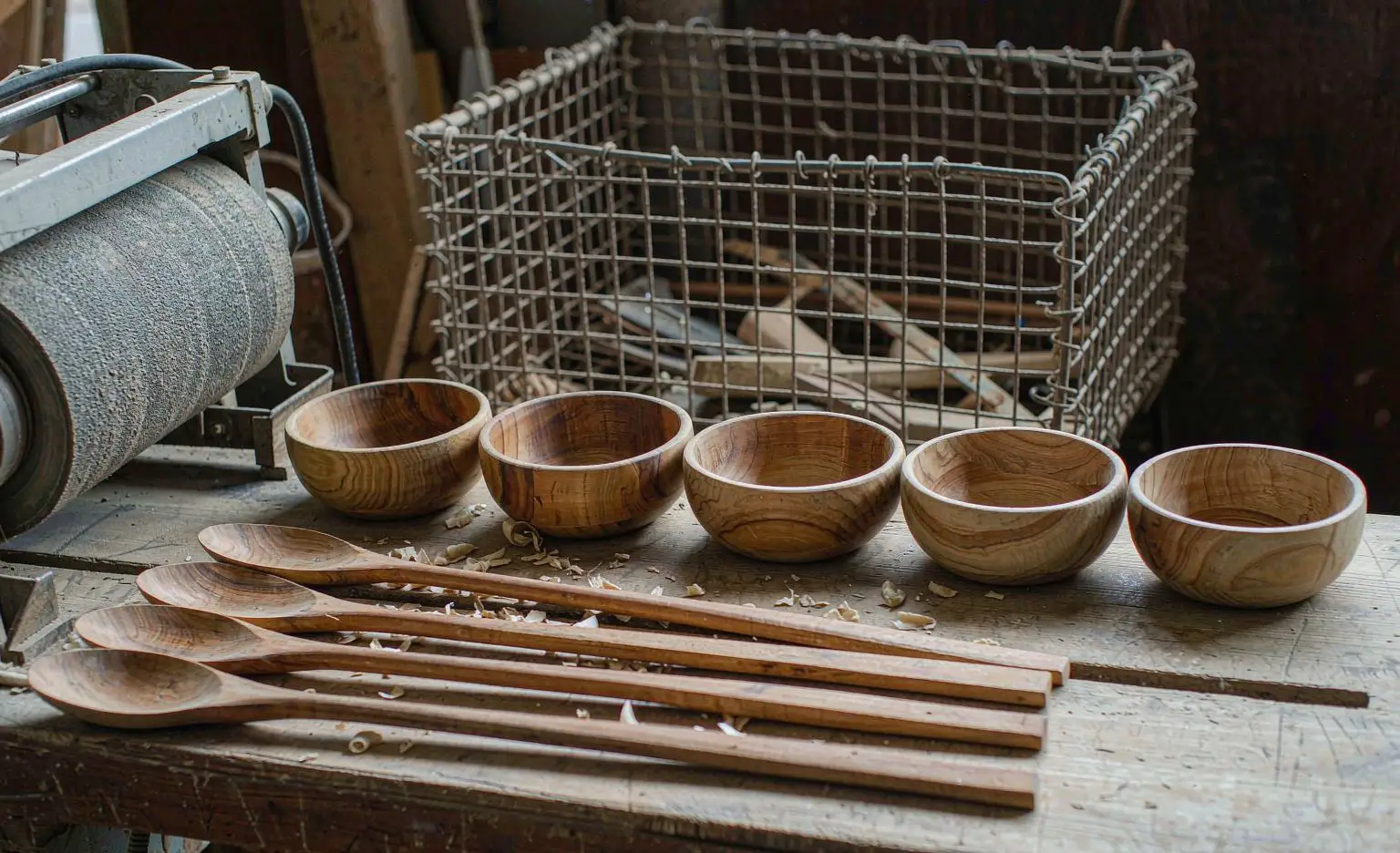
Same material, harder problem, for three reasons. The first is wall thickness: a bowl wall runs 6-10mm and a spoon head is thicker still, and the additive has to travel from the surface into the core, which takes time and temperature rather than a stronger bath. The second is density: hardwood has fine vessels and penetrates slowly, so a three-minute dip wets the skin and nothing else. The third is service: bowls and spoons go through water every day and are usually put away damp, so residual water sits on the inner wall and the back of the spoon, which is exactly where a spot starts.
That gives food-contact ware two rules: use the lightest ratio that still works, and give the soak more time while drying the piece properly. Neither is solved by adding more powder – a stronger bath leaves more residue on the surface, which washes off in a few uses, while what matters is getting the additive into the fibre and then getting the water out.
2. Which concentration food-contact ware should use
The FT data sheet splits the ratio three ways and food-contact ware uses the lightest; the table lists all three so purchasing can check an order.
| What is treated | Dilution | Water temperature | Weight gain | Note |
|---|---|---|---|---|
| Chopsticks, bowls and spoons – food-contact ware | 1:500 | 45C or above | 10%-15% | Lightest ratio, so the soak runs longer |
| Open-grained bamboo and wood parts | 1:200 | 45C or above | 10%-15% | Thin-walled, light parts |
| Dense bamboo and wood parts | 1:100 | 45C or above | 10%-15% | Hardwood, thick stock |
| Top-up liquor | 1:180 or stronger | 45C or above | – | When the liquor no longer covers the parts |
Why is the lightest ratio the one for food-contact ware? Because the face that touches food is the one that matters, and less residue is better; protection comes from additive inside the fibre, not a layer on the surface. The 1:500 dosage is the one the data sheet sets for food-contact chopsticks, and bowls and spoons belong to the same group. On safety, the FT test was run at 0.5% and returned no irritation to skin or eyes, and slight oral toxicity – which is why it is the grade to pick for this kind of ware.
3. Mixing the 1:500 bath: cold water first, powder dissolved in stages
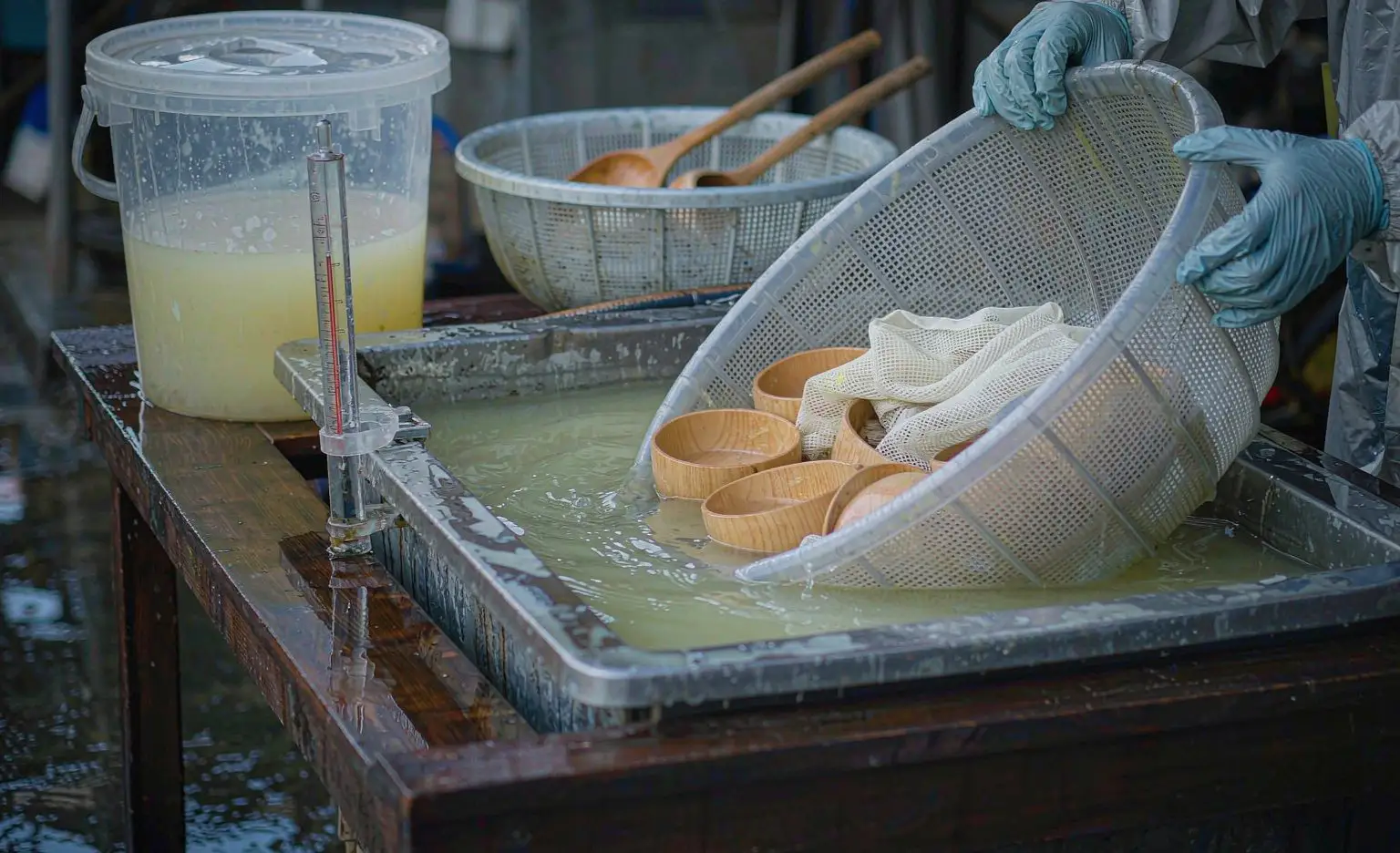
iHeir-FT bamboo and wood anti-mildew powder is a pale yellow crystalline powder with a slight sharp odour, poorly soluble in cold water and much more soluble in hot water above 65C, with an active content of 98% or more. Do not tip the powder into cold water in one go – it cakes and sinks. The data sheet method is: fill the tank with cold water, put the weighed powder into a smaller pail, dissolve it with hot water added in several portions, pouring the clear liquid into the tank each time and repeating four or five times, then rinse the pail into the tank.
Worked example: for 200kg of a 0.5% bath, take 1kg of powder, put 160kg of cold water in the tank and use the remaining 40kg as hot water in stages. A 1:500 food-contact bath follows the same method with less powder per litre; keep the bath above 45C, and top up with hot water in winter when the tank cools.
FT is acidic and must not touch metal or alkaline material, so tanks, baskets and hooks should be plastic; work with ventilation and wash hands with soap. A mixed bath is stable and can be reused, topped up at 1:180 or stronger when the level drops below the parts. Packing is 30kg to the drum with a three-year shelf life.
4. How long to soak, and what weight gain counts as through
The criterion is a 10%-15% weight gain, not a fixed time. Hardwood bowls and spoons are dense, so reaching it takes longer than a chopstick: at the same 1:500, a chopstick is done in minutes while a bowl keeps going. Weigh three pieces from the batch as a baseline, pull them when the gain enters the window, and run the rest to that time. A piece that was not soaked through shows it once drained: the wall whitens again quickly and dries too fast.
During the soak the parts must be fully submerged. Bowls float, so hold them down with a mesh basket or a plastic bar across the tank; spoons go in loose rather than tied in a bundle, because a bundle keeps a dry core. Drain before drying, and never stack wet pieces in a crate – the centre holds water and the soak is wasted. Ratios for other bamboo and wood parts are in mouldy bamboo and wood chopsticks.
5. Drying and packing: if the water stays, the soak is wasted
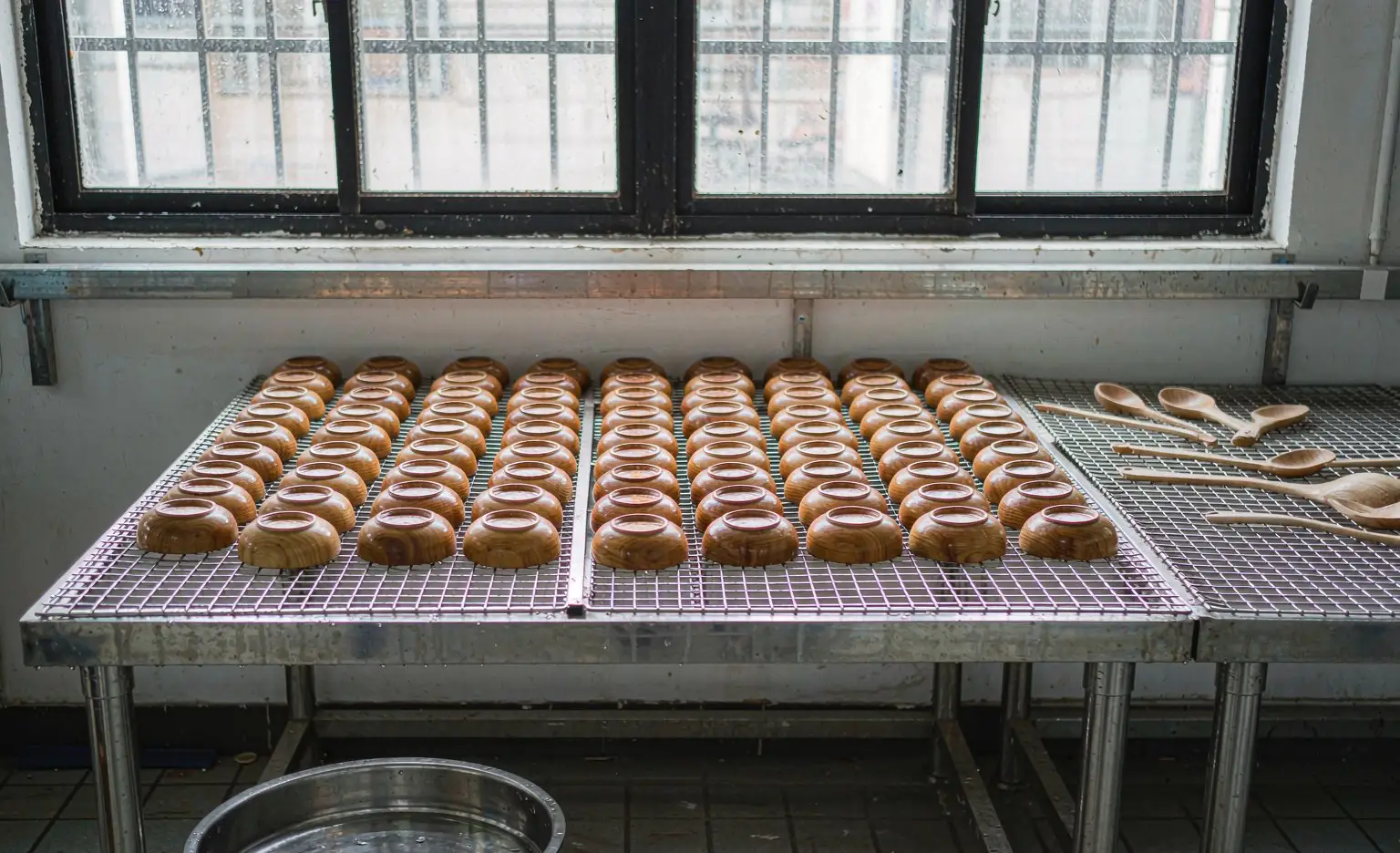
Drying is where food-contact ware most often fails. A bowl holds water if it is set the wrong way up, and holds it on the inner wall if it is set the right way up, so the practical answer is to stand it upside down on a mesh rack with a gap under the rim and let the water run off; spoons go flat in a single layer, never stacked. Dry until the moisture is stable and the surface no longer feels damp before packing, which takes longer than the surface suggests – dry skin over a wet core means water circulates inside the bag and mould starts on the inner wall.
Two things at packing. Do not use a fully sealed bag: leave a vent or wrap in moisture-resistant paper. And check a few pieces on the inner wall before the carton is closed, sending any damp ones back to the rack. In the wet season add a small desiccant pack to the carton; the cost is trivial. For ware that will be oiled, the data sheet is explicit that dipping and drying first helps the oil take, so the order is soak, dry, oil – never the other way round.
6. Can a bowl that has already spotted be saved
Two cases. Where the mould is on the surface and the colour has not changed, scrub with water and a neutral cleaner, dry it thoroughly, give it another 1:500 soak and dry it again; it can still ship, but downgrade it or declare it, because buyers are stricter on food-contact ware. Where the spots have gone into the wood and the colour has gone black or green, it cannot be saved: once hardwood is moulded through the fibre, sanding removes neither the stain nor the smell, and the piece is scrap.
The reason is worth remembering: the mould is not only on the surface, the hyphae travel along the vessels, so a piece that has been scrubbed clean keeps growing inside and spots again two weeks later. That is the argument for doing the work up front – soak through, dry through, pack with a vent – which is what keeps the rework rate down.
Closing: food-contact ware at 1:500 with the bath above 45C, dipped to a 10%-15% weight gain; parts fully submerged, bowls held down with a basket and spoons loaded loose; drain, then dry upside down on a rack in a single layer before packing with a vent; surface mould can be cleaned, re-soaked and downgraded, while mould in the fibre is scrap. iHeir-FT ships 30kg to the drum with a TDS, and samples can be checked against your wood species and wall thickness.


