




 View Count:55
 Date:2026-09-29
How do you deal with hotel linen mould when the goods are in constant circulation? Linen moves fast and goes through the wash line again and again, so it looks as though nothing sits long enough to grow, yet the failures cluster at two points: new stock waiting in the store, and washed stock packed before it is properly dry. Run iHeir-BJ at 2-3% o.w.f. by padding at the mill, treat spots with iHeir-Clean, and hold the pack climate with Power Pak. This article covers the three stages, the wash-line controls and the storage figures.
1. Why linen goes mouldy in the transit store
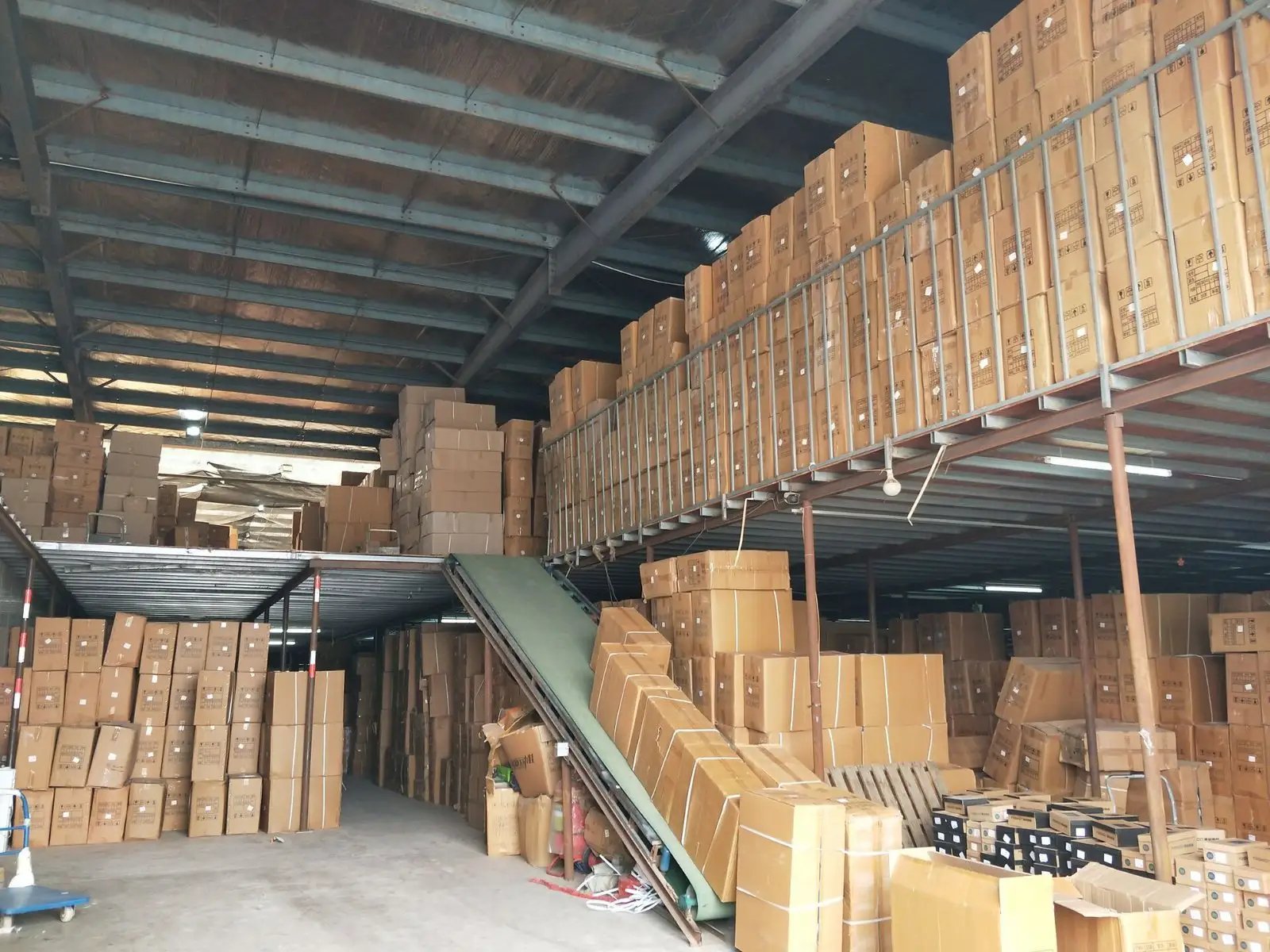
Linen is high-turnover and batch-concentrated. It leaves the mill into a finished-goods store, moves to a commercial wash house or an in-house line, is washed, dried, pressed and racked again for dispatch. It looks as though it never stops, but every step contains a stationary period: stock waiting for an order, washed goods waiting for pressing, pressed goods waiting for loading. Those are where growth happens, and the wet season concentrates it.
Three causes account for most of it. First, goods are packed with the moisture content still above specification, so the water is sealed between the pieces. Second, the transit store is poorly ventilated and the racking sits against an outside wall, so the lowest and outermost layer takes up damp first. Third, the new stock never received a mould finish at the mill, or received too little add-on, so the fibre carries no protection and growth starts along the folds as soon as conditions allow. The first two are process discipline; the third is a specification to agree with the mill when the order is placed.
2. The three control points at a glance
The table lists the stage, what is treated, the product, the figures and the points to watch, so purchasing and quality can work down an existing supply chain against it.
| Stage | Treated part | Product | Figures | Points to watch |
|---|---|---|---|---|
| Mill finishing (the mould line) | New linen, bedding fabric, towelling | iHeir-BJ textile mildew inhibitor | Padding at 2-3% o.w.f. | Bath 21-50 degrees, pH 4.5-8.5; cationic, never with an anionic auxiliary |
| Turnaround after washing | Washed pieces awaiting packing | Drying and moisture control | Store below 60% relative humidity | Cool before packing; packing warm seals the damp in |
| Spot treatment | Pieces that already show spotting | iHeir-Clean mould spot cleaner | Wipe on and let dry | Test a small area first, and check dyed and yarn-dyed pieces separately |
| Transit store and packing | Packed units and the space inside | Power Pak anti-mould tablets | Working in 72 hours, replaced every 15 days | Place by pack volume, inside the bag with the goods |
| Export and long-haul | Full container or full truck load | T-1000 container desiccant sticks | 8-10 sticks for 20 ft, 10-12 for 40 ft | Hung from the roof rails, with the air path left clear |
| Acceptance | Finished goods and batch file | Testing as agreed in the contract | Retained sample per batch | Mould is read from a growth rating such as GB/T 24346-2009 |
Six rows, one conclusion: linen protection is a relay between three stages. Build it into the fibre at the mill, keep the wash line dry, and hold the store and the pack climate — if one stage slackens, the other two have to carry it.
3. At the mill: how to run the anti-mould finish
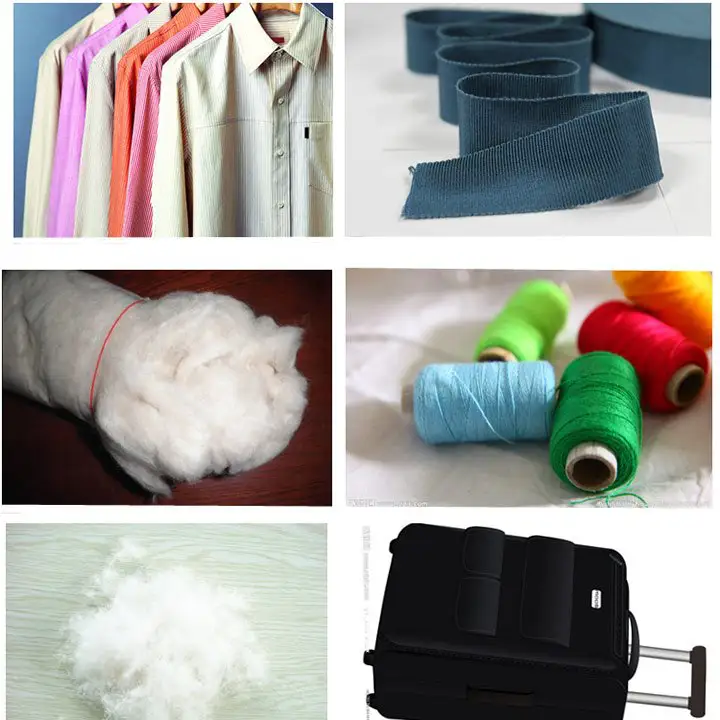
New stock is the only point in the chain where protection can be built into the fibre. Treat with iHeir-BJ at 2-3% o.w.f. by padding, with the bath at 21-50 degrees Celsius, the working liquor at pH 4.5-8.5 (ideally near 6), soft water throughout, and pre-mixing with 9-13 parts water before the bath. Hold pickup at 70% and dry as usual. The dosage sets the service life: 2% corresponds to roughly a year or more, 3% to two to three years, so the pieces washed most often, such as table cloths and guest-room bedding fabric, are simpler at the 3% tier.
Purchasing should agree three things with the mill: the tier and the bath temperature, written into the process card; the finishing record supplied with each batch; and a growth rating to GB/T 24346-2009 on sample, rather than a check of weight and hand feel alone. One rule matters on the line: BJ is cationic and must not run in the same bath as an anionic softener or fixing agent, so the mould finish goes ahead of softening with a clear rinse in between.
4. The wash line: moisture, cooling and segregation
No mould agent is added on the wash line; discipline is what protects it, and it is also where growth is most easily reintroduced. Three rules. First, drying has to bring the moisture content back to specification, because packing warm is the most common accident — pieces still carrying heat and vapour are stacked into the bag and create a warm damp micro-climate inside it. Second, the holding area between washing and packing has to be ventilated, with no standing water on the floor, and packed units must not be stacked in a corner. Third, keep affected and clean goods separate: anything showing spots is isolated and treated rather than mixed back into a normal batch.
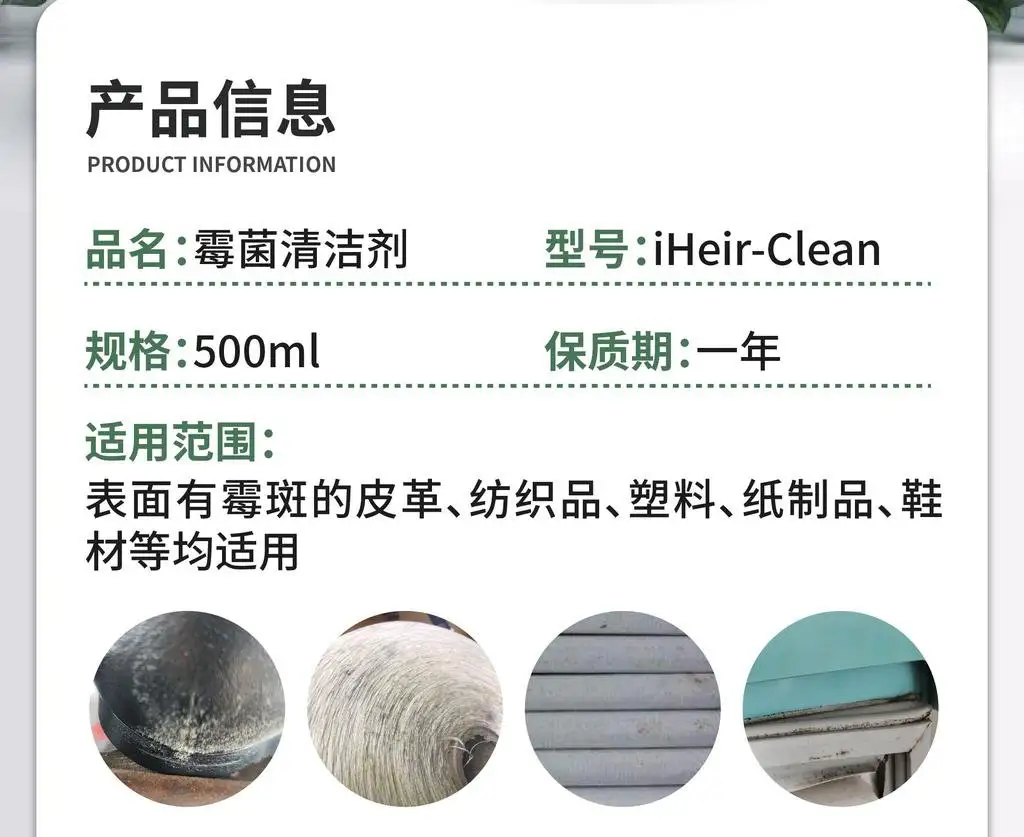
How do you treat pieces that already show spotting? Use iHeir-Clean and wipe the affected area, then let it dry, testing an inconspicuous area first and checking dyed and yarn-dyed pieces before running a batch. Be clear about what cleaning does: it removes the spotting that is already there, it does not put protection back into the fibre, so the goods still go back into humidity control afterwards or the growth returns.
5. Storage and casing: humidity plus vapour phase
Climate control in the transit store is the cheapest of the three lines. Hold the store below 60% relative humidity, run dehumidifiers through the wet season and log the curve, keep racking off the wall and the floor, and do not put dispatch stock on the wall-side rack. Work stock first in, first out.
At packing, use Power Pak tablets: they work within 72 hours and are replaced every 15 days, placed by pack volume and piece count inside the bag with the goods rather than outside it, because vapour-phase protection depends on distribution in a closed space. For container export or long-haul runs, hang T-1000 desiccant sticks to match the unit: 8-10 for 20 ft and 10-12 for 40 ft. Linen packs are bulky and stack tight, so container air movement is poor to begin with and roof condensation drips onto the upper packs first.
6. Common questions
Q: Does the finish survive repeated washing? It fades, which is why linen protection runs on two legs: build it in at the mill and control moisture during turnaround. The finish clearly delays the onset of growth, but heavy-wash goods cannot be carried by one treatment alone, so compare the tier of finish and the turnaround moisture plan together rather than on unit price alone.
Q: Can spotted pieces be rewashed? It depends. Where the spotting is on the surface and the fibre has not discoloured, cleaning and rewashing can work; where it has gone into the fibre, with a colour difference that will not wash out or a drop in strength, the piece is downgraded. Test a small area first, and be careful with dyed and yarn-dyed goods.
Q: Is a dehumidifier enough for the transit store? No. A dehumidifier handles the room, but the space inside a pack needs a vapour-phase product as well, and only the two together cover the journey from the store to the point of use. The finishing side is covered in choosing anti-mould packaging paper, and the fibre side in the anti-mould growth rating explained.
Hotel linen mould control comes down to three points: build protection into the fibre with iHeir-BJ, hold moisture content and holding conditions on the wash line, and hold the pack and container climate with Power Pak and T-1000, treating the occasional spot with iHeir-Clean. Samples and minimum order details are available on request.


