




 View Count:50
 Date:2026-08-29
How many mold resistance grades are there? Buyers and QC teams see phrases like “mold grade 0” or “99% antibacterial rate” everywhere, but few know what the numbers mean or how they are measured. This article explains mold testing standards and grade determination.
1. How Are Mold Grades Divided? GB/T 1741 Example
GB/T 1741 (mold resistance test of paint films) is the most common Chinese standard for coatings and plastic surfaces:
| Grade | Criteria (28-day incubation) | Recommendation |
|---|---|---|
| Grade 0 | No growth under 50x magnification | First choice for damp areas (bathroom, kitchen, exterior) |
| Grade 1 | No visible growth; slight under magnification | Acceptable for general indoor use |
| Grade 2 | Slight visible growth (<25% coverage) | Not for damp areas |
| Grade 3 | Clear growth (25%-50%) | Insufficient mold resistance |
| Grade 4 | Heavy growth (>50%) | No mold resistance |
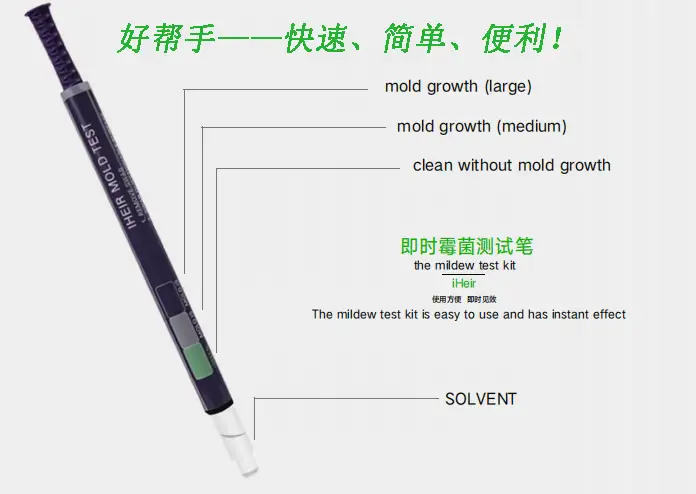
▲ Instant mold test pen (factory screening tool)
2. What Does Each Standard Measure?
| Standard | Object | Rating |
|---|---|---|
| GB/T 1741 | Paint films, plastic surfaces | 0-4 grades, 28-day incubation |
| ASTM G21 | Plastics and other nonmetallic materials | 0-4 (0 = no growth), by coverage area |
| AATCC 30 | Textiles | Part 3: fungal growth on fabric, 0-5 |
| ISO 22196 | Surface antibacterial (bacteria) on plastics | Rate >=99% or 99.9%, calculated from colonies |
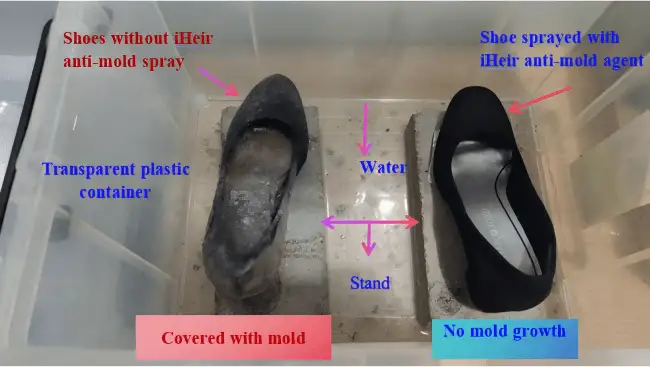
▲ Anti-mold agent effectiveness test
3. Three Points for Reading Test Reports
- Standard and sample: confirm which standard and material – using a plastic report to claim textile mold resistance is non-compliant;
- Grade and duration: confirm incubation time (14 vs 28 days); grade 0 at 28 days is the most reliable;
- Laboratory: CMA/CNAS-accredited labs issue reports with legal validity; choose accredited third parties.

▲ Factory self-test methods
4. What Should Each Role Do?
- Manufacturers: send products for grade-0 reports as sales proof; screen incoming materials with instant mold test pens (shake 30 seconds, rest 5-10 minutes, check color);
- Buyers: require material-matched reports, verify grade and lab accreditation, avoid “mismatched reports”;
- Brands: advertising “grade 0” requires a GB/T 1741 report – otherwise it is false advertising.
5. FAQ
Q1: Is antibacterial rate the same as mold grade?
A: No – antibacterial rate (ISO 22196) measures bacteria inhibition; mold grade (GB/T 1741) measures fungi inhibition; they cannot substitute for each other.
Q2: Can factories self-test mold resistance?
A: Use instant test pens for quick qualitative screening, but formal grading requires accredited lab 28-day incubation.
Conclusion
Understanding mold grades comes down to matching standard + matching material + accredited lab. For testing guidance or tools, contact us or browse the product range; related: How to Test for Mold?