




 View Count:14
 Date:2026-10-29
How do you stop jewellery box mould? The bloom almost always starts on the plush lining, and the water comes from the adhesive under it: glue pressed before it dries seals moisture between cloth and board, where wiping does not reach. The wooden body takes iHeir-M5 at 1:40 to a 15%-20% gain, the plush takes iHeir-BJ at 2%-3% o.w.f. before cutting and gluing. This article covers both stages and export packing.
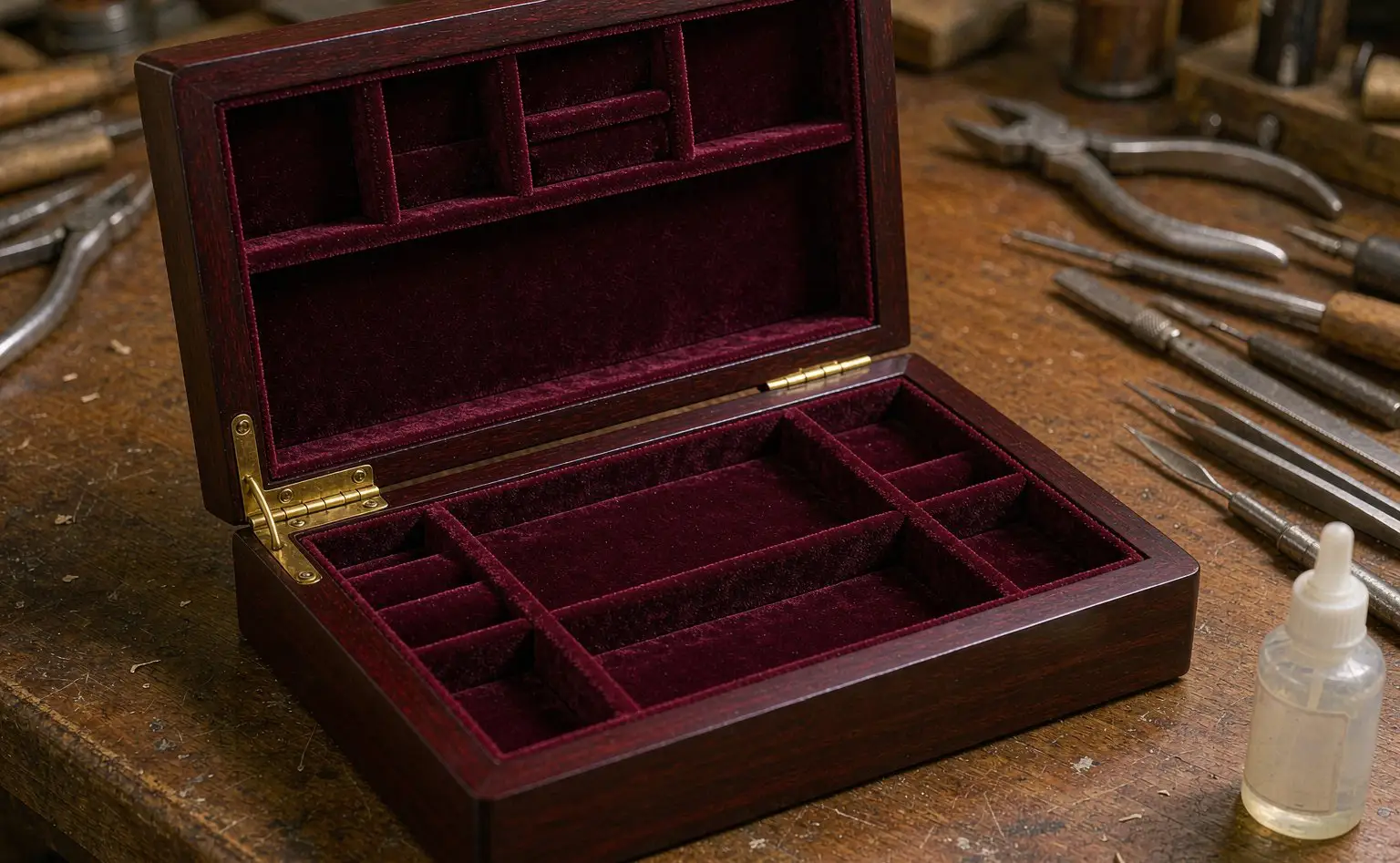
1. Mould starts on the plush lining and in the adhesive layer
A jewellery box is two material systems: a wooden body (MDF, solid wood or finger-jointed board) and a plush lining (long pile, short pile or imitation suede). The plush is a raised synthetic fabric with an enormous surface area, taking up moisture fast and giving it up slowly, so the bloom shows on the face and cut edge of the cloth first.
The adhesive layer matters more. Plush is stuck to the inside walls with water-based glue or hot melt. Water-based glue carries a lot of water: press it before it dries and the water is sealed between cloth and board, so the face is damp again within three days. Hot melt carries no water, but a box packed before the layer sets traps the same moisture.
The second place is the closed lid: once shut, a box is a sealed space lined with plush. On a sea leg the day-night swing condenses water on the inside of the lid and it lands on the cloth, the more so the smaller the box.
The third is stacking: boxes sit face to face with lids on lids, so the contact faces never breathe, and in the wet season the middle layers show a white ring on the lid.
2. Body and lining are treated separately
The table sets the four stages side by side: the body measured as weight gain, the lining as o.w.f. on dry cloth weight. The two are not convertible, and the order cannot be reversed.
| Part | Material and stage | Product and level | Where it goes | Basis |
|---|---|---|---|---|
| Wooden body | MDF or solid wood, cut and formed | iHeir-M5 mixed 1:40 | Dip after forming, before gluing | 15%-20% weight gain |
| Plush lining | Long or short pile, cut to size | iHeir-BJ 2%-3% o.w.f. | Finishing bath before cutting | Dry cloth weight |
| Gluing | Water-based glue or hot melt | No additive, set by glue weight and timing | Press station | Glue spread |
| Stacking and export | Boxing, cartoning, container | Humidity control only | Packing and loading | Store and container |
Two boundaries. The lining cannot be sprayed: additive on the surface is rubbed off by gluing, edge folding and trimming, and the cut edge blooms first. The body cannot be brushed instead of dipped: finger joints, routed grooves and end faces are out of a brush’s reach, and the bloom starts at the joint mouth.
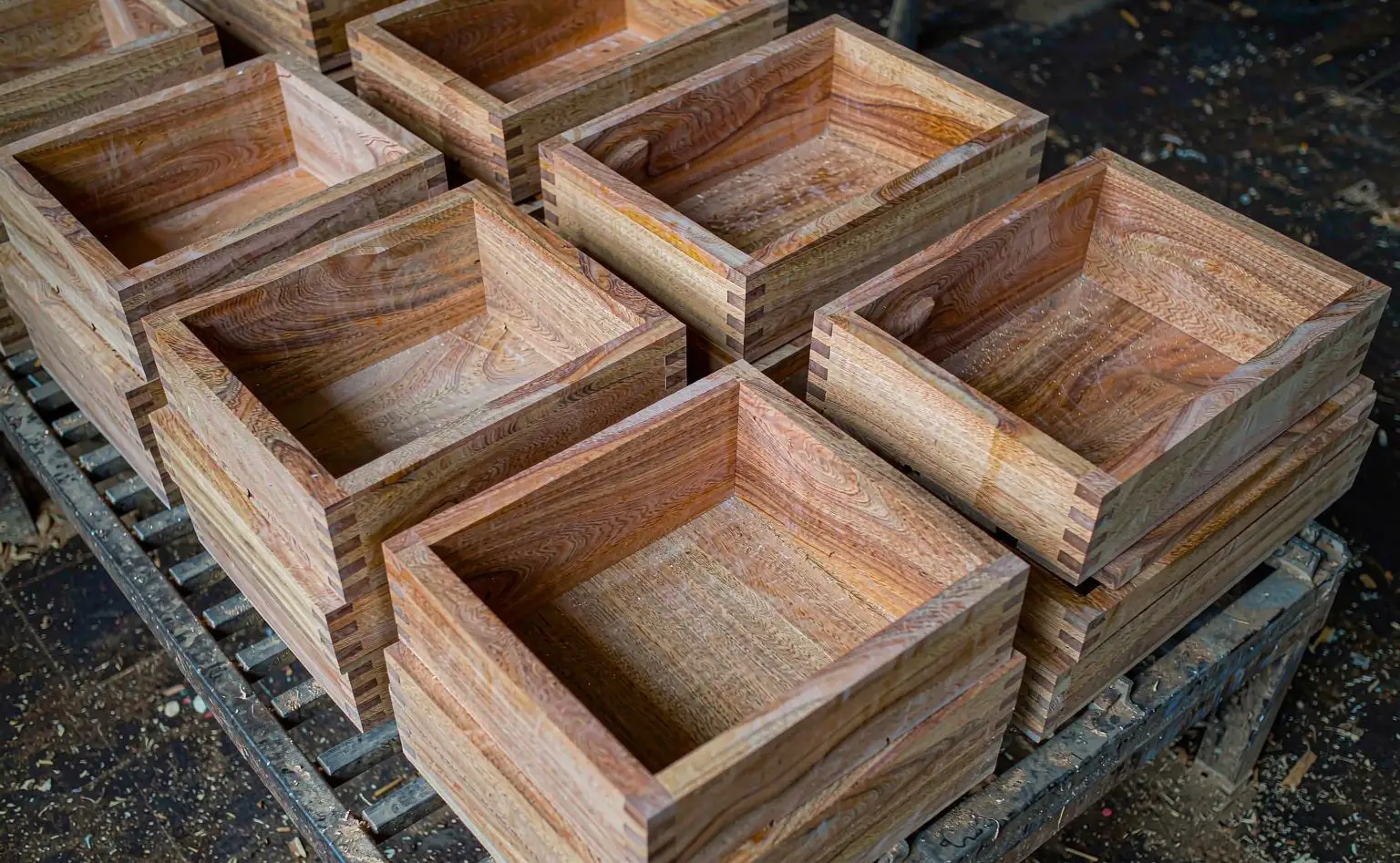
3. Wooden body: soak to a twenty percent gain
The body stage uses iHeir-M5 immersion-type bamboo and wood fungicide. Mix the bath at 1:40, that is 5kg of product to 100kg of water; submerge each body fully without letting it break the surface, soak to a 15%-20% gain in roughly 5-10 minutes, then lift, drain and dry before gluing.
Weight is the only firm criterion. Body thickness varies, so the same five minutes can take in twice as much on one box as on another; weigh a few pieces before and after and pull at 15%-20%. Below 15% the joint is dry at the core; above 25% the board cups and the joints open.
Three operating points. Tank material: M5 is acidic and must not touch metal or be mixed with alkaline material, so use plastic or FRP. Shake before use: a floating layer is normal, and pouring unshaken leaves the active content at the bottom. Top up at 1:40, because water alone dilutes the bath and later batches become a plain dip.
Do not stack the bodies out of the tank: stand them on racks in one layer, and bring moisture below 12% before gluing, since a wet board glued to plush seals the water inside the box.
4. Plush lining: one finishing pass before gluing
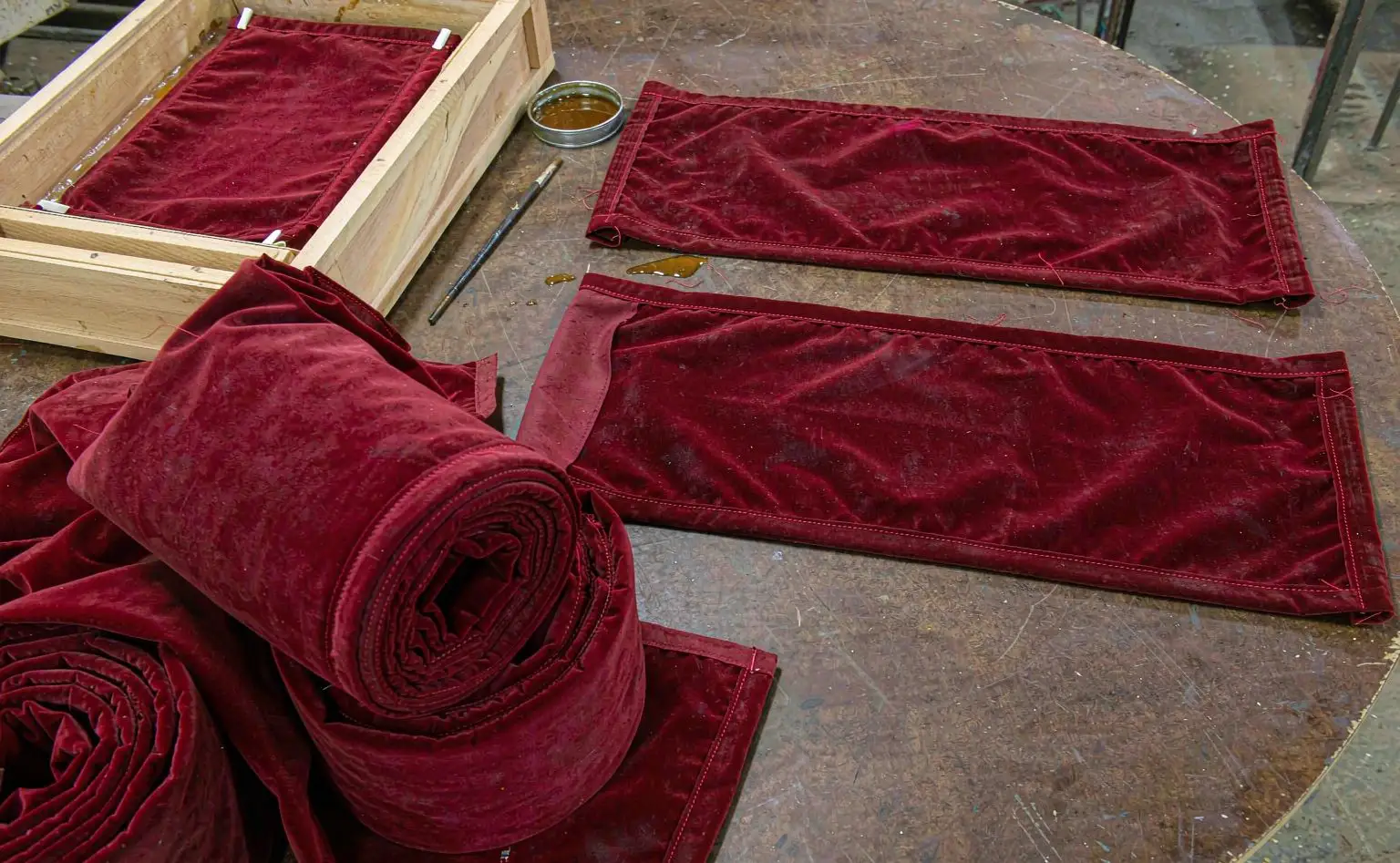
The lining stage uses iHeir-BJ textile mildew inhibitor at 2%-3% o.w.f. on dry cloth weight, bath 21-50℃ at pH 4.5-8.5 with 6 as the target, soft water only. Premix with 9-13 times its water, add 0.1% hydrophilic agent, then make up the bath; concentrate poured straight in leaves hot spots and patches on the pile.
The order is: finish the roll, dry it, cut it, glue it. Finishing comes before cutting, with pick-up at 70% and drying below 8% moisture. Cut pieces left on a bench for two days undo the work.
The easiest way to lose a batch: BJ is cationic and cannot share a bath with anionic auxiliaries. Where a softener or antistatic agent is anionic the two flocculate, scum rises and the cloth holds no additive. Schedule them separately or test compatibility first. Dose follows storage life: 2% gives about a year, 3% reaches 2-3 years.
5. Gluing, stacking and export
At the gluing station: hold the glue weight to the process card, let it flash off before pressing, and leave the box 24 hours for the layer to set. Body moisture below 12% going in, because a wet board glued to plush leaves the water no way out but into the box. Shop humidity below 60%, and no bench facing a door.
At stacking: leave a gap between boxes and never stack lid on lid; a compressed stack leaves the lower half without air. Hold the store below 60% RH, first in first out.
Leave an air path in the container, with no carton against the wall or under the ceiling: the day-night swing condenses water on the roof and those cartons dampen first. Once the inside of the lid blooms, a gift box can only be downgraded. The humidity logic matches condensation in sea freight containers, and the process side follows bamboo and wood products in humid environments.
6. Questions on patches, damp lids and boxes that already bloomed
Q: There are light and dark patches on the plush after finishing — is the dose too high? Patches come from concentrate poured straight in, which leaves local high concentration, or from uneven pick-up. Premix at 9-13 times water, add the hydrophilic agent and hold pick-up at 70%; pieces that show patches go to the hidden lower lining, not the lid face.
Q: The inside of the lid is damp and the plush is tacky — is that the glue? Usually the box was packed before the glue set, or flash-off was too short. Check glue weight and flash-off first, then whether body moisture was above 12%; only if all three are right look at shop humidity.
Q: Can a box that already has mould be saved? Only surface bloom can be wiped, dried and re-finished; where mould has gone into the base of the pile the lining has to be replaced. Any reworked batch needs both the body soak and the lining finishing again — wipe only and the mould returns within two weeks.
Four points to take away: soak the body in iHeir-M5 at 1:40, fully submerged, pulled at a 15%-20% gain in 5-10 minutes, in a non-metallic tank, shaken first and topped up at 1:40, with moisture below 12% before gluing; finish the plush at 2%-3% o.w.f., bath 21-50℃ at pH 4.5-8.5, premixed at 9-13 times water with 0.1% hydrophilic agent, pick-up 70%, before cutting; leave glued boxes 24 hours; stack with gaps, hold the store below 60% RH and leave an air path in the container.


