




 View Count:25
 Date:2026-11-06
Can leather jacket mould be prevented? The food comes from the oil left by fatliquoring, so the fuller the oil and the longer the storage, the sooner the spots appear, and on a finished jacket a spot means re-dyeing the whole garment with a shade difference that never goes away. The routine is 0.05%-0.2% iHeir-PF leather anti-mould agent on hide weight behind the fatliquor, plus iHeir-D vapour sheets at 0.1-0.2g of active matter in the cover. This article covers the dose, the finishing and the packing.
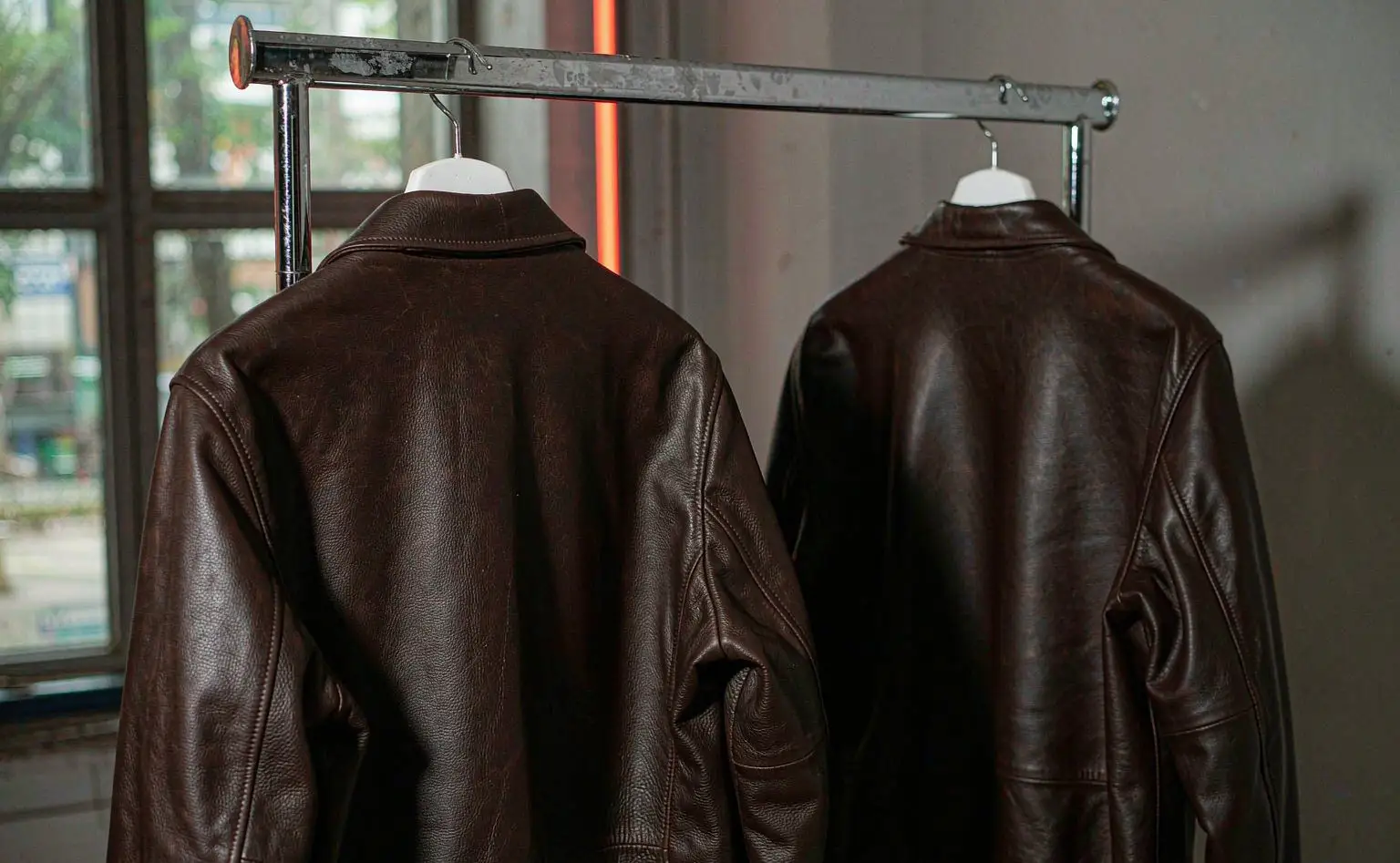
1. The mould starts in the oil left after fatliquoring
Trace a jacket back to the hide: chrome-tanned blue stock, retanning, fatliquoring, drying, finishing, cutting, sewing, pressing, bagging. Leather is collagen, and the sulphited, natural and synthetic oils used in fatliquoring are all organic food, so the two together build a culture medium into the hide.
Blue stock is the danger window. Chrome-tanned leather in the wet blue state carries a high moisture content at an acid pH, which is exactly where mould settles. Hides waiting on a pallet for the next stage pick up bloom on the grain the moment shop humidity rises, and by the finishing stage it has become a patchy shade.
More oil means more risk. Garment leather is fatliquored fuller than upper leather to get a soft handle, and the oil reaches the grain layer, which puts the food at the surface. Made into a jacket, the mould tends to start at the collar, the cuffs and the hem, the places that sit against the body and take moisture back first.
A spot leaves a shade difference. The finish on garment leather is thin, so a spot that eats into the grain means re-finishing the whole panel, and a poor job leaves a patch. Reworking one jacket costs far more in labour and material than dosing the fatliquor.
2. Hide and cover handle different stages
The table lines up fatliquoring, finishing, the cover and the carton. Hide is dosed on weight, paper on active matter per sheet, and the two are not convertible.
| Part | Material | Product and level | Stage | Control point |
|---|---|---|---|---|
| Hide, retanned | Chrome-tanned cowhide, sheepskin | iHeir-PF 0.05%-0.2% on hide weight | Behind the fatliquor | Liquor pH 8 or below |
| Finish coat | Acrylic, polyurethane | iHeir-PF 0.05%-0.2% | Finish make-up | Compatibility checked first |
| Cover lining | Non-woven, cotton cover | iHeir-D 0.1-0.2g per sheet | Bagging | Paper between sheet and finish |
| Carton and hangtag | Corrugated, coated board | iHeir-D one sheet on the wall | Packing, sealing | Only works in a closed box |
One boundary. iHeir-PF goes into the hide and protects the material; the vapour sheet sits in the cover and protects the space around the garment. Hide only leaves the cover and carton to mould, paper only leaves the spots inside the leather. Both stages, and the carton opens clean.
3. Dosing the anti-mould agent behind the fatliquor
Hide takes iHeir-PF leather anti-mould agent at 0.05%-0.2% on hide weight. It is an emulsifiable concentrate with 30±1% active matter that forms an emulsion in water, so dilute it to the drum ratio first and never pour concentrate onto the hide.
Which stage. Behind the fatliquor, meaning after the oil has gone in and while the hide is still turning. Add the two separately with a gap between them, so the oil distributes first and the agent follows; dosed together they compete for the same sites and the grain takes up less of either.
Hold the pH. Keep the treatment liquor at pH 8 or below. The product runs from pH 3 to 8 in a 1% solution, and above 8 the active matter degrades, so the dose is wasted. Where the float after fatliquoring is alkaline, adjust with acid into range before dosing and check again afterwards.
How much. Fast domestic turnover where the jacket sells within the season takes 0.05%-0.1%; an export lot that sits in a container, crosses a wet season in store or ships on a long routing takes 0.15%-0.2%. Garment leather is thin, so when going to the upper figure check handle and shade first, because an overdose dulls the grain.
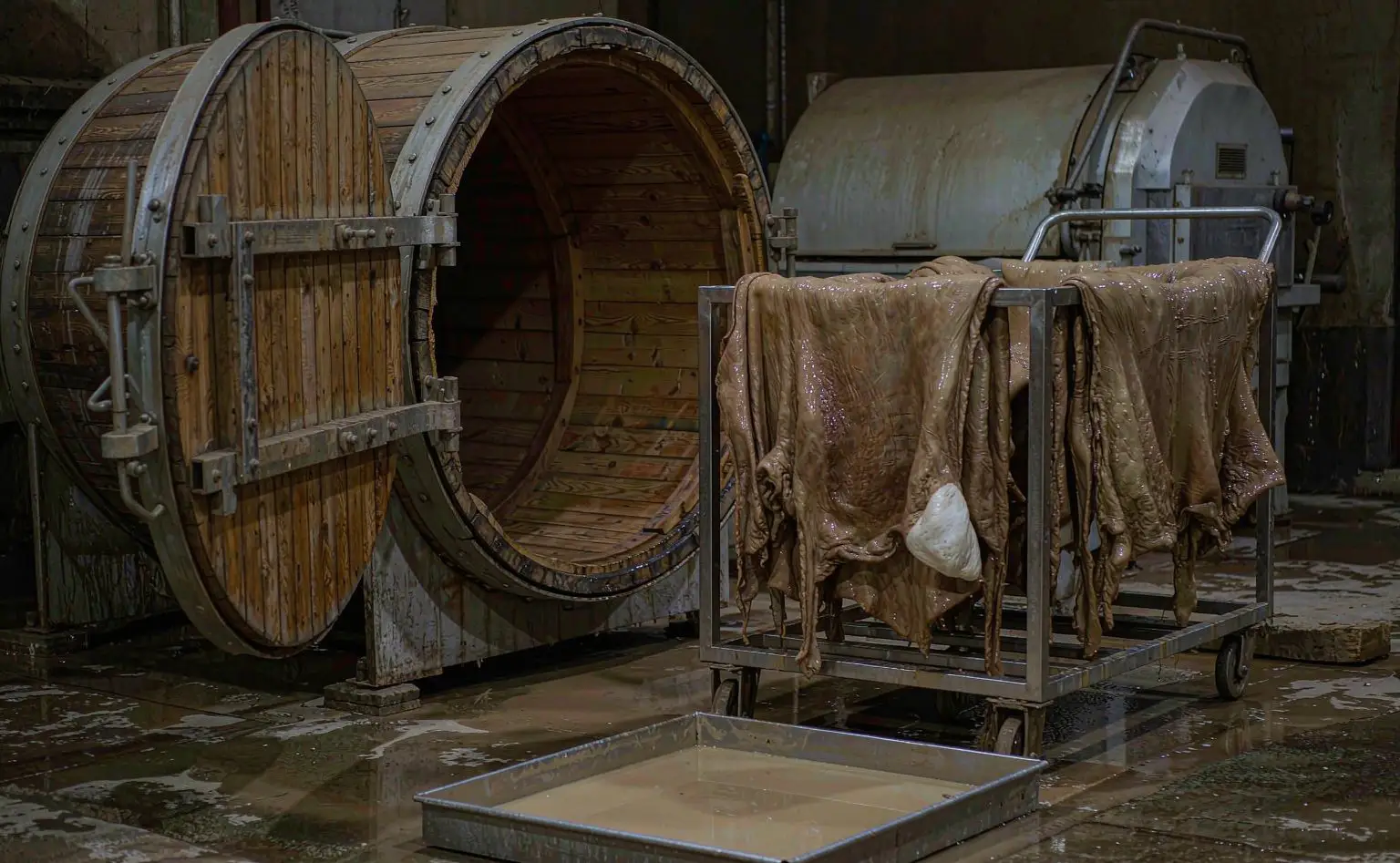
4. Finishing and drying: do not lock water into the hide
Mould control in the finish is a reinforcement, not the main line. Dose 0.05%-0.2% into the finish make-up alongside the acrylic or polyurethane, and check compatibility first: stir a small batch with the agent, let it stand, and look for separation, lumps or a gritty feel before making up a full bath.
Dry it through. Much of the mould on a jacket comes back out from the inner layers rather than starting on the surface. Follow the drying curve, measure moisture content off the dryer, and cut only below about 14% for garment leather; leather cut wet and sewn into a cover has the water sealed inside.
Pressing and hanging. Do not bag a jacket straight off the press, because steam pressing puts water in and it has to come out; hang the garment at a ventilated station until it is cool and dry. This is the step most often skipped in a wet season, and the time saved is paid back in rework.
5. Cover, carton and storage
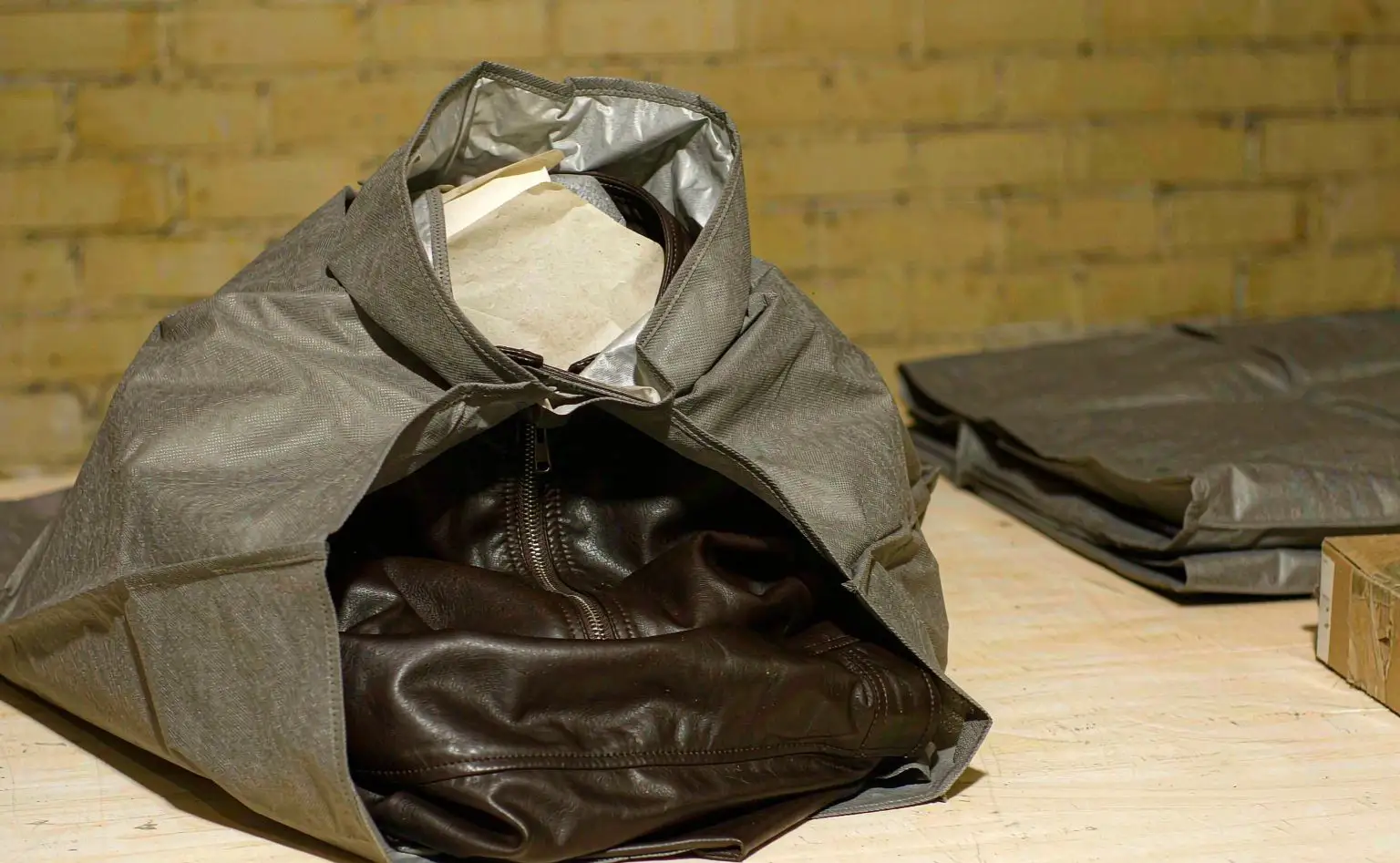
At bagging, tuck an iHeir-D vapour sheet into the cover lining at 0.1-0.2g of active matter per sheet. It is an ink-coated paper that holds a concentration in a closed volume, so it works inside a cover and a carton, not on an open rail.
Where it goes. Between the collar and the cover, or on the inside of the cover against the front panel, with a thin paper between the sheet and the finish. One sheet per bagged jacket; for a multi-piece carton, one on the carton wall and one between garments.
Trial compatibility first. Seal three times the normal dose with a finished jacket in a bag, mist a little water, separate with paper, and inspect after a few days for yellowing on a pale hide, a dulled finish or darkened hardware. iHeir-D carries 70%±5 solids and can corrode poor-quality metal when damp, so zips and rivets get the trial first.
Storage. Hold the finished goods store below 60% RH, hang jackets on ventilated rails clear of the outer wall and the floor, and never vacuum a cover, because moisture that cannot leave the bag beats any sheet inside it. Check on dispatch, and reseal any carton that was opened for inspection.
6. Questions on spots, handle and pale shades
Q: A jacket already has spots. What now?
Clean the spot with a leather cleaner, dry it, and see whether the grain has gone. Light bloom can be buffed and re-coloured; grain that has been eaten needs the panel re-finished. Always re-treat for mould afterwards, or the same lot repeats.
Q: Will iHeir-PF stiffen the leather?
Within 0.05%-0.2%, diluted before it enters the drum, the handle is normally unaffected. An overdose, or concentrate poured straight on, leaves the grain rough, so compare handle and shade on a small batch before scaling up.
Q: With a sheet in the cover, is hide treatment still needed?
Yes. The paper handles the space around the garment, and mould inside the leather still comes back; the split is protection in the hide and control in the pack, and dropping either one costs performance.
Q: Will a pale jacket shift shade?
At the recommended dose with the liquor held below pH 8 the risk is low. Overdosing, an alkaline float or too hot a dryer all push shade shift, so run a colour card comparison on pale hides first.
Four points to take away: dose iHeir-PF at 0.05%-0.2% on hide weight behind the fatliquor, diluted to an emulsion first, with the liquor at pH 8 or below and re-checked afterwards; reinforce at the same level in the finish make-up after a small compatibility batch; dry on the process curve, cut only below 14% moisture, and hang pressed garments until cool before bagging; tuck an iHeir-D sheet into the cover lining at 0.1-0.2g of active matter, add one on the carton wall, and run a trial at three times the dose first. A 1kg sample of the agent and a pack of sheets go out for a trial, with MOQ and lead time on the iHeir-PF product page.


