




 View Count:26
 Date:2026-11-05
What causes sweater mould, and why does it start at the yarn and not the garment? Wool and wool blends are protein fibres, so a spot on the yarn or garment washes to a mark or takes a shade difference on recolouring, and the piece is downgraded. Drain, rinse, and treat the yarn in a fresh bath with iHeir-BJ textile mildew inhibitor at 2%-3% o.w.f., then put iHeir-D vapour sheets in each poly bag at 0.1-0.2g of active matter. This article covers the sequence after dyeing and the packing.
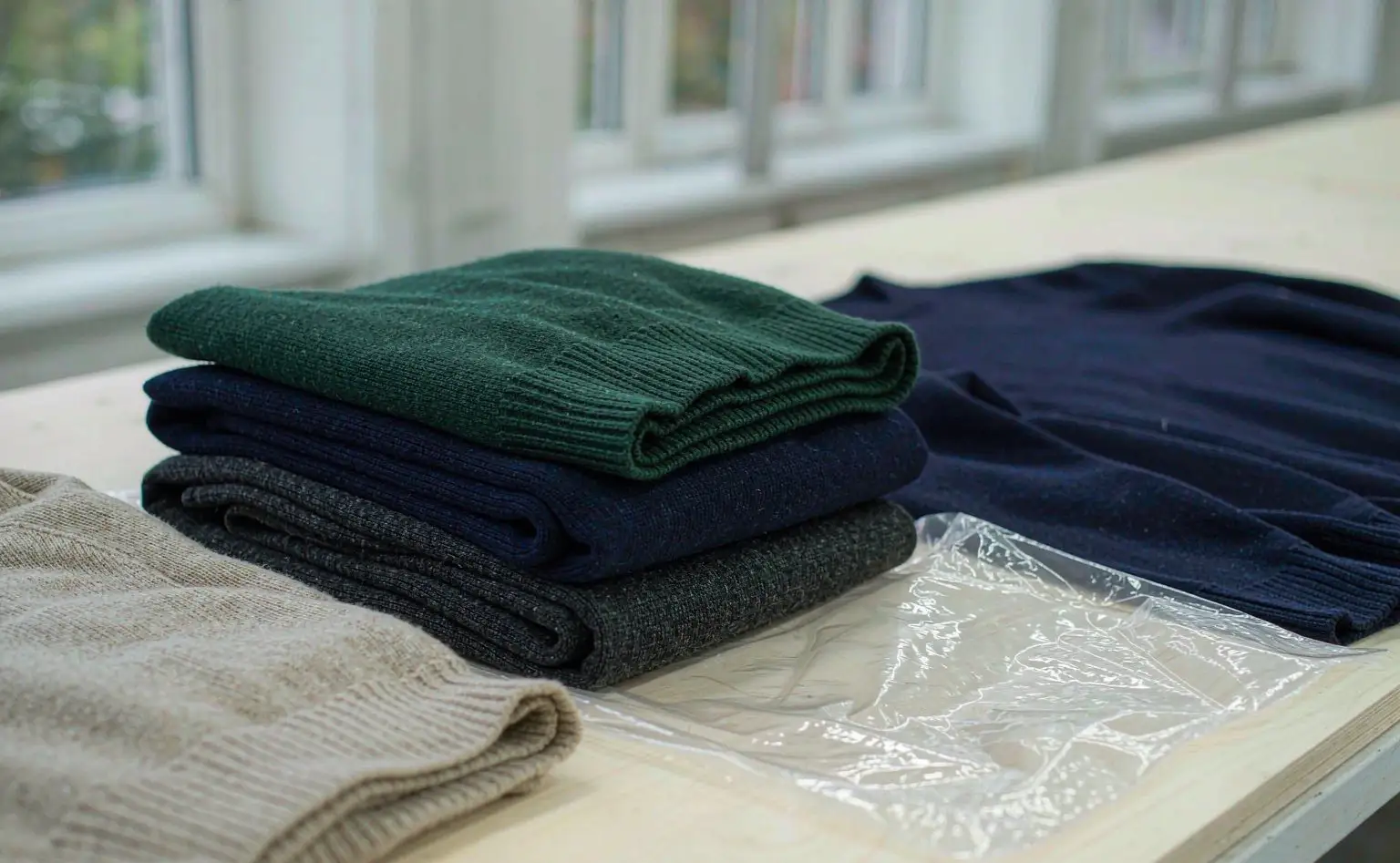
1. Wool spots faster than cotton and is harder to save
Trace a sweater back: wool or wool-blend yarn, dyeing and finishing, knitting, washing and setting, hangtag, clear poly bag, carton. Blends with a high acrylic or polyester share are less exposed; the risk sits in wool-rich yarn and garment, and in the bag and carton.
Wool is a protein fibre. The keratin in a wool fibre is food for a mould, and its official regain is around 15%, far above cotton, so water that goes in comes out slowly. Given a long storage period, the inside of the yarn spots first.
The spot will not wash out. Wool that has spotted shows pale marks. A light case can be washed back, a heavy one damages the scales and leaves the hand rough and the shade grey. Where a washed-back garment is not given a fresh mould finish, it spots again faster, which is the most common rework loop in this trade.
The bag is the last link. A garment in a clear bag sits in a small closed volume. Bagged before it has cooled after setting, it traps its own moisture, which condenses on the film and passes into the fabric. Cartons take water in the store, and the whole carton opens onto droplets inside the bags.
2. Yarn in the bath, bag with a sheet
The table lines up the yarn, the garment, the bag and the carton. Yarn is dosed on weight of goods, paper on active matter per sheet, and the two are not convertible.
| Part | Material | Product and level | Stage | Control point |
|---|---|---|---|---|
| Wool yarn | Wool and blends | iHeir-BJ 2%-3% o.w.f. | Fresh bath after dyeing | 21-50℃, pH 4.5-8.5 |
| Garment wash | Wool sweater | iHeir-BJ 2%-3% o.w.f. | Last wash box | Wet pickup held at 70% |
| Inside the bag | Clear poly bag | iHeir-D 0.1-0.2g per sheet | Before sealing | Thin paper between sheet and garment |
| Carton | Corrugated | iHeir-D one sheet on the wall | Before sealing | Trial at three times the dose |
One boundary. The agent in the yarn protects the fibre, the vapour in the sheet protects the space inside the bag. A spray on the finished garment leaves the inside of the yarn to mould, and a sheet alone leaves the source in the fabric. Starting at the yarn is the cheapest route in this trade.
3. After dyeing: know what is in the bath first
Wool yarn takes iHeir-BJ textile mildew inhibitor at 2%-3% o.w.f. Choose by protection period: 2% gives a year and more, 3% reaches two to three years, so a season’s stock runs at 2% and an export lot with a long shelf life runs at 3%.
Rinse after dyeing. A dye bath carries levelling agents, dye and fixing agents, most of them anionic, and iHeir-BJ cannot share a bath with anionic auxiliaries because the two cancel. Drain the bath, rinse once or twice, then treat in fresh water; the extra rinse is cheaper than a dead bath.
Bath conditions. Hold 21-50℃ and pH 4.5-8.5, ideally 6, with softened water. Wool is sensitive to alkali, and a high pH yellows the fibre and roughens the hand, so set the pH before adding the agent.
How to add it. Dilute it with 9-13 times its volume of water first, then add slowly, holding wet pickup at 70% with steady mangle pressure. Yarn comes as cones or hanks, so liquor ratio and circulation matter: use a circulation pump on cones and turn hanks on a schedule, otherwise the outside takes the agent and the inside does not. The garment wash runs at the same 2%-3% o.w.f., and rework of mouldy knitwear is covered in garments that have gone mouldy.
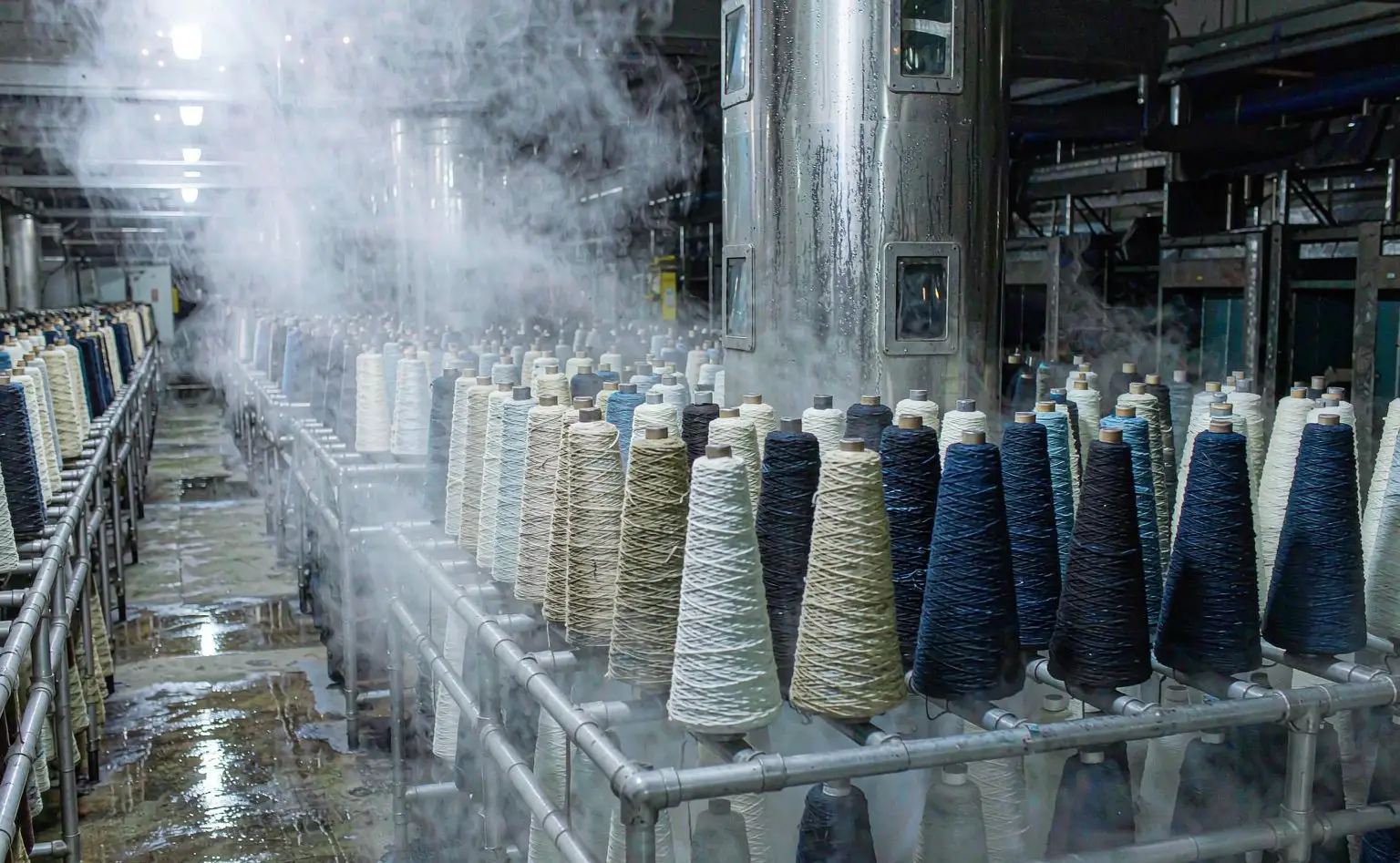
4. Drying, bagging and the carton
Dry before bagging. Yarn and garments go into a bag only at room temperature, because a warm piece traps its moisture inside the film. Hold regain to the process sheet after drying, and run another cycle where the hand still feels damp. Keep shop and store below 60% RH with dehumidifiers in the wet season.
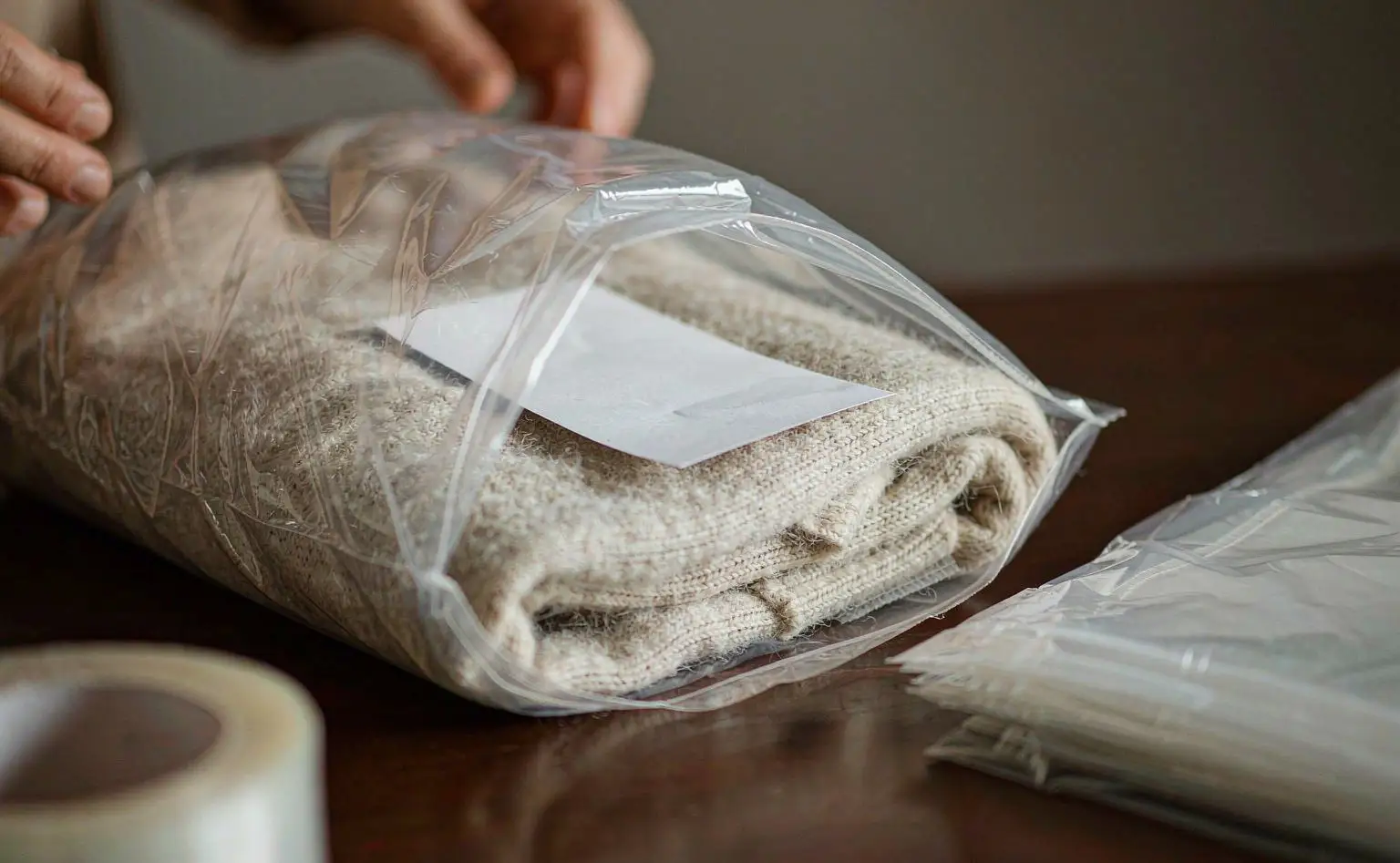
The bag stage uses iHeir-D vapour-phase paper at 0.1-0.2g of active matter per sheet, an ink-coated paper that releases into a closed volume and therefore only works once the bag is sealed.
Where. Tuck the sheet inside the bag between garment and film, or fold it into the tissue at the centre; never press it against a dark face. For a multi-piece bag, one on the wall plus one between layers, and one more on the carton wall, taking the upper figure for large cartons, many layers or a long sea leg.
Trial compatibility first. Seal three times the normal dose with a finished garment, mist a little water, separate it with tissue, and inspect after a few days for a faded dark face, a dulled metal tag pin or a yellowed white knit. iHeir-D carries 70%±5 solids and can corrode poor-quality metal when damp, so pieces with metal trims get the trial first.
5. Mill audit and release
On the yarn side. Grade to GB/T 24346-2009, sampling yarn and garment; colour fastness runs as usual, with water spotting, perspiration and rubbing as the items to watch, sampling a dark and a white shade. The grading method is set out in GB/T 24346 grading.
On the finished side. Grade a whole garment to ASTM G21 or ISO 846, sampling the underarm and the hem seam, and grade the bag and carton separately to GB/T 24346-2009. Hold a full carton for 30 days at 30℃/85% RH, then open it to inspect the inside of the bags, the fabric and the tags.
Paperwork an auditor asks for. The dyehouse dosing sheet and the bath change record, pH and temperature logs, wet pickup checks, and the batch number and count of the vapour sheets. Auditors ask whether the agent goes into the dye bath or into a later stage, and being able to quote liquor ratio, temperature and the number of rinses is worth more than saying it was added.
6. Questions on dye baths, yarn stages and desiccants
Q: Can the agent go into the dye bath with the dyestuff?
No. Dyestuff and levelling agents are mostly anionic and cancel iHeir-BJ. Drain, rinse once or twice, then treat in a fresh bath.
Q: Can the yarn stage be dropped and the garment only be treated?
It saves cost and raises risk, because yarn can spot in store and a garment finish then seals the source inside. Export lots should start at the yarn; a fast domestic turn can treat at the garment wash.
Q: 2% or 3%?
By protection period and stock turn. A season’s stock runs at 2%; export lots that sit in a container for 30 days or more, or hold long in the warehouse, run at 3%, which costs cents per piece against a rejected carton.
Q: With a sheet in the bag, is a desiccant still needed?
They can be used together if the split is clear: the sheet handles mould in the bag volume, the desiccant handles water vapour. A desiccant alone still leaves mould on board and tags, and the bag should be micro-perforated rather than vacuumed.
Four points to take away: drain and rinse the dyed yarn, then treat in fresh water at 2%-3% o.w.f. of iHeir-BJ with the bath at 21-50℃, pH 4.5-8.5, softened water and a 9-13 fold dilution first, holding pickup at 70%; circulate cones and turn hanks so the inside takes the agent too; bag only when cool and tuck an iHeir-D sheet inside the bag at 0.1-0.2g of active matter after a trial at three times the dose; grade yarn and garment to GB/T 24346-2009 and ASTM G21. A 1kg sample and a pack of sheets go out for a trial, with MOQ and lead time on the iHeir-BJ product page.


