



 View Count:51
 Date:2026-09-03
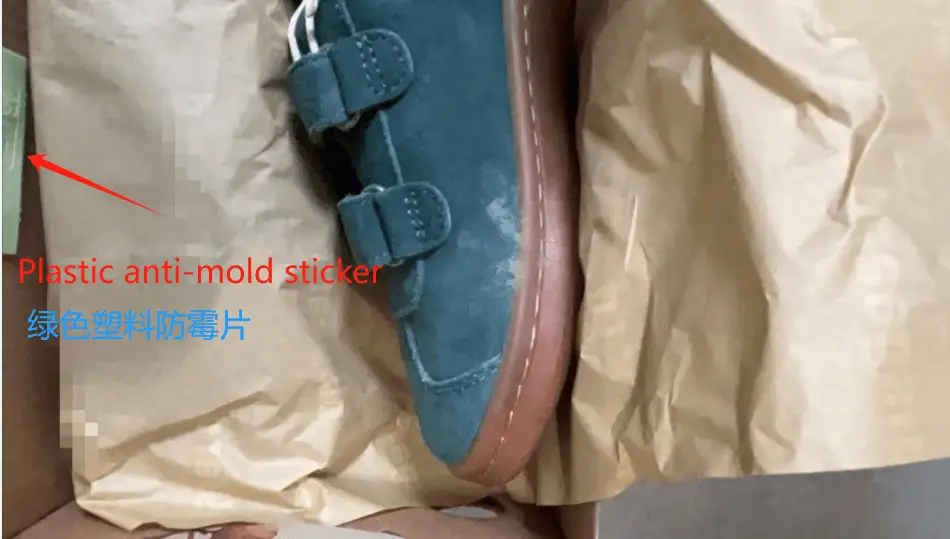
Many factory owners are surprised the first time they hear “PU leather mold” — synthetic materials shouldn’t grow mold, right? The truth is opposite: although PU leather, synthetic leather and PVC leather don’t contain animal protein, their base materials (polyurethane, PVC, plasticizers, fillers) and surface inks are full of carbon and nitrogen sources that mold spores feed on. Combined with shipping humidity of 75%-95% for 30-40 days, mold rates in export shipments often hit 25%-35%, with one container rejected and claims of tens of thousands of dollars.
This guide combines real factory experience to explain mold mechanisms, anti-mold agent selection by substrate, complete production-side and warehouse-side solutions, plus a FAQ section. A ready-to-use selection table is at the end so you can copy it directly.
1. Why PU and Synthetic Leather Mold
To fix the problem, you must first see it clearly. PU leather and synthetic leather mold is not a single cause — it is the combination of “substrate + process residue + storage environment.” Let’s break it down:
1.1 Substrate-level “nutrients”
Many people think synthetic materials don’t provide nutrients for mold — the opposite is true:
- PU (polyurethane) resin: Incompletely reacted -NCO groups, soft-segment polyether polyols, and hard-segment diisocyanates are all organic carbon sources mold can use. At RH above 80% and 25-35°C, Aspergillus niger and Aspergillus flavus can grow visible colonies in 7-10 days.
- PVC resin: PVC itself doesn’t mold, but the plasticizers (DOP/DBP/DINP), epoxidized soybean oil, UV stabilizers and antioxidants BHT added in production are mold’s “side dishes” — especially DOP phthalate plasticizers, which are easily decomposed by Aspergillus niger as carbon source.
- Surface inks and printed coatings: Water-based PU printing inks contain polyurethane dispersions, acrylic resins, pigment dispersants and thickeners — all “ready-made” mold food. We saw a PU leather factory whose warehouse always molded but production floor didn’t — the cause was the printing workshop’s exhaust outlet facing the finished-goods warehouse, splashing ink onto PU surfaces and essentially “actively coating a mold nutrient base.”
- Fillers and foam layer: The PU leather foam middle layer (typically CFC-substitute or CO2 blown) contains large amounts of micropores; after absorbing moisture, water content can reach 8%-15%, well above the 12% critical point where mold mass-reproduces.
1.2 Process residue “hidden nutrients”
Several small production habits push PU leather to the mold edge:
- Insufficient washing: If the final water wash on dry/wet PU lines uses insufficient pure water or low change frequency, residual DMF (dimethylformamide), ammonia and surfactants stay in the substrate. These nitrogen-containing organics are mold’s favorite.
- Insufficient drying temperature: Drying line set below 110°C or running too fast leaves residual solvent and moisture inside. Standards require PU leather water content ≤1.5% after drying and synthetic leather ≤2%; exceeding these buries mold risk.
- Oil contamination from embossing/printing: Mineral oil on embossing rollers, ink-machine guide roller oil and workshop floor oil become aerosols, forming invisible oil films on finished surfaces where mold spores attach and germinate within 24 hours.
1.3 Storage environment “breeding ground”
90% of mold in export orders happens in the “finished-goods warehouse + container shipping” stages:
- Finished warehouse humidity out of control: In southern China during the rainy season (April-September), warehouse humidity stays at 80%-95% for months. Small factories without dehumidifiers can’t lower it naturally. Every 10% humidity increase accelerates mold 2-3x.
- Container rain: Container walls reach 60-70°C in daytime sun, dropping to 20-25°C at night — a 40°C delta that creates massive condensation (container rain). After a month, 5-10 liters of water can pool at the bottom; PU leather in the lowest layer soaks directly.
- Contaminated wrapping paper/PE bags: Using recycled paper or non-sterilized PE bags is like “sending mold seeds into the finished product.”
2. Anti-Mold Agent Selection Table for PU/Synthetic Leather
One solution doesn’t fit all substrates. The table below summarizes three years of factory practice — check it against your product:
| Substrate | Recommended Solution | Dose / Process | Cost (USD/piece) |
|---|---|---|---|
| PU synthetic leather (footwear/bags) | iHeir-PF leather anti-mold + iHeir-Spray surface spray | 1.5%-2.0% in production; 8-10 g/m² finish spray | 0.014-0.025 |
| PVC synthetic leather (sofa/seat) | iHeir-Spray anti-mold (eco water-based) | 10-15 g/m² surface spray | 0.021-0.035 |
| PU/PVC composite (car interior) | iHeir-PF + masterbatch premix + spray triple | 2.0% PVC masterbatch; 8 g/m² PU surface | 0.042-0.063 |
| TPU film (phone case/wrap) | iHeir-ECO masterbatch + spray | 3.0% masterbatch; 5 g/m² spray | 0.028-0.042 |
| PU synthetic leather (suede/frosted) | iHeir-CM remover + iHeir-PF protection | Wipe then spray 12 g/m² | 0.035-0.049 |
If your product already shows mold spots, follow one principle: remove first, protect second. First use iHeir-CM Mold Remover to wipe clean (wear gloves + mask), air-dry, then apply anti-mold protection. Using one product for both jobs weakens results — surfactants in remover block anti-mold agent penetration into the substrate.
3. Production-Side Complete Solution (Factory)
This step “cures at the source” — embedding anti-mold factors from raw material dosing. Four-step process:
Step 1: Substrate water content control
Use a halogen moisture meter after PU leather exits the dryer — require ≤1.5%; synthetic (PVC) leather require ≤2.0%. Every 0.5% over limit raises mold probability by ~30%. Recommended drying temps: PU 120-130°C, PVC 100-110°C, line speed 15-20 m/min.
Step 2: PU resin premix with anti-mold
At the end of PU resin synthesis or in the paint-mixing stage, add iHeir-PF leather anti-mold agent at 1.5%-2.0% of PU resin dry weight, stir 15-20 minutes for even dispersion. Notes:
- Don’t combine with pH<5 acid pigments — causes anti-mold agent precipitation;
- Don’t add simultaneously with zinc/copper stabilizers — chelation reduces activity. Add in two steps, 30 minutes apart;
- Recommended addition temperature 40-50°C; above 70°C accelerates volatilization and decomposition.
Step 3: Surface spray on finished product
Use automatic spray line on PU leather back side (non-printed) after exit, spray iHeir-Spray at 8-10 g/m² (wet film). Spray pressure 0.3-0.4 MPa, gun distance 20-30 cm. Immediately enter 60-80°C drying tunnel for 30-60 seconds. This step addresses edges and composite layers where premix doesn’t reach.
Step 4: Packaging process control
- Finished PU leather rolls must cool to room temperature (≤30°C) before PE wrapping, or hot PU + PE film causes fogging and condensation;
- Place 2-3 Power Pak anti-mold chips per PU roll, seal with outer PE film;
- Outer carton (corrugated) inner wall must not use recycled paper — recycled paper carries 10-20x more spores than virgin paper;
- Place 1-2 sachets of iHeir-F series desiccant (calcium chloride + activated carbon composite), 50 g per sachet.
4. Warehouse and Shipping Solution
This step solves the “factory perfect, warehouse ruins it” last-mile problem:
4.1 Finished warehouse six essentials
- Humidity: ≤60%, industrial dehumidifier or central system;
- Temperature: ≤28°C, AC during summer heat peaks;
- Stacking: PU rolls 50 cm from walls, 30 cm off floor, shelf spacing ≥80 cm airflow;
- Separation: Finished warehouse ≥20 m from raw material and chemical warehouses;
- Cleaning: Monthly mop floor with iHeir-CM dilution (1:50) to kill residual spores;
- Monitoring: Place 5-10 mold indicator cards in stacking zones.
4.2 Container loading “four-piece set”
- T-1000 desiccant strip: 1 strip (1.2 kg) per 10 m³ container volume, absorbs container condensation;
- Power Pak anti-mold chips: 2-3 per carton (1-2 for small boxes), hung on container walls or sandwiched between PU rolls;
- Container wall anti-mold spray: Quick spray of iHeir-Spray on container walls before loading (5 min job), killing residual spores;
- Moisture barrier: PE or aluminum foil moisture barrier mat at container bottom.
5. Real Case Study (Desensitized)
A Dongguan PU bag export factory had terrible mold rates in 2024 H2: first batch of 3000 PU shoulder bags 18% mold rate, second batch of 5000 bags hit 32%. Customer claimed USD 120,000 and the owner nearly shut down.
On-site investigation revealed three critical issues: 1) PU resin had no anti-mold agent added — only surface spray relied on; 2) Printing workshop exhaust vent faced finished warehouse, ink splatter contaminating finished products; 3) No dehumidifier in finished warehouse, RH stayed 85%+ during rainy season. Solution: premix iHeir-PF 1.8% in PU resin + redirect printing workshop exhaust + install dehumidifier + Power Pak in packaging. Three months later, two more batches of 12,000 bags shipped, mold rate dropped to below 0.3%, all qualified.
6. FAQ
Q1: Does iHeir-PF irritate human skin?
A: iHeir-PF passes SGS acute oral toxicity LD50>5000 mg/kg (practically non-toxic), compliant with EU REACH. Still recommend nitrile gloves and protective mask during production to avoid prolonged skin contact.
Q2: Will PU leather yellow after anti-mold agent spray?
A: iHeir-PF is a light yellow transparent liquid; at recommended dose it doesn’t change PU resin color. Overdose (>3%) or excessive drying temp (>140°C) may cause slight yellowing. Small trial recommended.
Q3: Customer requires “zero anti-mold agent” — what to do?
A: Switch to iHeir-ECO food-grade plastic antimicrobial (FDA food-contact certified), adding to PU interlayer (not outer) or inner lining fabric. Some brands requiring outer-layer zero can only rely on desiccant + anti-mold chip + strict humidity control, mold rate returns to 5%-8%.
Q4: Can already-molded PU leather be saved?
A: Light mold (white surface spots or local green mold) can be wiped with iHeir-CM, then spray iHeir-PF after drying — recovery rate 80%-90%. Severe mold (mycelium deep into substrate, black spots, rot smell) should be scrapped — mold metabolites (e.g., aflatoxin) cannot be removed and will contaminate downstream contacts.
Q5: How long does anti-mold protection last?
A: Standard iHeir-PF formula gives ≥2 years at 25°C/60% RH constant environment; ≥1.5 years in shipping + southern warehouse. Drier and cooler storage extends duration.
7. Final Words
PU leather/synthetic leather anti-mold isn’t “spray and done” — it’s a complete chain from raw material premix → surface spray → packaging isolation → warehouse humidity control → container loading. Any broken link can scrap a whole batch. If you’re struggling with mold issues, start with sections 3 and 4 above. For new PU leather lines, contact us directly to customize anti-mold solutions based on your substrate formula (PU/PVC/TPU/composite) and product form (footwear/bags/sofa/car interior).
Contact us for free samples and one-on-one technical support.