




 View Count:5
 Date:2026-09-16
When a buyer asks what anti-mould grade a fabric will report, most mills forward the question straight to the lab and only find out at the report stage that the result falls short. The lab is not the problem. A lab measures the result, the finishing line makes it. Understanding what the standard actually tests lets you work backwards to the process, which is far cheaper than repeated submissions.
1. What GB/T 24346 actually measures
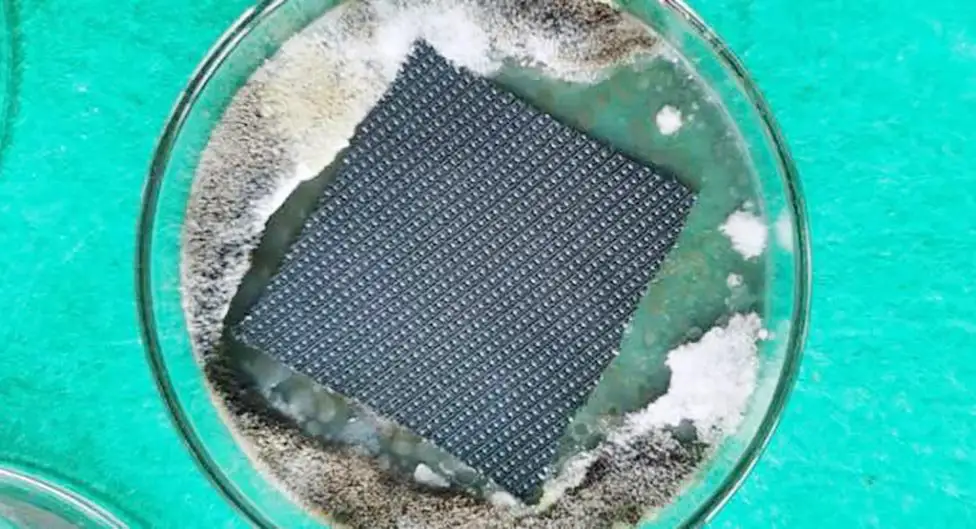
GB/T 24346, the Chinese standard for evaluating the anti-mould performance of textiles, covers how well a textile resists fungal growth. A spore suspension of specified organisms is inoculated onto the specimen, incubated under controlled temperature and humidity for 28 days, and the growth on the surface is then assessed. The routine test organisms include Aspergillus niger, Chaetomium globosum, Penicillium funiculosum and Trichoderma viride, which are among the most common and most destructive species on textile materials.
Note that this covers fungi. It is a different test from the bacterial standards such as GB/T 20944.3 or AATCC 100. Buyers in Europe and North America often ask for both reports, and a bacterial test alone will not keep mildew away. Blends, prints, coated fabrics and composites carrying size or plasticiser carry the highest risk, because the size and coating themselves act as a carbon source.
2. How the grade is expressed, and how to write it into a contract
Grades run from no visible growth upwards, so the lower the number the better the performance. A common contract wording is that the anti-mould grade shall be no worse than grade 1, while home textile, outdoor and military orders often specify no visible fungal growth. The precise boundaries between grades sit in the standard text and in the test report, so attach the report to the contract rather than relying on a verbal expectation of being mould resistant.
Two details trip mills up. First, re-testing after laundering: home textile and apparel orders usually require the grade to be measured again after a set number of washes to AATCC 135 or GB/T 8629, and fabrics do drop a grade after washing. Second, sampling position: wet pickup differs between selvedge and centre, and between printed and plain areas, so grades differ too. Sample several positions in house before sending anything out.
3. Specimens and submission: size, quantity and lead time
Line these up before sending samples and you save a round trip. Screen in house first with a petri dish test, reading growth after 28 days, and only send borderline or promising batches to a third party lab.
| Step | Usual practice | Watch out for |
|---|---|---|
| Cutting specimens | Cut to the specified size, at least three parallel specimens per sample | Avoid selvedge and joins, record the print position for patterned fabric |
| Specimen condition | Dry fully and seal before dispatch, moisture content affects results | Sending fabric that has not been dried after finishing understates performance |
| Incubation | 28 days at controlled temperature and humidity | Allow four to six weeks from dispatch to report, book early for tight shipments |
| Control specimen | Send an untreated control alongside | A mouldy control beside a clean treated sample makes the strongest report |
| Wash re-test | Wash per buyer requirement then test again | For wash-durable orders, silver based finishes hold up better |
4. Three finishing routes and what to dose
The grade is made in the pad bath. Choose the route by fabric form and order requirement, since the difference between the three routes is not the chemistry but wet pickup and how the finish is fixed.
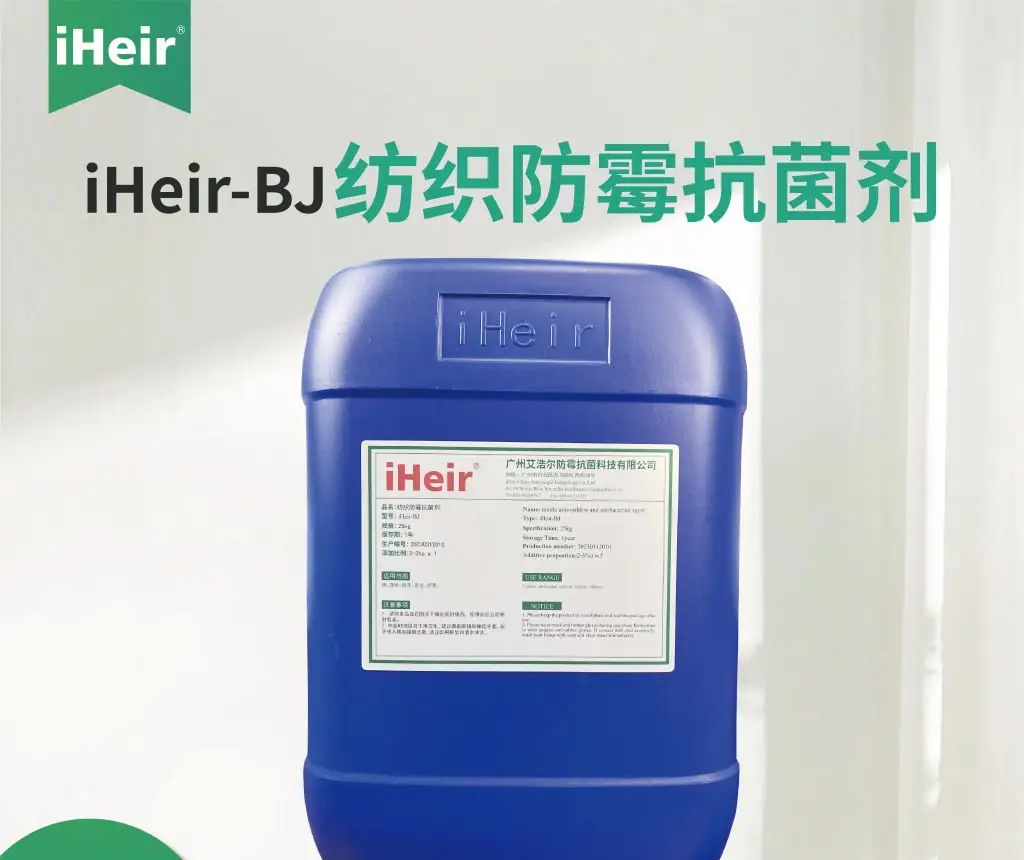
Padding suits continuous greige and finished fabric. The bath is set at 2 to 3 percent o.w.f., so 100 kg of fabric takes 2 to 3 kg of concentrate, and the fabric is squeezed to a controlled wet pickup before drying. iHeir-BJ textile mildew inhibitor runs on this route: bath temperature 21 to 50 degrees, pH between 4.5 and 8.5 with around 6 preferred, soft water mandatory, and no anionic auxiliaries in the same bath or the finish precipitates out. At 2 percent o.w.f. protection lasts over a year, and at 3 percent it extends to two to three years, so long life orders can have the figure written into the process card.
Exhaustion suits yarn, garments, socks and webbing that cannot go through a continuous range, relying on liquor ratio and time. Coating suits coated and laminated fabrics, with the finish built into the coating paste. Where both antibacterial and anti-mite performance are wanted, iHeir-333 textile antimicrobial agent is applied at 2 to 3 percent o.w.f. and bonds chemically to the fibre surface, with a bromophenol blue dip test that verifies the layer in two minutes on the shop floor. For wash durable orders, colour sensitive fabric or hard water, switch to iHeir-BJ1000 silver ion textile antimicrobial agent, dosed at 2 to 4 percent for textile finishing. It is a composite silver ion solution, tolerant of water hardness, dilutable with ordinary water and compatible with anionic systems, which avoids the yellowing that some finishes leave behind.
When comparing suppliers, align the basis before discussing price: convert the drum price through active content and dilution ratio into a cost per kilogram of fabric, and confirm minimum order, lead time and the test report supplied with the goods.
5. The four documents a factory audit asks for
When a buyer or third party auditor raises anti-mould performance, four documents should be available immediately: a third party GB/T 24346 grade report; an antibacterial report to GB/T 20944.3 or AATCC 100; a re-test report after laundering with the wash method and cycle count stated; and the finishing record for the batch, listing bath concentration, wet pickup, drying temperature and line speed. The fourth is the one most often missing and the one that proves process stability, which is what the auditor is really looking for.
In house screening matters too. A petri dish test, or a handheld mould detection pen used to spot check finished fabric, both beat waiting for an external report. The variables that affect the grade on a padding line are covered in more detail in our notes on wet pickup and drying on padded fabric.
6. FAQ
Q: Is an anti-mould grade the same as an antibacterial test?
No. GB/T 24346 covers fungi, while standards such as GB/T 20944.3 cover bacteria. The organisms, inoculation method and reporting differ, and export orders usually require both.
Q: The report says grade 1, why does the buyer still ask for a retest?
Usually sampling position or wash conditions. Wet pickup differs across the width, so grades vary, and washing beyond the conditions used for the original submission will drop a grade. Compare the submission conditions with the buyer requirement first.
Q: Can the finish go into the same bath as a softener?
It depends on ionic character. iHeir-BJ is cationic and can run with cationic or non-ionic softeners, but not with anionic auxiliaries in the same bath or it precipitates. Where both are needed, use two stages, finish first, dry, then softener.
Q: What is the difference between 2 and 3 percent?
Durability. At 2 percent o.w.f. protection lasts over a year, at 3 percent it reaches two to three years. Long storage cycles and long sea legs justify running at 3 percent. Dosage, samples and minimum order are set out in our textile anti-mould buying guide, and a trial run always precedes volume.
Send us the fibre composition, fabric weight and order requirement and we will propose a finishing route and a specimen test plan before any volume commitment. Contact us.