



 View Count:39
 Date:2026-09-03
Do rubber products really mold? Yes — and far worse than most people imagine. Silicone, rubber, TPE/TPU “soft materials” routinely hit 20%-40% mold rates in export shipments — especially long transit times with large temperature swings. I’ve seen extreme cases: a Dongguan rubber footwear factory exported 80,000 rubber outsoles to Brazil; on opening, 90% were covered in black mold and the entire shipment was scrapped, losing over RMB 800,000.
This guide systematically explains rubber/silicone mold mechanisms, anti-mold agent selection by rubber type, production premix and surface coating processes, complete operating SOPs, and the factory’s most common FAQs.
1. Three Root Causes of Rubber/Silicone Mold
Rubber mold differs from PU leather — natural rubber contains natural proteins and polysaccharides that are premium carbon sources for mold; synthetic rubber has lower protein content but plasticizers, vulcanization byproducts, antioxidants and fillers (carbon black, silica, calcium carbonate) still feed mold. Combined with silicone/rubber porous structures that absorb moisture, mold can spiral out of control.
1.1 Rubber type “nutritional differences”
| Rubber type | Mold tendency | Main causes |
|---|---|---|
| Natural rubber (NR) | ★★★★★ | Natural proteins, polysaccharides, fatty acids — premium mold food |
| SBR | ★★★ | Residual styrene monomer, stearic acid |
| BR (polybutadiene) | ★★ | Residual catalyst, mineral oil |
| NBR | ★★★ | Acrylonitrile residue, DOP plasticizer |
| Silicone (VMQ) | ★★★ | Silicone oil, silica, dicumyl peroxide |
| EPDM | ★★ | Filler, plasticizer |
| TPE/TPR | ★★★ | SEBS base + oils |
| TPU | ★★★★ | Polyurethane hydrolysis + plasticizer |
The table shows natural rubber (NR) carries the highest mold risk, while TPU’s polyurethane hydrolysis also causes serious mold. Silicone itself is not an organic carbon source, but silica and silicone oil still “feed” mold.
1.2 Production process “residual nutrients”
- Unvolatilized plasticizers: DOP, DBP, epoxidized soybean oil, citrate esters — left on rubber surface, lay a “carpet” for mold;
- Vulcanization byproducts: Sulfur-vulcanized systems generate hydrogen sulfide and polysulfides; peroxide-vulcanized systems generate alcohols and ketones — all decomposable organics;
- Blooming: Antioxidant 4010NA and RD bloom to rubber surface, creating “nutrient-rich layer”;
- Mold oil/fingerprints: Workers’ hand oil and sweat (amino acid-rich) become mold starting points.
1.3 Storage environment “amplification effect”
- Stacking pressure: Rubber outsoles and seals often stacked dozens deep; micro-environment humidity at contact points runs 5%-10% higher than surroundings, so mold grows there first;
- Warehouse aerosols: If neighboring materials (wood pallets, cardboard) carry mold, air spore concentration reaches 10⁴-10⁵ CFU/m³, 10-100x normal environment;
- Shipping condensation: Container day-night delta 30-40°C, rubber surfaces accumulate 5-10 g/m² condensation daily — equivalent to a 7-day water soak.
2. Rubber/Silicone Anti-Mold Selection Table
Different rubber types and product forms need different solutions. The table below summarizes factory practice:
| Rubber/Product | Recommended Solution | Dose/Process | Cost (USD/kg rubber) |
|---|---|---|---|
| Silicone phone case/tableware | iHeir-GG silicone antimicrobial paste (iHeir-GG907) | 0.8%-1.2% mixing stage addition | 0.35-0.49 |
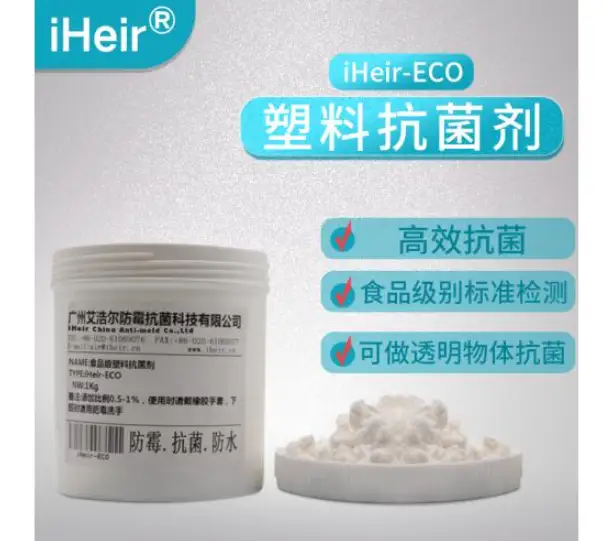
| Silicone nipples/baby items | iHeir-ECO food-grade plastic antimicrobial (FDA certified) | 1.0% mixing addition | 0.56-0.70 |
| Rubber outsoles/footwear | iHeir-GGTK rubber masterbatch + iHeir-Spray surface | 2.0% masterbatch; 10 g/m² spray | 0.42-0.56 |
| Rubber seals/O-rings | iHeir-GG907 + iHeir-PF synergy | 0.8% GG907 + surface PF spray | 0.63-0.77 |
| EPDM door/window seals | iHeir-JS117 anti-mold powder + GG surface coat | 1.5% masterbatch; 5 g/m² surface | 0.42-0.56 |
| TPE/TPR handles/tools | iHeir-ECO masterbatch | 2.5% masterbatch premix | 0.70-0.84 |
| TPU watch straps/cases | iHeir-ECO + iHeir-CM after + iHeir-PF protect | 3.0% masterbatch; 8 g/m² PF spray | 0.84-0.98 |
| Recycled rubber/scraps | iHeir-GGTK high-dose (mind dispersion) | 3.0%-5.0% masterbatch | 0.77-0.98 |
Key selection principles:
- For silicone, TPU and other transparent/light-color products use iHeir-ECO food-grade antimicrobial (no discoloration) and avoid phenolic anti-mold agents that yellow;
- For rubber outsoles and seals prioritize iHeir-GG paste (iHeir-GG907), heat-resistant (>200°C) without vulcanization decomposition;
- For food-contact products (nipples, tableware, drinking tubes) must use FDA-certified iHeir-ECO series, not ordinary anti-mold agents.
3. Production-Side Complete Solution (Factory)
Step 1: Raw material inspection
Test each batch of rubber for moisture content and spore load. Natural rubber moisture ≤1.0%, synthetic rubber ≤0.5%; surface mold spore load ≤100 CFU/g. Over-limit material first soak 30 min in iHeir-CM 1:50 dilution, drain then enter mixing.
Step 2: Masterbatch premix (core)
Add antimicrobial masterbatch or paste at 0.8%-2.0% of rubber weight early in mixing (after mastication, before vulcanization agent):
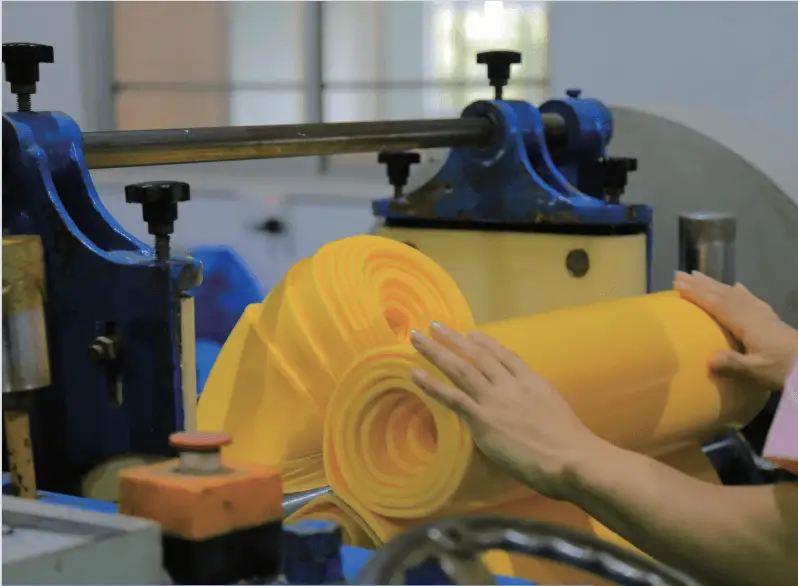
- Silicone antimicrobial paste (iHeir-GG907) recommended right after open mill roll banding, mix 3-5 min for even dispersion;
- Plastic antimicrobial masterbatch (iHeir-ECO, GGTK) pre-blend with raw resin in proportion then feed into extruder/injection machine;
- Anti-mold agent must be made into masterbatch with small rubber portion first then added to bulk, avoiding one-shot addition that causes dispersion issues;
- Mixing temperature must not exceed 180°C (silicone) or 220°C (rubber); exceeding accelerates anti-mold agent decomposition.
Step 3: Vulcanization and forming
- Vulcanization temperature 160-170°C (rubber) or 180-200°C (silicone), time per vulcanization curve;
- After vulcanization immediately enter post-cure: silicone 200°C/2h recommended, rubber 100°C/1h — this step removes residual vulcanization byproducts and lets anti-mold agent penetrate further;
- Vulcanization mold interior cleaned weekly (iHeir-CM 1:30 wipe) to avoid mold contamination.
Step 4: Surface post-treatment
Spray iHeir-Spray or iHeir-PF anti-mold agent on formed rubber surface at 8-12 g/m². Focus on stacking contact faces (seal stacking contact, rubber outsole concave surface) — mold hides there most.
4. Packaging and Shipping Complete Solution
4.1 Packaging six essentials
- Products fully cool to room temperature (≤30°C) before packaging;
- 1 Power Pak anti-mold chip per sealed PE bag;
- Outer carton uses virgin corrugated paper, no recycled paper;
- 1 sachet (50 g) iHeir-F desiccant per carton;
- PE separator between layers during stacking to prevent adhesion and moisture absorption;
- Finished goods go through metal detection + visual inspection dual screening before warehousing, picking out already-molded items.
4.2 Container loading “four-piece set”
- T-1000 desiccant strip: 1 strip (1.2 kg) per 8 m³ container, absorbs container condensation;
- Power Pak anti-mold chip: 2 per carton (1 for small boxes), hung on container walls;
- Container wall spray: Quick iHeir-Spray spray before loading (5 min job) killing residual container spores;
- Moisture barrier: PE moisture barrier mat at container bottom.
5. Real Case Study (Desensitized)
A Zhejiang silicone phone case factory received a US customer 500,000-piece order in early 2025, split into two batches. First batch 250,000 pieces shipped with 3% mold rate, customer grudgingly accepted; second batch mold rate soared to 35%, customer cancelled the follow-up order and claimed RMB 2 million.
On-site investigation found two critical issues: 1) Silicone raw material had no antimicrobial added — owner believed “silicone doesn’t mold”; 2) Warehouse and raw material workshop shared one space, airborne mold spore concentration extremely high. Solution: premix iHeir-GG907 1.0% in silicone + physical separation of raw and finished warehouses + Power Pak in packaging + container loading four-piece set. Three months after remediation, two more batches of 600,000 pieces shipped, mold rate controlled under 0.5%, customer resumed orders and added 300,000 more pieces.
6. FAQ
Q1: Does iHeir-GG907 antimicrobial paste affect silicone transparency?
A: iHeir-GG907 is a translucent paste; at 1.0% addition to transparent silicone, no color change or transparency impact. Above 2.0% may show slight haze, small trial recommended.
Q2: Rubber outsole white surface after vulcanization — mold or blooming?
A: White rubber surface after vulcanization is not mold but antioxidant or vulcanization system component blooming. Wipe with iHeir-CM 1:50 dilution to remove, then spray iHeir-PF. Real mold has filamentous mycelium, moist feel and musty smell and quickly recurs after wiping.
Q3: Customer requires EU REACH certification?
A: iHeir-GG907, iHeir-ECO, iHeir-GGTK all registered under EU REACH (substance list number available), SGS test reports provided. For SVHC-list exclusion requirements, declare and provide statement in advance.
Q4: Recycled rubber has extremely high mold rate — how to break it?
A: Recycled rubber contains large amounts of incompletely desulfurized proteins and fibers; mold rate is 3-5x virgin rubber. Suggestions: 1) Soak recycled rubber in iHeir-CM before warehousing to disinfect; 2) Increase anti-mold agent to 3.0%-5.0% in formula; 3) Add 0.5% zinc oxide during mixing to assist antimicrobial action.
Q5: What anti-mold for silicone nipples/baby products?
A: Must use iHeir-ECO food-grade plastic antimicrobial, FDA 21 CFR and EU 10/2011 food contact certified. Dose 0.8%-1.2%, no food safety impact. Do not use ordinary industrial-grade anti-mold agents (containing phenols, organic tin).
Q6: Can moldy rubber seals still be used?
A: Light mold (surface white mold) can be wiped with iHeir-CM 1:30, air-dried then sprayed with iHeir-PF, performance recovers ~85%. But seals are functional parts; after mold recommend downgrade use (e.g., for non-sealing applications), don’t use in critical sealing scenarios — mold corrosion may cause leakage.
7. Final Words
Rubber/silicone product anti-mold is a systematic project — from raw material inspection → masterbatch premix → vulcanization process → surface post-treatment → packaging and shipping, no step can be taken lightly. If you’re struggling with mold, first use Section 2’s selection table to lock down the solution, then execute the standard SOP in Sections 3 and 4. If you’re starting a new rubber/silicone line, contact us directly to customize antimicrobial formula and process based on your rubber type (NR/SBR/NBR/silicone/TPU) and product form (phone case/outsole/seal/tableware).
Contact us for free samples and one-on-one technical support.