




 View Count:10
 Date:2026-09-15
The same batch of latex paint that sat fine in the warehouse turns sour the moment the customer opens the pail and stirs it: a sharp fermented odor, plus green-black mold spots floating on the surface. The sales rep’s first instinct is to blame storage, and the customer’s comeback is brutal: the competing brand sits on a shelf for a year with no problem, so why did yours spoil in two days? The dispute usually stalls because both sides treat it as one defect. In reality a water-based coating carries two independent lines of defense, and losing either one produces a different symptom. In-can preservation fights the bacteria and fungi carried in during production; when it fails you get odor, swelling pails, and viscosity loss. Dry-film mold protection fights fungal colonization on the cured film in service; when it fails you get mold spots on walls and woodwork.
In-Can Preservation and Dry-Film Protection Are Different Problems
Water-based coatings disperse in water at pH 7-9 and carry cellulose thickeners, polyvinyl alcohol, and surfactants — ready-made carbon and nitrogen sources for microbes. If the fungal load introduced during production is not controlled, a pail sitting at 20-35°C with a near-neutral pH lets bacteria double every 4-8 hours; within days their metabolism turns the batch acidic, which is exactly the sour smell the customer notices, followed by visible mycelium as fuzzy patches on the surface. Odor comes from bacteria, mold spots come from fungi, but both feed on the same formulation.
The dry film is a separate story. Once the water has evaporated, in-can preservatives barely act at the surface. Fungal spores landing on a cured film that contains binder and fillers will colonize whenever surface humidity stays above 75%, which is why south-facing walls, bathrooms, and wood or bamboo substrates are the classic failure points. No amount of in-can preservative protects the cured film, and a formula that only carries dry-film protection can still swell and sour in the pail after three months in storage. QC managers should therefore start every mold complaint with one question: did the paint smell when the pail was opened, or did mold appear on the wall weeks after application? The root cause, liability, and corrective action differ completely between the two.
Water-Based Systems: Dose the Two Lines Separately
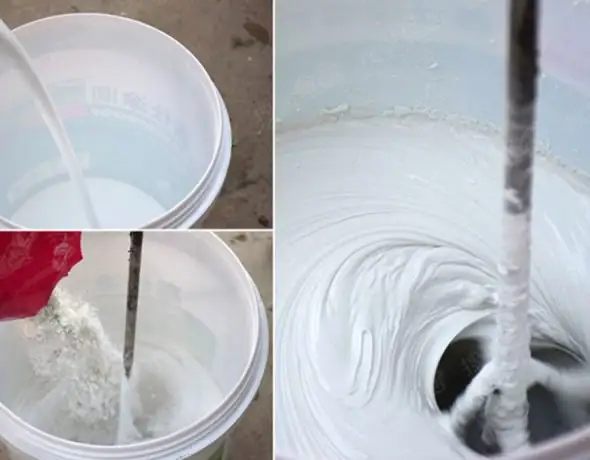
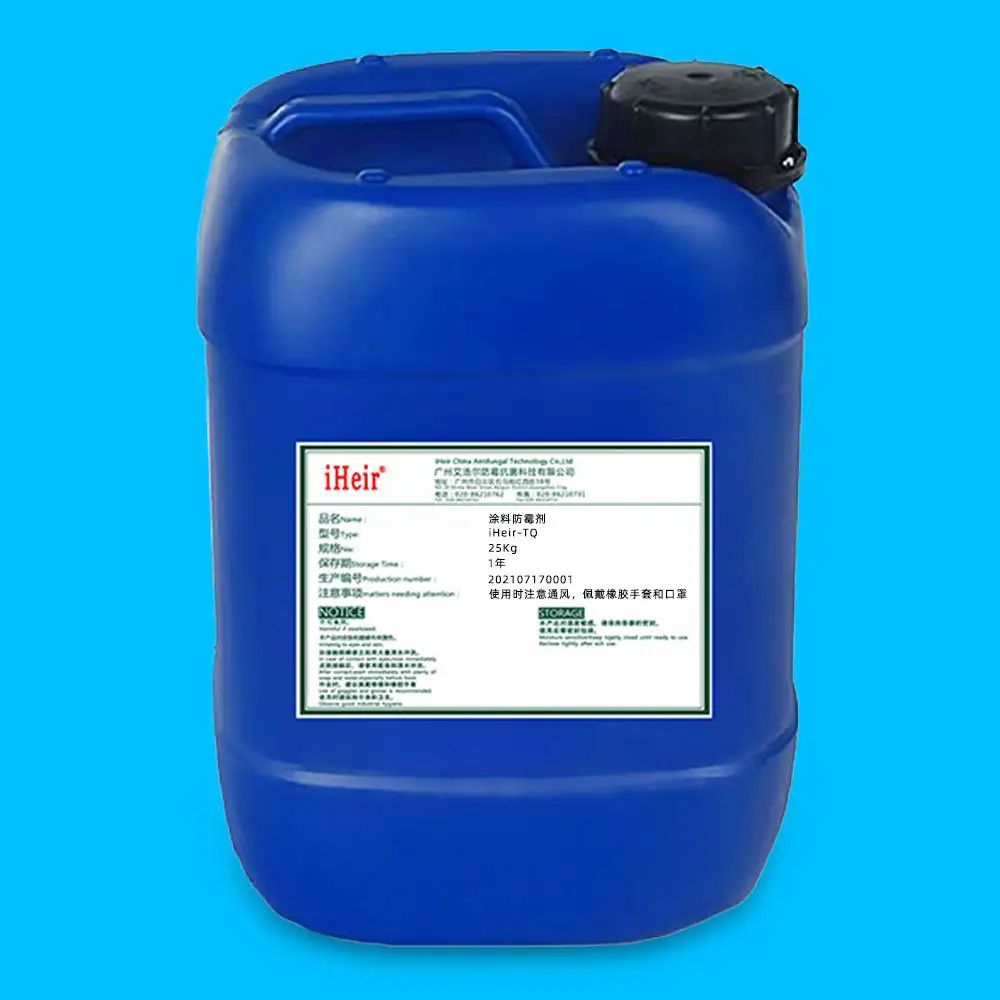
In-can preservation goes in during the grind or let-down stage, mixed thoroughly for even dispersion, at 2-3% of total system weight; high-nutrient systems — putty with starch-based thickeners or heavy PVA loading — take the top of the range. iHeir-TQ coating mold inhibitor was built for exactly this role: a water-based formulation carrying CMIT/MIT actives at 45% total concentration, for latex paint, waterborne coatings, polymer emulsions, pigment pastes, and printing inks, compatible with acrylic, vinyl acetate, and styrene-butadiene systems as well as pigments and fillers, and effective against gram-negative and gram-positive bacteria plus yeasts and molds — spoilage, souring, and discoloration in one pass.
Dry-film protection addresses the service life of the coating. Exterior masonry paints, bathrooms, and wood or bamboo substrates need dedicated anti-mold actives layered on top of the in-can package — neither substitutes for the other. Solvent-borne systems (alkyd, PU, ink binders) take iHeir-YQ paint mold and bacteria inhibitor, which carries 79.5% actives and serves both in-can preservation and surface protection for paints, PU, latex paints, and oily coatings, at the recommended 1-1.5% of formula weight. Water-based inks face a thinner-film constraint: too much active hurts printability and adhesion, so start at the lower end of the recommended range and scale up only after adhesion and color-strength comparisons.
Solvent-Borne and Powder Coatings
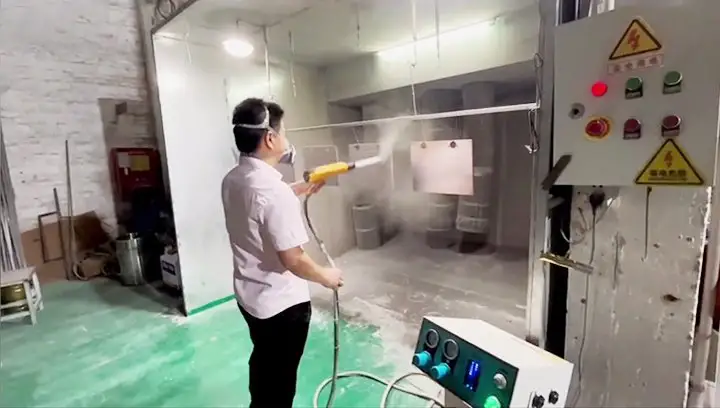
Solvent-borne coatings face little in-can risk because microbes do not thrive in the solvent phase, so the whole effort goes to dry-film protection along the YQ route above. Powder coatings are a special case: the cure window runs at 180-200°C, which destroys most conventional anti-mold actives, so heat tolerance is the first hard selection criterion. Two viable routes exist for epoxy and epoxy-polyester powders: blend a heat-stable anti-mold powder into the premix at 0.5-0.75% of total mass so the extruder disperses it evenly, or post-treat cured parts where recoating is acceptable. iHeir-BCA paint mold-proof powder is a dry-powder formulation designed for putty and other dry-powder coating systems: a white 4-30 μm powder built on slow-release and light-stabilization technology, stable across pH 5.0-10.0, blended into the mix at 0.5-0.75%; humid regions can run slightly higher, and the actual behavior under powder-coating extrusion conditions should be confirmed with a line trial first.
Purchasing managers can price the insurance directly. For a typical latex paint, dosing the in-can package at 2-3% puts the chemical cost in the low hundreds of RMB per ton of finished paint, well under 1% of factory price. One rejected batch for souring costs the full shipment value plus freight and warehouse handling. Against that arithmetic, the chemical cost is a rounding error — the real risk is adding it in the wrong stage or skipping the mixing step.
How to Handle a Batch That Already Soured or Molded
Grade the batch first, then act — criteria and actions below.
| Grade | Criteria (any one triggers) | Action |
|---|---|---|
| Scrap | Strong sour or putrid odor; viscosity down over 20% against the standard batch; pH drifted more than one unit from release; mold covering more than a third of the liquid surface | Scrap the whole batch — rework cost plus complaint exposure exceeds the goods value |
| Rework | Mild sour note only, normal viscosity and pH, no visible mold | Skim the surface layer, top the in-can preservative back up to the original formulation dose, mix under low shear, hold a retention sample for 7 days; release only if clean, and ship to non-critical orders |
| Light | Mold on the pail neck or lid only, contents clean | Wipe the sealing face and fit a new lid gasket |
Two shop-floor rules make or break the rework. Quarantine reworked batches and use a dedicated mixer shaft, or wash shared equipment down to the bearing, otherwise the surviving microbes re-contaminate every normal batch behind it — that is how plants end up with “the more we rework, the worse it smells.” And never return wash water from a spoiled pail into the production water loop.
Test Protocols and Formula Validation
Two acceptance tracks for QC. In-can preservation: run a microbial challenge test (inoculate, incubate 28 days, watch for spoilage), or the simpler accelerated hold — 4 weeks at a constant 40°C with no odor and no swelling, which practically covers 12 months of ambient warehousing. Dry-film protection: export orders report ASTM D3273 (28-day environmental chamber test for mold resistance of interior coatings, grade 10 means no growth); the domestic track reports GB/T 1741 (paint film mold resistance), where grade 0 is the usual contract requirement for exterior and damp-area formulas. For the wall-surface side of the problem, our wall mold treatment guide covers the substrate and environment logic; for a product-by-product comparison of paint anti-mold agents, see how to choose paint anti-mold agents.
The validation order for R&D saves money: compatibility mini-sample first (dose at the top of the range, watch 24 hours for coagulation, flocculation, or viscosity anomalies), then accelerated retention, then the third-party report. Reversing the order burns test fees on formulas that never had a chance.
FAQ
Can we mask the sour smell with fragrance and ship anyway?
No. The odor is microbial metabolite; fragrance hides it for two or three days, then the customer finds out anyway, and a small complaint turns into a large claim.
We dosed enough preservative, so why does the film still grow mold?
Almost certainly the formula carries in-can preservation but no dry-film actives — the two lines are dosed separately, per section two.
The pail has surface mold, can we skim it and sell?
Once mold patches spread across the surface, mycelium and metabolites are already in the bulk; scrap it even if viscosity and odor look acceptable.
What should we watch in a humid southern warehouse?
Hold humidity under 65%, inspect pail gaskets quarterly, never stack pails directly on the floor, and treat the warehouse walls and pallets with a protective anti-mold spray each quarter; keep condensation off the pails and the in-can problem shrinks with it. In-can preservation, dry-film protection, and dry storage — get all three right and the “it smelled when we opened it” complaint disappears at the root.