




 View Count:31
 Date:2026-11-03
How is mould kept out of a piano bench, and why does it return at the joints after the seat has been soaked? Mould sits in the glue lines of the seat panel, on the mortise walls and on the end grain of the legs, and the joint is the one place a dip never reaches. Mix iHeir-M5 at 1:40, soak the seat panel whole to 15%-20% weight gain, then flood and brush the mortises with the same liquor. This article covers the order of the two stages, the weight-gain criterion and the packing.
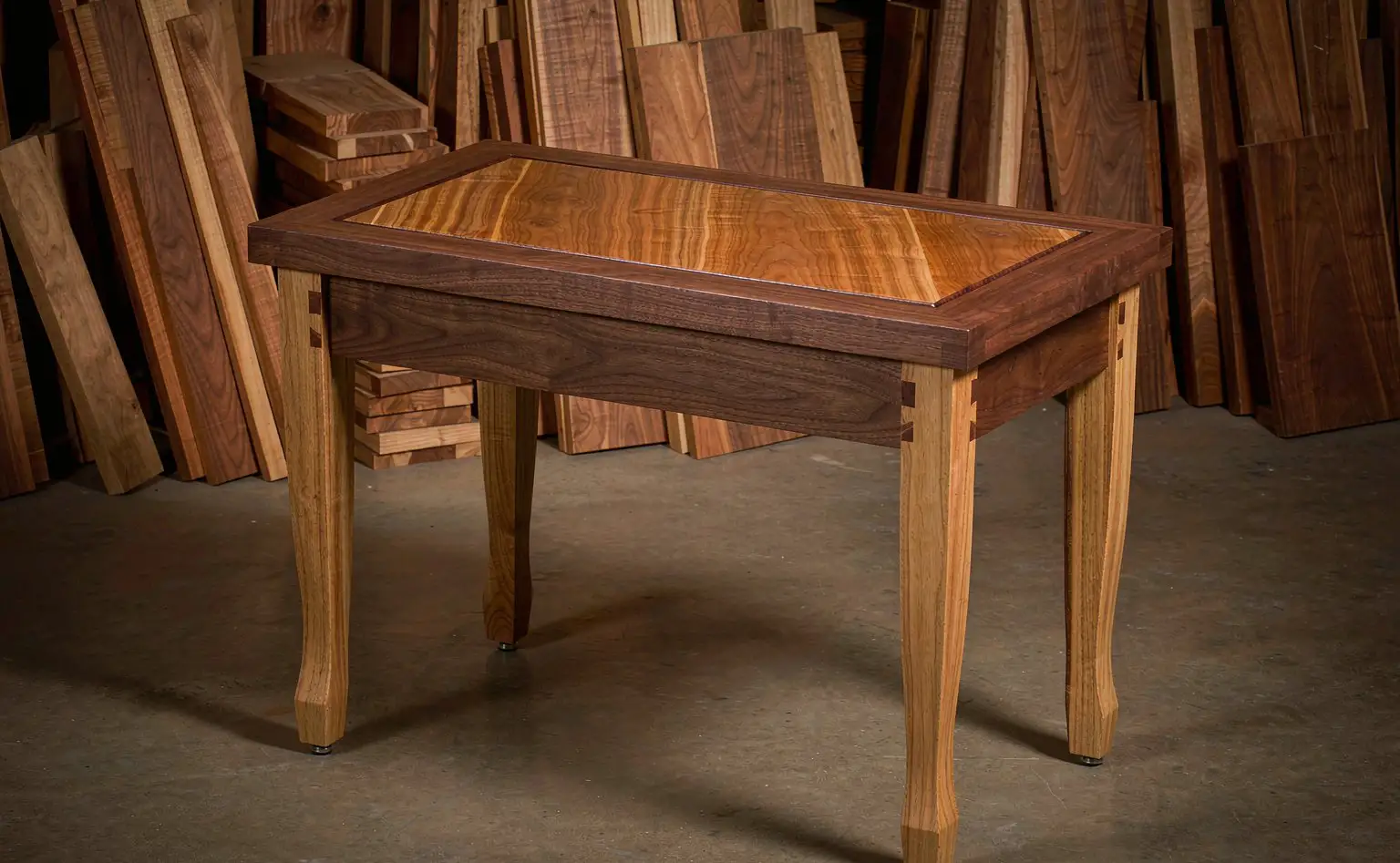
1. Mould sits in the glue lines, the mortises and the end grain
Take a piano bench apart: the seat is several boards glued into a panel, the legs and rails are mortise-and-tenon, and the feet carry adjustable glides. Hardware and glides do not mould. The glued panel, the joints and the end grain do.
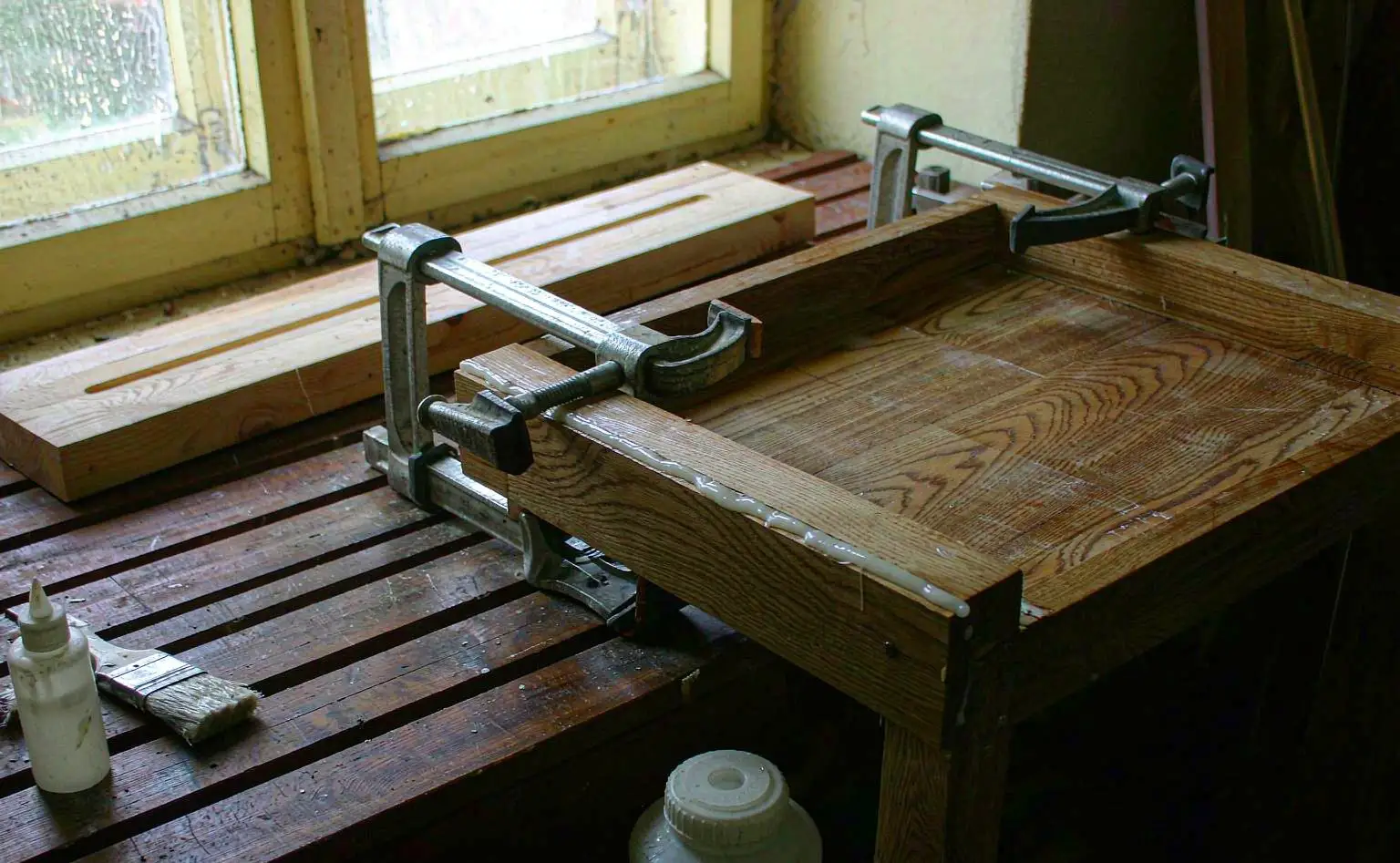
The panel fails on glue and trapped water. A glued panel is clamped while the adhesive still carries water, and the closed joint is a narrow slot where that water leaves slowest. Made in a wet season and stored for a while, the seat shows a grey-white line of mould along the glue line, following the grain.
The mortise fails because nothing reaches it. A mortise is a square hole closed on four sides, and the gap between wall and tenon takes no liquor; dipped whole, the hole traps air and the liquid never enters. Once water gets in, mould works from the wall inward, invisible from outside until the tenon has gone black.
End grain fails fastest. The bottom of a leg and any cut end expose fibre ends across the section, which take water several times faster than a side face. Leave the ends untreated and a damp floor starts mould there, which then climbs.
2. Dipping and topping up: two ways to get liquor in
The table lines up the seat, the joints, the end grain and the hardware. Dipping is judged on weight gain and topping up on coats, and neither replaces the other.
| Part | Material | Method and level | Stage | Control point |
|---|---|---|---|---|
| Seat panel | Glued solid timber | iHeir-M5 at 1:40, 15%-20% gain | After glue-up, before machining | Fully submerged, judged on gain |
| Mortises, tenons | Solid timber | Same liquor, flooded and brushed | After machining, before assembly | No air pockets, left to stand |
| Leg ends, cut ends | End grain | Same liquor, two coats | After sanding | Wet through, second coat after drying |
| Glides, fittings | Metal | Per-part rust protection, off the liquor | After the timber dries | Wiped dry before fitting |
One boundary. A soaked seat does not finish the bench: the mortises take nothing from the dip and nobody deals with the end grain. The dip primes, the top-up covers the dead corners, and only both together keep rework out of the finished-goods store.
3. Seat panel: soak it whole and judge the end point on weight gain
The seat stage uses iHeir-M5 immersion-type bamboo and wood fungicide mixed at 1:40, that is 5kg of concentrate to 100kg of water, and the dosage is quoted against the water rather than the timber, so size the tank by the water weight. It is a red-brown liquid of high solids, shaken before use.
When to soak. After the panel is glued and the adhesive has set, not on the day of glue-up: the water in the adhesive has to leave first, or the glue line opens once the soaked panel dries. Nor soak after machining and sanding, because the tenons are already cut to size and will move. The order is glue-up, cure, soak, dry, machine, sand.
How to soak. Put the whole seat under the surface, weight it with a batten and let nothing float clear of the liquor. The end point is a 15%-20% weight gain, about 5-10 minutes; a seat panel is thinner than leg stock and reaches the gain first, so do not leave it in for the leg time. Lift out, drain, then air-dry or sun-dry to a normal moisture content.
Tank and liquor. Use a plastic or plastic-lined tank, never steel. M5 is acidic and must not meet metal or alkaline material; the liquor also picks up wood dust over successive batches, so strength falls and the weight gain with it. Top up by batch and change the tank when it turns cloudy. The general immersion route is in using wood anti-mould agents.
4. Mortises and tenons: top up where the dip cannot reach
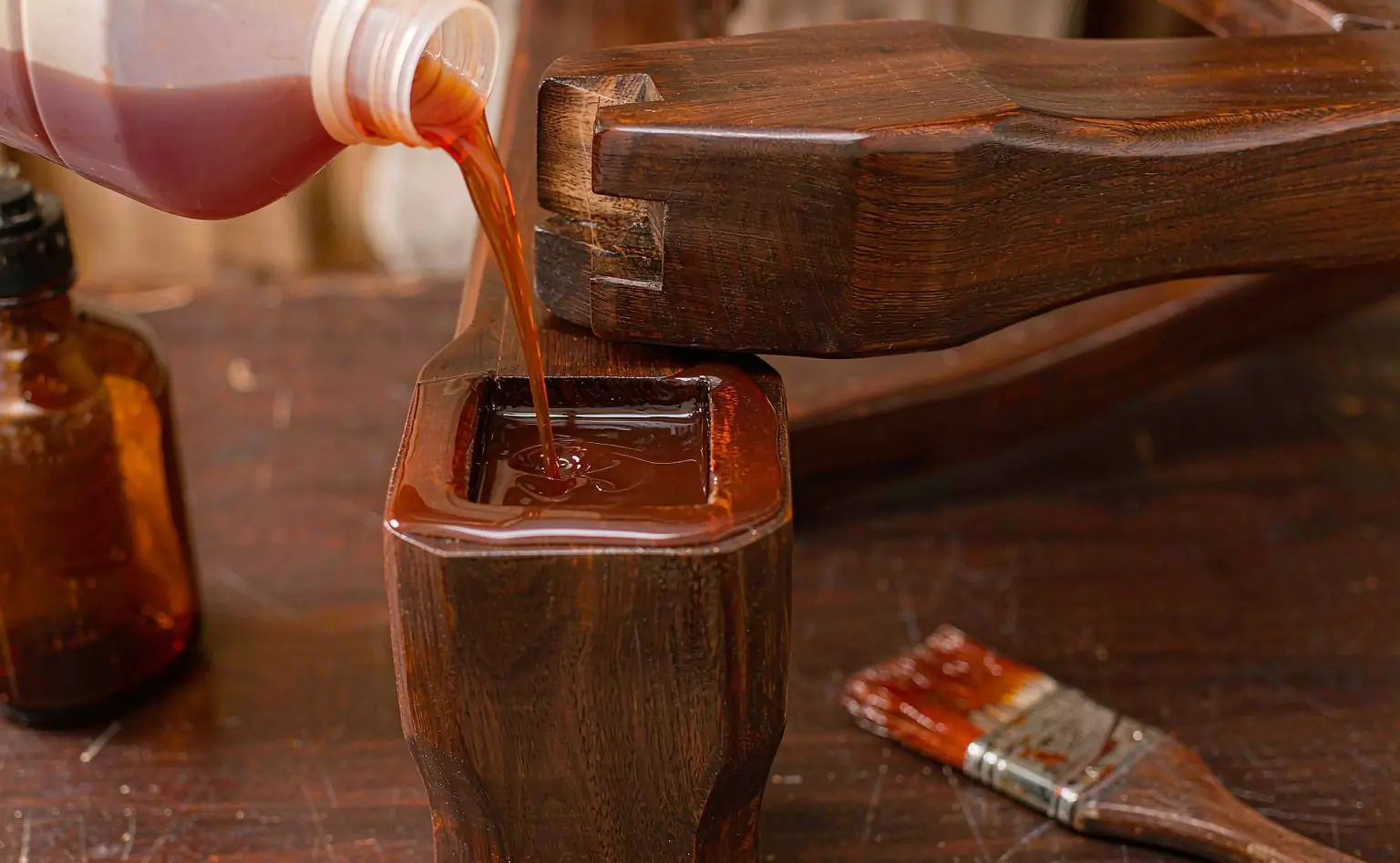
The joint stage uses the same iHeir-M5 at 1:40, poured straight from the dip liquor without further dilution. It takes two actions: flood the mortise from a small-spout jug until it stands full and leave it a few minutes, then brush the four faces of the tenon twice along the grain, the second coat after the first dries.
Why it has to stand. A closed square hole traps air under the liquor; a few minutes lets the bubbles rise, then a second fill reaches the walls that stayed dry. Flood before brushing the tenon, so it carries liquor into the joint at assembly.
Dry it before assembly. A topped-up joint carries more water, and assembly has to wait until the moisture is back to normal. A wet tenon driven into a mortise glues poorly and seals the water in, and mould starts from inside.
Do not skip the ends. Brush the leg bottoms and rail cuts twice, the second coat after the first dries. End grain drinks fast and is the easiest place to forget. Wipe the ends dry before fitting glides, and keep metal away from the acidic liquor.
5. Drying, assembly, packing and export
Drying is the step most often skipped: soaked parts stack in a corner and look dry on the surface while the core is still wet. Drain first, then move to a drying room or ventilated shed, and check moisture by batch before machining, sanding and assembly. Larger plants tag each stack with the soak batch and the date.
At packing, bag or foam-wrap each bench, stack seat-up and never on top of another seat, and put cartons on pallets 10cm off the floor and 10cm off the wall below 60% RH. At sea, container condensation is harsher than any warehouse, so leave an air path and keep cartons off the wall; upholstered seats and fabric covers take up more moisture inside a container, and the route is in mouldy furniture panels.
Release at three levels: panel stock to GB/T 18261, sampling both sides of a glue line; joints to the same standard, sampling from the mortise wall; finished benches for 30 days at 30℃/85% RH, opening to check glue lines, joints and end grain. The plant-wide route for solid timber is in solid wood furniture anti-mould.
6. Questions on joints, order and drying
Q: With the seat soaked, can the mortises be left?
No. A mortise is closed on four sides and traps air during the dip, so liquor never enters; untreated, mould starts on the wall, stays hidden and shows up when the tenon has gone black.
Q: Can glue-up and soaking swap places?
No. Soak first and the adhesive bonds to a surface already loaded with liquor and holds poorly. The order is glue-up, cure, soak, dry, machine, sand.
Q: Is air drying after the dip enough?
For small batches in a dry season it can be, provided moisture readings back it up; in a wet season and in volume, use a drying room and check each batch rather than judging by touch.
Four points to take away: soak the glued seat panel whole in iHeir-M5 at 1:40 to 15%-20% weight gain after the glue cures, then drain and dry to a normal moisture content before machining and sanding; flood the mortises with the same liquor and let them stand, brush each tenon twice and give the leg ends two coats before assembly; use a plastic tank and keep the liquor off metal and alkalis; palletise off the floor and wall, hold the store below 60% RH and leave an air path in the container. A 1kg sample goes out first, with MOQ and lead time on the iHeir-M5 product page.


