




 View Count:39
 Date:2026-09-09
Nankang solid-wood furniture export anti-mold: from timber moisture content to finished warehouse control
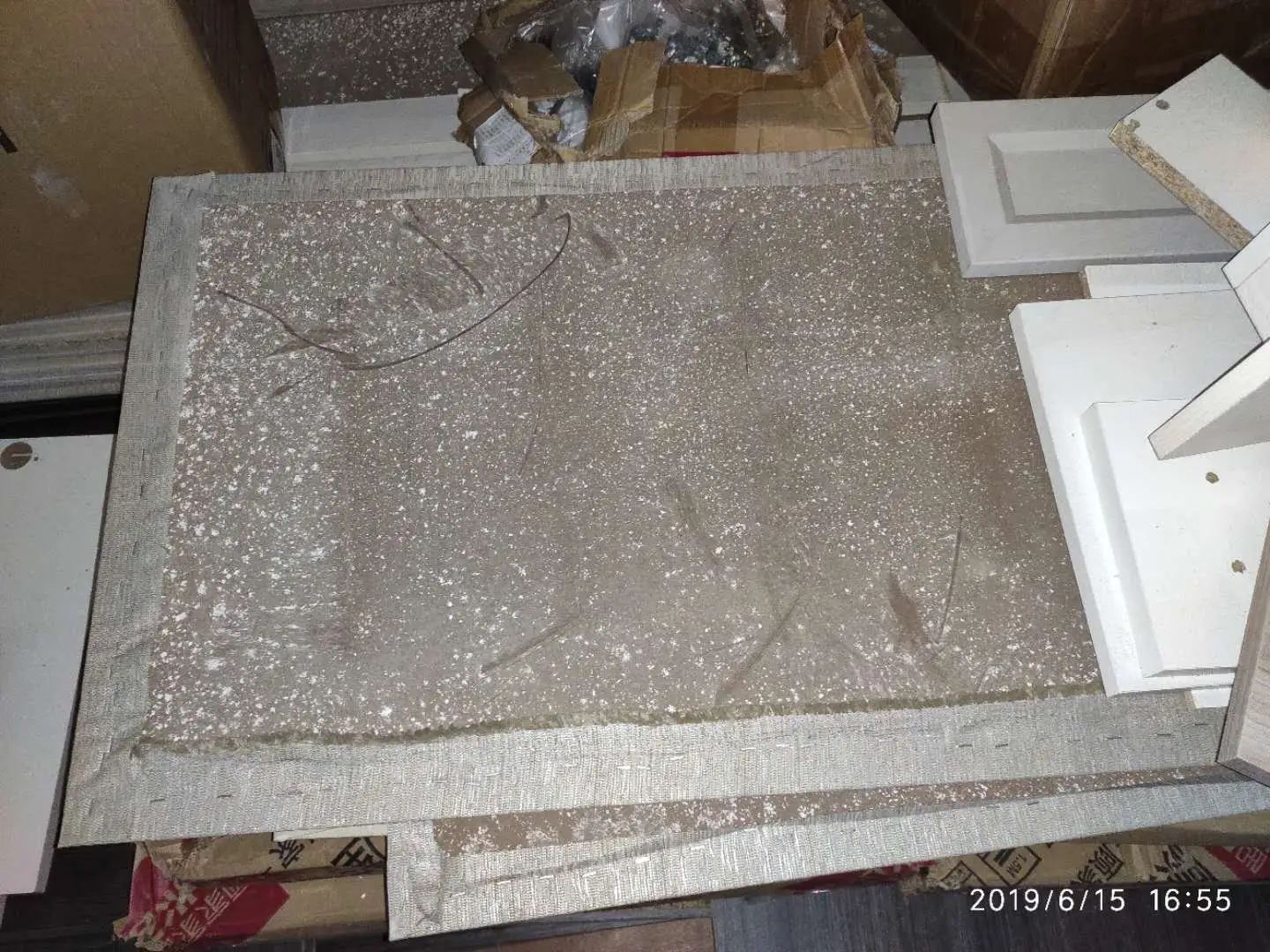
Jiangxi Ganzhou Nankang is the heart of China’s solid-wood furniture export industry — the Nankang furniture industrial park and surrounding townships host over 8,000 solid-wood furniture factories and panel-wood hybrid plants, producing solid-wood beds, dining tables, wardrobes, bookcases and tea tables valued at over RMB 80 billion a year, exported to the US, Europe, Southeast Asia and the Middle East. Every year between April and October — the plum-rain season, typhoon season and the hot-humid sea-freight cycle — mold claim incidents spike across the cluster. One recent incident: a Nankang solid-wood dining-table plant shipped 8,000 oak tables to Los Angeles only to have the customer open cartons at the destination and find 14% of table legs covered in black mold at the mortise-and-tenon joints with 9% of the table tops showing a musty odor, triggering a full-batch return and an RMB 960,000 claim under contract annex 4. Another white-oak bed plant lost RMB 1.45 million when 22% of 12,000 headboard support panels arrived moldy after 28 days at sea. The root cause is rarely a single process step — it is one or two weak links across six process ports: raw timber moisture content, kiln drying, white-stock storage, pre-paint treatment, finished warehouse, and container sea-freight. This guide strings those six ports into a ready-to-deploy anti-mold SOP for Nankang solid-wood furniture factories, panel-wood hybrid plants and foreign-trade companies.
1. Mold risk chain in Nankang solid-wood furniture: 4 high-risk ports from raw timber to container
Across the solid-wood furniture supply chain, mold typically appears at four high-risk ports:
1. Raw timber moisture content and kiln drying: Nankang furniture plants use imported rough-sawn timber such as oak, walnut, cherry and ash with initial moisture content 35%-60% (see the wood anti-mold agent usage guide). If the kiln drying is incomplete and the final moisture content exceeds 12% (the solid-wood furniture export standard), the moisture inside the wood migrates repeatedly under the high temperature of sea-freight, and the surface develops mold spots. Uneven drying also deforms and cracks the finished furniture, worsening the mold issue.
2. White-stock (semi-finished) storage and pre-paint: White-stock furniture (with moisture content brought below 12%) sits in the white-stock warehouse for 7-30 days before painting. Most Nankang white-stock warehouses are color-steel sheds with no floor moisture-proofing or humidity control. In summer, with white-stock warehouse humidity above 75%RH, the white-stock furniture surface develops local mold spots within 7-10 days — especially at mortise-and-tenon joints, carved recesses, and drawer interiors, which are the first “humidity dead zones” (see the custom furniture anti-mold plan).
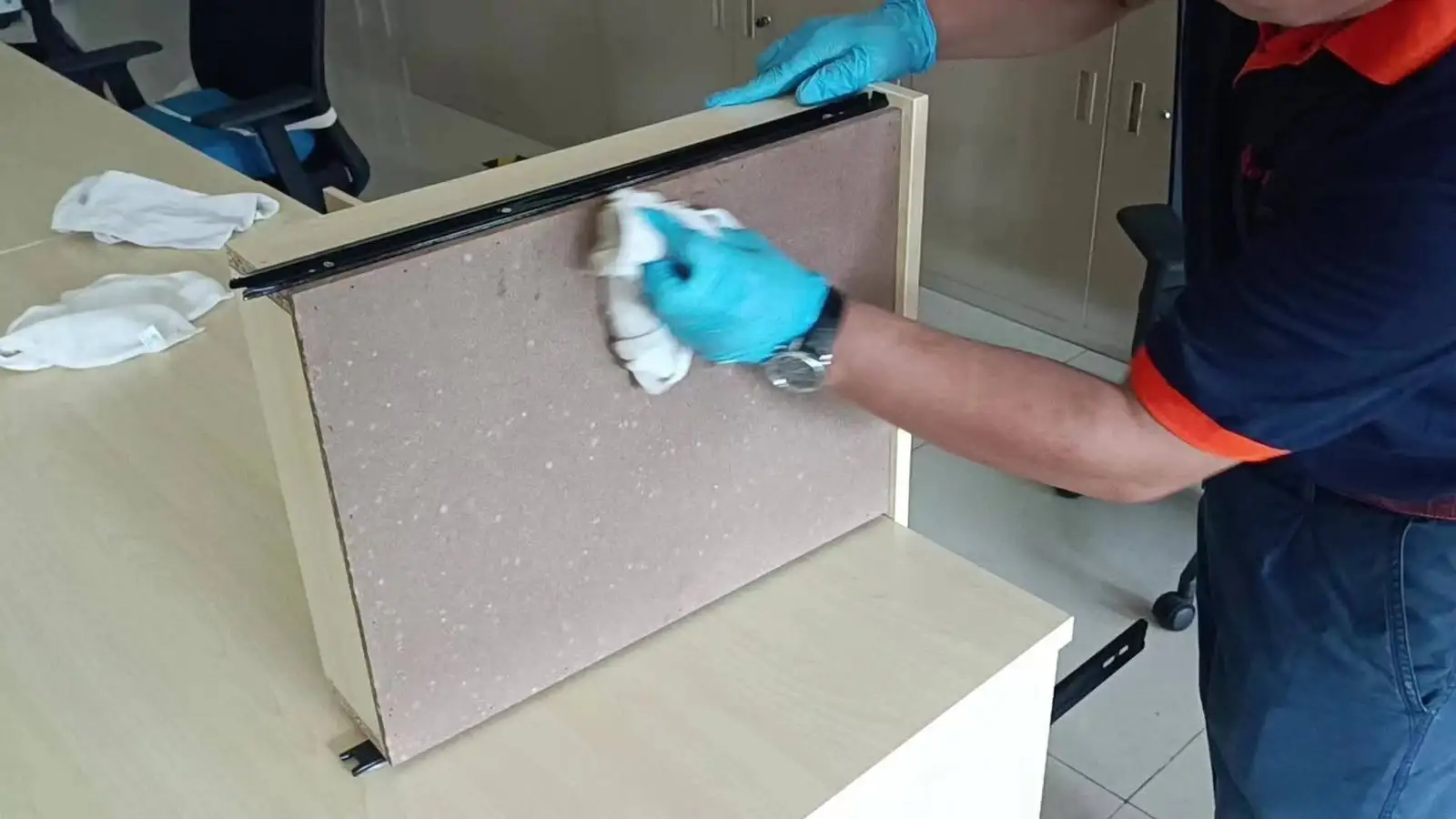
3. Panel-wood hybrid and veneer: Modern solid-wood furniture extensively uses panel-wood hybrid structures (solid-wood frame + multi-layer board / MDF with veneer). Multi-layer board and MDF themselves are a “food source” for mold — the boards contain large amounts of starch-based adhesives and go moldy readily when wet (see the board mold treatment plan). Poor edge-sealing after veneering allows moisture into the board, and within 1-2 months the board molds and the veneer blisters.
4. Finished warehouse and container sea-freight: Finished furniture is packed into cartons + corner protectors + stretch film, then enters the finished warehouse. Finished warehouses stack densely with no airflow, and with indoor humidity above 70%RH, the cartons absorb moisture and condensation forms on the inside of the stretch film, spreading the musty odor to the furniture within 1-2 weeks. Inside the container, the “container rain” effect kicks in: daytime sun bakes the box at 50-70°C, nighttime drops to 25°C with humidity above 95%, and condensation drips onto the cartons. Solid-wood furniture is bulky and the sea-freight cycle is long (18-22 days from China to the US West Coast), further amplifying the mold risk (similar sea-freight scenario covered in the wood pallet anti-mold guide).
This is why “just spray an anti-mold agent” never works — anti-mold control has to run across all six ports: raw timber moisture, kiln drying, white-stock treatment, veneer anti-mold, finished warehouse humidity, and container desiccation.
2. Nankang solid-wood furniture deployable SOP: six-port anti-mold plan
Below is a procedure directly insertable into the production flow of a Nankang solid-wood furniture plant:
1. Raw timber moisture content and kiln drying: Sort raw timber by species and dimension and load into the kiln in batches. Oak drying benchmark: 60% to 8%-10% moisture content over 30-45 days, stepped 50-65°C ramp (avoiding fast-drying cracks). Walnut / cherry drying cycle 25-40 days. After kiln exit, spray iHeir-JP bamboo and wood anti-mildew agent diluted 1:10 with water on the end-grain and surface (80-100 ml per square meter), air-dry 30 minutes before the next process. iHeir-JP penetrates wood fibers to form an anti-mold protective layer without affecting subsequent paint or wax adhesion.
2. White-stock (semi-finished) storage and pre-paint anti-mold: Run industrial dehumidifiers in the white-stock warehouse to hold RH below 55%RH, lay moisture-proof floor mats, and keep a 10 cm gap between white-stock pieces. Before painting or waxing, spray iHeir-Spray (M3D) water-based anti-mildew agent at 1:8 with water evenly on the white-stock surface (50-80 ml per square meter), focusing on mortise-and-tenon joints, carved recesses, drawer interiors and other “humidity dead zones”, air-dry 30-60 minutes before painting. M3D dries colorless and odorless, without affecting water-based paint, oil-based paint or wax oil adhesion or gloss (office furniture anti-mold reference at the office furniture anti-mold plan).
3. Panel-wood hybrid and veneer anti-mold: After receiving multi-layer board, MDF and veneer material, spray or dip with iHeir-MA soaking-type bamboo and wood preservative at 1:5 with water (thin board dip 30 seconds; thick board spray 100-150 ml per square meter), air-dry before veneering or edge-sealing. Add 0.3%-0.5% iHeir-MA mold inhibitor to the EVA or PUR glue used for veneering. Edge-sealing quality is critical — poor edge-sealing is the #1 cause of mold in panel-wood hybrid furniture (see the panel furniture anti-mold plan).
4. Paint and finished surface treatment: Water-based paint, oil-based paint and wax oil themselves do not prevent mold, but they block moisture. Add 0.5%-1% iHeir-MA mold inhibitor to the water-based topcoat (no effect on film gloss or adhesion) as a double safeguard. After painting, use a moisture meter to test the finished surface moisture content (solid-wood furniture export standard ≤12%, panel-wood hybrid parts ≤10%), and rework any over-spec pieces.
5. Finished warehouse and inventory: Run industrial dehumidifiers in the finished warehouse to hold RH below 55%RH, lay moisture-proof floor mats, and cap stacking height at 3 layers (solid-wood furniture is heavy and stacks of 4+ layers deform under pressure), with moisture-proof mats between layers. For finished product in inventory longer than 1 month, add 1-2 packs of silica gel desiccant per piece (or the multifunctional CH-10 anti-mildew drying and deodorizing pack), and wrap the outer packaging (carton + corner protectors + stretch film) with an additional layer of gas-phase anti-mold film (the iHeir-D 5 series gas-phase antimicrobial and mold inhibitor).
6. Container sea-freight: Hang 6-8 T-1000 container desiccant sticks in a 20 ft container, 10-12 in a 40 ft high cube. Stick moisture-proof aluminum foil reflective film to the inner walls to deflect the “container rain” path. Inspect the door gasket for damage. Solid-wood furniture is bulky and the T-1000 quantity needs to be adjusted based on the remaining space inside the container (typically a 20 ft container loaded with 4-6 large furniture pieces needs 4-6 T-1000 sticks + 4-6 packs of silica gel desiccant in combination). T-1000 uses calcium chloride base material that absorbs moisture even at -20°C, covering the 18-22 day transit from China to the US West Coast and bringing in-container humidity from 95%RH down to below 35%RH.
3. Real mold case at a Nankang solid-wood furniture factory with product test data
A Nankang furniture industrial park oak dining-table plant (annual output 50,000 table sets, supplying US Crate & Barrel and European Habitat) shipped 8,000 oak dining tables to Los Angeles in May 2024 with FOB value RMB 5.8 million. After 22 days at sea, the customer opened cartons and found 14% of table legs covered in black mold at the mortise-and-tenon joints and 9% of the table tops with a musty odor, triggering a full-batch return and RMB 960,000 claim under contract annex 4.
Root cause review: kiln final moisture content 13.5% (above the 12% standard); white-stock warehouse humidity 82%RH in summer with no humidity control; no M3D treatment before painting; finished warehouse humidity 73%RH; container had no T-1000 sticks; outer cartons used plain corrugated board with no gas-phase anti-mold. Lab testing of the mold samples identified three mixed colonies: Aspergillus niger, Penicillium, and Mucor, primarily spreading from the mortise-and-tenon humidity dead zones + the panel-wood hybrid board mold.
Remediation plan: kiln process adjusted to tightly control final moisture content ≤10%; industrial dehumidifier added to the white-stock warehouse; pre-paint iHeir-Spray (M3D) water-based anti-mildew agent at 1:8 spray + 1:5 secondary spray at the mortise-and-tenon joints; panel-wood hybrid parts treated with iHeir-MA soaking-type bamboo and wood preservative; industrial dehumidifier added to the finished warehouse; 6 T-1000 sticks per 20 ft container + 4 packs of silica gel desiccant. In the second half of 2024 across 8 shipping containers, the mold rate dropped to under 0.4%.
A Nankang white-oak bed plant (annual output 30,000 beds) faced a similar situation (see the wood pallet anti-mold general guide). After switching to iHeir-JP end-grain treatment + M3D surface spray + MA board mold inhibitor + dehumidifier-controlled warehouse, the mold rate dropped from 22% to 0.6%, and ASTM D4442 moisture-content testing cleared all pieces at ≤10%.
4. Anti-mold product selection guide for Nankang solid-wood furniture plants
Nankang solid-wood furniture plants typically use four categories of anti-mold products, and the right model must be chosen per process port:
1. Raw timber end-grain and surface anti-mold (spray type): iHeir-JP bamboo and wood anti-mildew agent, non-toxic and odorless, with strong penetration, drying colorless and odorless, without affecting subsequent paint, wax and veneer adhesion. Suitable for oak, walnut, cherry, ash, teak and all solid-wood furniture materials. Mix ratio: end-grain and surface spray at 1:10 with water (80-100 ml per square meter); high-value species (rosewood, teak) recommend 1:5 dilution.
2. White-stock and semi-finished anti-mold (spray type): iHeir-Spray (M3D) water-based anti-mildew agent, at 1:8 with water spray evenly on the white-stock surface (50-80 ml per square meter), focusing on mortise-and-tenon joints, carved recesses and drawer interiors. Dries colorless and odorless, paintable directly. Also suitable for pre-treatment anti-mold on refurbished used furniture.
3. Panel-wood hybrid and veneer anti-mold (dip/spray type): iHeir-MA soaking-type bamboo and wood preservative, mix ratio: thin board dip at 1:5 with water for 30 seconds; thick board spray at 1:5 with water at 100-150 ml per square meter; add 0.3%-0.5% iHeir-MA mold inhibitor to the water-based glue, EVA glue or PUR glue. Suitable for multi-layer board, MDF and veneer materials (panel-wood hybrid anti-mold reference at the board anti-mold plan).
4. Container sea-freight moisture control (stick type): 6-8 T-1000 container desiccant sticks per 20 ft container, 10-12 per 40 ft high cube. Solid-wood furniture is bulky and T-1000 quantity needs to be adjusted based on the remaining container space; combine with silica gel desiccant.
5. Compliance essentials for Nankang solid-wood furniture exports: 12% moisture, GB/T 3324, ASTM D4442, ISPM 15
Solid-wood furniture exports to Europe and the US must pass the following compliance checks:
1. Moisture content standard ≤12%: Solid-wood furniture exports to Europe and the US require moisture content ≤12% per GB/T 3324 “General technical requirements for wooden furniture”. International US and European buyers typically require ≤10%. Nankang furniture plants use the kiln + moisture meter for piece-by-piece testing; ASTM D4442 oven-dry method is the international standard (see the wood anti-mold agent usage guide).
2. GB/T 3324 “General technical requirements for wooden furniture”: Moisture content ≤12% (solid-wood) / ≤10% (panel-wood hybrid); formaldehyde emission ≤1.5 mg/L (E1 grade); paint film adhesion ≥grade 2; humidity-heat resistance ≥grade 2. iHeir-JP, MA and M3D have passed SGS REACH 171-item testing, with no formaldehyde detected, supporting E1-grade compliance.
3. ASTM D4442 / D4444 wood moisture and volumetric shrinkage: ASTM D4442 oven-dry method (103°C × 24h) for moisture content; ASTM D4444 for volumetric shrinkage and swelling. Nankang furniture exported to the US must attach a third-party ASTM D4442 test report.
4. ISPM 15 international trade wood packaging quarantine: Wood cases / pallets / frames used for solid-wood furniture exports must be fumigated (methyl bromide) or heat-treated (56°C × 30 minutes), and printed with the IPPC mark (IPPC logo + exporter code + processing plant code). iHeir anti-mold treatment does not replace ISPM 15 fumigation / heat treatment (see the wood pallet anti-mold and ISPM 15 alternative guide).
5. Export commodity inspection and certificate of origin: Nankang furniture exports via Ganzhou Customs or Shenzhen Yantian Port, requiring CIQ commodity inspection certificates, FORM A / E / F certificates of origin; furniture containing anti-mold agents must note “contains anti-mold agent” on the customs declaration packaging description.
6. Nankang solid-wood furniture factory anti-mold checklist (printable)
Below is a six-port checklist that the Nankang solid-wood furniture factory or quality manager can print and post on the wall:
☐ Kiln final moisture content ≤10% (oak / walnut / cherry etc.); spray iHeir-JP at 1:10 on end-grain and surface after kiln exit
☐ White-stock warehouse RH ≤55%RH (dehumidifier running 24h), moisture-proof floor mats, 10 cm gap between white-stock pieces
☐ Pre-paint: spray iHeir-Spray (M3D) at 1:8 on the white-stock, 1:5 secondary spray at mortise-and-tenon joints, air-dry 30-60 minutes before painting
☐ Panel-wood hybrid parts: multi-layer board / MDF treated with iHeir-MA at 1:5 (dip or spray); 0.3%-0.5% iHeir-MA mold inhibitor in the veneering glue
☐ Water-based topcoat with 0.5%-1% iHeir-MA; post-paint moisture meter test ≤12%
☐ Finished warehouse RH ≤55%RH, stacking height ≤3 layers, moisture-proof mats between layers
☐ Inventory over 1 month: 1-2 packs of CH-10 drying pack per piece + 1 additional layer of gas-phase anti-mold film (iHeir-D 5 series) on the outer packaging
☐ 6-8 T-1000 sticks per 20 ft container (adjust by container space) + 4-6 packs of silica gel desiccant, intact door gasket, moisture-proof aluminum foil reflective film on inner walls
☐ Wood cases / pallets / frames: ISPM 15 fumigation or heat treatment (56°C × 30 min) with IPPC mark printed
☐ Customs declaration marked “contains anti-mold agent”, with SGS REACH 171-item report, ASTM D4442 moisture report, GB/T 3324 report, CIQ inspection certificate and ISPM 15 IPPC mark
Run this checklist through one full cycle at the Nankang furniture industrial park and the mold claim rate drops from 8%-22% to below 1%, with container loads of RMB 1 million+ solid-wood furniture effectively achieving zero-mold delivery. For wood anti-mold agents, soaking-type MA, surface treatment M3D samples, Power Pak bulk pricing, or a complete T-1000 container desiccant plan, please contact us.