




 View Count:39
 Date:2026-11-03
How do you keep mould off a ukulele, and why is it hard to fix once it starts? The body is thin and the cavity is sealed, so mould on the inside of the soundboard or in the case lining cannot be reached or washed off, and an export batch is downgraded. Soak the soundboard and body parts in iHeir-M5 at 1:40 to a 15%-20% weight gain, then lay an iHeir-D sheet at 0.1-0.2g of active matter under the case lining. This article covers the dip criterion, the glue-up order and the packing.
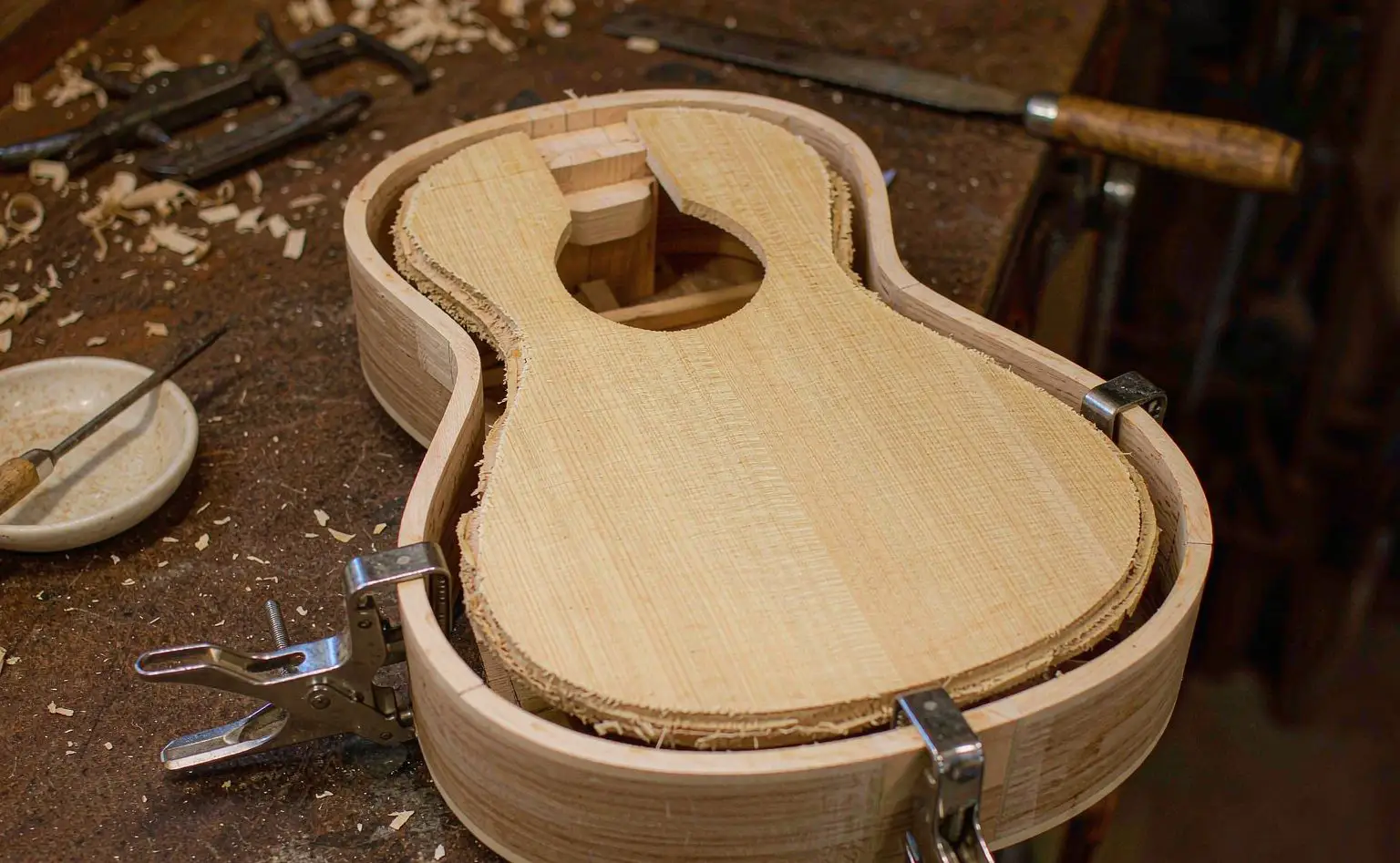
1. Mould sits in the soundboard, the cavity and the case lining
Take a ukulele apart: soundboard, back and sides, neck, fingerboard, bridge, braces, nut and tuners, with a hard case or a padded bag around it. Metal tuners do not mould. The boards, the cavity and the case lining do.
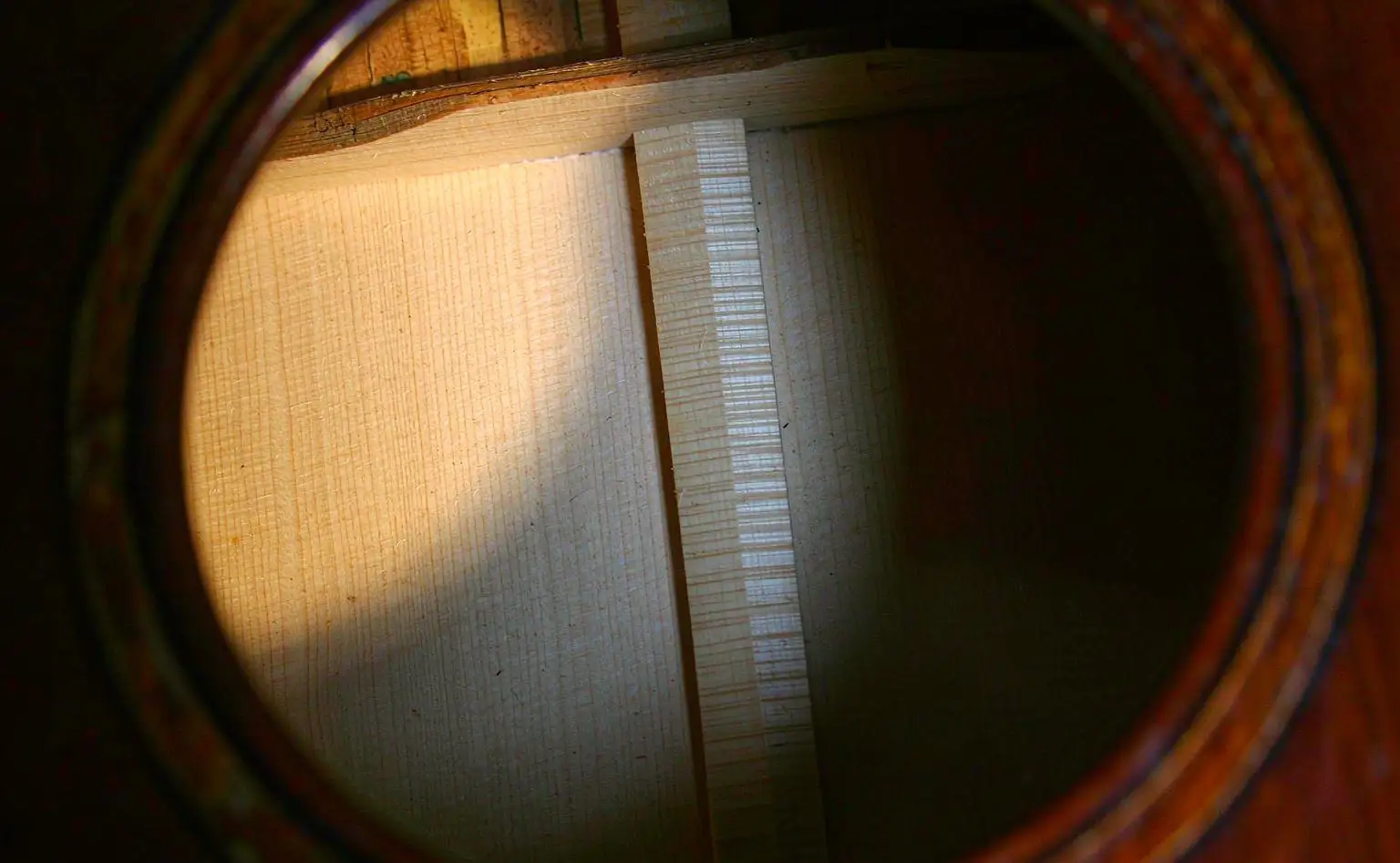
The soundboard fails on thickness. A top is around two millimetres, so it takes up and gives off water far faster than a neck; its inner face carries the braces, which means many glue lines and the poorest airflow in the instrument. Made in a wet season and stored for a while, the inner face spots first, most visible looking in through the soundhole.
The cavity fails because it is closed. Once the body is closed it is an almost airtight box, and the water carried in during glue-up cannot leave. Spots on the inner face cannot be reached, and a buyer who looks through the soundhole sees them, which leaves no repair route: the instrument is downgraded or scrapped.
The case fails on the lining. A hard case is lined with plush and a padded bag with foam and cloth, both of which hold moisture, and a closed case is another sealed volume where container temperature swings condense water onto lining and lacquer. The instrument can be perfect and the case still fails on opening.
2. The soundboard takes the dip, the case takes the sheet
The table lines up the top, the neck, the cavity and the case. Timber is dosed to weight gain and paper to active matter per sheet, and the two are not convertible.
| Part | Material | Product and level | Stage | Control point |
|---|---|---|---|---|
| Soundboard, back and sides | Spruce, acacia and similar thin stock | iHeir-M5 at 1:40, 15%-20% gain | After cutting, before closing | Judged on gain, never on the clock |
| Neck, braces | Solid timber | Same liquor, longer dip for thick stock | After shaping, before glue-up | Dry before adhesive |
| Case lining | Plush, foam | iHeir-D 0.1-0.2g per sheet | Before the instrument goes in | Trial at three times the dose |
| Tuners, bridge screws | Metal | Per-part rust protection, off the liquor | After the timber dries | Wiped dry before fitting |
One boundary. A soaked soundboard does not make the case safe: damp in the lining and water in the timber are separate problems, and only the sheet reaches that sealed volume. Run both stages for a clean instrument on opening.
3. A thin top means the dip time comes from weight gain
The top, back and sides take iHeir-M5 immersion-type bamboo and wood fungicide mixed at 1:40, that is 5kg of concentrate to 100kg of water. It is a red-brown liquid of high solids, shaken before use.
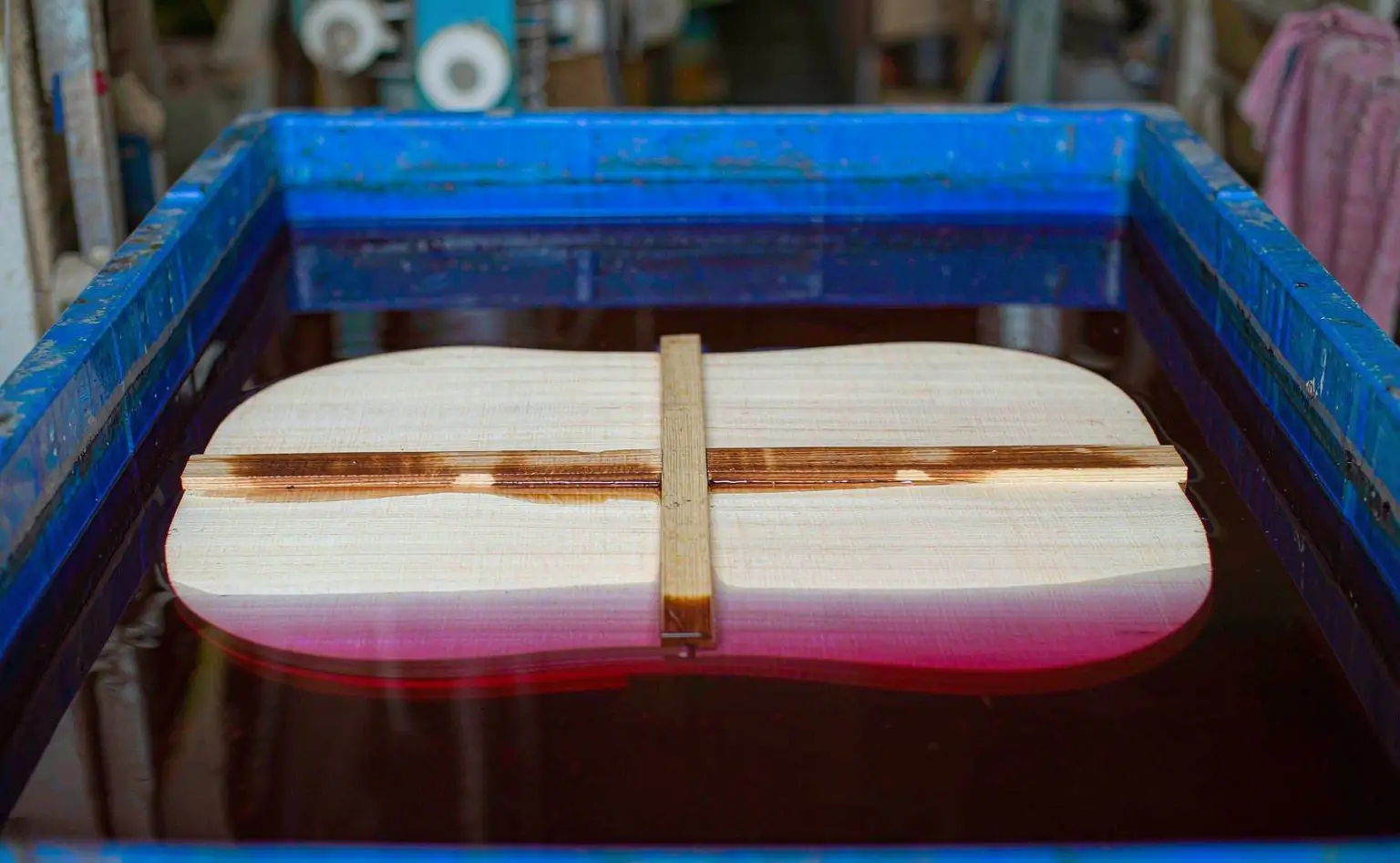
Do not soak a thin board for a full day out of habit. Over-soak and the moisture content climbs so high that drying takes days and the braces let go; under-soak and the gain stays below 15%, so the protection never got in. The end point is the 15%-20% gain: a two-millimetre top gets there in a few minutes, measured on the species and thickness in hand, and the neck’s timing never applies to it.
How to soak. Keep the board fully under the surface; thin stock floats, so weight it with a batten or a mesh. Lift it out the moment the gain is reached, drain it flat, then dry in a room or a ventilated shed and check moisture by batch. Dry thin boards flat, because standing them on edge cups them.
Tank and liquor. Use a plastic or plastic-lined tank, never steel. M5 is acidic and must not meet metal or alkaline material; wood dust dilutes the liquor over successive batches until the gain falls away, so top up by batch and change it when it turns cloudy. The general route is in using wood anti-mould agents.
4. Neck, braces and the glue faces
The neck, braces and cavity strips take the same iHeir-M5 at the same 1:40. A neck is thick stock and dips longer, still judged on a 15%-20% gain; braces are small strips, dipped in bundles and separated to dry.
Glue faces have to be dry. This is where instruments go wrong most often: adhesive applied to timber that is still carrying dip water bonds poorly, and the water is sealed inside the joint where mould works inward, invisible once the body is closed. Check moisture by batch, glue only at a normal moisture content, and let the closed body stabilise in a humidity-controlled room for a few days.
Lacquer and the cavity. The outside gets lacquered and the film keeps water out; the cavity usually gets nothing, and it is the face most likely to mould. Brushing the cavity with the same liquor and letting it dry before closing is the most direct way to cover what the dip missed. The wider instrument route is in mould prevention for wooden instruments.
5. Assembly, setup, packing and export
Risk at assembly is humidity: build in a shop that swings and the top and back move differently, the lacquer cracks, and a crack is a way in for mould. Assemble and set up in a room held at 45%-55% RH, and leave finished instruments there for a few days before casing them.
At packing, lay a vapour sheet under the case lining, close the case, carton it, and put cartons on pallets 10cm off the floor and 10cm off the wall below 60% RH. At sea, container condensation is harsher than any warehouse, so leave an air path and keep cartons off the wall.
Release at three levels: top, back and sides to GB/T 18261, sampling the inner face and the area around a glue line; cases to GB/T 24346-2009, sampling the lining; complete instruments for 30 days at 30℃/85% RH, opening to check the inner face, the soundhole wall and the lining. Put all three on one shipping inspection sheet.
6. Questions on cavities, dip time and lining sheets
Q: With the top soaked, does the cavity still need brushing?
Yes. The cavity is open while the top is dipped, and the braces and inner walls are dead corners; brush the same liquor before closing and let it dry, or that face stays untreated.
Q: Can one dip time cover every part?
No. A two-millimetre top and a fifteen-millimetre neck gain very different amounts in the same time; judge on a 15%-20% gain and treat the clock as a guide only.
Q: Will the case sheet dull the lacquer?
There is a risk. A poor lacquer reacts to the vapour, so run the trial at three times the dose, separate the sheet from the finish with paper and inspect after a few days for dulling or blooming.
Q: Can the liquor be reused?
Yes, with top-up and concentration checks. Wood dust lowers the strength and the gain with it, so top up by batch and mix fresh liquor once it turns cloudy.
Four points to take away: dip the top, back, sides and neck at 1:40 with iHeir-M5 and judge the end point only on a 15%-20% gain, lifting thin boards out in minutes, draining flat and checking moisture by batch before glue-up; brush the cavity and braces with the same liquor and dry them before closing; lay one iHeir-D sheet at 0.1-0.2g of active matter under the case lining after a trial at three times the dose; assemble and set up at 45%-55% RH, palletise off the floor and wall, and leave an air path in the container. A 1kg sample and a pack of sheets go out for a trial first, with MOQ and lead time on the iHeir-M5 product page.


