




 View Count:33
 Date:2026-11-03
Can mould in a wooden mahjong box be prevented, and why does it return after treatment? Mould sits in the glued panels, the hollowed lid and the velvet lining, and a batch opened at the port ends in a return and a claim. Soak body and lid in the same tank with iHeir-M5 mixed at 1:40 to a weight gain of 15%-20%, then lay an iHeir-D gas-phase sheet at 0.1-0.2g of active matter under the velvet. This article covers the soak, the weight-gain criterion and the packing.
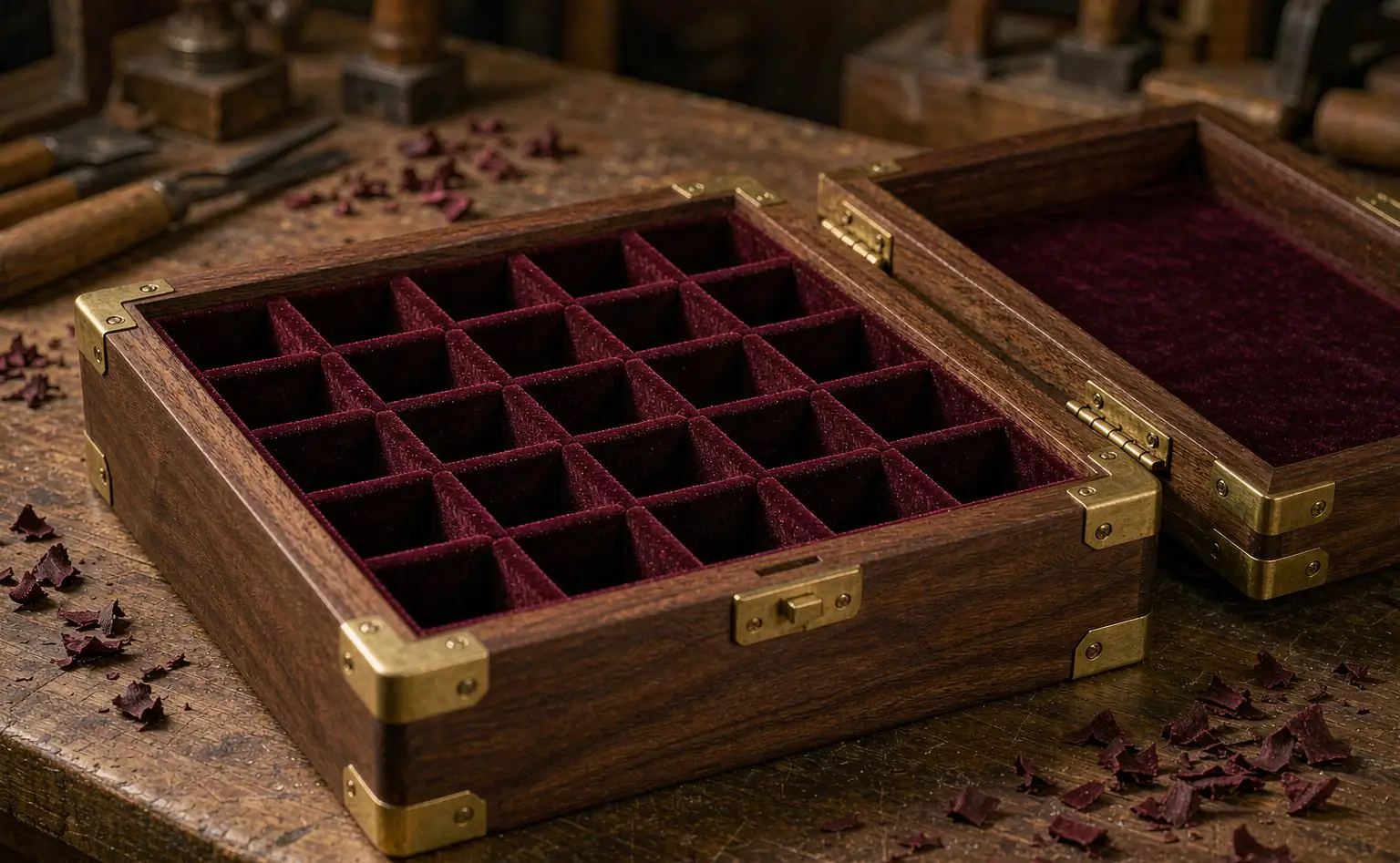
1. Mould sits in the panels, the hollow lid and the velvet
Take a mahjong box apart: body and lid are two pieces of timber, the cavity is lined with velvet, the corners are brass and the lid closes on magnets. Brass and magnets do not mould. The timber and the velvet do.
Timber fails on moisture content. The body is usually a glued panel, and boards of differing moisture content cup once they are joined; the glue line and the water left in it are where mould begins. The lid is hollowed from one block, so its walls are thin and it dries faster, and the wider the gap between the two, the sooner the lid cavity spots after closing.
Velvet fails on uptake. Velvet does not look absorbent, yet the fibre structure holds damp; glue that has not cured before the lid goes on seals that moisture inside the box. Once velvet spots, the marks do not wash out and the whole panel is replaced, which costs more than reworking timber.
2. Timber takes the soak, velvet takes the sheet
The table lines up the body, the lid, the velvet and the rest. Timber is dosed to weight gain and paper to active matter per sheet, and the two are not convertible.
| Part | Material | Product and level | Stage | Control point |
|---|---|---|---|---|
| Body, lid | Solid timber, glued panel | iHeir-M5 at 1:40, 15%-20% weight gain | After sanding, before lining | Same tank, same batch, fully submerged |
| Velvet and box interior | Velvet, blended cloth | iHeir-D 0.1-0.2g per sheet | After lining, before closing | Trial at three times the dose |
| Brass corners, magnets | Brass, magnet | Per-part rust protection, away from the liquor | After the timber dries | Wiped dry before fitting |
| Printed box, cloth bag | Board, cloth | Paper per box, humidity control | Packing | Store below 60% RH |
One boundary. Soaked timber does not make the box interior safe: damp held by the velvet and water inside the timber are separate problems, and only the sheet reaches that small sealed volume. Run both stages for a clean box on opening.
3. Body and lid go into the same tank, and weight gain sets the time
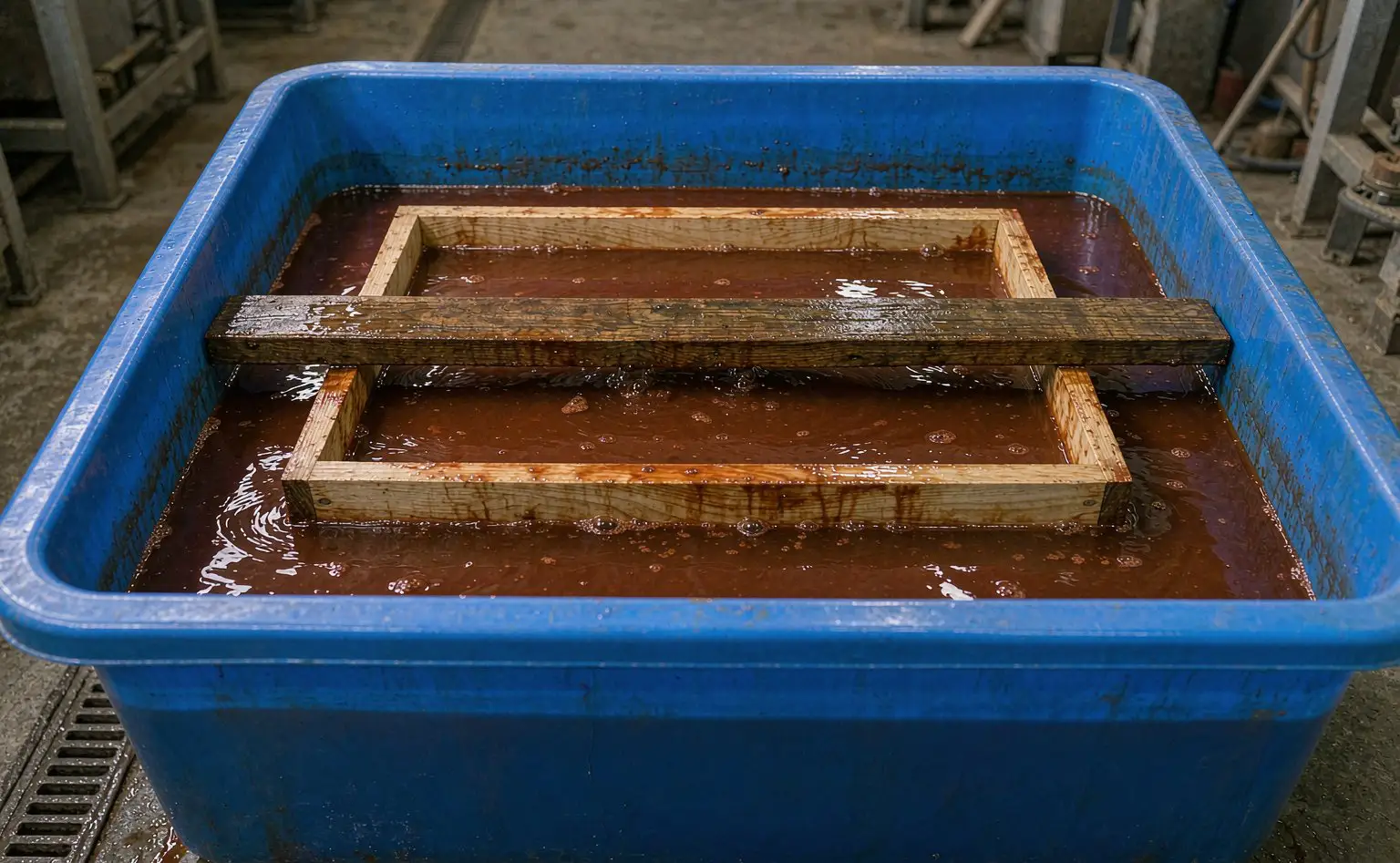
The timber stage uses iHeir-M5 immersion-type bamboo and wood fungicide, mixed at 1:40, that is 5kg of concentrate to 100kg of water. It is a red-brown liquid of high solids, shaken before use.
How to soak. Put body and lid into the same tank in the same batch, fully submerged, held down with a batten so nothing floats above the surface. The end point is not the clock but the weight gain: soak to 15%-20%, about 5-10 minutes. A thin-walled lid reaches that gain first, so do not leave it in for the body’s time, or it takes up too much water and dries more slowly afterwards.
Why one tank matters. Split them into separate batches and the liquor strength and soak time differ, so the moisture contents differ; after closing, one piece gives water up while the other takes it in, and the lid cavity spots or the glue line opens.
After the soak. Lift out at the target gain and drain, then air-dry or sun-dry to a normal moisture content before lining, assembly and packing. M5 is acidic and must not meet metal or alkaline material: use a plastic or plastic-lined tank rather than a steel one. The general immersion route for timber is in using wood anti-mould agents.
4. Velvet and lining: the sheet goes underneath the cloth
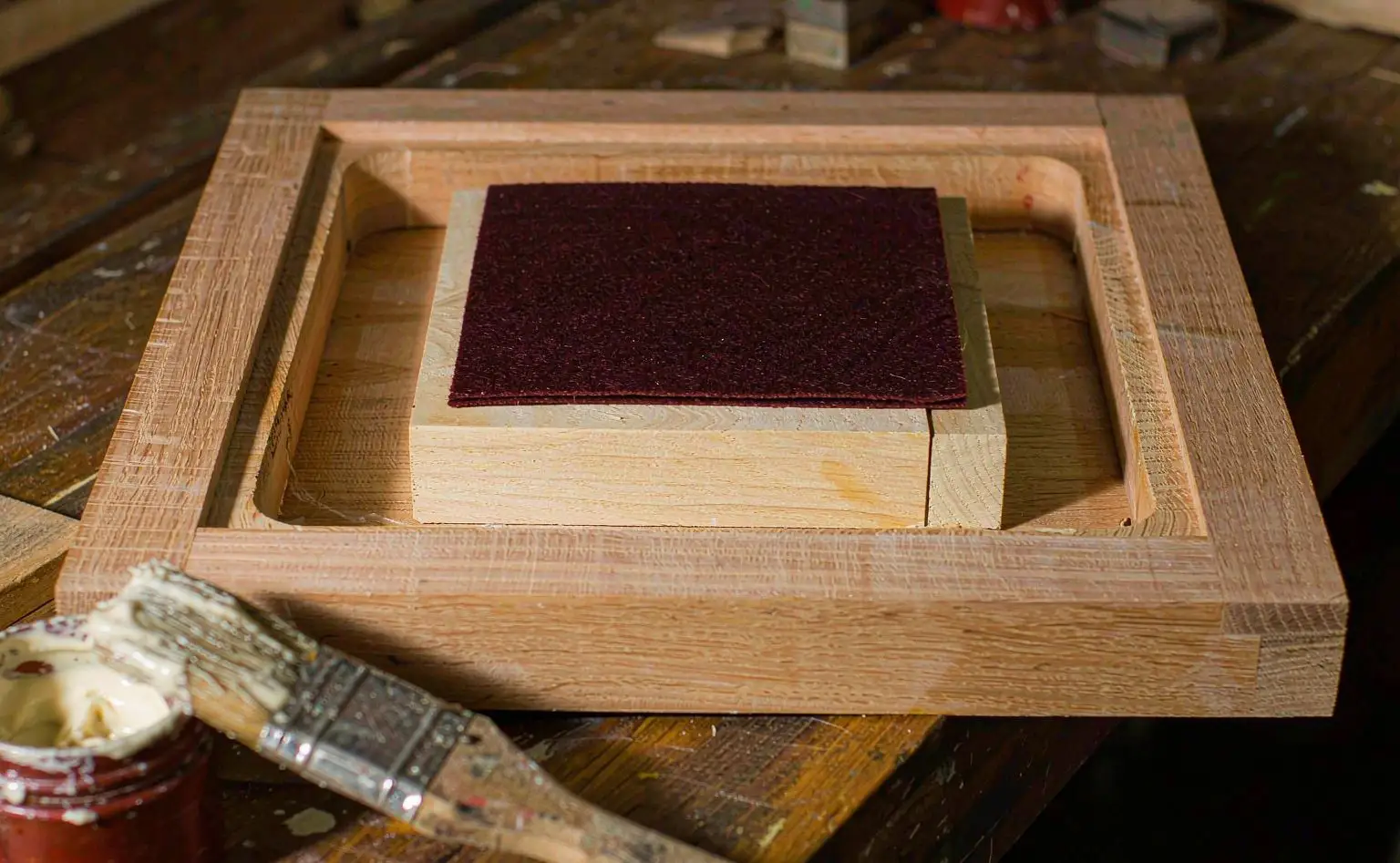
The interior stage uses an iHeir-D gas-phase anti-mould sheet, a speciality ink carrying anti-mould particles coated onto paper that works once the box is closed. The dose basis is 0.1-0.2g of active matter per sheet, one sheet to a box, taking the upper figure for large boxes and long storage.
Where it goes. Under the velvet, against the timber base, not on top of the tiles. The vapour is heavier than air and settles downward, so a sheet at the bottom spreads evenly; a sheet against the tile faces or the velvet pile rubs and leaves a paper mark the buyer sees the moment the lid opens.
When to place it. After the lining is done and the glue has cured. Close the box on uncured glue and the moisture is sealed in, and the sheet absorbs it until it has nothing left to give; sheet and close on the same day, then bag it promptly.
The compatibility trial is not optional. These boxes use dyed velvet, foil logos and brass corners. Put three times the normal dose into the box under test, mist a little water, separate the sheet from the velvet with paper, close it and inspect after a few days for faded velvet or dulled brass. Poor dyes really are faded by the vapour, and under damp conditions it can corrode a poor-quality metal fitting, so a box with brass corners gets the trial first.
5. Packing, storage and export
Risk at packing is glue and residual water: lining takes a lot of adhesive, and cartoning before it cures lifts the humidity inside the box. Run lined boxes through a drying room and close only when the glue has cured, keeping boxes and bags off the floor.
In store, hold 60% RH or below, stack on pallets 10cm off the floor and 10cm off the wall, and keep boxes off outer walls and roller doors. At sea, container condensation is harsher than any warehouse, so leave an air path and keep cartons off the wall. Release at three levels: timber to GB/T 18261, sampling one glue line and one lid cavity; velvet to GB/T 24346-2009; complete boxes for 30 days at 30℃/85% RH, opening to check velvet, brass corners and glue lines. Grading for rework is in reworking mouldy bamboo and wood in the warehouse.
6. Questions on brushing, velvet and reusing the liquor
Q: With the body soaked, can the lid just be brushed?
Not advisable. Brushing gives poor control of uptake, and a thin, wide lid often gains under 15% in one pass; a shared soak judged on weight gain keeps both pieces in the same state.
Q: Does the velvet itself need treating?
Most velvet mould comes from damp inside the box rather than the cloth. Soak the timber and sheet the interior; where lined boxes sit for weeks, finish the velvet as a textile on its own route.
Q: Can the liquor be reused?
Yes, with top-up and concentration checks. Wood dust and debris dilute it over time and the weight gain falls away, so top up by batch and change the tank when it turns cloudy.
Q: Is dulled brass down to the liquor?
Usually a wet part fitted to brass. M5 is acidic, so a lid not dried to a normal moisture content dulls the brass at the interface; dry the timber first, then fit the corners.
Four points to take away: soak body and lid in one tank at 1:40 with iHeir-M5 to 15%-20% weight gain, after sanding and before lining, then drain and dry to a normal moisture content; use a plastic or plastic-lined tank and keep the liquor away from metal and alkalis. Once the velvet is on and the glue cured, lay one iHeir-D sheet at 0.1-0.2g of active matter under the velvet against the timber base, after a trial at three times the dose, and close the same day. Hold the store below 60% RH, keep pallets off the floor and wall, and leave an air path in the container. A 1kg sample and a pack of sheets go out for a trial first, with MOQ and lead time on the iHeir-M5 product page.


