




 View Count:14
 Date:2026-09-15
A carton plant opens a drum of adhesive and gets a faceful of sour air; glued box flaps pop open after two days, and white mold scrapes out of the glue line. The woodworking shop is just as frustrated: the PVA glue sat indoors, went unused for a month, and grew a skin of mold. Glue spoilage is one of the most frequent shared complaints between adhesive makers and downstream users, and the standard response — “just add some preservative” — fails because it skips three questions. Where does the fungus come from, how much agent goes in and at which stage, and what do you do with glue and glue lines that have already molded?
Why PVA Glue Is a Food Jar for Fungus
The base formula of white glue (PVAc emulsion) and most water-based adhesives is friendly to mold: water as the medium, polyvinyl alcohol and its derivatives, starch and cellulose thickeners, and sometimes casein — all directly digestible nutrient sources, at a mostly neutral pH. Once spores enter the drum through air or recycled material, visible mycelium appears within 24-48 hours at 25-30°C. Bacteria move faster still: their metabolism acidifies the batch, viscosity drops, and the sour smell sets in. By the time the weakened glue reaches the box, bond strength is already gone — which is why cartons open at the flaps and laminates blister. The “bad glue” complaint on the surface usually started as a spoiled drum before filling.
For the owner, the arithmetic is one-sided. A full pallet of cartons returned for open flaps costs the shipment value plus freight plus rework labor — often dozens of times the price of the glue itself. On the adhesive maker’s side, one mold complaint typically ends a stable line-supply relationship. Preservative chemistry adds tens of RMB per ton of glue, the highest-leverage spend in the whole formulation.
Water-Based Glue: In-Can and Dry-Film, Two Separate Doses
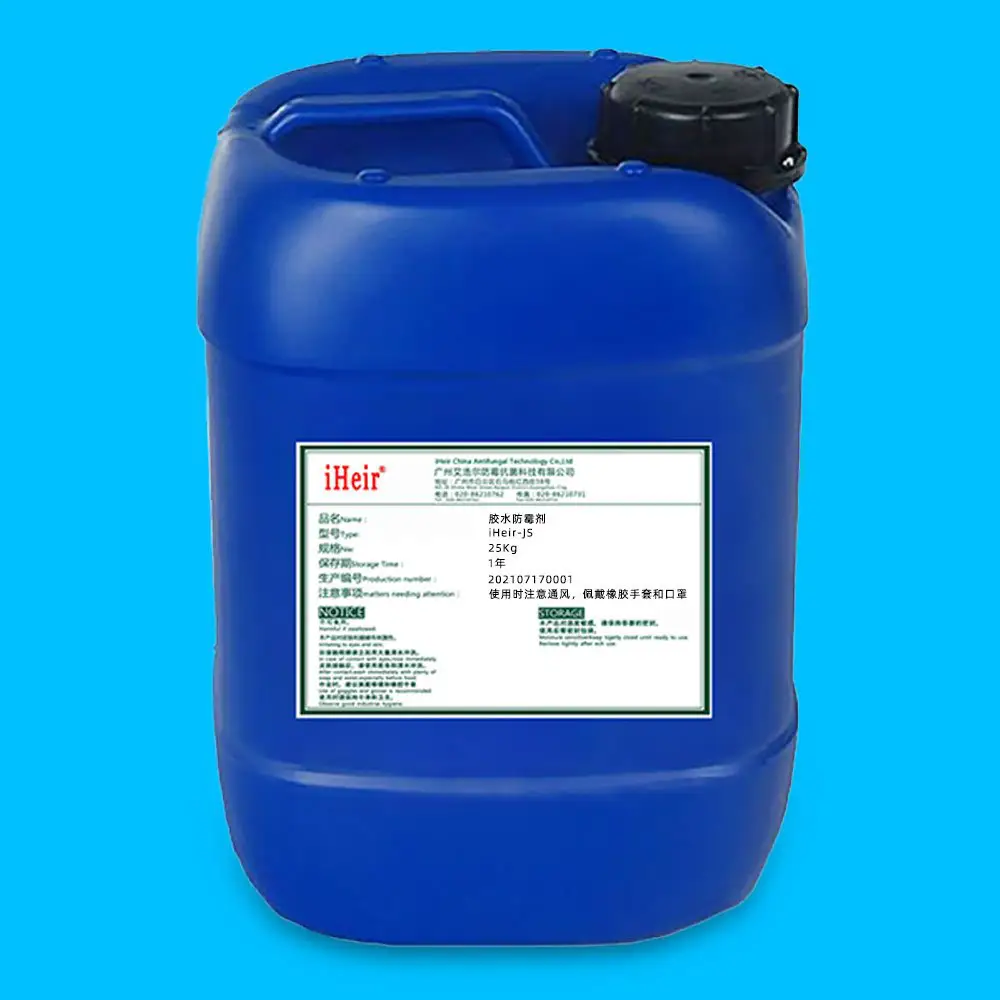
Water-based adhesives need both defense lines. In-can preservation covers the liquid phase in the drum: dose during the grinding or compounding stage and mix thoroughly after adding. iHeir-JS glue mildew inhibitor is designed for exactly these water-based systems — white glue, waterborne coatings, pigment slurries — at the recommended 1-2% of product weight, compatible with acrylic and vinyl acetate systems, effective against both bacteria and fungi to stop spoilage, souring, and discoloration; starch or heavy cellulose thickener formulas take the upper end. Dry-film protection covers the cured bond in service: cartons glued before the rainy season sit in humid warehouses, laminated boards ride in damp containers, and once the glue line and the paper or wood fibers pick up moisture, mold grows right through the bond. Here the residual active level in the formulation carries the load, across both paper and woodworking grades.
Two special systems deserve separate lines. Alkaline systems — sodium silicate grades and starch glues above pH 9 — decompose conventional actives, so use an alkali-stable formulation: iHeir-JS(OTB) alkaline glue preservative is built for alkaline and neutral systems across pH 3-10, at the recommended 0.25-1% of formula weight. Coatings sensitive to color speck: some actives precipitate visible spots in glue films; iHeir-JS7 glue anti-mildew agent prevents the speck and spotting that mold causes on surfaces and inside coatings, suits acidic systems at pH 3-6, and is dosed at the recommended 1-2% of formula weight.
Selection and dosage across the four systems, summarized:
| System | Product | pH range | Recommended dose | Dosing stage |
|---|---|---|---|---|
| Water-based glue (PVA, starch) | iHeir-JS | Neutral water-based systems | 1-2% of product weight | Grinding or compounding stage, mix thoroughly |
| Alkaline systems (silicate starch glues) | iHeir-JS(OTB) | 3-10, alkaline-friendly | 0.25-1% of formula weight | Add directly during production |
| Color-speck-sensitive coatings | iHeir-JS7 | 3-6, acidic systems | 1-2% of formula weight | Add directly during production |
| Hot melt and solvent-borne | iHeir-G | Not above pH 8 | 1-2% of glue weight | Add during compounding; hot melt in the kettle |
For hybrid systems, check pH before anything else: an alkaline starch glue that also fears color speck goes alkali-first, with separate mini-sample validation for JS(OTB) and JS7 before either is locked in.
Solvent-Borne and Hot Melt Adhesives
Solvent-borne glues carry little in-can risk; the exposure is the cured film in service. Polyurethane and contact adhesives on damp substrates mold like anything else, so choose an oil-compatible agent. iHeir-G glue anti-mildew agent was developed specifically for hot melt and solvent-borne adhesive systems, dosed at the recommended 1-2% of glue weight, added directly during compounding and mixed thoroughly; note that it must not be used above pH 8 or in contact with alkaline materials. Hot melt is the sharpest trade-off: the EVA and resin matrix itself is indigestible, but the service environment — bookbinding, carton sealing, edge banding — puts a thin glue line against moisture-hungry paper and wood, and mycelium creeping in from the substrate undermines the bond anyway. Dosing happens in the melt kettle at 150-180°C, so the active must survive that window without fuming, degrading, or shortening open time. Dose at 1-2% and confirm bond strength on a trial batch before scaling up.
Dosing Timing and Compatibility: The R&D Window
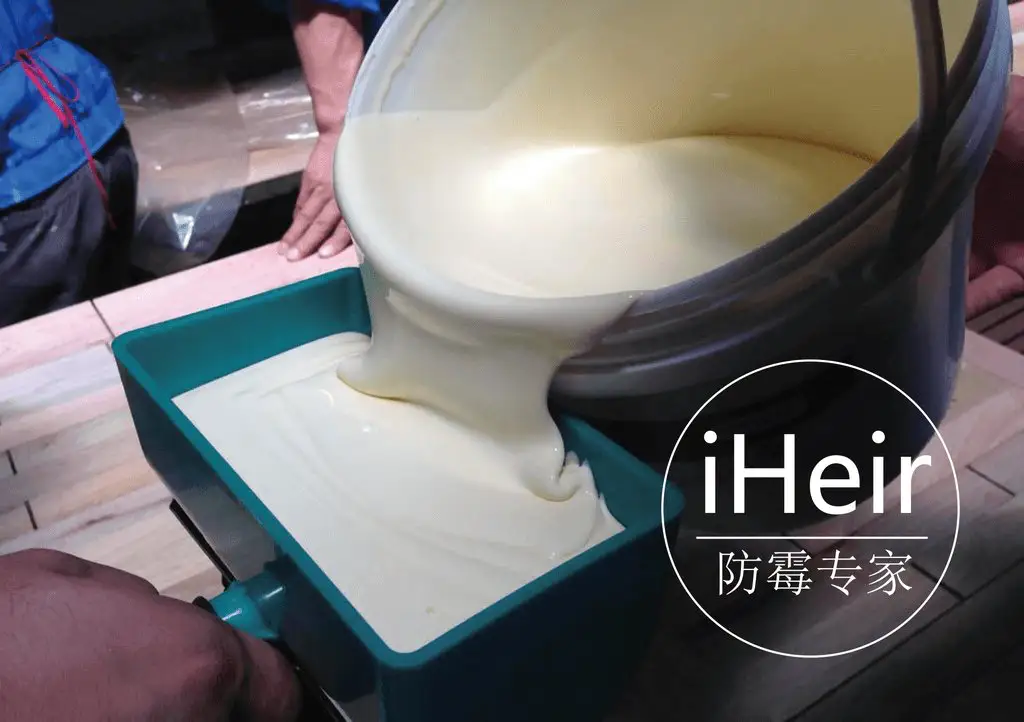
The formulator’s checklist has three steps. Timing: per the product directions, dose during the grinding or compounding stage and mix thoroughly until evenly dispersed — never top up at the filling line, where the agent cannot mix in properly. Compatibility check: pull a 500-gram mini-sample at the top of the dose range, let it stand 24 hours, and watch for flocculation, separation, or viscosity drift above 5%; then draw a film and check transparency and color delta. Retention validation: keep 500 ml of both the dosed batch and an undosed control at a constant 30-35°C for 28 days. When the control molds and the dosed sample stays clean, the preservation package earns its keep — that 28-day hold is the technical backing behind a “no mold” promise to your customer.
For purchasing, the supply picture is simple: at 1-2% of the glue formula, the agent adds a low-hundreds-of-RMB amount per ton of finished glue; 25kg pails with routine minimum order carry no real inventory burden. Ask for the batch COA and match the actives content — no need to send every lot to a third-party lab.
Handling Moldy Glue and Moldy Glue Lines: Rework and Scrap Criteria
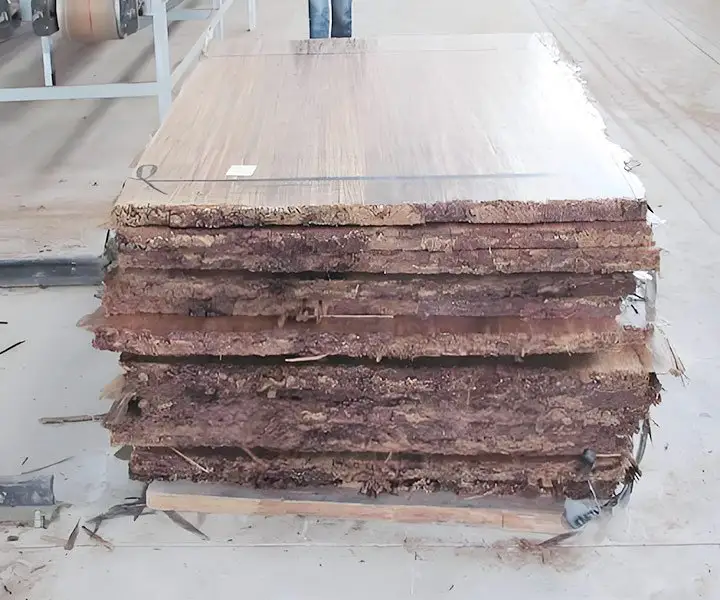
Grade the material before acting. Glue scrap line: obvious sour odor, viscosity down more than 15% from standard, or mold sheeting across the surface — any one of the three and the drum goes to waste. Microbial metabolism has already restructured the colloid; no amount of added preservative restores the original bond strength. Glue rework line: only a light surface skin, with normal odor and viscosity — skim the skin and the top 2-3 cm of glue, top the preservative back up to the original formulation dose, mix thoroughly, hold a sample for 7 days, and if clean, downgrade the batch to internal uses such as shop fixtures, never formal orders. Glue line treatment: mold spots on glued carton flaps covering under 10% of the area — wipe dry with a cloth, dry the box, reglue. Sheeted mold or open flaps — rework the boxes through the gluing line after cleaning the glue pot. Molded glue lines on woodwork: light cases get sanded and reglued; mold in the substrate means the piece is scrap. Every drum, glue pot, and applicator roller that touched spoiled glue gets a hot-water detergent wash and full dry before restart, because residual inoculum will replay the whole failure within a week.
Testing, Storage, and FAQ
The QC acceptance track: glue preservation by constant-temperature retention comparison (28 days, following the framework of ISO 846 for plastics and ASTM D4783 for adhesive resistance to bacterial attack); cured-film mold protection reported on the 0-4 growth scale. In the warehouse, glued cartons and boards stack on pallets at least 15 cm off the floor, with humidity held under 65%. For downstream packaging products — luggage and paper goods — the companion logic appears in our glue got moldy: treatment and prevention article and the carton and printed box mold prevention guide, with parameters consistent with this one.
FAQ.
Glue never molds in winter but molds in summer — is it just temperature?
Temperature only sets the pace; the nutrient source and the spore load are the root. Summer’s 25-32°C is peak fungal activity, so any glue with a weak preservation package reveals itself then.
Does preservative hurt bond strength?
At the recommended dose with a passed compatibility sample, bond strength shifts under 5% in typical systems; beyond that, check for emulsion destabilization before blaming the dose.
Can we dilute sour glue and keep using it?
No — dilution removes neither the microbes nor their metabolites, and both bond strength and odor ship straight to the customer.
We mix glue in-house; what should we watch?
The water line, the starch cooking kettle, and the mixer are the three main inoculum sources. Wash them every shift and wipe the mixing equipment with preservative solution weekly — that beats doubling the dose. Mechanism, dosing, remediation: close all three loops and glue spoilage drops from a chronic complaint to a rare event.