




 View Count:22
 Date:2026-10-20
How is wooden easel mould treated? An easel is two materials bolted together: the board is usually plywood and the stand is solid timber, and the two take water and distort in completely different ways, so one method for both either warps the board or leaves the stand untreated inside. The plywood board takes iHeir-M8 bamboo and wood fungicide sprayed at 1:20 on both faces, and the solid stand takes iHeir-MA soaking type bamboo and wood preservative dipped at 1:20 to a 15%-20% weight gain. This article covers the dosage, the criteria, the assembly and the studio rules.
1. Easel mould starts on the back of the board and in the stand joints
An easel line runs from board cutting and stand cutting to drilling, surface treatment, assembly and packing. Mould turns up in two places first. One is the back of the board: the face is for painting and usually leaves the factory with a protective film or a primer coat, while the back is bare, and in transit and storage the back faces down against the packing, where it is dampest and least ventilated. The other is the stand joint: the stand is solid bar, the joint is an open section, and once assembled the bolt sits on top of it, so water enters there and travels up the grain.
The studio makes both worse: studios run humid to keep paints and paper workable, an easel stands in one place for years with its back against a wall or a cupboard, and in a wet season the back spots first – by the time it shows through the face, the board is due for replacement. So an easel is treated as two materials with two processes, not as one frame sprayed all over.
2. Board and stand compared
The table sets out material, process, ratio and criterion for both parts.
| Part | Material and process | Product and ratio | Criterion | Points to watch |
|---|---|---|---|---|
| Board | Plywood, sprayed – not dipped | iHeir-M8 at 1:20, both faces | Full coverage, air dried | Do the back; dry flat, never upright |
| Stand | Solid timber bar, dipped | iHeir-MA at 1:20, dipped 5-10 minutes | 15%-20% weight gain | Fully submerged; acidic, so plastic tanks |
| Joints | Tenons and bolt holes | MA at 1:10, brushed or sprayed | Full coverage, no dry patches | Treat before assembly, not after |
| Drying and store | Both parts | – | Moisture below 25% | After M8, protection is rated at more than one year below 25% moisture |
The first three rows are treatment and the last is drying. Row three is the one that gets dropped: a tenon and a bolt hole are open sections, a sprayed frame does not reach them, and once the bolt is in there is no way back.
3. The board: M8 at 1:20, sprayed on both faces
Plywood should not be dipped whole. It is built from veneers pressed in layers, takes water quickly and gives it back slowly, and repeated swelling and shrinking works on the glue line until the board delaminates and the face lifts. Spraying is the right process. iHeir-M8 bamboo and wood fungicide is diluted 1:20 (1kg of M8 to 20kg of water), stirred, then sprayed or brushed onto the board so the surface is covered completely, and left to air dry. Packing is 25kg to the drum, shelf life three years, and it must not be stored in a metal container.
Three rules on the spray. First, the back matters more than the face: the face has a primer or a film, the back is bare, so the back gets the edges and the corners. Second, run the spray round all four edges – the edge of plywood is a stack of open veneer ends and takes water fastest, and many spots start there and creep onto the face. Third, dry flat, never upright: upright, the liquor runs down and leaves streaks and an uneven moisture profile.
Do not chase thickness. The maximum use level is capped at 15ppm active substance; a surface evenly wetted is enough, and a heavier coat only stretches drying and raises the risk of the face feeling damp again.
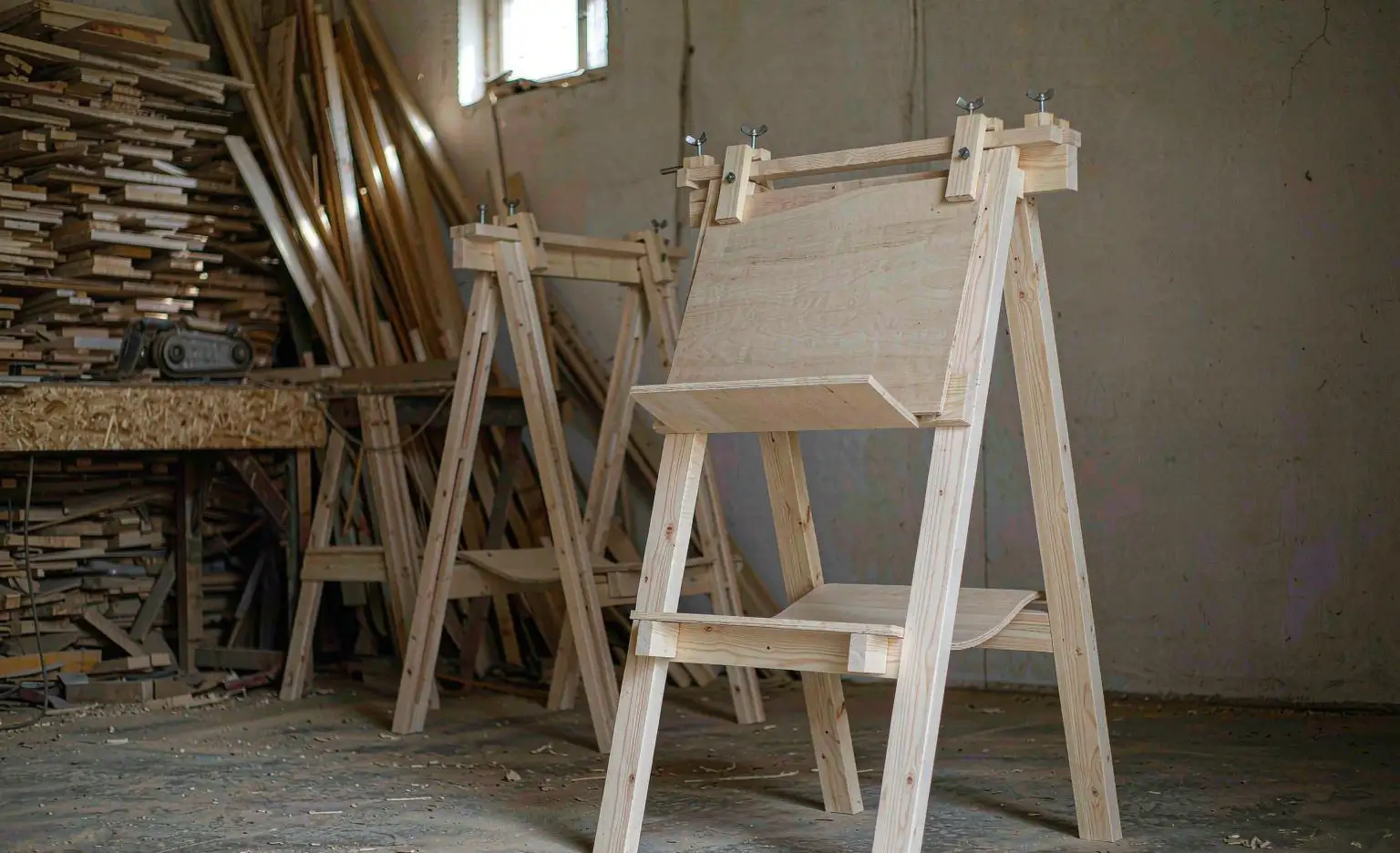
4. The stand: MA at 1:20, dipped to a 15%-20% weight gain
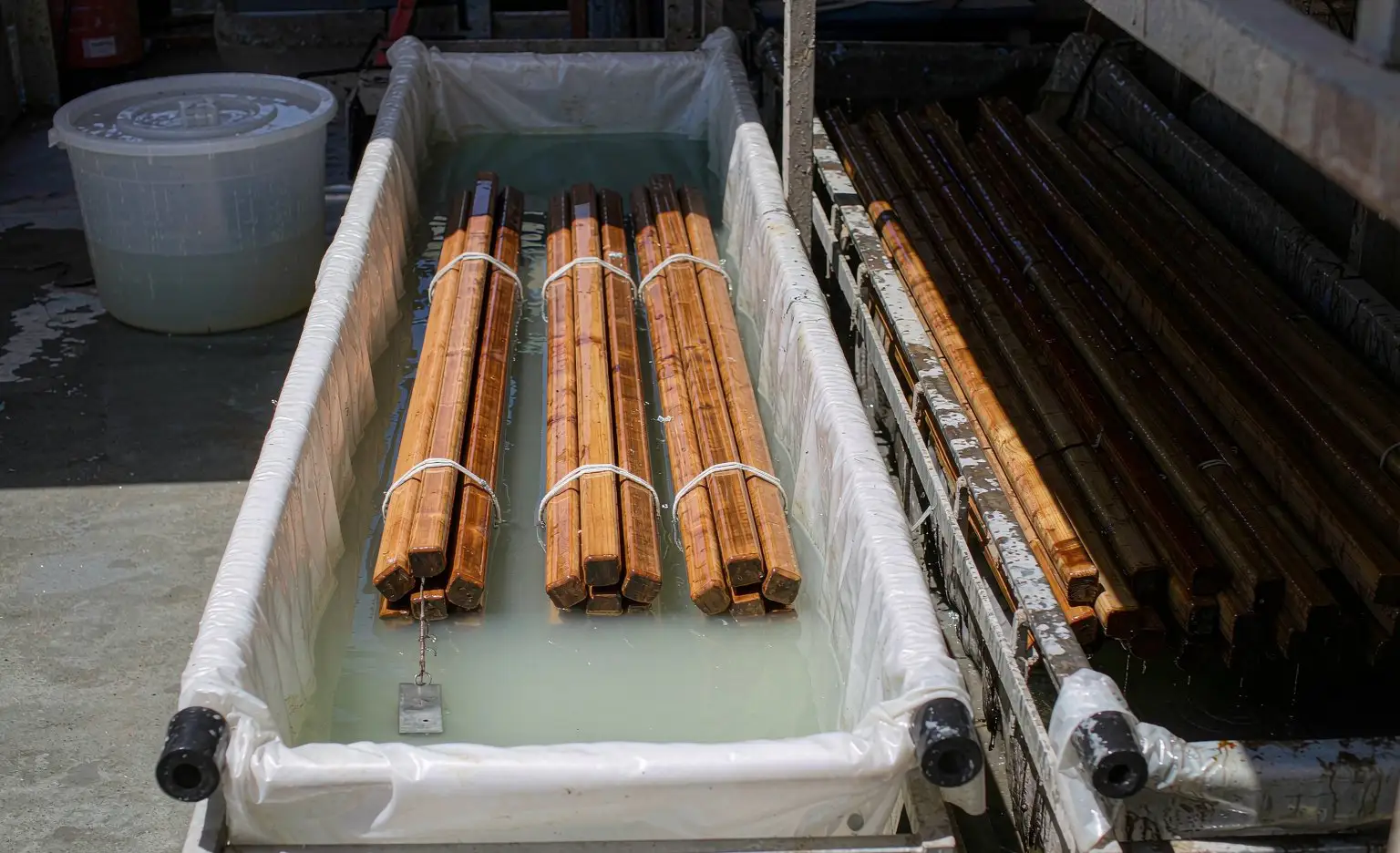
The stand is solid bar and can, and should, be dipped. iHeir-MA soaking type bamboo and wood preservative is a pale yellow liquid; mix the bath at 1:20 (5kg of MA to 100kg of water), submerge the bars completely, dip 5-10 minutes, and pull them out at a 15%-20% weight gain to drain, then air or sun dry before packing. Packing is 25kg to the drum, one year in a dry, dark store.
The window is higher than the board’s spray because a solid bar is small in section and can be loaded through; under 15% the core never took it, over 20% puts too much water back in and drying drags. MA is specified for wood products against insects and mould, covering outdoor timber structures, flooring, fencing, timber buildings and carved or crafted pieces, which is where an easel stand belongs.
Tenons and bolt holes get their own pass: before assembly, brush or spray a 1:10 MA bath onto the sections and hole walls so they hold liquor with no dry patch, then dry and assemble. MA is acidic and must not touch metal or alkaline material, so use plastic tanks and crates; the concentrate is high in solids and can sensitise skin, so wear gloves at the tank.
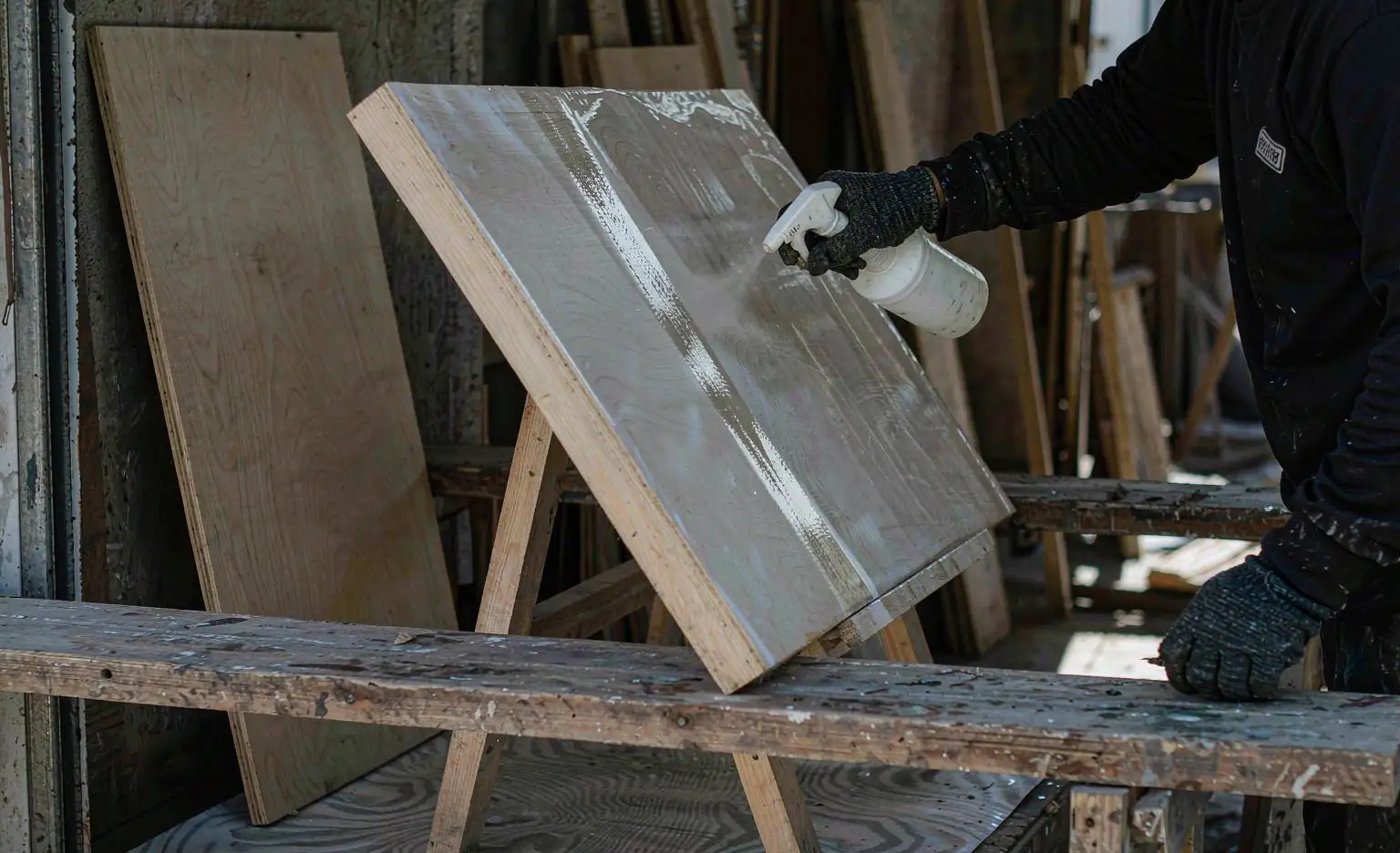
5. Assembly, drying and the studio: keeping moisture out
Drying is the hard line for both parts. The M8 data sheet is specific: below 25% moisture the treated part is rated at more than a year of protection, and above it both stages are discounted. Boards dry flat, bars hang, and neither goes to assembly until the moisture is stable – do not assemble damp to hit a shipping date.
Two details at assembly: put a thin spacer between the board and the stand so air can move behind the board, and pack with the face out and the back supported rather than pressed against the carton wall. An export carton can take a small desiccant pack at very little cost.
The studio can do two things as well: keep the easel off the wall with at least ten centimetres of clearance behind the board, and in the wet season turn the easel round once a week so the back sees air. MA holds an FDA 21 CFR 178.3800 test report with our company as the applicant (CAN23-060739-01), which can be pulled for an export order on request.
6. Questions: one process for both, and a frame that has spotted
Can both parts be sprayed, to save the dip? Short term yes, long term no. A sprayed bar carries the additive on the surface only, with nothing in the tenon or the core, so water entering at a joint goes straight in; a dipped board, on the other hand, delaminates. The answer is not one process for the whole frame but the right process for each material.
What about an easel that has already spotted? Look at where. Surface mould on the back of the board can be cleaned, dried and re-sprayed with M8, then downgraded or declared; plywood that has moulded into the core with the face lifting cannot be repaired and is scrap. Mould on the surface of a stand can be sanded and re-brushed with MA; mould inside a joint with the bar discoloured is cheaper to replace than to fix.
What documentation is available for an export order? Both products come with a TDS, the MA FDA report can be pulled (our company is the applicant), and the board side can be sent for testing to a customer’s specification. Check each market against its own rules rather than using one report to cover everything.
Closing: the plywood board sprayed with iHeir-M8 at 1:20 on both faces and all four edges, dried flat; the solid stand dipped in iHeir-MA at 1:20 for 5-10 minutes to a 15%-20% weight gain, with tenons and bolt holes brushed at 1:10 before assembly; both parts below 25% moisture before they are put together; and a spacer behind the board, the back kept off the carton wall and desiccant in the container.


