




 View Count:19
 Date:2026-10-20
Where does bamboo blind mould come from, and how should it be treated? Where the slats were never soaked through and the threading holes were left untreated, a roll that looked clean in the shop starts spotting from its middle wraps in an overseas warehouse, and the whole roll is scrapped. The slats take iHeir-M5 immersion type bamboo and wood fungicide at 1:40 for a 5-10 minute dip to a 15%-20% weight gain, and the threading holes are touched up from the same bath once the blind is strung. This article gives the dosing, the touch-up timing, the drying rule and the packing figures.
1. Bamboo blind mould starts inside the slat and at the drilled hole
A bamboo blind line runs from slat splitting to steaming or carbonisation, drying, drilling, threading, trimming and packing. Mould shows up in two places first. One is the slat itself: thin sections with a large surface area, split open so the sugars and starch in the fibre are exposed, and the first grey-green spots appear as soon as shop humidity rises. The other is the drilled hole: drilling breaks the skin and both side fibres, so the hole wall is an open section that takes water faster than anything else, and once the blind is strung the hole also holds the thread, which keeps the water in.
The two together form one water path: with no fungicide in the slat and no seal on the hole wall, damp enters at the hole and travels along the fibre until spots lift in the middle wraps. Rolled blinds for export are the worst case, because the centre of the roll does not ventilate and the inner wraps go first.
2. The slat dip and the threading-hole touch-up compared
The table lines both stages up as a draft process card.
| Stage | What is treated | Product and ratio | Criterion | Points to watch |
|---|---|---|---|---|
| Slat dip | Split slats, bundle or loose | iHeir-M5 at 1:40, dipped 5-10 minutes | 15%-20% weight gain | Fully submerged, never above the liquor line; drain before drying |
| Touch-up after threading | Hole walls, hole mouths and thread ends | The same M5 bath, brushed onto the hole mouth and wall | Liquor held at the mouth, no dry patches | Do it the same day the blind is strung, before the thread takes up damp |
| Drying | Dipped and touched-up blinds | – | Moisture stable, no damp feel | Dry flat, never in a bundle |
| Rolling and store | Finished blinds | – | Store dry and ventilated | Desiccant in the roll centre, pallets off the floor, absorbent material in the container |
Rows one and two are treatment, three is drying, four is storage – and row three is the one most often skipped.
3. The slat dip: M5 at 1:40, 5-10 minutes, 15%-20% weight gain
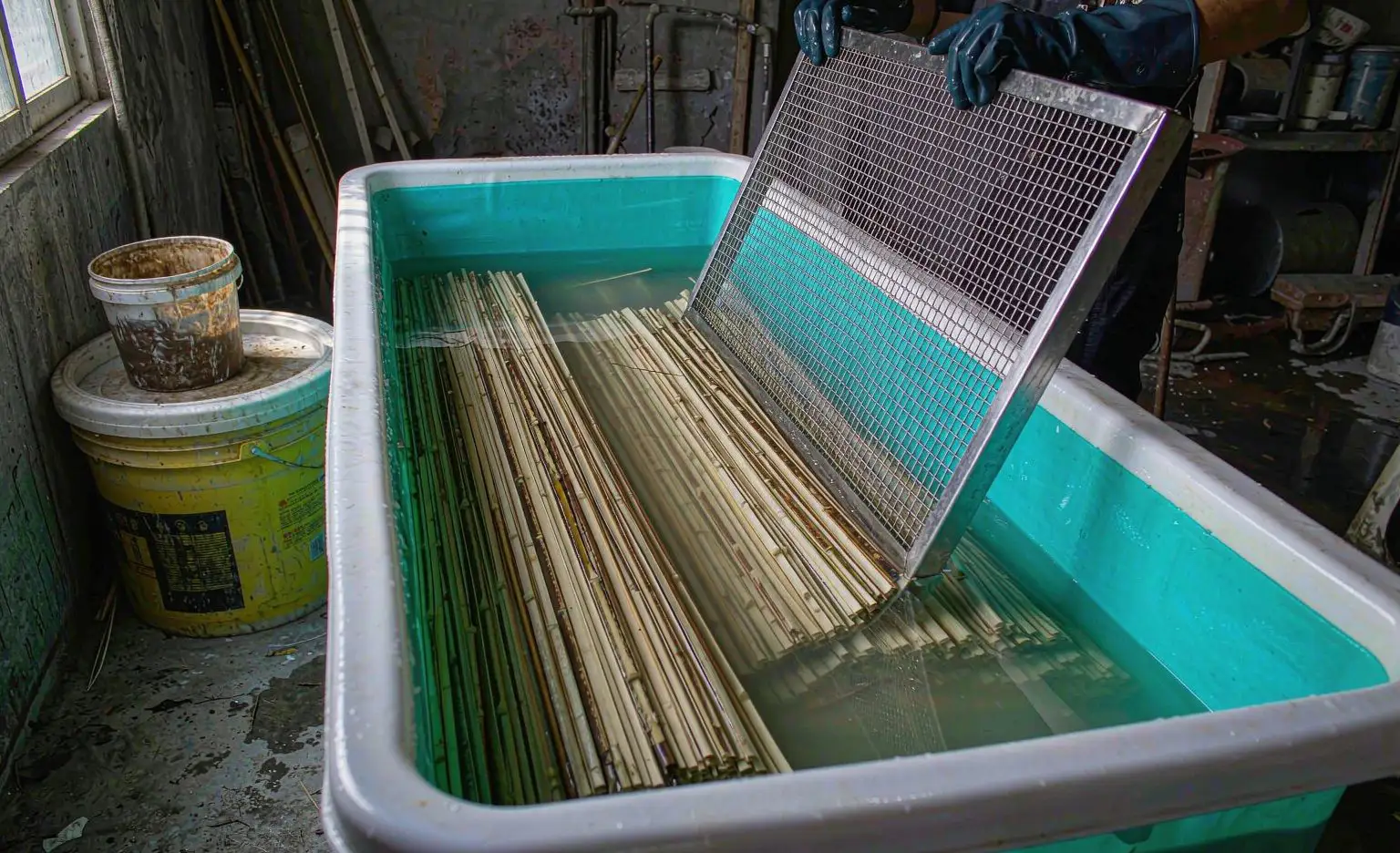
iHeir-M5 immersion type bamboo and wood fungicide is a red-brown liquid built from several actives, and its data sheet lists high solids, acid and alkali resistance, resistance to leaching, strong penetration, high adhesion and tolerance of high humidity. Mix the bath at 1:40 (5kg of M5 to 100kg of water), submerge the slats completely so nothing sits above the liquor line, dip for 5-10 minutes, and pull them out at a 15%-20% weight gain to drain, then air or sun dry before packing. It ships 25kg to the drum, keeps one year in a dry, dark store.
Why the 5-10 minute window? M5 works by penetrating, not by leaving a film. Too short and only the skin carries the active, which the drill and the trimmer take off; too long and the slat takes up water it then has to give back, which stretches drying and bows thin sections. Weight gain is the criterion: below 15% the slat did not take it up, above 20% most of what went on is water.
Two points on the bath and the kit. M5 is acidic and must not touch metal or alkaline material, so the tank, baskets and lifting hook should all be plastic; stir before use, since a surface film after standing is normal. The concentrate is high in solids and can sensitise skin, so wear gloves when mixing and lifting. Packing is 25kg to the drum with a one-year shelf life.
4. The threading holes and the thread: touch up after stringing
Threading is the step most lines skip. Drilling leaves an open section, and once the blind is strung the hole also holds the thread, which takes up damp on its own – cotton far more than polyester. That is why the touch-up belongs after threading and not before: treat the holes first and the thread pulls the liquor off the hole mouth as it runs through.
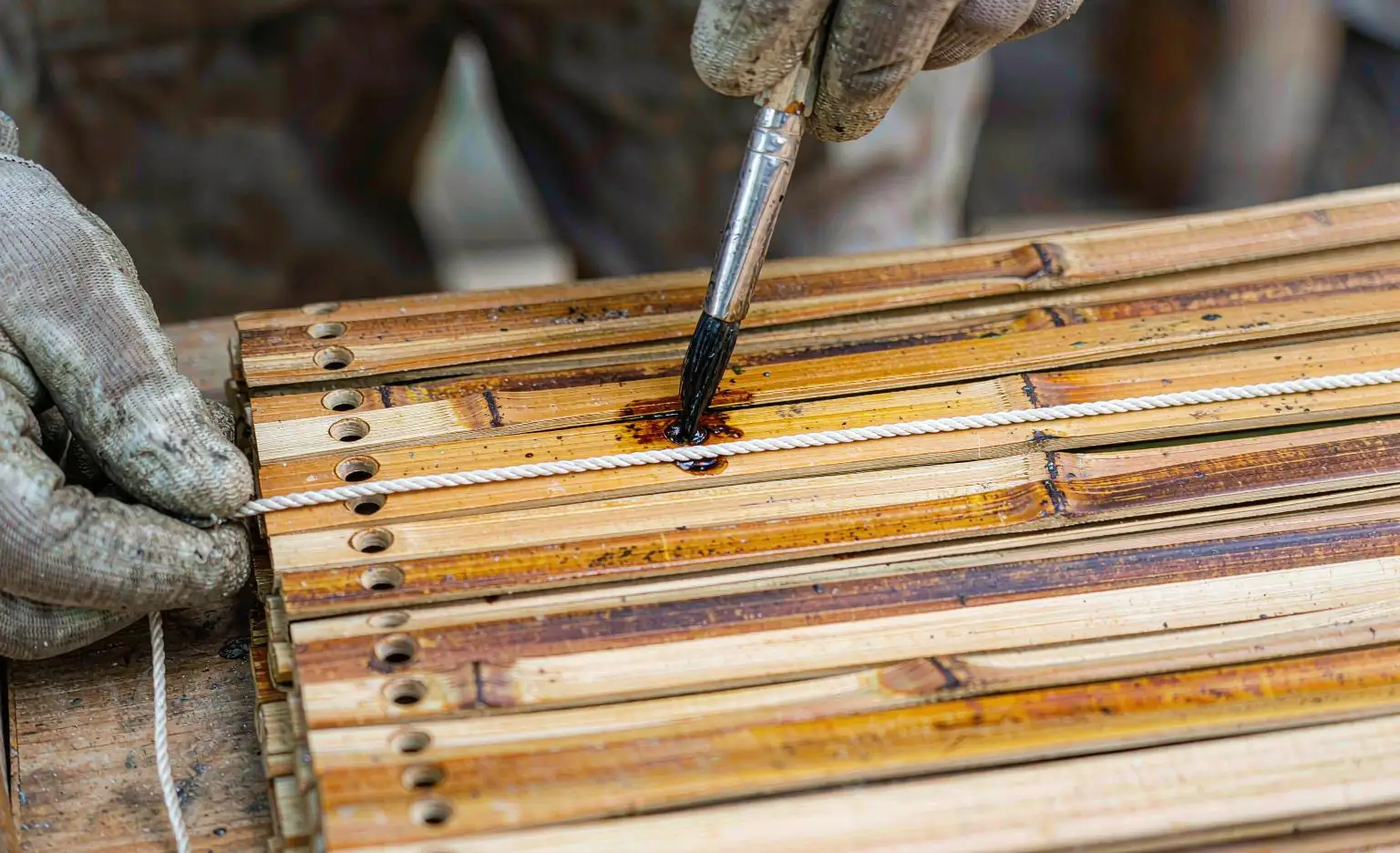
The method is simple. Take the same 1:40 bath, brush the hole mouth and wall, or run a small spout along the row of holes so each mouth holds liquor with no dry patch, then lay the blind flat to dry before rolling. No fresh bath is needed – the liquor left in the tank carries on, stirred before use. On the thread, specify polyester where the buyer allows it; sized cotton is the commonest starting point for a spot.
Touch up the same day the blind is strung: leave it overnight and the thread has already drawn moisture into the hole, so brushing only seals the water in.
5. Drying, rolling and the finished-goods store
Drying is the master control on this line. Lay dipped slats flat rather than in a bundle, because the centre of a bundle does not ventilate and the water never leaves; dry until the moisture is stable and the surface no longer feels damp. Touched-up holes need the same treatment: roll a blind with a wet hole mouth and the water is sealed in.
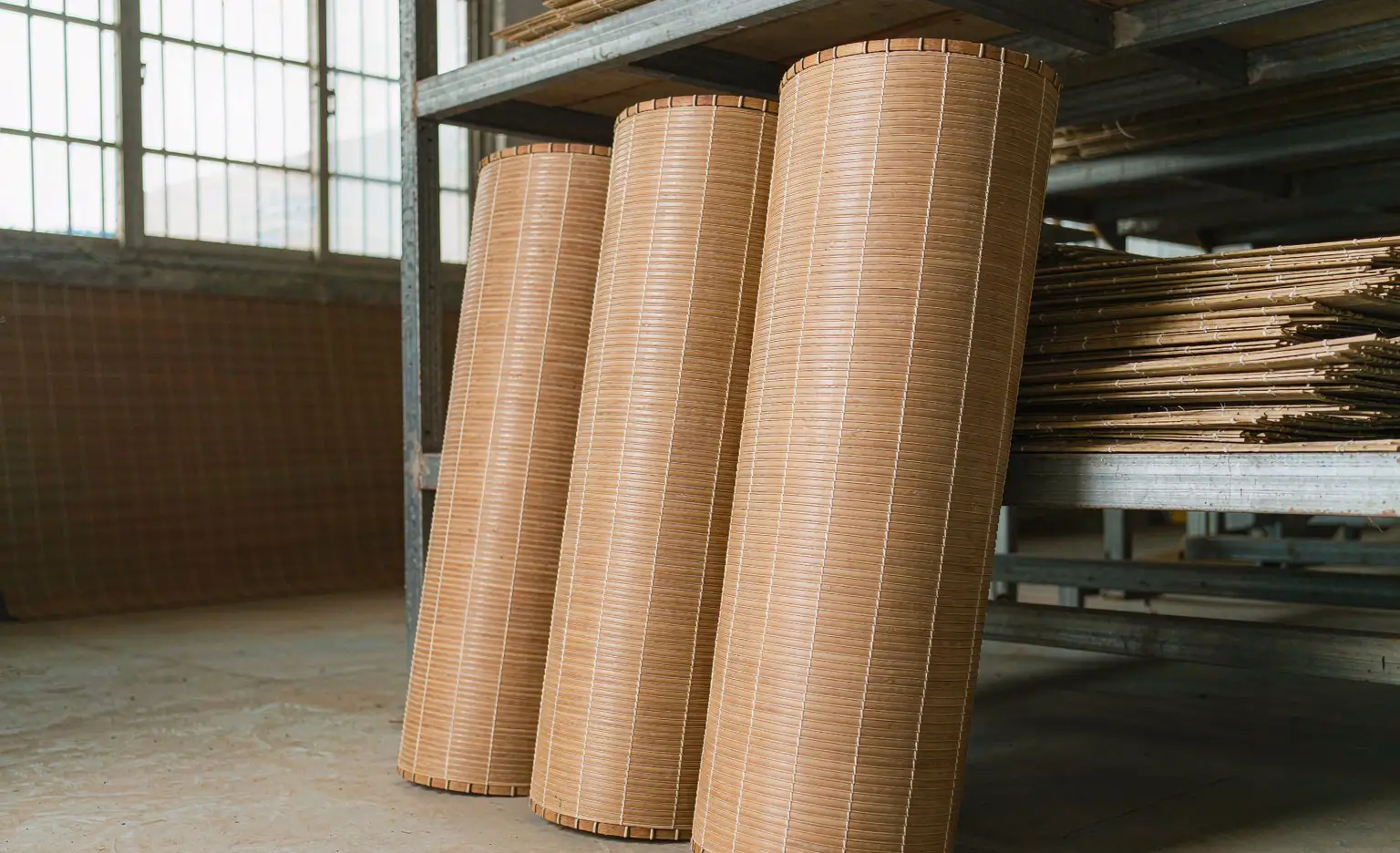
Rolling and stacking: a small desiccant pack in the centre of each roll, gaps between rolls, pallets off the floor, and a store held dry and ventilated. Before an export container is loaded, check that no condensation sits on the blind faces and add absorbent material inside; before and after the wet season, pull out the stacks against the wall and turn them over.
This last stage decides whether the same batch spends 20 days or 40 days at sea without a claim, so control the water in the store first and treat the container as the second line of defence.
6. Questions: can the touch-up be dropped, and can a mouldy blind be saved
Can the touch-up be dropped if the dip was done properly? It depends on the thread and the route. Polyester thread, a short lead time and a dry destination can hold on the dip alone; cotton thread, a full sea container and a wet-season shipment leave an opening at every hole. The touch-up costs little, and the rework it prevents costs a great deal.
Can a blind that has already spotted be saved? Two cases. Where the mould is on the surface and the slat has not discoloured, clean the spots, dry the blind and give it another pass of the bath, then downgrade it or declare it to the customer. Where the spots have gone into the slat and the fibre has darkened, it cannot be recovered: scrap those, and go back to the weight-gain record and the drying time.
Can spraying replace the dip? On thin slats it can, provided both faces are covered and the hole mouths get extra attention, but the weight gain never reaches the dip figure and long-term protection is weaker; thick slats and export orders should still go through the tank. Samples and a TDS are available; we can check the 1:40 ratio and the 5-10 minute window on a small trial against your bamboo species and slat thickness.
Closing figures: iHeir-M5 at 1:40, dipped 5-10 minutes to a 15%-20% weight gain with every slat below the liquor line; the same bath brushed onto the hole mouths and walls the day the blind is strung; dry flat until the moisture is stable before rolling, with desiccant in the roll centre; and pallets off the floor, a ventilated store, absorbent material in the container and a stack turn-round before and after the wet season.


