




 View Count:29
 Date:2026-10-14
How is lighting fixture mould handled when the shade is moulded, the holder is coated and the wiring is extruded in three different shops? The rework that turns up most often is a hazy patch on a shade after demoulding, or mould creeping under the coating on a holder. The shade takes iHeir-ECO plastic antimicrobial agent at 0.3%-1.0% through the masterbatch, transparent shades switch to iHeir-IPL inorganic plastic antimicrobial agent at 0.8%-1%, and the holder is handled inside the coating system. This article covers the dosing and the processing temperatures at each substrate.
1. Three places mould appears: the shade, the holder and the wiring
Rarely is trouble on a lighting fixture confined to one part. The shade is a moulded part, and patches usually appear after demoulding, during storage or at assembly. The holder is metal under a coating, so the risk sits at the back of the film and in the corners. The wiring is an extruded sheath, and once coiled the inner wraps pick up moisture first. Three materials, three forming routes and three downstream steps mean one product cannot serve all three.
Why not? Because plastics and coatings tolerate additives very differently. A compound that runs in a masterbatch has to survive barrel temperatures around 200 degrees and still disperse through the resin, while a coating cures at room temperature or slightly above, so anything added has to clear compatibility and stability first. Putting a coating additive into a masterbatch usually ends with poor dispersion and colour variation off the mould.
2. Substrates and dosing at a glance
The table lines up the position, the material and forming route, the main measure, the figure and the points to watch, as a first draft of a dosing instruction.
| Position | Material and forming | Main measure | Figure or criterion | Points to watch |
|---|---|---|---|---|
| Shade | PC / PMMA / PS, moulded | iHeir-ECO through the masterbatch | 0.3%-1.0% on total plastic weight | Heat stable to 240 degrees; keep processing below 320 degrees; transparent parts need a different grade |
| Shade, transparent or pale | PC / PMMA, moulded | iHeir-IPL through the masterbatch | 0.8%-1% | Whiteness above 90 and 1-2 micron particles, heat resistance 300 degrees; does not shift the colour of a clear part |
| Holder | Metal with a sprayed coating | Anti-mould additive in the coating system, applied on the spray line | On total coating weight | Confirm adhesion and curing conditions; corners and cavities must not be missed |
| Wiring | PVC / PE sheath, extruded | Masterbatch-type agent in the sheath compound | 0.3%-1.0% on the compound | Extrusion is more heat-sensitive than moulding; the core of the coil needs separate damp control |
Four rows make the division of work clear: the shade and the wiring are dosed through the compound, so protection sits inside the material, while the holder is dosed in the coating, so protection sits on the film.
3. The shade: masterbatch, with transparent and dark parts dosed apart
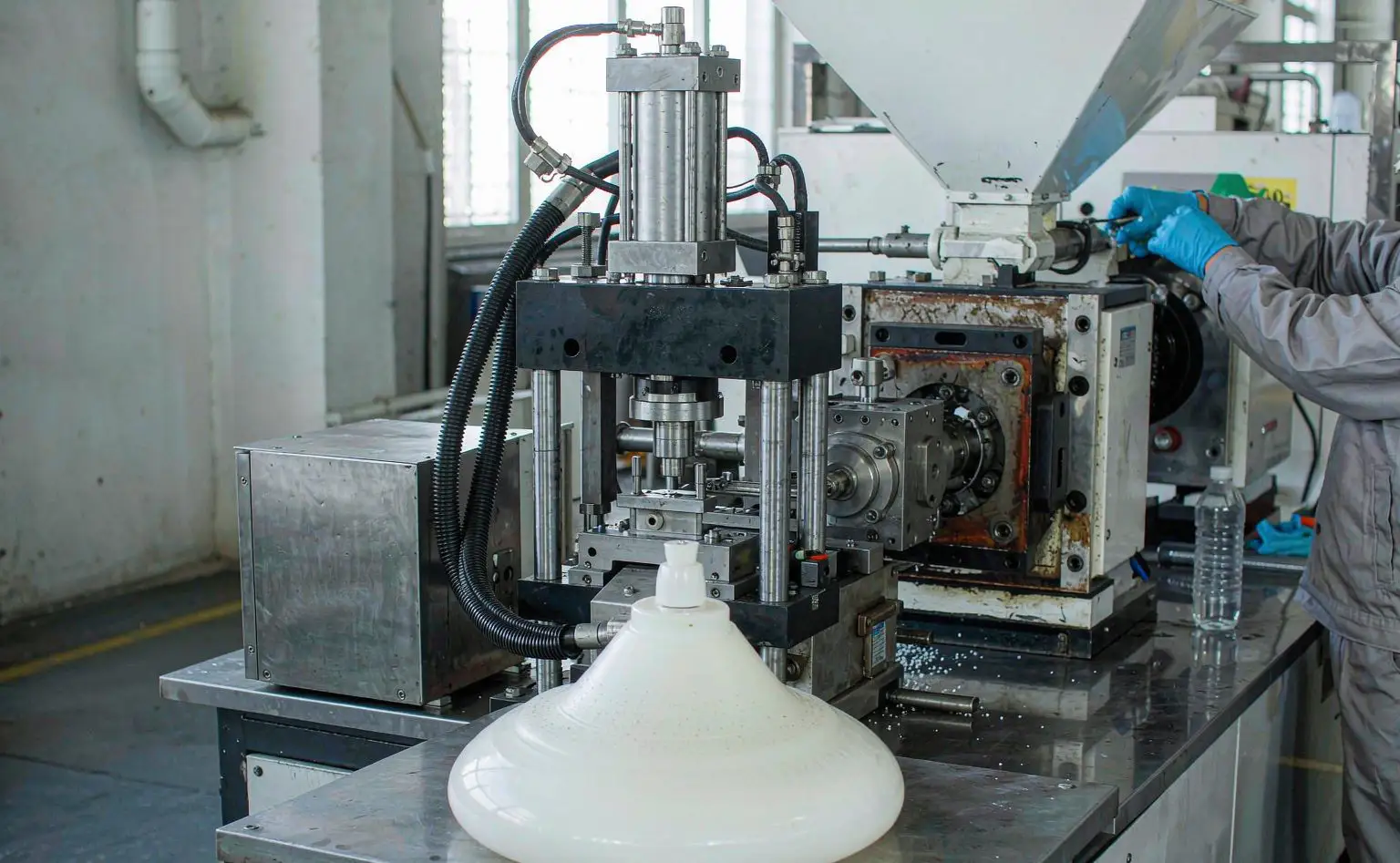
The shade is most easily handled through the masterbatch: antimicrobial masterbatch and resin are dry-blended, fed together to the barrel, and the agent ends up distributed through the moulding rather than sitting on the surface, so it cannot be wiped off. Standard parts take iHeir-ECO plastic antimicrobial agent at 0.3%-1.0% on total plastic weight, in polyolefins such as PP, LDPE and HDPE. Its heat stability reaches 240 degrees, processing should avoid going above 320 degrees, and it stores sealed, dry and away from light with a shelf life of one year.
Transparent shades follow a different route. PC and PMMA parts are the most sensitive to appearance, and the smallest amount of contamination fogs or yellows them, so this position uses iHeir-IPL inorganic plastic antimicrobial agent: a white powder with whiteness above 90, an average particle size of 1-2 microns, a specific surface of 10-15 m2/g, a particle density of 3.0 g/cm3 and heat resistance of 300 degrees, recommended at 0.8%-1%. Small, evenly distributed particles are what keep the colour and light transmission of a clear part predictable, so do not run clear and dark parts from one shared batch.
Two habits matter here: dry-blend the masterbatch and the resin before feeding and pre-compound at higher loadings, or local concentration differences show up as flow marks off the mould; and do not push the barrel temperature up to chase output.
4. The holder: the additive goes into the coating, not on the part
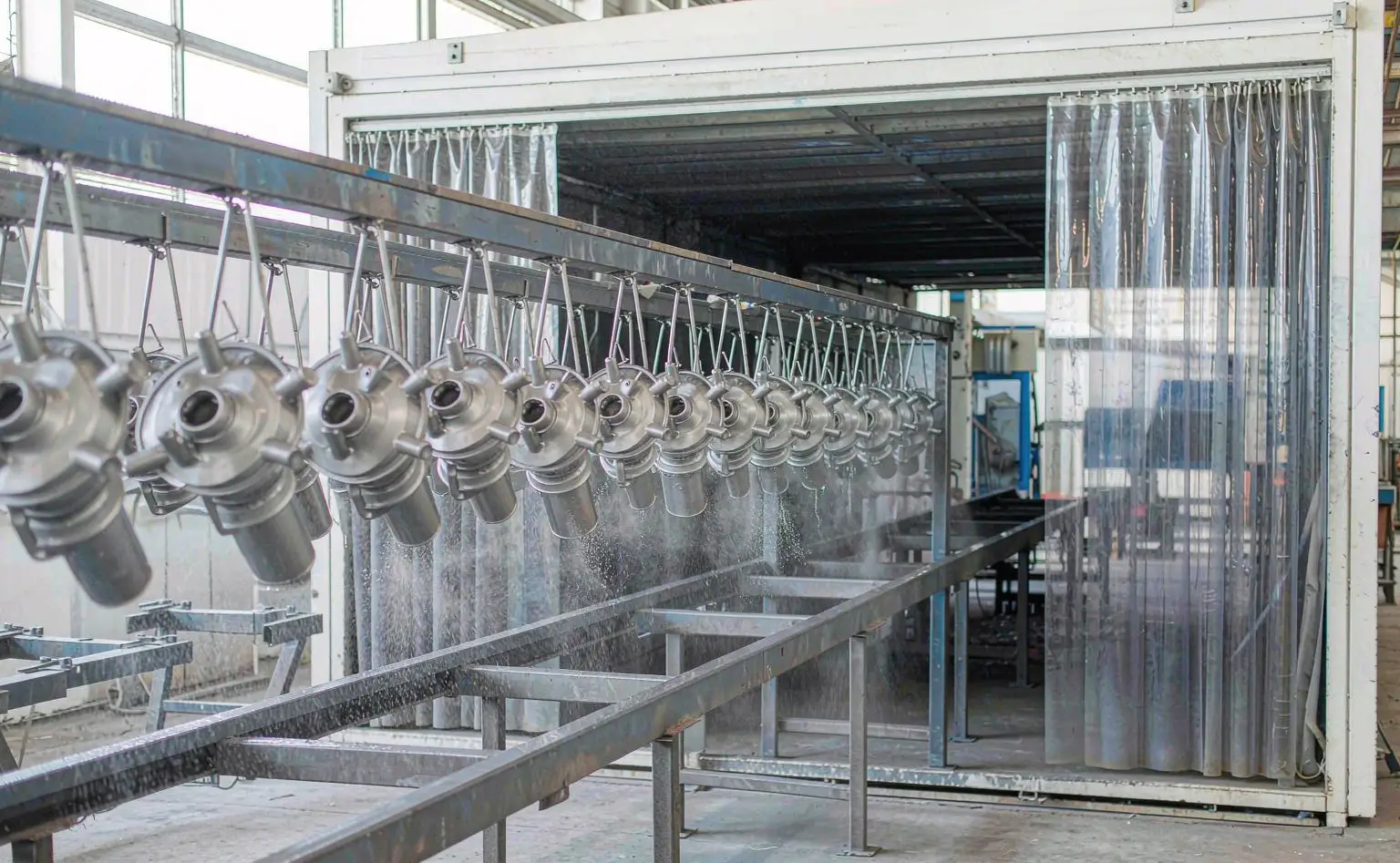
The holder is metal protected by a film, so the anti-mould additive belongs in the coating rather than in a sprayed layer on the finished part. It is metered on total coating weight on the spray line, and once the film has cured the agent stays inside it, so assembly and wiping do not take it away.
What gets missed here is corners and cavities. A holder has steps, threaded holes and an internal cavity the spray gun cannot reach at a good angle, so corners are easily left short, and a missed corner is often the first place to hold water. After a changeover, check film adhesion and thickness on sampled parts, confirm cavities and threaded holes separately, and keep curing inside the window the coating supplier gives.
One more point has nothing to do with dosing but matters just as much: hold relative humidity down in the spray shop and at the oven exit. A coating surface that has not fully cured takes up moisture most readily, so if the end of the line sits beside an open doorway or a water trough, those batches will be the first to show damp.
5. The wiring: agent in the sheath, then damp control on the coil
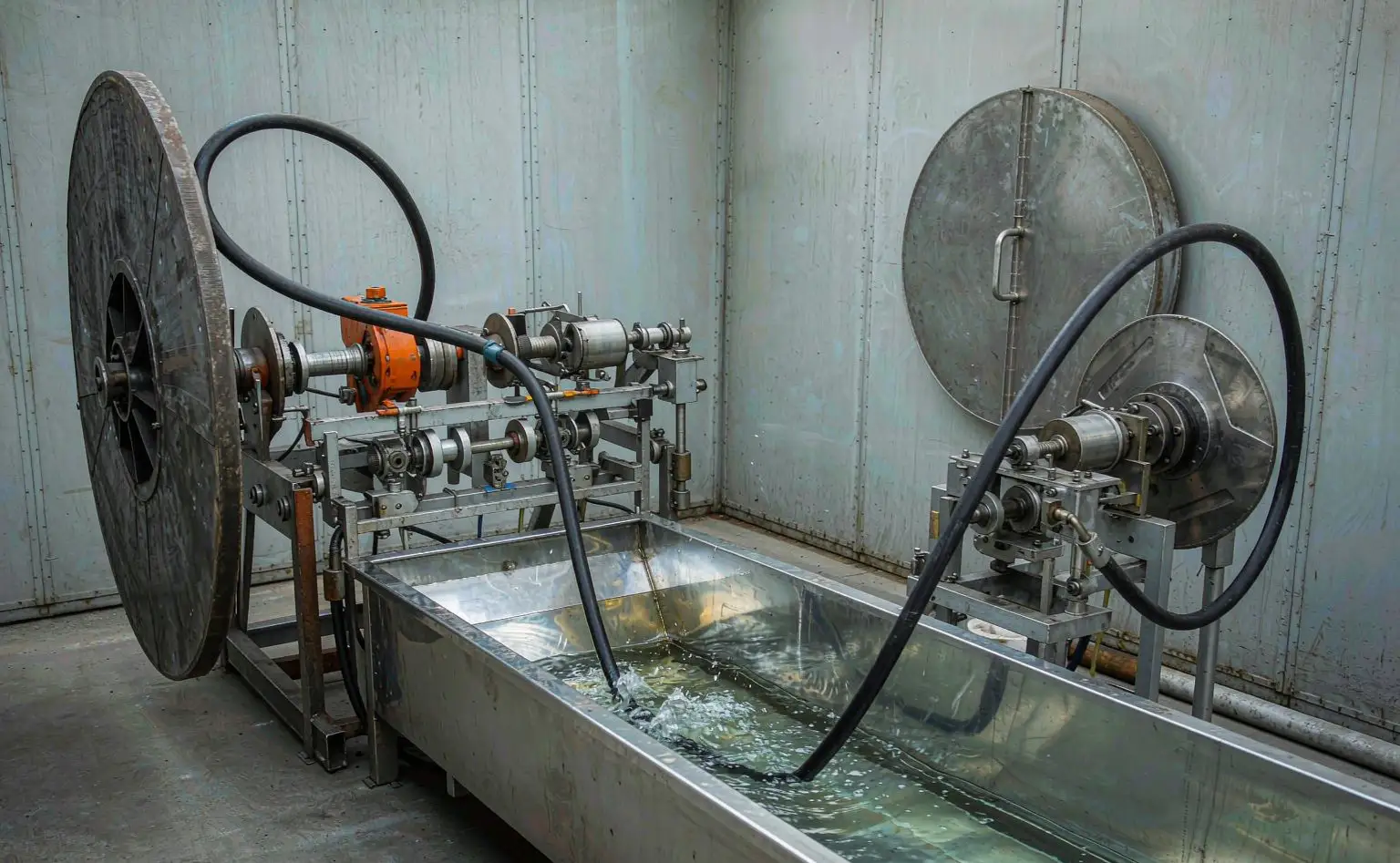
The wiring carries its protection in the sheath compound. PVC and PE sheaths take a masterbatch-type agent in the same way as the shade, at 0.3%-1.0% on the compound, but extrusion is more heat-sensitive than moulding: the barrel window is narrower, so the feed position and dispersion time have to be trialled against the screw geometry rather than copied from the moulding line.
Coiling is the second gate. A coil is wound tight, the inner wraps barely see shop air, and any moisture carried in cannot get out, so the core is what shows mould when a sea-freight carton is opened. Cool the cable before winding, keep the tension moderate, and stack finished coils off the wall and off the floor. For export lots, treat the container separately: condensation from the day-night swing is the main source of damp, as set out in the guide to mould prevention for exported lighting fixtures.
6. Questions that come up: shade only, and what happens to regrind
Is it enough to get the shade right and leave the holder and the wiring alone? No. Fixtures ship as complete units, so a sound shade alongside a holder with mould behind the coating, or a coil with a damp core, still comes back as a rejected batch.
Can regrind from parts that already contain the masterbatch be reused? Yes, with control on the ratio and on the lots. Regrind already carries the agent, so blending it with virgin resin lifts the total loading; store it separately and blend at a fixed ratio with the record kept. For transparent parts it is not advisable, since colour and light transmission go wrong there first. Run a small trial batch before it goes back on the line.
Three points carry the work. The shade takes iHeir-ECO plastic antimicrobial agent at 0.3%-1.0% on total plastic weight and transparent or pale parts switch to iHeir-IPL inorganic plastic antimicrobial agent at 0.8%-1%, dry-blended before feeding with the barrel below 240 degrees. The holder takes the anti-mould additive inside the coating, with corners and cavities confirmed on the line. The wiring takes the same masterbatch route, with the finished coil stacked off the wall and off the floor and the container handled separately. Samples and TDS are available to check the configuration against your shade materials and spray line.


