




 View Count:74
 Date:2026-09-28
How do you keep appliance mould out of a shipment that sits in a humid warehouse for weeks? A rework before despatch misses the delivery date, and a rejected container still costs the sea freight. Dose iHeir-ECO into plastic parts at 0.3-1.0% of part weight, switch hot parts to iHeir-IPI001 at 0.8-1.0%, and put iHeir-GG907 into the rubber seal at 1.5-2.0% in the mixing stage. This article covers the three dosing points, the rates for each, and how to check the result.
1. Why appliances grow mould in storage and at sea
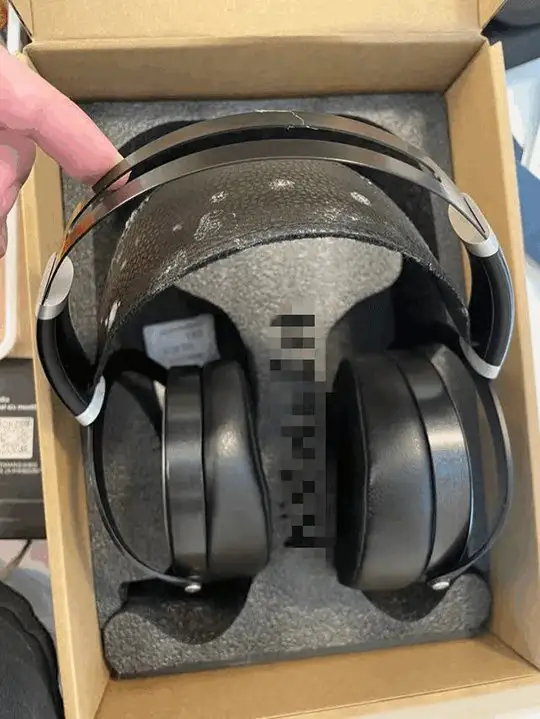
A finished appliance looks like metal and plastic, so it seems not to absorb water. Mould needs three things: moisture, warmth and a carbon source, and the three part families in an appliance supply all three between them. Mould release agents and residual oils on moulded housings and liners are a carbon source, the plasticisers and fillers in a rubber door seal are another, and the packaging — cartons, EPE foam and foam inserts — is wood pulp and resin, which takes up moisture quickly. Once warehouse humidity passes 85%, the packaging grows mould first and the growth spreads across the contact faces onto the machine.
Export makes it worse. In a sea container the cargo is heated by day and cooled at night, so water condenses again and again; droplets come off the ceiling onto the cartons, and the box that opens at the port is already covered in black and green spots. Appliance mould control is therefore not one additive in the housing. It is three dosing points — plastic parts, rubber parts and packaging — and if one of them is skipped, mould simply takes that route.
2. The three dosing points at a glance
The table lists the part, its material, the product to use, the rate and the process stage, so it can serve as the first draft of a process card. A surface spray is deliberately absent: the failures on appliances happen on internal faces and sealing surfaces, where a spray cannot reach.
| Part / location | Material | Product | Rate | Added at |
|---|---|---|---|---|
| Housing, liner, water tank, drip tray | PP / PE / ABS / PVC | iHeir-ECO plastic antimicrobial agent | 0.3-1.0% of part weight | Mixing or plastifying stage, with the colour paste |
| Hot parts (near heating elements, engineering plastics) | PA / PBT / high-heat ABS | iHeir-IPI001 zinc-ion compound | 0.8-1.0% of part weight | Mixing stage, stable above 380 degrees Celsius |
| Transparent parts and light-coloured panels | PC / PMMA / clear ABS | iHeir-IPL inorganic antimicrobial agent | 0.8-1.0% of part weight | Mixing stage; whiteness above 90, particle size 1-2 micron |
| Seal strip, door gasket, rubber pad | Silicone / EPDM / rubber compound | iHeir-GG907 rubber antimicrobial cream | 1.5-2.0% of compound weight | Mixing stage of the rubber; check the curing temperature |
| Final packing | Carton and foam insert | iHeir-D vapour-phase product | 0.1-0.2 g of active content per sheet | Placed before sealing, covering the carton space |
Five rows, one conclusion: if any of the three stages is left out, mould starts at that stage. The most common omission is to dose the plastic housing only and leave the seal alone — the growth then starts on the gasket, and the unit still fails inspection.
3. Plastic parts and liners: dose in the mix, on part weight
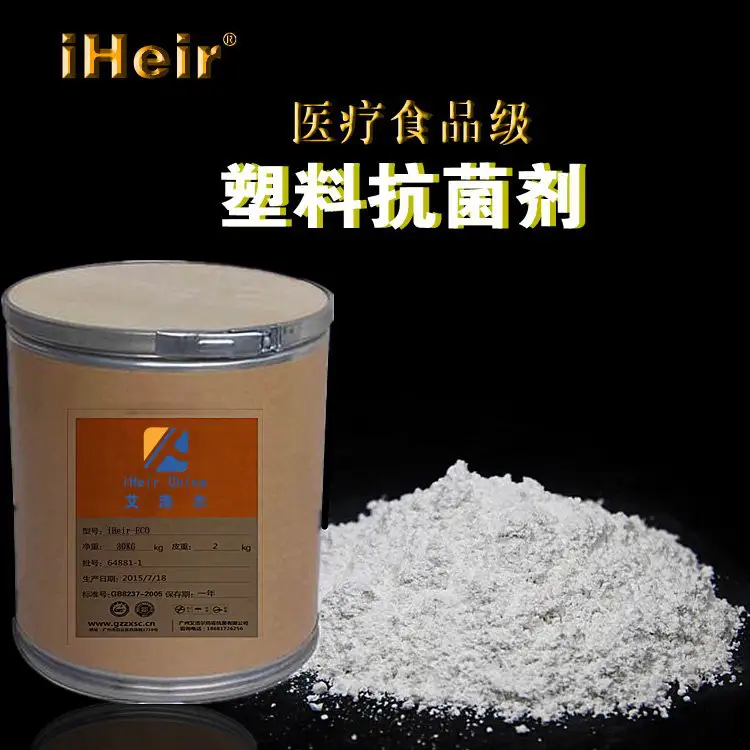
Plastic parts take the agent internally. Add iHeir-ECO at 0.3-1.0% of the total part weight, at the mixing or plastifying stage and together with the colour paste, so it is evenly dispersed before the part is formed. The band depends on the polymer: 0.3-0.5% for PE and PP, 0.5-1.0% for PVC. Water tanks and drip trays that see condensation constantly go to the upper end; housings in a dry zone can sit at the lower end. ECO is heat stable to 240 degrees Celsius, so keep it out of extreme windows above 320 degrees.
Why not chase the same result with a coating? Because the failures are on the inside. A spray gun does not reach the inner wall of a tank, the corners of a drip tray, or the gap between a liner and a housing, and the outer faces a spray does reach are not where growth starts. There is one test for a moulded part: did the agent go into the mix at the specified rate on part weight.
4. Choosing for hot parts and transparent parts
Parts on the same machine can be moulded 100 degrees apart, so one agent will not cover them all.
- Parts near heating elements and engineering plastics. These run hot in the mould and often stay warm in use, so use iHeir-IPI001 at 0.8-1.0%; it withstands above 380 degrees Celsius. An inorganic system does not decompose or migrate, which suits surfaces held against metal parts.
- Transparent and light-coloured parts. Clear resin fears two things: yellowing and haze. Use iHeir-IPL at 0.8-1.0%, with whiteness above 90 and a particle size of 1-2 micron, which suits light and clear parts.
- Mid-temperature engineering parts (300-320 degrees). Use iHeir-PSZ104 at 0.5-1.0%. It can be blended straight into the resin, or pre-made into a masterbatch or dispersion for better distribution.
- Add one more acceptance step for clear parts. Besides the antimicrobial rate, compare colour difference after a hot and humid soak. Yellowing in clear resin is usually the agent reacting with the antioxidant package rather than the agent itself, so trial a small batch before scaling up.
5. Seals, gaskets and the packing stage
The seal strip is the stage most often skipped and the one that grows mould first. Rubber and silicone gaskets carry plasticisers and fillers, they are compressed into a gap, and they get the least air movement at the highest humidity. Add iHeir-GG907 at 1.5-2.0% of the compound weight during rubber mixing; active content is 50% and the working range is pH 5-9. For seals already moulded, a surface pass before assembly is possible, but confirm first that the curing temperature matches the temperature resistance of the agent, or the hot stage will strip it.
Once the unit is assembled it goes to packing, and the gap to be covered is the period between despatch and first opening. Place a vapour-phase product in the carton; iHeir-D carries 0.1-0.2 g of active content per sheet, so work out the number of sheets from the carton volume. Foam inserts are themselves a mould carrier, so treat the insert as well rather than the housing alone. For full-container export, match desiccant sticks to the container: 8-10 sticks for a 20 ft unit and 10-12 for a 40 ft unit, hung from the roof rails so condensation forms on the sticks rather than on the cartons.

6. Common questions
Q: Do you test the whole unit or individual parts? Agree the basis with the customer first. Part-level testing such as ISO 22196 is easier to run and to repeat; whole-unit testing is closer to use but the test points are hard to define. Our suggestion is to test parts, keep the records, and treat the assembled unit as a growth observation, with the two sets of data on separate lines of the acceptance sheet.
Q: Where is the real risk on a small appliance for export? In the packaging and the finished-goods store. Internal dosing is the baseline, but most failures sit in the carton, the EPE foam and the storage humidity; that chain is broken down in anti-mould control for Cixi small appliance exports. For the process window when dosing plastic parts, see antimicrobial agents in electrical appliances.
Q: Can the same agent be used on parts that touch food? No. Parts that come into direct contact with food are outside our scope; flag them separately and we will review the material and the regulatory position before proposing anything.
Appliance mould control comes down to three dosing points in the right places: plastic parts in the mixing stage, seals in the rubber mixing stage, and the packaging before the carton is sealed. Get those three right and add container humidity control at the end, and there is no route left for mould. Samples and minimum order details for iHeir-ECO, iHeir-IPI001, iHeir-IPL, iHeir-PSZ104 and iHeir-GG907 are available on request.


