




 View Count:24
 Date:2026-10-19
Where does bamboo flooring mould start, and at which two stages is the anti-mould agent dosed? Right after carbonisation the strips are still wet and take the additive most readily; before the topcoat the cut ends and the tongue-and-groove section are still open. The dip after carbonisation runs iHeir-M8 bamboo and wood fungicide at 1:20 to a 10%-20% weight gain, and the cut ends take iHeir-PT bamboo and wood anti-mould agent as a brush-on before coating. This article gives the figures, the moisture limit and the edge-sealing rules for both stages.
1. Where bamboo flooring mould begins: after carbonisation and at the cut ends
A bamboo flooring line runs from strip splitting to steaming or carbonisation, drying, planing, profiling and coating. Mould appears in two places. The first is right after carbonisation: the strips leave the vessel with a high moisture content and with sugars and starch still in the fibre, and one night in the shop is enough for grey-green spots to show. The second is the cut end: once the profile is milled the section is exposed, an open-cell face that takes water faster than any other surface, and the coating covers the face but rarely the end.
Both failures share one cause – water held inside. Bamboo is porous, so with moisture still high the additive cannot get in, and what does get in does not stay; an untreated end is a channel that lets damp travel along the glue line until a spot lifts on the face. Anti-mould treatment on this line is therefore not a pass added at the coating station: the additive has to go in while the moisture is still workable, and the ends have to be sealed before the topcoat.
2. After carbonisation and before the topcoat: the two stages compared
The table lines up timing, product, figure and the points to watch for both stages, as a first draft of the process card.
| Stage | What is treated | Product and ratio | Criterion | Points to watch |
|---|---|---|---|---|
| Dip after carbonisation | Carbonised strips, bundle or piece | iHeir-M8 at 1:20, dipped 1-10 minutes | 10%-20% weight gain | Fully submerged, never above the liquor line; drain, then air or sun dry |
| Brush before the topcoat | Cut ends and profiled sections | iHeir-PT neat, or lightly diluted | Full coverage of the section, air dried | pH compatible to 9.5; acidic, so no contact with metal or alkali |
| Drying and planing | Dipped strips | – | Finished moisture below 25% | Below 25% moisture, M8 protection is rated at more than one year |
| Store and export | Finished flooring | – | Store below 60% relative humidity | Stacks upright with ventilation gaps; desiccant sticks in the container |
The first two rows are the dosing and brushing stages, the third is the moisture criterion, the fourth is storage. Row three is the one most often skipped – however well the strips were treated, if the moisture does not come down the mould returns.
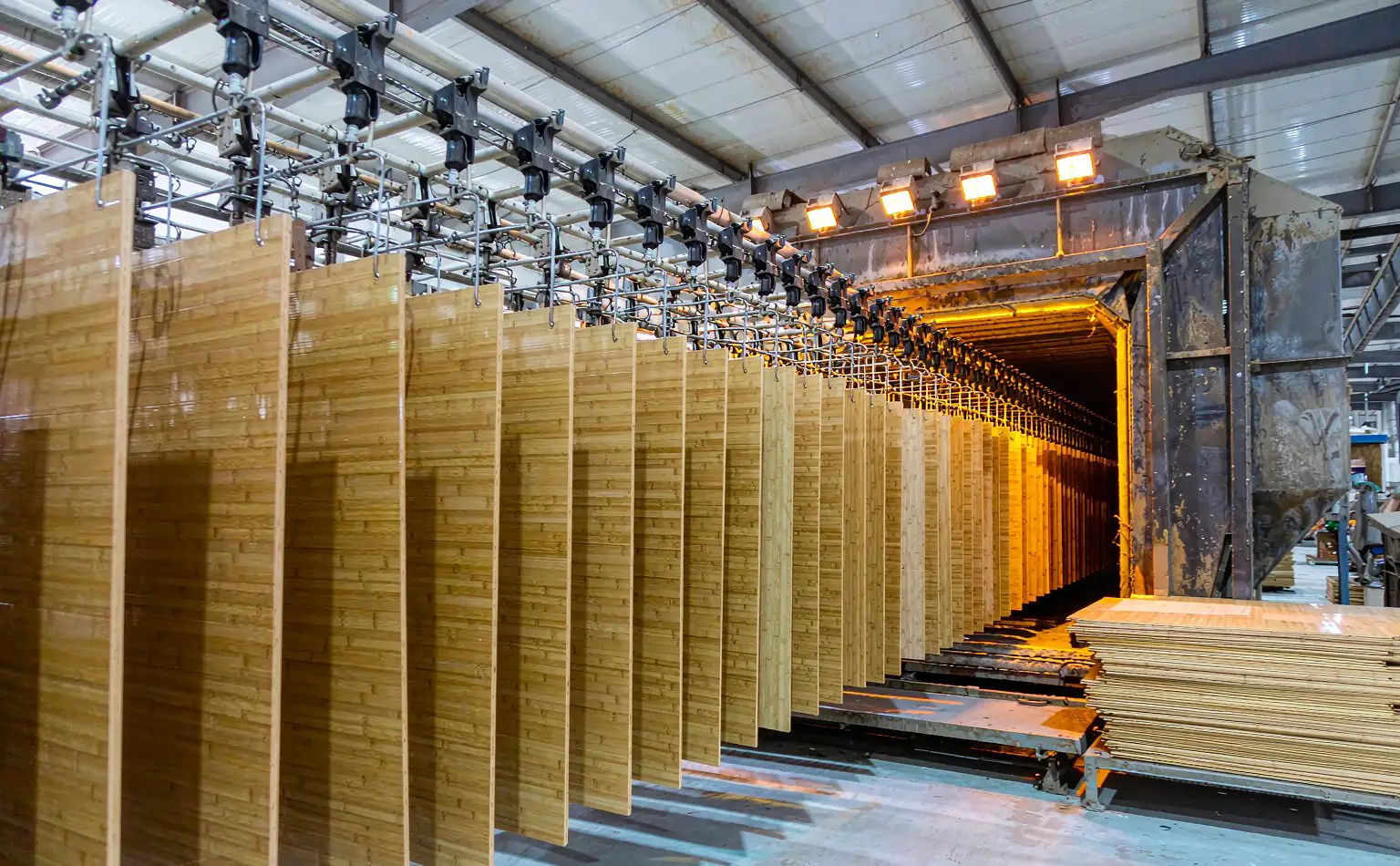
3. After carbonisation: M8 at 1:20, dipped to a 10%-20% weight gain
iHeir-M8 bamboo and wood fungicide is a clear amber liquid with a sharp acidic odour, its active fraction soluble at 5-7ppm in water and dispersing in the aqueous phase. Make the bath at 1 part M8 to 20 parts water, submerge the strips completely, and dip for 1-10 minutes to a 10%-20% weight gain; drain, then air or sun dry. It ships 25kg to the drum, the concentrate keeps three years and stores below 60C.
Why straight after carbonisation? At that point the strips are wet and the fibre is open, so the liquor goes in and stays in. Treat after drying and planing instead, and the surface has been pressed smooth – the additive sits on the skin and the first pass of the planer takes it off. Weight gain is the criterion on this stage: under 10% means the strip did not take it up, over 20% puts too much water back in, which costs drying time and raises the risk of checking in the kiln.
Two points on the bath. First, stir before use – standing liquor throws a surface film, which is normal, and a bath should be used within a month of mixing. Second, the maximum use level is capped at 15ppm active substance; do not chase performance with a stronger bath, because concentration drives weight gain and the drying stage pays for it.
4. Before the topcoat: PT brushed neat, pH compatible to 9.5
iHeir-PT bamboo and wood anti-mould agent is the brush-on grade: a clear pale yellow liquid, viscosity 40 centipoise at 25C, pH compatible up to 9.5 and heat stable to 60C. Brush the neat liquor, or a lightly diluted bath, evenly over the cut ends and the profiled sections that the coating cannot reach, check full coverage, then let it air dry. A mixed bath is stable and can be reused. Packing is 25kg to the drum with a three-year shelf life.
PT is acidic and must not touch metal or alkaline material, so use plastic brushes and containers rather than a steel pail, and let the brushed ends dry before the boards enter the coating line – going in wet blisters the film and spoils adhesion. On safety, oral LD50 in male rats is 550mg/kg on the active substance and skin sensitisation is a known concern, so gloves and goggles belong at the station.
Do not brush the whole board: treat the ends and the cut sections only. Brushing the face wastes material and wets the board unevenly, which shows up as shade variation after coating. The ends matter most: once laid, they sit against the wall inside the skirting, the dampest and least ventilated spot in the room, and the boards nearest the wall are usually the first to spot.
5. Moisture, drying and sealing the profile: keeping water outside the board
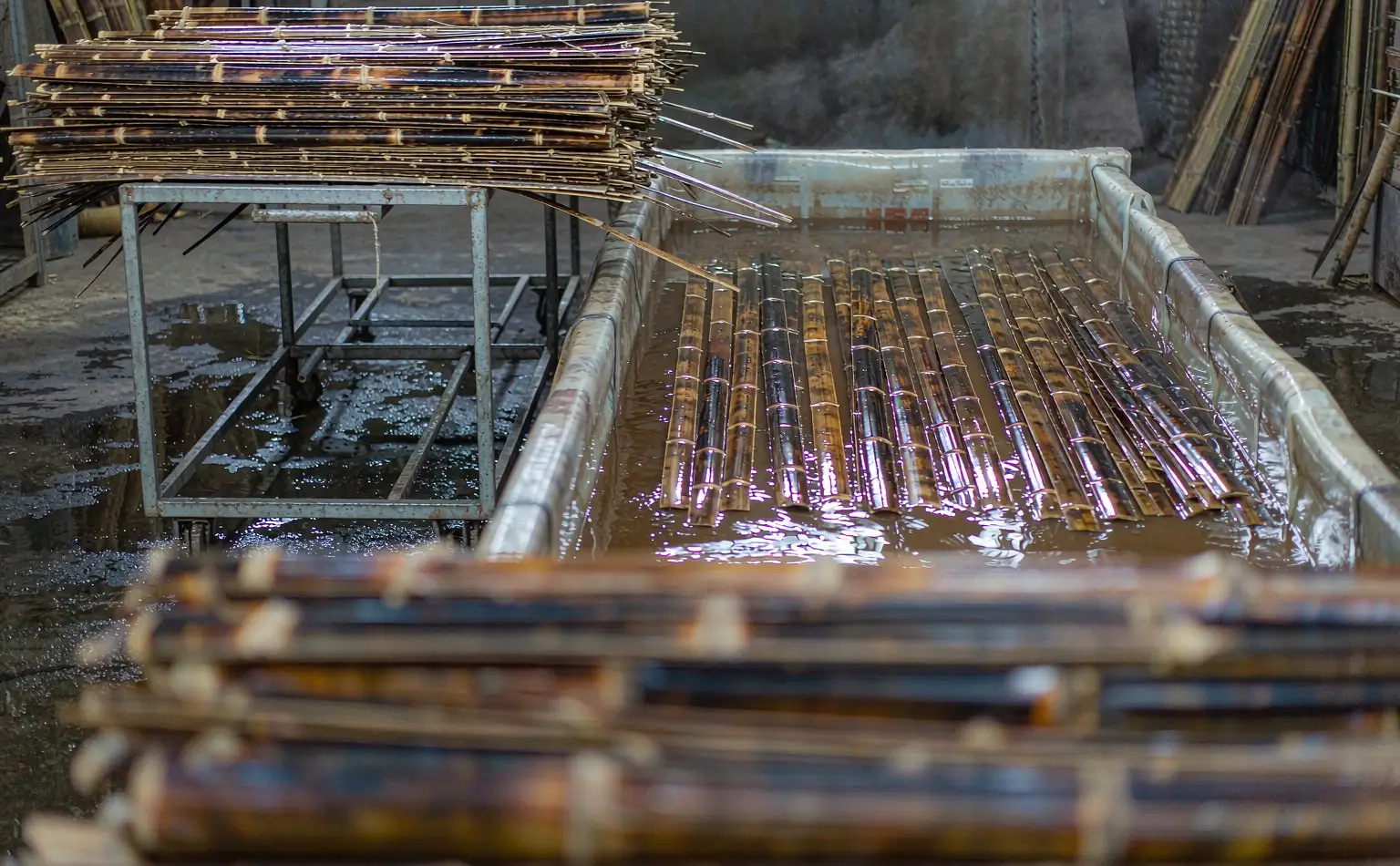
Moisture is the master control on this line. The M8 data is specific: once the treated board is below 25% moisture, protection is rated at more than a year; hold the moisture higher and the effect is discounted. Set the kiln curve by strip thickness rather than by delivery date – surface dry over a wet core means water keeps moving outward after the kiln, and the face lifts.
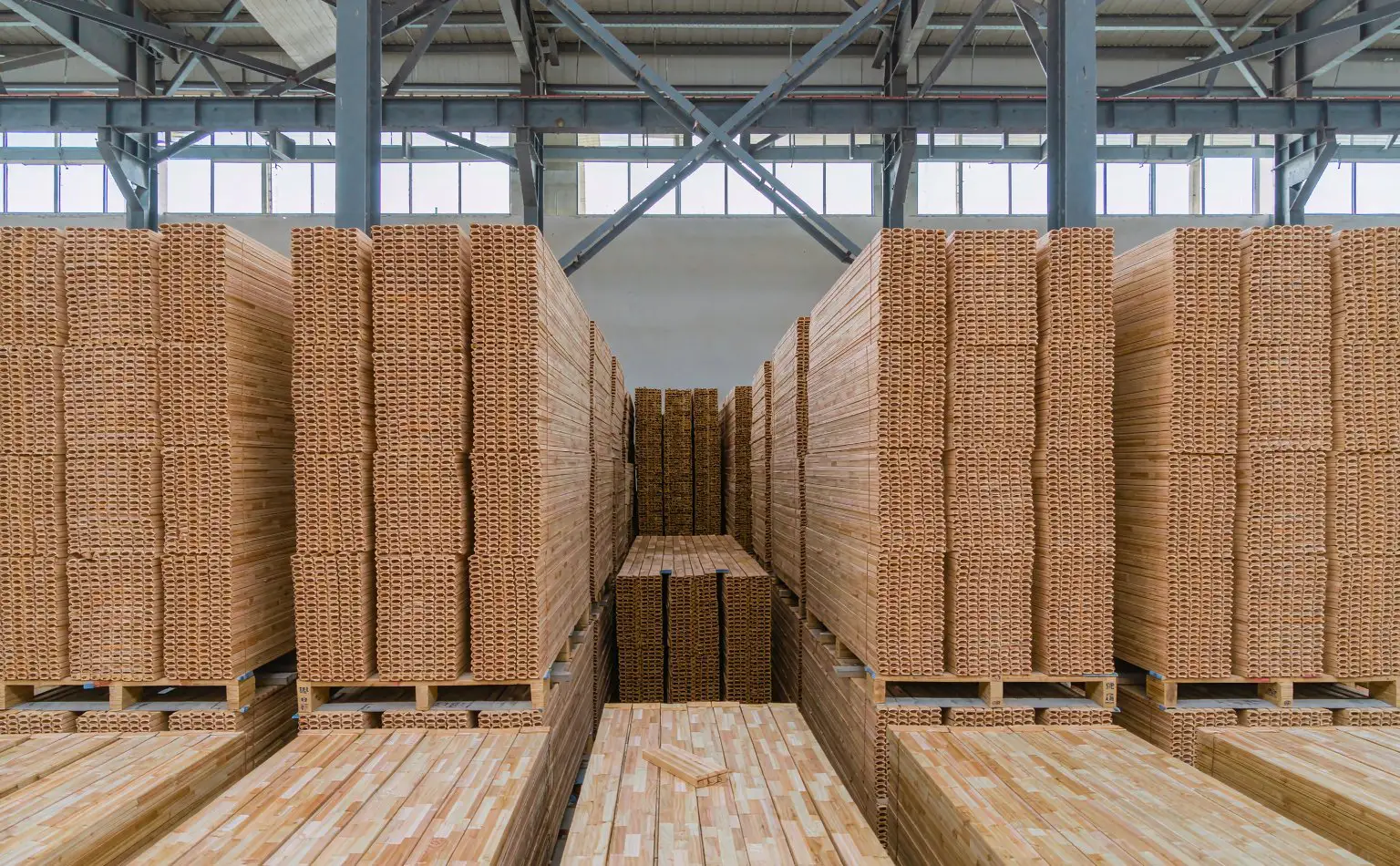
Profiling and sealing are the other half. The section is exposed after milling, so PT goes on after profiling and before coating, and the end sealer or end lacquer has to cover the section with no burrs or gaps left. Stack finished boards with the ends facing out and ventilation gaps between stacks, keep the store below 60% relative humidity, add desiccant sticks in the export container, and check that no condensation sits on the faces before the doors close.
6. Questions: can one stage be dropped, and can finished boards be retreated
Can the brush stage be dropped if the dip is done properly? It depends on how the ends are finished. Where the sealer or end lacquer fully covers the section after profiling and the finished moisture stays below 25%, one stage can hold; on most lines the ends are the leak, especially the click profile and the tongue-and-groove, which the coating rarely covers completely. The brush stage costs little, and the rework it prevents costs a great deal.
Can boards that are already coated and in store be retreated? Only on the surface, and that does not put anything back into the board. The film has sealed the face and the additive cannot penetrate; the realistic route is to pull the affected boards, clean them, downgrade or rework them, and go back to the moisture figure and the end sealing so the next batch does not repeat it. Samples and a TDS are available for both products so the figures can be checked against your bamboo species, your carbonisation cycle and your coating system.
Four closing figures: iHeir-M8 at 1:20 after carbonisation, dipped 1-10 minutes to a 10%-20% weight gain, drained and dried; iHeir-PT brushed neat on the cut ends and profiled sections before coating, pH compatible to 9.5, dry before the line; finished moisture below 25%, which is where the one-year protection figure applies; and stacks with ventilation gaps, the store below 60% relative humidity and desiccant in the export container.


