




 View Count:21
 Date:2026-10-20
How is rattan lampshade mould treated, and why does it take two layers? Cane is porous, so the additive only stays if it goes in while the cane is still a bundle of straight strips; once the shade is woven and set, the whole piece cannot go into a tank, so the surface layer has to be brushed on. The cane takes iHeir-M5 immersion type bamboo and wood fungicide at 1:40 for 5-10 minutes to a 15%-20% weight gain, and the finished shade takes iHeir-JP bamboo and wood anti-mildew agent at 1:10-20 brushed over both faces. This article gives the dosing for both steps, the coverage rule, the drying limit and the checks before assembly.
1. Rattan lampshade mould starts in the cane pores and the weave gaps
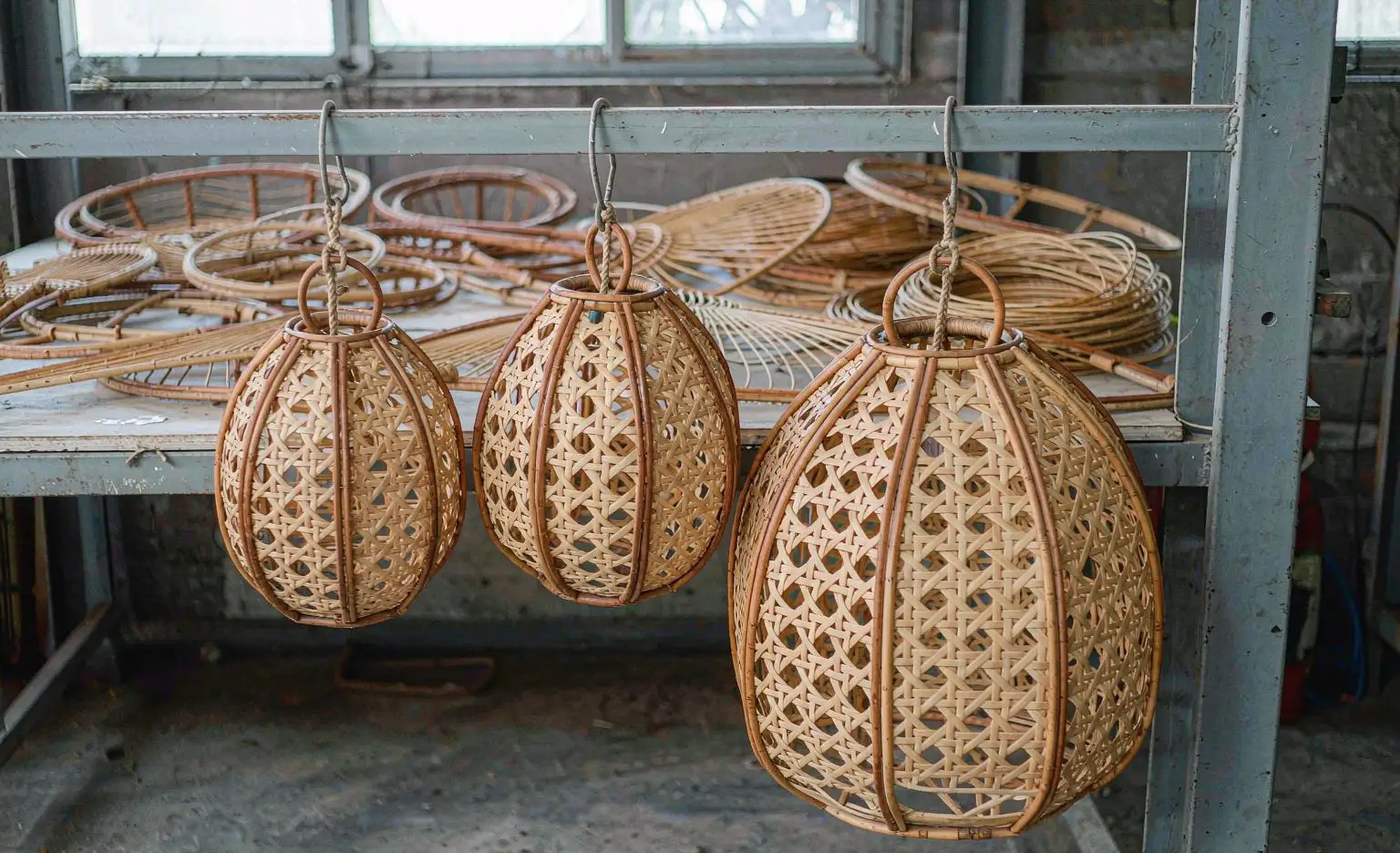
A rattan lampshade line runs from cane sorting to steaming and softening, peeling, weaving, setting, trimming and assembly. Mould starts in two places. One is the cane itself: rattan is a porous material with a layer of vessels under the skin, quick to take water and slow to give it back, and a few days in a store during the wet season is enough for grey-green spots to show. The other is the weave gap, where two strands cross: dust and water collect in the gap, air does not move through it, and that is where spots cluster.
The shade adds two problems of its own. First, shape: once woven and set, a shade has a frame and a curve, so a full dip takes space and distorts it – the dip belongs to the cane stage. Second, service: a shade sits close to the lamp and the air inside runs warmer than the room, so moisture condenses on the inner face; a water-soluble film is gone within a season. The rule is therefore simple: the inner layer goes in by dipping, the outer layer needs a non-leaching finish.
2. Cane dip and shade surface treatment compared
The table lines both stages up as a draft process card.
| Stage | What is treated | Product and ratio | Criterion | Points to watch |
|---|---|---|---|---|
| Cane dip | Cane before weaving, in bundles | iHeir-M5 at 1:40, dipped 5-10 minutes | 15%-20% weight gain | Fully submerged; acidic, so plastic tanks only |
| Shade surface | Inner and outer faces and the weave gaps | iHeir-JP at 1:10-20, brushed or sprayed | Full coverage, liquor held in the gaps | Use within one month of mixing; do not miss the inner face |
| Drying | Dipped cane and brushed shades | – | Moisture below 25% | Below 25% moisture, JP protection is rated at more than one year |
| Assembly and store | Finished shades | – | Store dry, no condensation inside the shade | Vented bag per shade, pallets off the floor, absorbent material in the container |
Rows one and two are treatment, three is the drying criterion, four is assembly. The 25% comes from the JP data sheet: hold moisture above it and the one-year rating is a number on paper.
3. The cane dip: M5 at 1:40, 5-10 minutes, 15%-20% weight gain
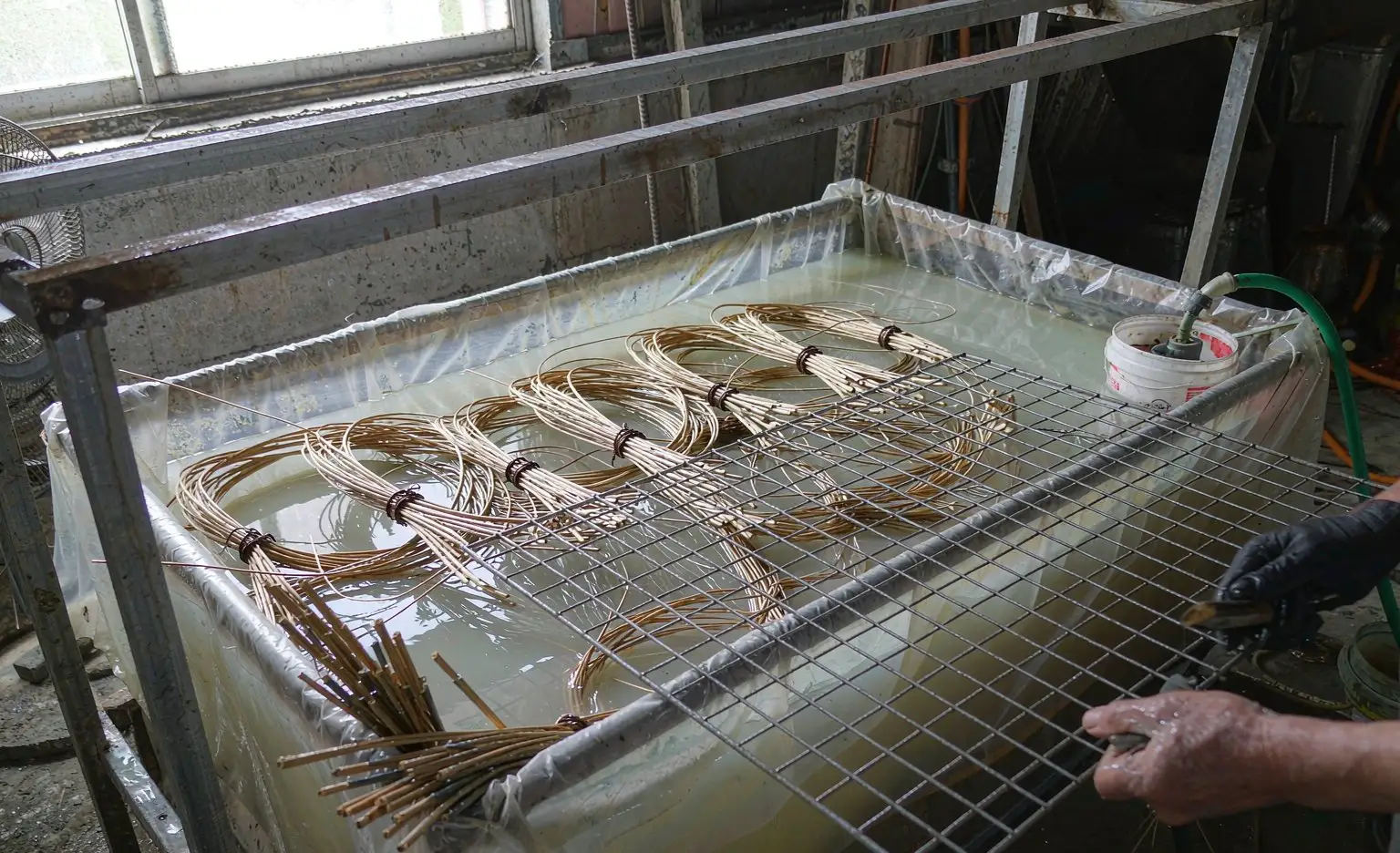
iHeir-M5 immersion type bamboo and wood fungicide is a red-brown liquid built from several actives, with high solids, acid and alkali resistance, resistance to leaching, strong penetration, high adhesion and tolerance of high humidity; rattan, along with cane, palm and grass, sits inside its stated scope. Mix at 1:40 (5kg of M5 to 100kg of water), submerge the bundles, dip 5-10 minutes and pull out at a 15%-20% weight gain. Packing is 25kg to the drum, one year in a dry, dark store.
The point on this stage is that the bundle must not keep a dry core. Loaded tight, the centre is pressed shut by the outer strands and the bundle comes out wet outside and dry inside. Split it, space the bundles on a rack, or turn each one once in the tank. Weigh the whole bundle: under 15% the cane did not take it up, over 20% most of the gain is water, which leaves the cane soft on the loom.
M5 is acidic and must not touch metal or alkaline material, so tanks, crates and lifting hooks should all be plastic; stir before use, since a surface film after standing is normal. The concentrate is high in solids and can sensitise skin, so wear gloves at the tank.
4. The shade surface: JP at 1:10-20, brushed into the weave gaps
iHeir-JP bamboo and wood anti-mildew agent is a pale yellow liquid with a soft fragrance to almost no odour, its active fraction soluble at 5-7ppm and dispersing in water, stable below 60C for a year. It is a non-leaching treatment: it does not bleed, migrate or get consumed by micro-organisms, and it bonds at ambient temperature, so heat does not break it down – which matters on a shade.
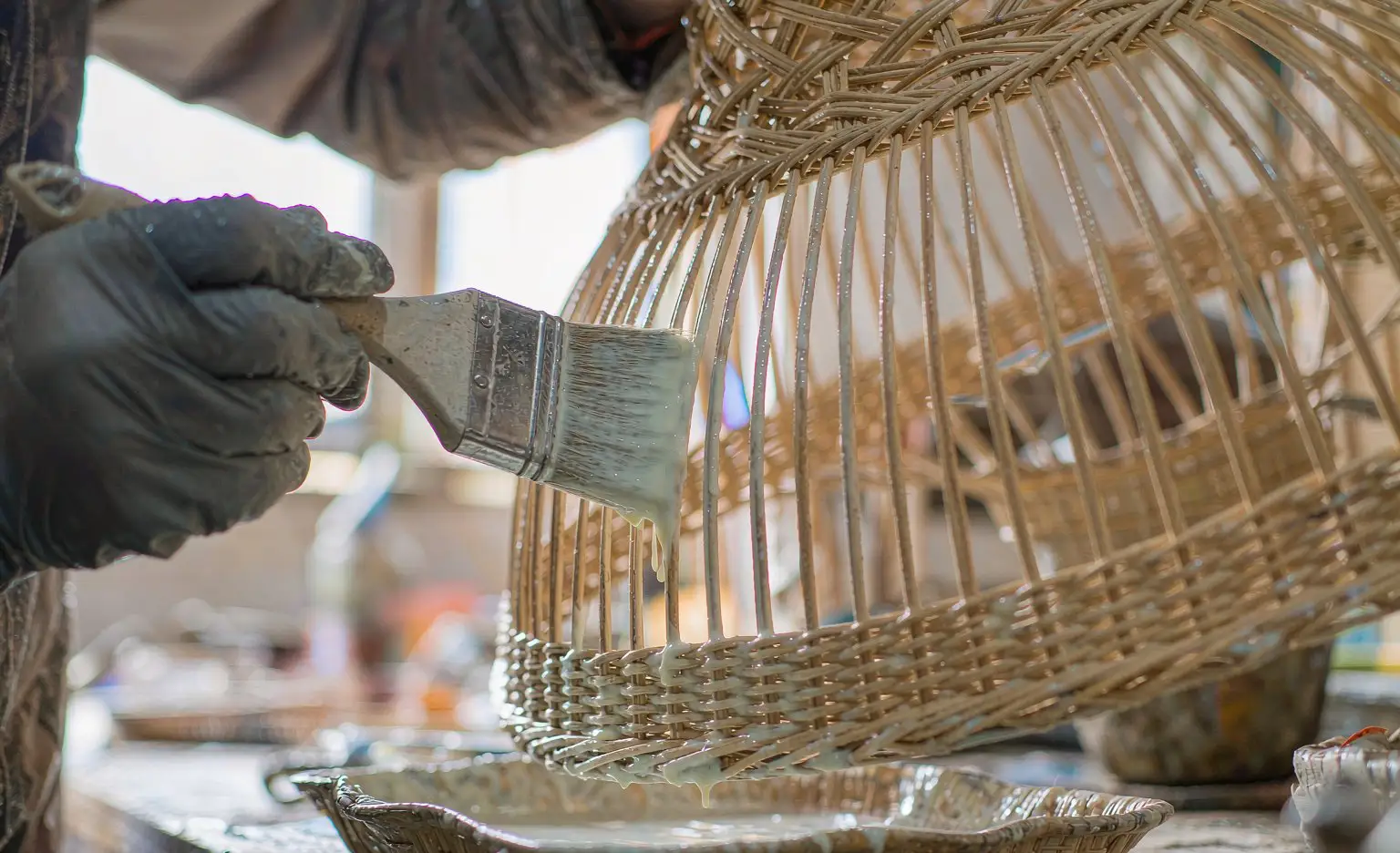
How to use it: on the finished shade, dilute 1:10-20 in water (alcohol also works), stir, then brush or spray both faces, going over the weave gaps and frame joints in particular so that the liquor covers the surface completely; let it air dry. A mixed bath should be used within one month. Packing is 25kg to the drum with a three-year shelf life.
Two places get missed. The inner face is the first: brushing only the outside leaves the inside dry, moisture starts there, nothing shows from outside until it has spread across. The second is the gap: swept across the surface only, the gap stays dry at its centre, which is exactly where a spot begins. Press a soft brush into the gap so the liquor goes in.
5. Drying, odour and assembly: 25% moisture is the hard line
The JP data sheet is specific: after dipping or spraying, a product held at below 25% moisture keeps its protection for more than a year. So do not assemble straight after brushing – bagging a wet shade seals the water in and pre-installs the mould. Dry until the surface no longer feels damp.
Odour is both a selling point and an audit item. JP runs from a soft fragrance to almost none and leaves nothing to smell once dry; if an audit picks up an odour, the bath was mixed too strong or the shade was bagged wet.
Assembly and storage: bag each shade with a vent, never in a sealed bag; keep pallets off the floor and the store dry; check for condensation on the inner face before an export container is loaded and add absorbent material inside. Shades are bulky and stack deep, so the bottom layers are the ones pressed shut and left without air – check those first when a stack is turned.
6. Questions: surface only, and mixing with alcohol
Can the cane dip be skipped and only the surface treated? It can pass in the short term and it will not hold in the long term. A surface layer blocks damp from outside, but with no additive inside the cane, water that enters at a gap or a cut end still starts mould within the strand; and cane is thin-walled, so mould inside shows through quickly. Doing both stages costs a little more and removes most of the rework risk.
Can JP be mixed with alcohol instead of water? The data sheet allows either. Alcohol dries faster, at the cost of odour and flammability, so on a large line water plus proper drying is the simpler route. Whichever is used, finish the bath within one month.
Can a shade that has already spotted be saved? Where the mould is on the surface and the cane has not discoloured, clean the spots, dry the shade and brush another coat of JP, then downgrade it or declare it. Where the spots have gone into the fibre and darkened it, scrap the shade. Samples and a TDS are available for both products to check the ratios against your cane species and weave density.
Closing figures: iHeir-M5 at 1:40, dipped 5-10 minutes to a 15%-20% weight gain with bundles fully under the liquor line; iHeir-JP at 1:10-20 over both faces and into the weave gaps after setting; dry below 25% moisture, where the one-year rating applies; vented bags, pallets off the floor, absorbent material in the container.


