




 View Count:27
 Date:2026-11-06
How is bearing mould handled? Every bearing leaves the plant with rust-preventive oil, but an oil film does not stop a carton from taking water, so once the humidity inside passes 75% the outer ring faces spot first and then rust, and the lot is rejected. The routine is iHeir-D vapour sheets at 0.1-0.2g of active matter per sheet once the film has flashed off, plus T-1000 drying rods in the case corners, 8-10 per 20ft container. This article covers sheet placement, rod counts and store humidity.
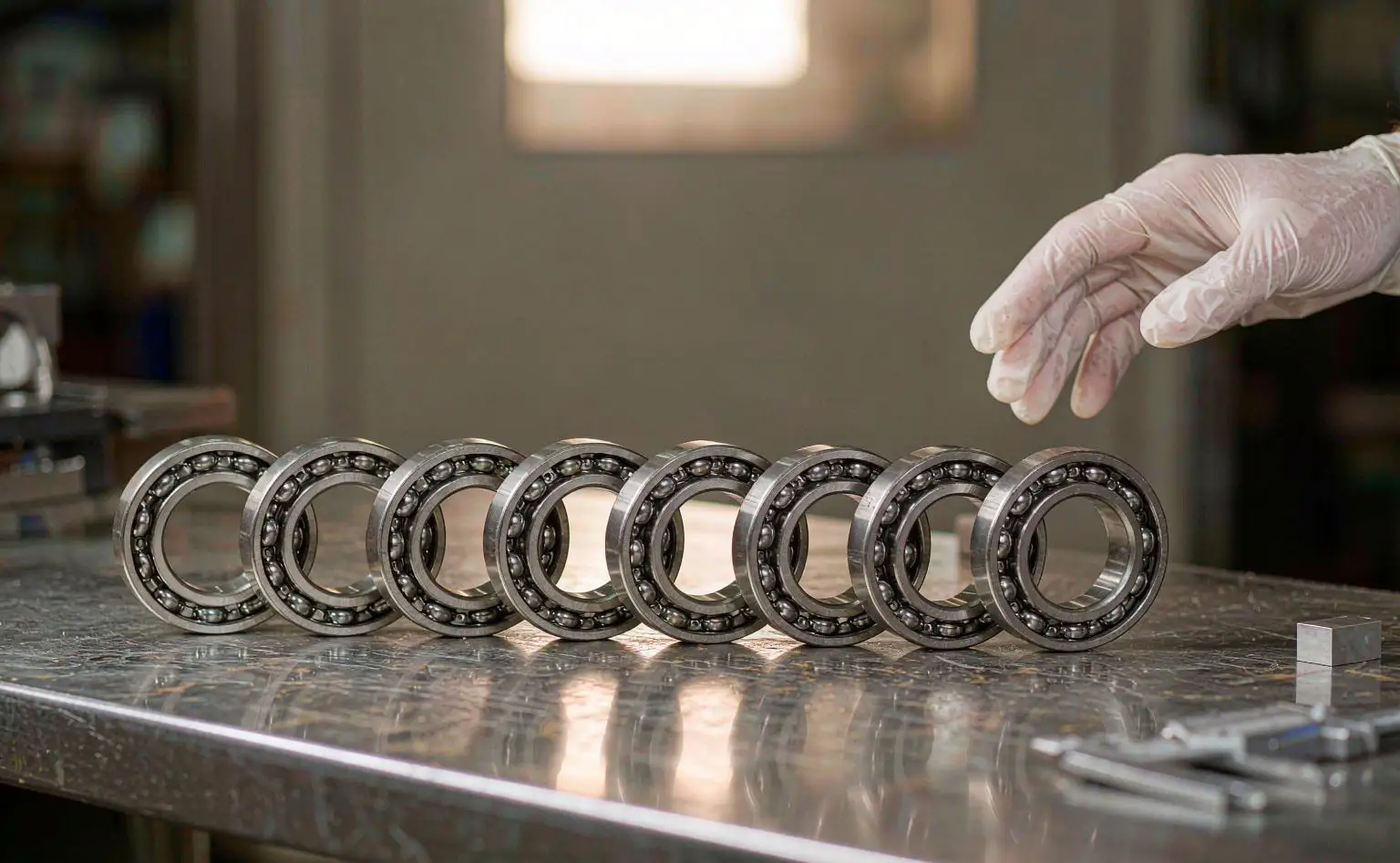
1. Bearings fear rust and mould, and both come from the same place
Take a bearing apart: inner ring, outer ring, balls, cage, seal or shield, rust-preventive film, inner wrapping paper, carton or wooden case, pallet. Steel does not feed mould, but the oil, the grease and the wrapping paper are all organic, so once box humidity climbs the growth starts on the film and the paper.
A mould spot turns into a rust spot. Once mould colonises the film, the hyphae lift it off the steel, the exposed face loses its protection, and salt spray or condensation puts rust on it. Inspection sees rust, but the cause is mould: strip the rust without controlling humidity and the next lot repeats it.
The carton is the moisture path. Corrugated board reaches an equilibrium moisture content above 12% in a wet season, and a wooden case goes higher. A box arrives from the converter or the case shop already carrying water, the bearings sit inside, and moisture travels in through the wall, so the layer nearest the wall fails first.
Condensation is the item most often missed. A shop at 32℃ by day and a store at 24℃ by night means the air in the box cools and condenses, leaving an invisible film of water on the oil; that is enough for mould, and enough for rust.
2. Oil film and packing take separate counts
The table lines up the film, the inner wrapping, the outer case and the container. Paper is counted in sheets of active matter, rods in pieces, and the two are not convertible.
| Part | Material | Product and level | Stage | Control point |
|---|---|---|---|---|
| Ring faces | Bearing steel plus oil | No anti-mould treatment | Washing, oiling | Even film, dry before packing |
| Wrapping and interleaving | VCI paper, neutral paper | iHeir-D 0.1-0.2g per sheet | Unit wrap, between layers | Neutral paper against the oil |
| Carton and case walls | Corrugated, plywood | iHeir-D one sheet on the wall | Packing, sealing | Only works in a closed box |
| Case corners and container | Wooden case, 20/40ft box | T-1000 8-10 / 10-12 rods | Packing, loading | High up, clear of the doors |
One boundary. The vapour sheet handles mould in the box volume, the rod handles moisture in the box and the container; paper does not absorb water and a rod does not stop mould, so the two jobs stay separate. Sheets alone saturate, rods alone leave the carton wall moulding.
3. Let the oil flash off before the sheet goes in
Bearings are washed and oiled, and film thickness follows the oil supplier’s data sheet rather than feel. After oiling, stand the parts at a ventilated station and let the solvent flash off before packing; box a wet film and the solvent evaporates inside the carton, which is the same as adding water to it.
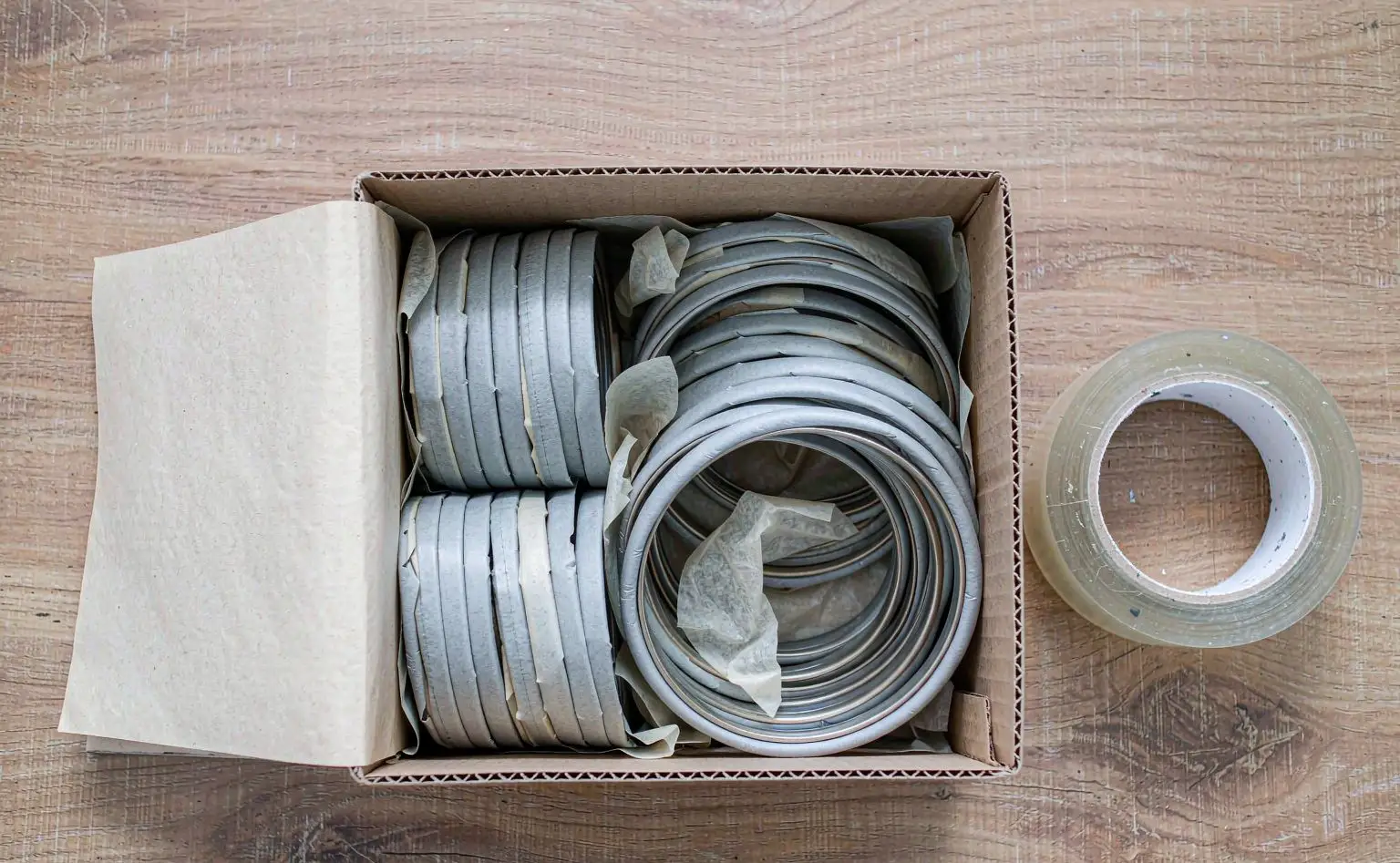
Where the sheet goes. For unit packing, replace the inner wrapping with a paper that carries a vapour-phase agent, or slip an iHeir-D vapour sheet inside the existing VCI paper, at 0.1-0.2g of active matter per sheet. For multi-layer packs, one between each layer, plus one on the carton wall so the volume is closed.
Keep neutral paper in between. Never lay the vapour sheet against an oiled steel face; put neutral or VCI paper between them. iHeir-D carries 70%±5 solids and can corrode poor-quality metal when damp, so plated parts and parts with a trace of rust need the separation most.
Trial compatibility first. Seal three times the normal dose with a bearing sample, mist a little water, separate with paper, and inspect after a few days for a dulled steel face, a thinned film or a discoloured cage. A trial is cheaper than sorting the shipment later.
4. Rods in the case corners, and how many
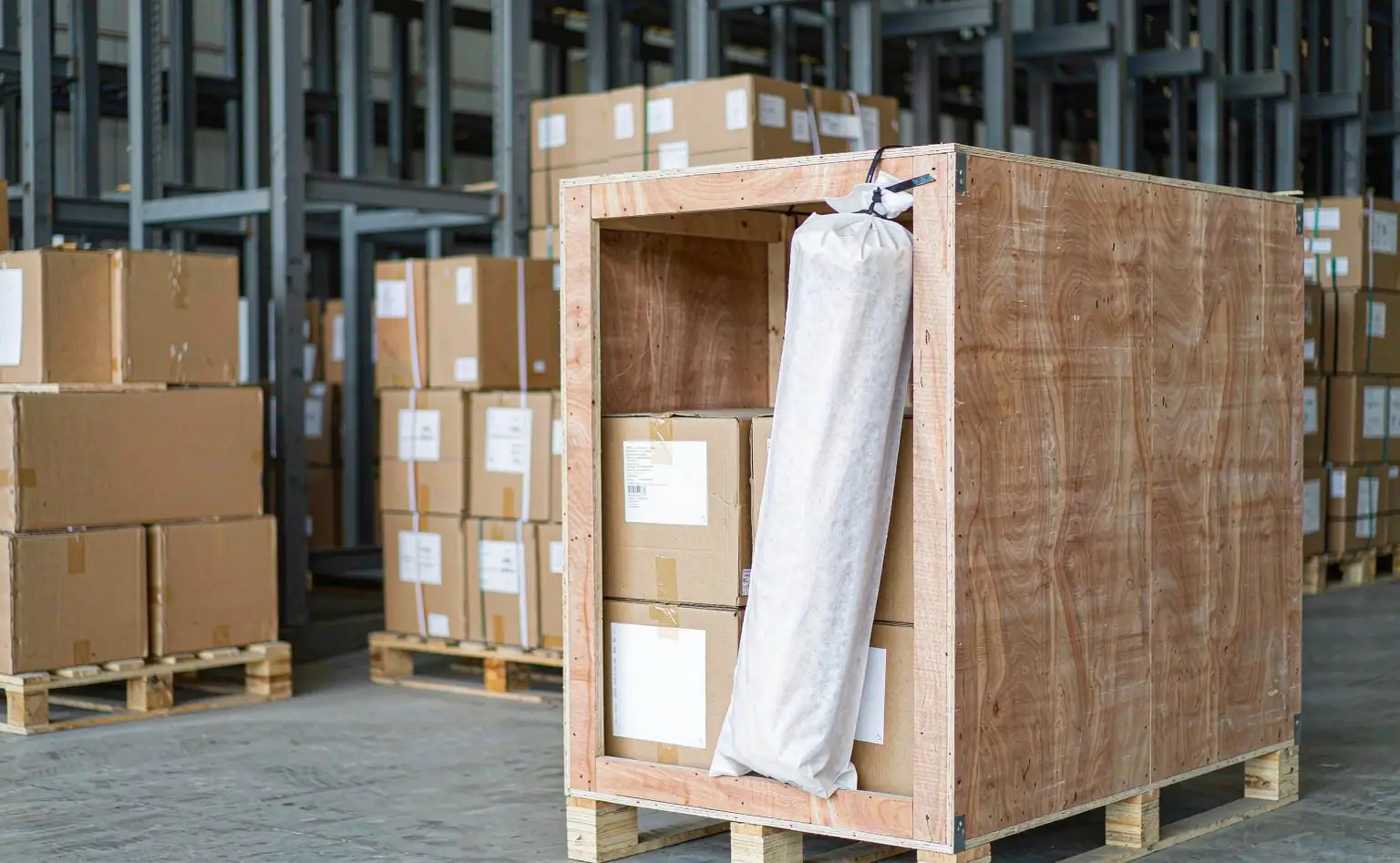
An export wooden case takes one T-1000 container drying rod in each corner, at 1000 grams per rod. The material is cross-linked sodium polyacrylate, free of chlorides, neutral in pH and non-corrosive to metal, absorbing more than its own weight at 25℃ and 80% RH, so it takes water out without putting rust on steel.
Counts for the container. 8-10 rods per 20ft box and 10-12 per 40ft box, fixed to the roof beam or high on a side wall and clear of the doors so loading does not knock them off. Take the upper figure for a long routing, slow port handling or a route with wide temperature swings.
How to fix them. Hang on hooks or tie wraps at the case corner and the container wall, never resting on the bearing packs; a rod gains weight as it absorbs and sags, so the fixing has to carry it. Leave an air path in both case and container, and in a container stacked to the roof hang the rods between the top layer and the ceiling.
When to hang them. Case corners go in after packing and before sealing. For a container, hang the roof rods when loading is seven or eight tenths done and close the doors last; hung open for hours beforehand, they absorb shop air and arrive partly spent.
5. Store and container humidity
Hold the finished goods store below 60% RH with dehumidifiers in the wet season, and put the hygrometer at mid-shelf rather than by the door. Pallets stand 10cm off the floor and off the wall, stacks stay within the marked shelf level, and the top of the stack stays clear of light fittings.
Stock rotation. First in, first out; do not leave a pallet in a corner through a whole wet season. After a sampling inspection, seal the carton again, because an open box exchanges its air in half a day and the vapour sheet inside is wasted.
Three checks before loading. Is the container dry and free of odour, is there any sign of standing water on the floor, and is box moisture within spec. All three pass before loading; a wet container is wiped and ventilated first, because no rod will absorb a puddle.
6. Questions on oil, paper and rod counts
Q: Can a bearing run on rust oil alone without the anti-mould step?
For fast domestic turnover, yes; for a container that sits, no. The film stops water but not mould, and once mould lifts the film the rust follows, so doing both is the cheaper route.
Q: Will the vapour sheet affect the oil film?
Run the trial at three times the dose and compare film appearance and steel condition before and after; at normal dose with neutral paper in between the film does not thin. Any model in doubt goes to a small batch first.
Q: How much space does one rod cover?
Counts are set by container: 8-10 rods for a 20ft box, 10-12 for a 40ft box, at 1000 grams each. One rod in each case corner is the small-volume routine, and a bigger case or a longer route takes more, never one rod for a 40ft container.
Q: Will a saturated rod leak?
Cross-linked sodium polyacrylate locks the water into a gel inside the non-woven sleeve and does not leak in normal use; a sleeve that is torn or crushed by cargo has to be replaced, and a torn rod is not reused.
Four points to take away: control film thickness to the oil data sheet and pack only when it is dry; one iHeir-D sheet between layers and one on the carton wall at 0.1-0.2g each, with neutral paper against the steel; one T-1000 rod in each case corner at 1000g, and 8-10 per 20ft or 10-12 per 40ft container, hung high; grade to GB/T 24346-2009 and hold a full carton 30 days at 30℃/85% RH. A pack of sheets and two rods go out for a trial, with MOQ on the T-1000 product page.


