




 View Count:25
 Date:2026-11-07
Where does fastener mould actually start? Not on the screw: it starts in the carton, the wooden pallet and the interleaving paper, and one cold night in a container puts white rust on the zinc until the thread fails the go/no-go gauge. The routine is to box the galvanised parts straight from the drying oven with iHeir-D vapour sheets at 0.1-0.2g of active matter per sheet, and to put T-1000 drying rods at 1000 grams each in the wooden case corners. This article covers sheet placement, rod counts and store humidity.
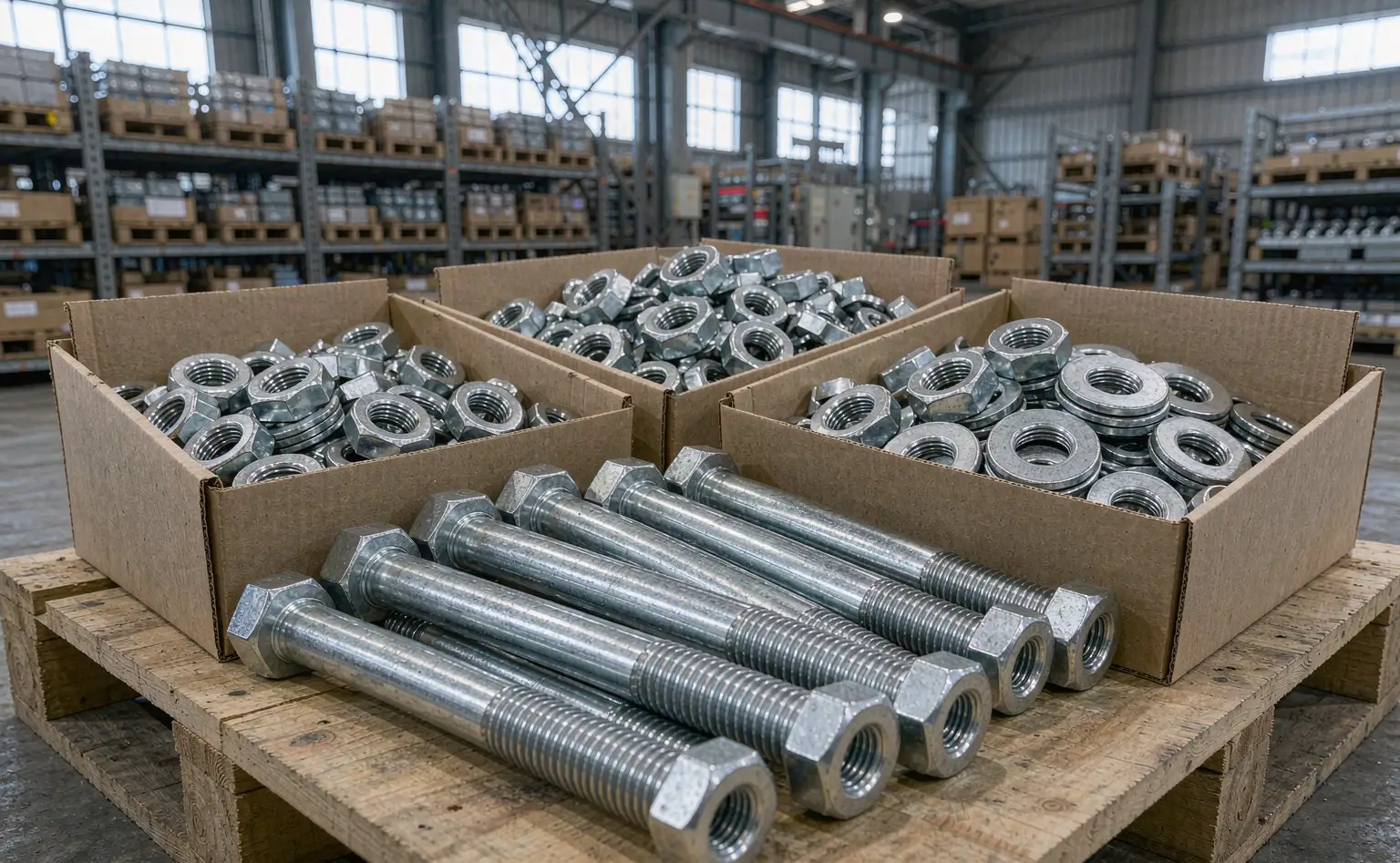
1. The screw does not mould, the carton and pallet do
Open a carton of fasteners: bolts, nuts, flat and spring washers, the zinc coating, an inner bag, interleaving paper, a corrugated carton, a wooden pallet. Neither steel nor zinc feeds mould; what fails is the carton, the pallet and the paper, plus the cutting fluid left on the parts.
White rust is not mould, but the two arrive together. Above 70% humidity with condensation on the surface, a galvanised part blooms white rust first, an even chalky film; mould shows as spots with a spreading edge and smells musty. Wipe white rust off as though it were mould and the coating looks clean, then rusts again in the next container.
The carton carries its own water. Corrugated board reaches an equilibrium moisture content above 12% in a wet season and a wooden pallet goes higher, so both arrive damp. The fasteners sit inside, moisture moves in through the wall, and the row against the wall fails first. A shop at 33℃ by day and a store at 24℃ by night adds condensation on top of that.
2. Plating and packing take separate counts
The table lines up the coating, the inner wrap, the carton and the container. Vapour paper is counted in sheets of active matter, rods in pieces, and the two are not convertible.
| Part | Material | Product and level | Stage | Control point |
|---|---|---|---|---|
| Thread and plating | Carbon steel, zinc | No anti-mould treatment | Washing, drying | Box straight from the oven, dry |
| Inner wrap, interleaving | Neutral paper, VCI paper | iHeir-D 0.1-0.2g per sheet | Unit wrap, between layers | Neutral paper against the plating |
| Carton wall | Corrugated board | iHeir-D one sheet on the wall | Packing, sealing | Only works in a closed box |
| Case corners | Plywood case | T-1000 one rod per corner, 1000g | Packing, sealing | Hung high, clear of the goods |
| Container | 20ft / 40ft box | T-1000 8-10 / 10-12 rods | Loading | Clear of the doors |
One boundary. The vapour sheet handles mould in the box volume, the rod handles moisture in the box and the container; paper does not absorb water and a rod does not stop mould, so the two jobs stay separate. Sheets alone saturate, rods alone leave the carton wall moulding.
3. Box it straight from the oven, and place the sheet
Fasteners leave the wash and dry line at sixty or seventy degrees. Do not bag them at the oven mouth, because residual heat inside a sealed bag is condensation by design. Stand them at a ventilated station until they are below 40℃, and never box a part that still carries wet cutting fluid or rust oil.
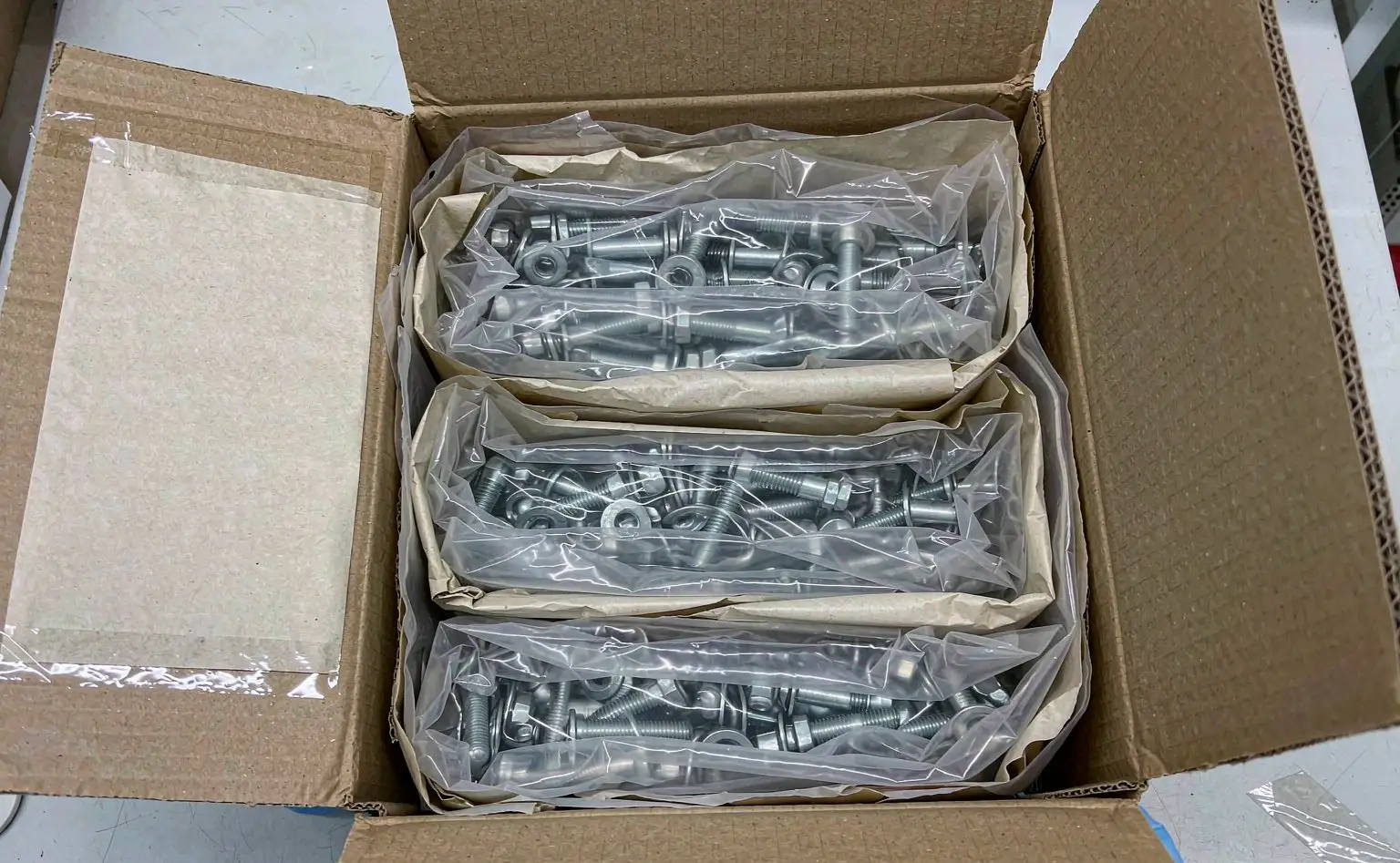
How the inner wrap is lined. For unit or small-bag packing, line the bag with one iHeir-D vapour sheet at 0.1-0.2g of active matter per sheet, and give threaded parts a layer of neutral paper first so the sheet never touches the thread. For multi-layer packs, one sheet between each layer.
One on the carton wall. Tape a sheet to the inside wall so the volume stays charged once the box is closed. A carton opened for sampling has to be sealed again, because half a day of open air exchanges the whole atmosphere, and in a wooden case the lid takes one more sheet.
Never use waste paper. Newspaper and recycled board carry spores and acidic matter, which puts a mould source and a corrosion source into the same box. iHeir-D runs 70%±5 solids and can corrode poor-quality metal when damp, so thin plating needs the neutral layer most.
Run a compatibility trial. Seal three times the normal dose with a fastener sample, mist a little water, separate with paper, and inspect after a few days for a dulled coating or a spring washer that has lost tension.
4. Rods in the four case corners, and how many
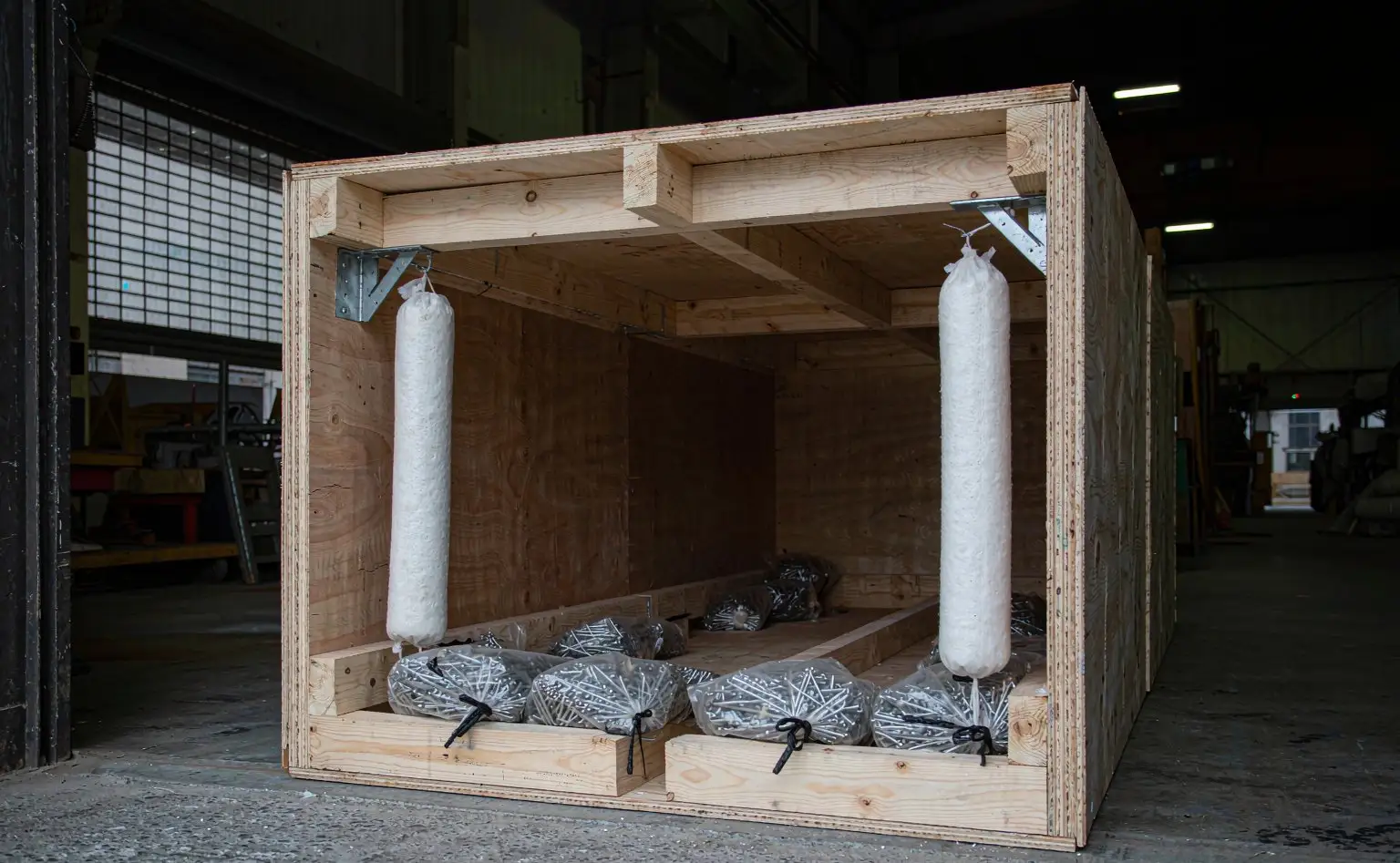
An export wooden case takes one T-1000 container drying rod in each corner, at 1000 grams per rod. The material is cross-linked sodium polyacrylate, free of chlorides, neutral in pH and non-corrosive to metal, absorbing more than its own weight at 25℃ and 80% RH.
Count by container, not by carton. 8-10 rods for a 20ft box and 10-12 for a 40ft box, fixed to the roof beam or high on a side wall and clear of the doors. Take the upper figure for a long routing or wide humidity swings, and never send one rod to cover a 40ft container.
How to fix them. Hooks or tie wraps at the case corner and the container wall, never resting on the packs; a rod gains weight as it absorbs and sags, so the fixing has to carry it. In a container stacked to the roof, hang the rods between the top layer and the ceiling.
Do not substitute a deliquescent salt sachet. A sack that turns to liquid as it works will leak in a case that gets knocked about, and the pool drips onto galvanised parts and blooms white rust, which is worse than no desiccant at all. The T-1000 holds the moisture inside the polymer and stays dry to the touch even at full take-up.
5. Store and container humidity, and what blackening means
Hold the finished goods store below 60% RH with dehumidifiers in the wet season, and put the hygrometer at mid-shelf rather than by the door. Pallets stand 10cm off the floor and off the wall, and the top of the stack stays clear of light fittings.
First in, first out. Do not leave a pallet of fasteners in a corner through a whole wet season, and seal the carton again after a sampling inspection.
Two routes to a black coating. One is white rust that oxidises and darkens after a damp spell; the other is wash residue reacting with the zinc. The first is solved by boxing dry and controlling container humidity, the second sends you back to the wash tank. Mix them up and the whole lot is reworked for nothing.
How to verify. Run the coating to neutral salt spray GB/T 10125 and read white rust area at 48 hours; grade mould resistance to GB/T 24346-2009 and hold a full carton 30 days at 30℃/85% RH. Mechanical properties follow GB/T 3098.1.
6. Questions on sheets, rods and rework
Q: Does the fastener itself need an anti-mould treatment?
No. Steel and zinc do not feed mould; what you control is humidity and mould load in the packing space.
Q: Can the vapour sheet attack the plating?
Not at the normal dose with neutral paper in between. iHeir-D poses a risk to poor-quality metal when damp, so run the three-times-dose trial first on thin plating.
Q: How much space does one rod cover?
Counts follow the container: 8-10 rods for a 20ft box, 10-12 for a 40ft box, at 1000 grams each. One rod per case corner is the small-volume routine.
Q: Can a carton that has taken water be saved?
If board moisture is out of spec, change the carton. Parts without white rust are dried and repacked; parts with white rust go to rework first.
Four points to take away: cool the parts below 40℃ after washing and drying, and never box wet cutting fluid or rust oil; one iHeir-D sheet in the inner wrap and between layers at 0.1-0.2g each, one more on the carton wall, with neutral paper against the plating; one T-1000 rod in each case corner at 1000g, and 8-10 per 20ft or 10-12 per 40ft container, hung high; read the coating on GB/T 10125 salt spray and the mould on GB/T 24346-2009, holding a full carton 30 days at 30℃/85% RH. A pack of sheets and two rods go out for a trial, with MOQ on the T-1000 product page.


