




 View Count:28
 Date:2026-11-06
Can valve mould be prevented? A valve body is cast or ductile iron, which feeds nothing, so the growth sits in the rubber disc and the carton liner, and a container of resilient-seated gate valves opened at the customer means stripping and re-discing the lot. The routine is 0.5%-1.0% iHeir-JS117 plastic anti-mould powder in the disc compound, paint fully dried before boxing, and iHeir-D vapour sheets at 0.1-0.2g of active matter on the carton wall. This article covers the mixing stage, the dryness test and the packing.
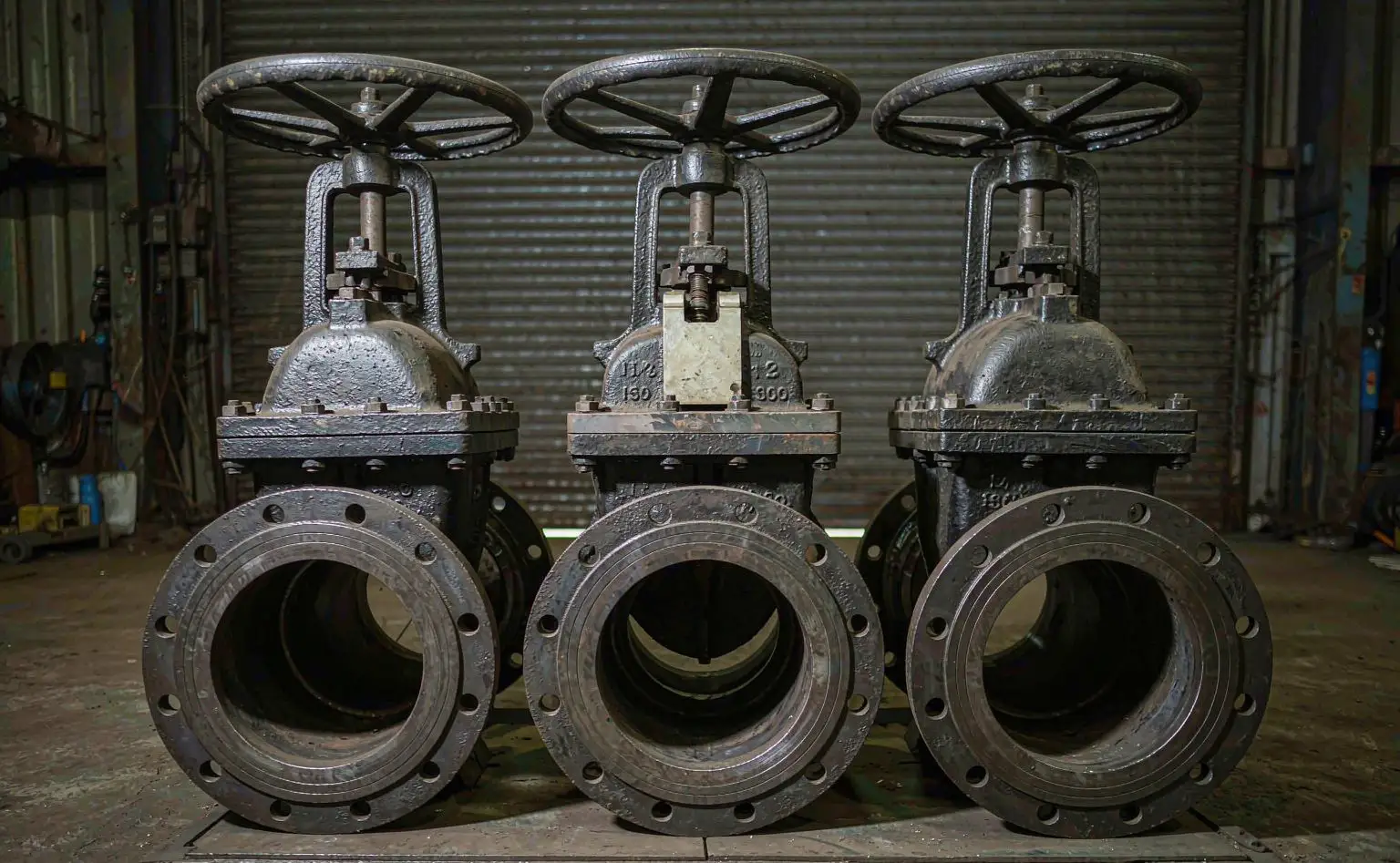
1. On a resilient-seated valve the mould is in the rubber disc
Take a gate valve apart: body, bonnet, stem, handwheel, rubber disc, clamping plate, bolts, paint film, carton and liner. Metal and epoxy coating feed nothing, so the exposure is the rubber disc first, then the carton, the liner and the manual.
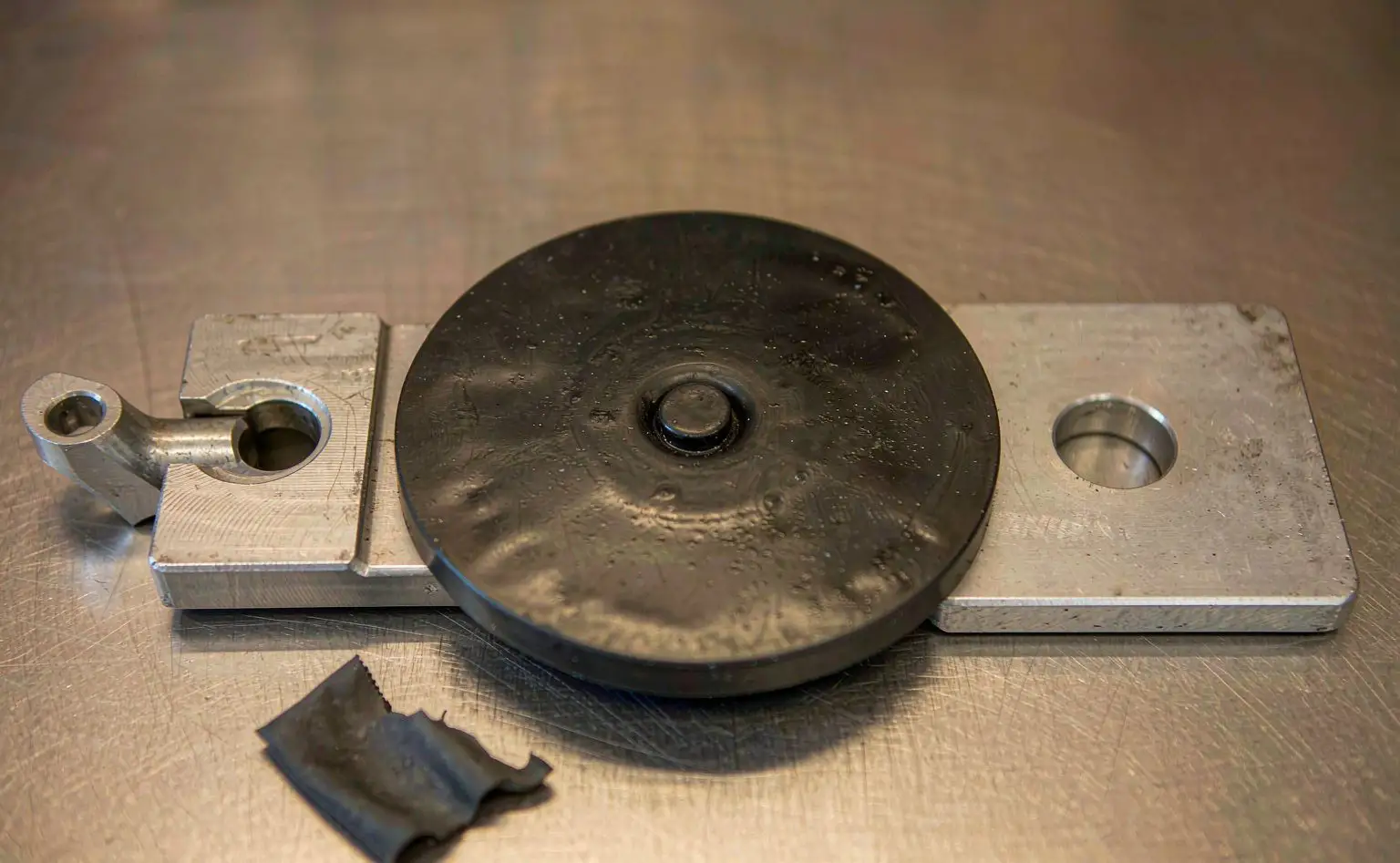
The disc is a thin-walled rubber part. Plasticisers and antioxidants in an EPDM or nitrile compound are organic food, and the disc sits pressed against the seat with no airflow on either face. The spot starts at the edge and around the bolt holes, and once it bites into the rubber it leaves a groove, so the seating face is no longer flat and the pressure test leaks.
Wet paint invites mould. A body sprayed with epoxy or coated in powder releases residual solvent and moisture slowly after boxing, the humidity inside the carton rises, and the rubber and the paper pay first. That mould was not carried in with the product, it grew inside the packing.
2. Disc compound and packing take different units
The table lines up the disc compound, the painted body, the carton and the vapour sheet. Compound is dosed on total weight, paper on active matter per sheet, and the two are not convertible.
| Part | Material | Product and level | Stage | Control point |
|---|---|---|---|---|
| Rubber disc, seat | EPDM, nitrile | iHeir-JS117 0.5%-1.0% of compound | Internal mixing or mill | Pre-blend with filler, no lumps |
| Body, bonnet | Cast iron, ductile iron | No anti-mould treatment | Painting, assembly | Box only after the film is dry |
| Carton and liner | Corrugated, PE bag | iHeir-D one sheet, 0.1-0.2g | Packing, sealing | Only works in a closed box |
| Manual and certificate | Coated board | iHeir-D one sheet beside them | Packing | Paper between sheet and disc |
One boundary. The powder in the compound protects the disc body, the vapour sheet protects the space in the carton. Compound only leaves the carton to mould, paper only leaves the spots inside the disc. Both stages, and the box opens clean.
3. The rubber disc: where the powder goes in the mix
The disc takes iHeir-JS117 plastic anti-mould powder at 0.5%-1.0% of compound weight. Active matter is above 97.0%, the mean particle size is 110 microns at D50 and bulk density is 380 kg/m³; because it does not dissolve in water, a disc that sits in water for years keeps its dose.
Which stage. Add it at the internal mixer or on the mill, pre-blended with filler such as silica or kaolin before it meets the rubber. Powder thrown straight onto the compound lumps, the sheet comes out speckled, and every speck becomes a defect on the seating face after cure. Keep it away from the curing agent and accelerator, which interfere with it at mixing temperature.
How to hold temperature. Follow the original cure curve and do not push temperature up for throughput. A powder additive loses part of its activity over a long hot cycle, so the dose is wasted; keep discharge temperature on the original process and test any batch that ran hot for both mould resistance and hardness.
Re-test after adding it. Check tensile strength and elongation to GB/T 528, and Shore hardness to GB/T 531.1, against the unmodified recipe. A disc seals by compression and rebound, so a harder compound changes the seating stress; then pressure test a finished valve and hold it before scaling up.
4. Dry the paint before the box closes
The body stage needs no additive, it needs the solvent and the water taken out. Cure the epoxy or powder coat to the process, and do not box straight from the oven: a film that feels dry can still hold solvent, most of all behind a thick-coated flange and inside the bore.
How to judge dryness. Follow the specified cure time and temperature, then let the part stand at a ventilated station until it reaches room temperature. Cross-hatch a sample for adhesion, and smell the flange bore: a solvent smell means it is not dry, and boxing it seals the solvent in.
Water at assembly. Every valve is pressure tested before dispatch, so blow the bore, the seat groove and the bolt holes dry afterwards. The seat groove is a narrow ring, so angle the air; box it wet and the disc sits in water for the whole sea leg, and no dose survives that.
Hold the shop and the finished goods store below 60% RH with dehumidifiers in the wet season. Keep stacks off the outer wall and off the floor, leave air space at the top, and keep product out of the band under the light fittings where condensation forms first.
5. Vapour sheets, store and release
Packing uses iHeir-D vapour-phase paper at 0.1-0.2g of active matter per sheet. It is an ink-coated paper that holds a concentration in a closed volume, not a spray.
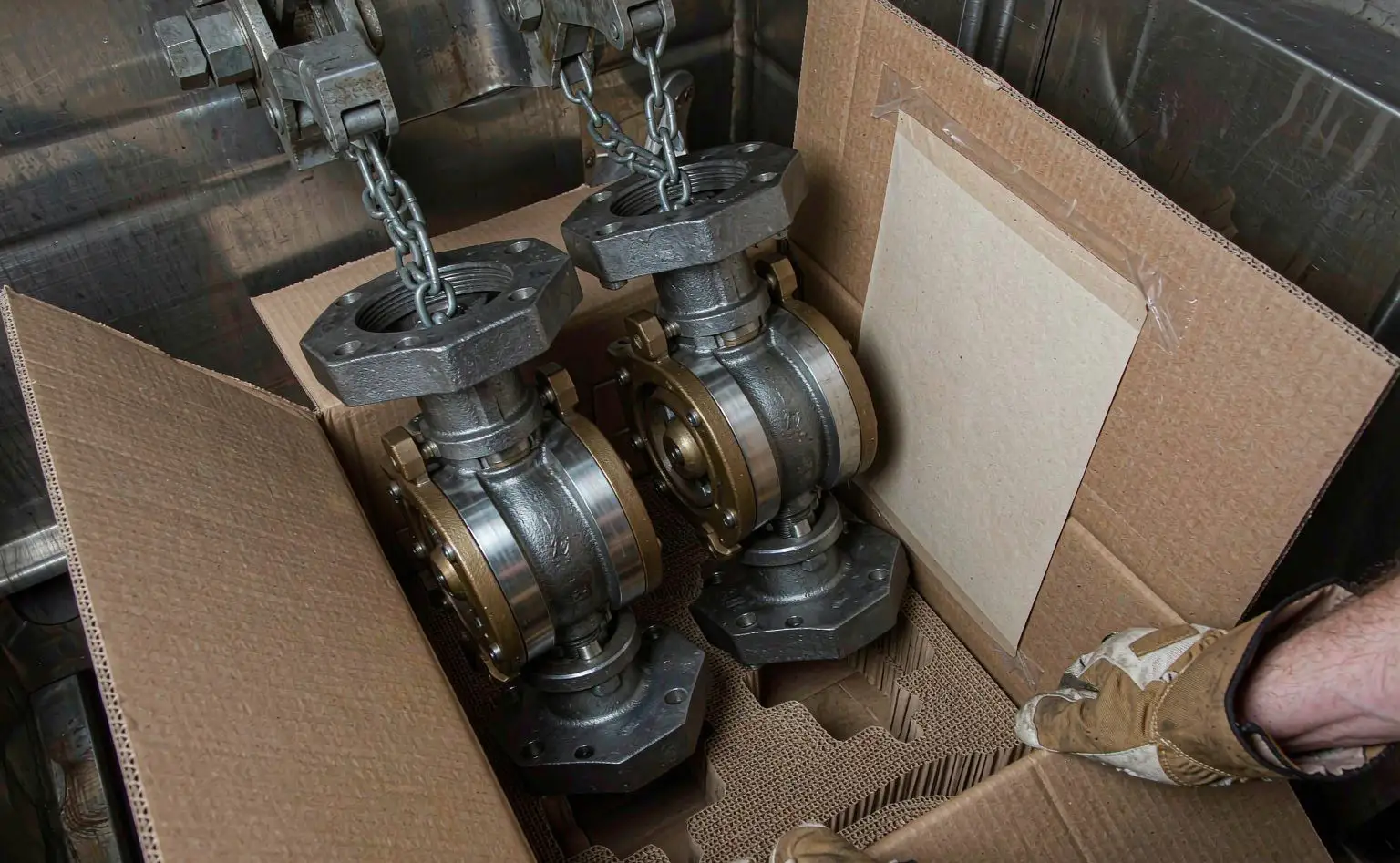
Where it goes. One sheet on the inside of the carton wall, with corrugated board between the sheet and the painted face so nothing presses on the finish; for several valves in one carton, one more between layers. Bag the manual and certificate and slip a sheet beside them, without sealing the bag dead.
Trial compatibility first. Seal three times the normal dose with a disc and a painted part, mist a little water, keep paper between sheet and parts, and inspect after a few days for a dulled film, a hardened disc or white rust on bolts. iHeir-D carries 70%±5 solids and can corrode poor-quality metal when damp, so a valve with zinc-plated bolts runs this trial first.
Release at three levels. Grade disc compound to GB/T 24346-2009, sampling from the disc edge; grade cartons and liners to the same standard; hold a full carton for 30 days at 30℃/85% RH, then open it to inspect the disc faces, the carton wall and the manual. Keep one set of seat test figures before the change and one after.
6. Questions on coating, hardness and sheet counts
Q: Should the coating carry an anti-mould additive?
Usually not. Metal and epoxy feed nothing, and the risk is wet paint plus test water; controlling those two beats dosing the paint.
Q: The disc got harder after the powder went in. Now what?
Check Shore hardness and compression set first, drop the dose to 0.5% and re-test if the movement is out of range, and change the plasticiser system if it is still out; adding more powder to compensate will fail the pressure test.
Q: Can a disc that already spotted be reworked?
Surface bloom wiped and a re-test passed can go into a non-critical size; a spot that has bitten in, or a grooved seating face, goes to scrap. A disc is a pressure part, and the saving is smaller than one claim.
Q: Six valves in a carton, how many sheets?
One on the wall and one between layers, so three to four per six-valve carton, taking the upper figure for a large carton or a long sea leg. A carton that does not close properly will not hold the concentration whatever you put in.
Four points to take away: dose iHeir-JS117 at 0.5%-1.0% of compound weight for the disc, pre-blended with filler, cured on the original curve, then re-tested to GB/T 528 and GB/T 531.1 and pressure tested; let the coating reach room temperature with no solvent smell before boxing, and blow the seat groove and bolt holes dry; one iHeir-D sheet on the carton wall and one between layers at 0.1-0.2g each, after a trial at three times the dose. A 1kg sample goes out for a trial, with MOQ on the iHeir-JS117 product page.


