




 View Count:10
 Date:2026-10-22
How should the masterbatch ratio and the store humidity be set for bubble wrap? As two separate decisions. The film takes iHeir-JS117 plastic anti-mildew powder at 0.5%-1% of finished weight, and because the bubble walls are thin the total additive per square metre is low, so the dosing runs to the upper end. The store is held by CH-10 anti-mildew drying and deodorising packs, with absorption above 200% and 270-300 days of effective humidity control. This article gives the basis for each stage and how the rolls should be stored.
1. Bubble wrap mould runs in two stages: the film body and the roll
Bubble wrap is two polyethylene layers combined: one is drawn into bubbles on a forming roll, the other is laid over the top and seals the air in. The sheet is thin and the thinnest point on a bubble wall is a few microns, which produces two consequences.
The first is the film body. A thin film carries little resin per square metre, so the same 0.5%-1% works out to very little additive per square metre, and the channels between bubbles and the folds of the walls are the thinnest places where uneven dispersion shows first. The second is inside the roll and in the store: bubble wrap takes up a great deal of volume, cannot be stacked high and has to stand upright, and the core ventilates poorly, so in damp weather the layers condense first and mould works outward from the core.
The inspection order follows: hold a bubble wall to the light for pinholes and gel spots, stand a roll up and look at the ends for water marks, then check the store humidity log.
2. Film body and store: the two stages side by side
The table sets out the resin stage and the storage stage. The actions are completely different, and neither covers for the other.
| Stage | Object | Measure and level | Check | Points to watch |
|---|---|---|---|---|
| Film body | PE resin and finished film | iHeir-JS117 at 0.5%-1% of finished weight at compounding | No gel spots or pinholes | Thin film, so run the top of the range |
| Roll storage | Finished rolls | Upright, off the floor, away from the wall, tail taped | Clean ends, no spotting at the core | Never lying on the floor |
| In the pack | Carton and liner | CH-10, sized by carton volume and storage period | No musty note on opening | Tissue pack punctures easily |
| Finished store | The stack | Humidity held, pallets off the floor, ventilation gaps | 270-300 days of effective control | Spot-check either side of the rainy season |
The money goes to different places. The film stage is spent inside the resin, once, and travels with the goods; the store stage is spent on packaging material and warehouse discipline and is a running cost. Skip the film and the customer sees the spots, skip the store and the goods fail in your own warehouse.
3. Film body: iHeir-JS117 at 0.5%-1% of finished weight, top of the range on thin walls
iHeir-JS117 plastic anti-mildew powder is a white to pale yellow powder, specific gravity 1.21, more than 97% active, bulk density 380 kg/m3, mean particle size 110 microns (D50), built on a nitrogen heterocycle phenol-alcohol compound and effective in PVC, PU, silicone resin, polyolefins, polyester and TPE; it resists leaching and contains no arsenic. The level is 0.5%-1% of finished product weight, mixed into the resin before forming.
Three points on this product. First, run the top of the range: the film is thin, 0.5% spread over a bubble wall leaves almost no margin, so ordinary bubble wrap runs at 0.8%-1%. Second, the pre-blend is not optional: mix the powder with a small portion of the same PE grade for three to five minutes before proportioning it in, because on a wall a few microns thick one unmixed cluster is one burst bubble. Third, pro-rate the regrind: gauge changes generate a lot of trim, and recycling it without the pro-rata dilutes the active.
One process note: the forming roll draws the film into its holes, and if the melt is too soft the bubbles collapse. A higher level slightly reduces melt strength, so do not push past 1% for safety; take the top of the range and verify bubble shape and burst rate on a trial roll.
4. Finished store: CH-10 holds the humidity for 270-300 days, rolls standing upright
CH-10 anti-mildew drying and deodorising packs are based on a natural mineral aluminium silicate; at 25C and 80% RH the maximum water vapour uptake exceeds 200%, holding more than 250 grams, 10 to 20 times the uptake of ordinary silica gel. Saturated uptake reaches 300% of its own weight at 25C and 100% RH, and the effective humidity control period runs 270-300 days. The composition also carries an antimicrobial component and nano microcapsule odour beads, and the tissue wrapping does not bleed back and is anti-static, which allows use in food packaging.
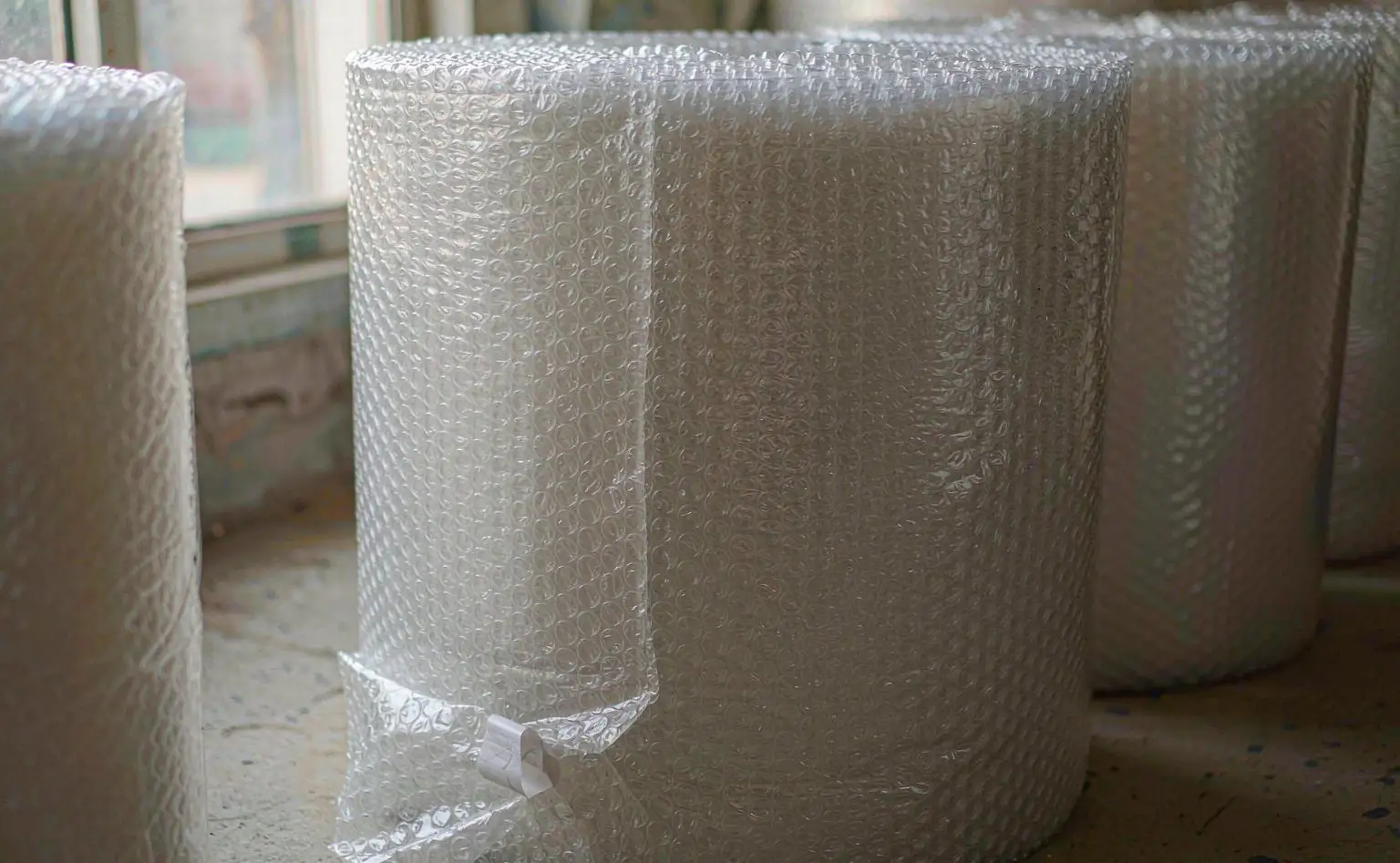
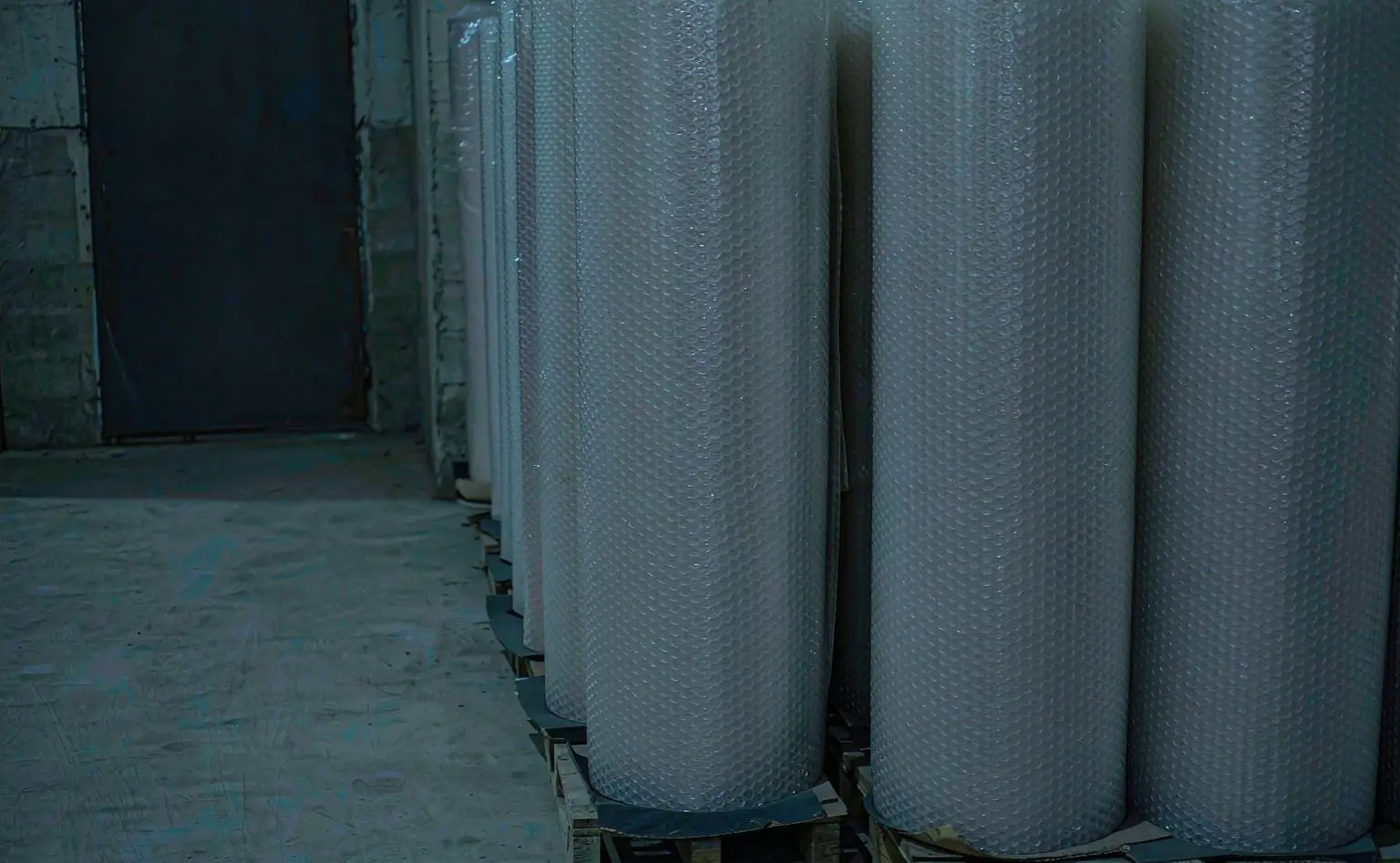
Size it by carton volume and by how long the goods will sit: per carton for fast turnover, per pallet for stock held for a vessel, counting the shelf life in, because 270-300 days is the effective window. How the rolls are stored matters more than another pack: stand them upright, never lying on the floor, pallets underneath and a gap to the wall, tail taped so the core is not left open to the aisle. Either side of the rainy season, stand a roll up and look at the ends.
5. Blowing and winding: three actions at the bubble forming stage
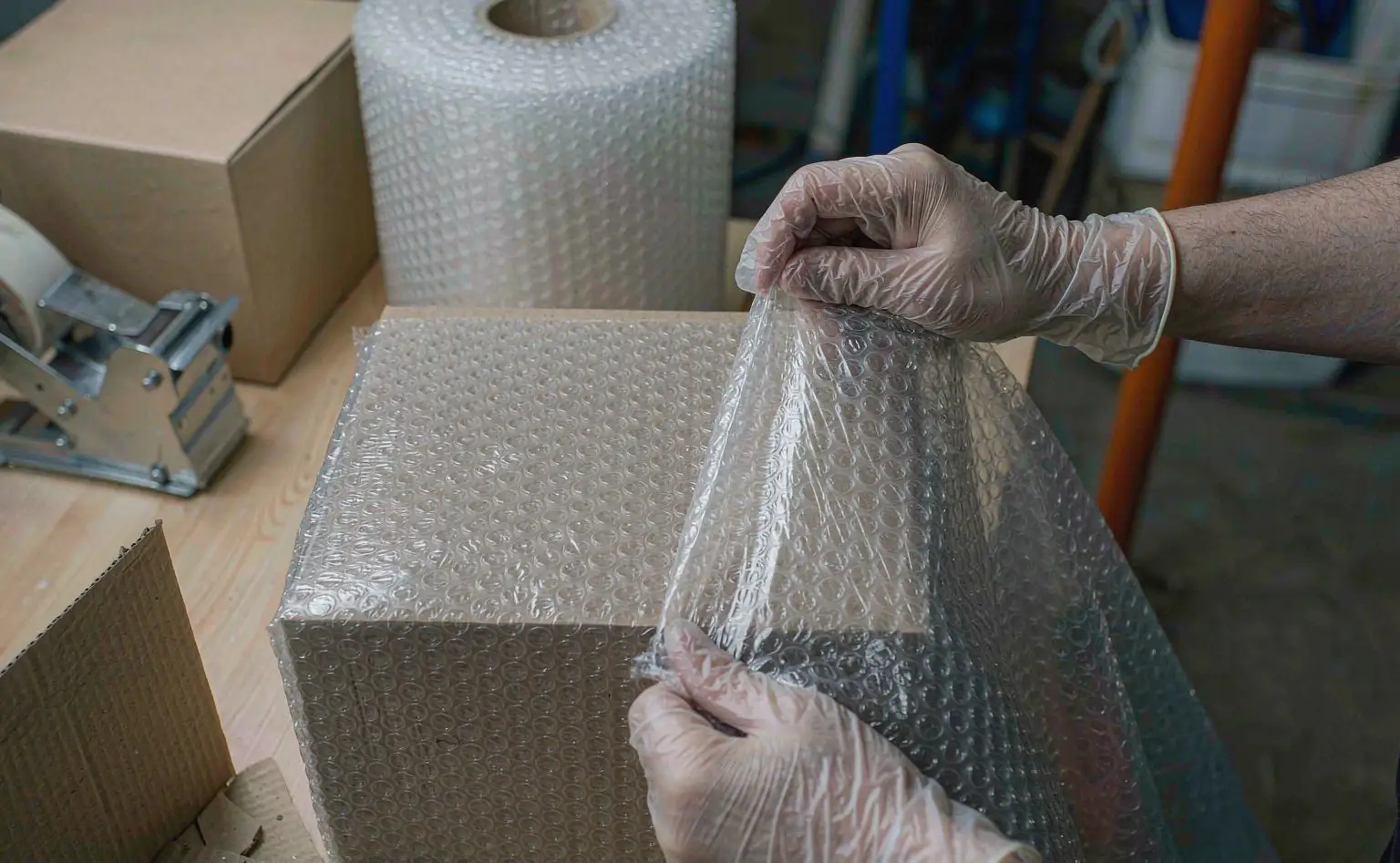
The first is vacuum and bubble shape. Too little vacuum and the bubbles are not drawn fully, which stretches the wall thinner and makes that ring the weak zone; too much and the crowns go white and burst easily. Set vacuum against bubble diameter.
The second is combining temperature. Too cool and the flat layer does not bond, air migrates between layers once the roll is wound and the bubbles slowly flatten; too hot and the bubble shoulders are ironed shut. Set the combining roll against film thickness.
The third is winding and cooling. Bubble wrap has bulk and a little too much tension flattens it. Cool the sheet properly before winding, run only enough tension to keep the ends square, and do not bag a roll immediately: let the roll temperature fall first, otherwise the bag becomes a layer of water.
6. Questions: can humidity control replace the additive, and can flattened bubbles be rescued
The store is under control, so can the film go without the additive? Your own store can be controlled, the customer’s cannot. Bubble wrap often sits at the customer before use, and spots at unpacking are grounds for a claim. Humidity control covers your warehouse, the additive covers the whole chain.
Part of a roll has flattened bubbles. Can it be salvaged? Separate a failed bond from crushing. If the layers are not bonded, air migrates between them and the roll cannot be recovered; it can only be downgraded to an inner liner. If it was crushed by tension or stacking, it creeps back a little but the shape stays uneven, so pull those rolls from any job where appearance is packed.
How is the effect verified? Mould resistance runs to ISO 846 or ASTM G21 on finished film containing the additive; the storage stage is checked with humidity records inside the pack and a smell test on opening.
Closing figures: iHeir-JS117 at 0.5%-1% of finished weight, 0.8%-1% for ordinary bubble wrap, pre-blended with the same PE grade and with regrind pro-rated; rolls upright on pallets away from the wall; and CH-10 sized by carton volume and storage period, holding 270-300 days.


