




 View Count:56
 Date:2026-09-29
Textile garment mould cannot be dosed with one figure across a plant: fabric and made-up garments run iHeir-BJ at 2-3% o.w.f. by padding, home-textile pieces are costed on finished fabric weight, and skin-contact goods add iHeir-333 at 2-3% o.w.f. Pick the wrong tier and either the fabric misses the specification or the hand feel goes hard. This article covers the three tiers, the process windows, and how to compensate on synthetic and blended fibre.
1. Why the account has to be costed by process stage
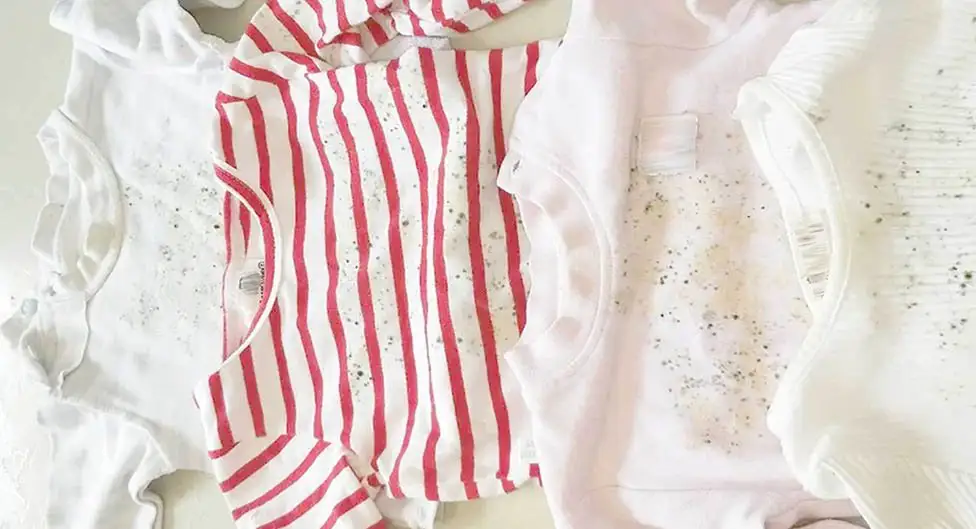
The usual mistake is to apply one ratio to every stage. The fabric line pads; made-up garments are treated at finishing or in a garment wash; home-textile pieces are costed on finished fabric weight. Liquor ratio, pickup and drying all differ, so the same headline 2% lands at very different add-on from one stage to the next. Dose too low and fabric and garment stages both fail inspection; dose too high and knitted goods and home textiles lose hand feel and wick less water, at which point the buyer complains about feel rather than about mould.
There is a second account to keep. Mould protection targets fungi, which show as spotting; antibacterial protection targets bacteria, which show as odour and discolouration. They are two specifications and two agents, and one cannot stand in for the other. Skin-contact garments and home textiles usually need both, tested separately: mould against GB/T 24346-2009 and antibacterial performance against GB/T 20944.3.
2. The three dosing points at a glance
The table lists the stage, what is treated, the product, the figures and the points to watch, so it can be used as the first draft of a process card.
| Stage | Treated part | Product | Figures | Points to watch |
|---|---|---|---|---|
| Fabric finishing (the main stage) | Greige, dyed and knitted fabric | iHeir-BJ textile mildew inhibitor | Padding at 2-3% o.w.f. | Bath 21-50 degrees, pH 4.5-8.5, soft water, pre-mix with 9-13 parts water; cationic, never with an anionic auxiliary |
| Garment finishing or garment wash | Made-up garments, knitwear, wovens | iHeir-BJ textile mildew inhibitor | Padding at 2-3% o.w.f. on garment weight | Run before the softening pass and never in the same bath as an anionic softener |
| Antibacterial for skin contact | Garments and home textiles | iHeir-333 textile antimicrobial agent | Padding at 2-3% o.w.f. | Bath 21-50 degrees, pH 4.5-8.5, soft water; run as its own pass |
| Silver-ion route | Garments, home textiles, towelling | iHeir-BJ1000 silver-ion agent | 2-4% on textile weight | Tolerant of water hardness and compatible with anionic systems |
| Roll goods and pad lines | Knitted rolls, nonwoven rolls | iHeir-PG composite antimicrobial agent | Pad at 20-40 g/L, or immerse at 2-4% o.w.f. | pH 6-8, 70% pickup, dry at 100-170 degrees |
| Storage and container | Finished goods and inner packing | Vapour-phase sheets plus container desiccant | 0.1-0.2 grams of active content per sheet | Match desiccant to the container size; keep stock off the floor and away from the wall |
Six rows, one conclusion: the fabric stage decides whether the fibre carries protection at all, the garment and home-textile stages decide hand feel and antibacterial performance, and storage decides whether any of it survives the climate.
3. Finishing: how to set the padding figures
Finishing is the main mould line. Use iHeir-BJ at 2-3% o.w.f. by padding, with the bath at 21-50 degrees Celsius, the working liquor at pH 4.5-8.5 (ideally near 6), soft water throughout, and pre-mixing with 9-13 parts water before the bath. Hold pickup at 70%. The rate sets the service life: 2% corresponds to roughly a year or more and 3% to two to three years, so choose the tier by destination. Batches bound for South-East Asia or the Middle East are simpler at 3% from the start.
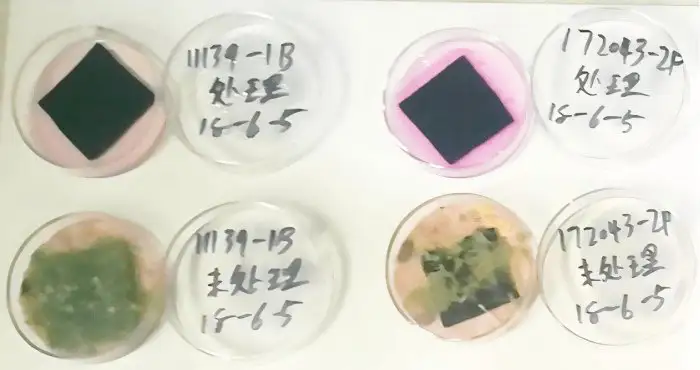
Before running, confirm the preparation. The fabric must be fully desized and well rinsed after dyeing, because residual alkali and auxiliary carry-over deactivate the agent and can throw floc in the bath. Use soft water for the same reason: calcium and magnesium in hard water also deactivate it. Three prohibitions belong on the process card: soft water only, never the same bath as an anionic auxiliary, and the mould finish ahead of the softening pass with a clear rinse in between. Check a first bath against a lab coupon before scaling up.
4. Garment and home-textile stages: antibacterial and hand feel
At the garment stage the object is a finished piece, so the arithmetic changes: dose at 2-3% o.w.f. on total garment weight, still inside the 21-50 degrees and pH 4.5-8.5 window, then dewater and dry as usual. Skin-contact garments and home textiles add an antibacterial pass with iHeir-333 at 2-3% o.w.f. as its own step. Where the buyer specifies a silver-ion system, or where the plant water is hard, switch to iHeir-BJ1000 at 2-4% on textile weight.
The trap at this stage is hand feel. Bedding sets, quilt fabrics and pillow shells are large pieces with a lot of skin contact, and buyers watch softness and absorbency closely. Where the fabric carries silicone or has to stay hydrophilic, top up with 0.1% cationic hydrophilic agent after the finish to bring the wicking back; without it the hand goes stiff and absorbency drops, and a batch that passes the mould test can still be rejected on feel. Cost home-textile pieces on finished fabric weight rather than copying the fabric-line pickup.
5. Synthetic and blended fibre: how to compensate
Polyester and nylon take up little moisture and have a hydrophobic surface, so they hold the agent less well than cotton and test lower at the same ratio. Two routes fix it: move up to the 3% tier, or switch to a pad-and-dry process with iHeir-PG at 20-40 g/L, pH 6-8, 70% pickup and drying at 100-170 degrees Celsius, which needs no heat setting and runs on a normal drying line. Small batches and odd widths can be immersed at 2-4% o.w.f. for 20-30 minutes at 50 degrees, then dewatered and dried.
For blends, pick the route by the dominant fibre: cotton-dominant poly-cotton runs BJ, polyester-dominant runs PG. Wool and cashmere blends need insect protection as well, so mould and insect treatments go as two separate passes. Evenness matters more than extra rate — where one section of a roll picks up too little liquor, growth starts there, so hold bath level, roller pressure and drying temperature together.
6. Common questions
Q: Can mould and antibacterial be run in one bath? Not advisable. The two agents differ in ionic type and in what they target, so a shared bath tends to complex and weaken both. Run them as two passes with a rinse in between. Where both are cationic and the lead time is tight they can run in sequence on one line, but confirm both specifications on a coupon first.
Q: Can garments and fabric share one set of figures? The product can be the same, but the process figures have to be set separately. Garments bring shrinkage and hand feel into play, and hanks differ from piece goods in liquor ratio and pickup, so run a first bath of each before scaling up.
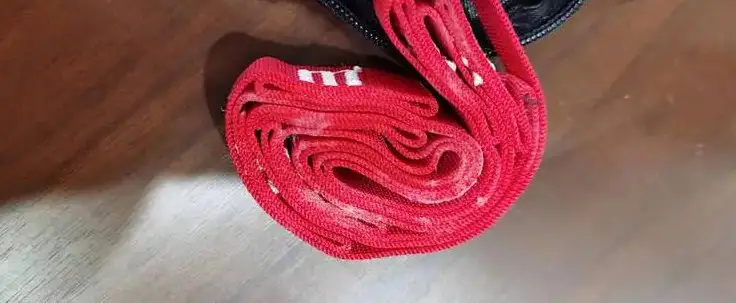
Q: Is anything still needed at the storage end? Yes. Finishing builds the protection into the fibre; storage and the container decide whether it survives. Keep stock off the floor and away from the wall, run dehumidification where needed, match desiccant sticks to the container, and place vapour-phase sheets by volume at casing. The selection side is covered in mould prevention on finished fabric and the container side in moisture and mould in sea containers.
Textile garment mould control comes down to costing each stage separately: use iHeir-BJ to build protection into the fibre, dose garments and home textiles on finished weight and add the antibacterial pass, run roll goods on the iHeir-PG pad or immersion route, and close with storage and container humidity control. Samples and minimum order details for iHeir-BJ, iHeir-333, iHeir-BJ1000 and iHeir-PG are available on request.


