




 View Count:56
 Date:2026-10-06
How should grass-weave mould be treated on straw hats and paper-rope storage baskets so it does not come back? Straw and paper rope are cellulose and take up moisture fast; once mould spots show, the brim curls and the batch is downgraded. Treat the fibre before weaving with iHeir-BJ at 2%-3% o.w.f. (bath 21-50 degrees, pH 4.5-8.5) and hold the store with iHeir-D at 0.1-0.2 gram per sheet. This article covers the bath before weaving, the drying and the finished-goods store, with the figures.
1. Where the mould comes from: straw is cellulose, paper rope is a regenerated fibre
Mould on a straw hat or a storage basket does not appear by itself; it appears after the material has taken water in. Straw and wheat straw are cellulose, and between the fibres there is a lot of open space, so water vapour gets in easily and leaves slowly. Paper rope is regenerated fibre twisted into rope, it takes water up faster still, and once damp it softens and swells.
The structure and the surroundings matter as much. The tighter a piece is woven, the less air moves between the layers, and in the store the goods sit in stacks where the core barely sees moving air. In the wet season, or in a sealed container, the first places to spot are the core of the stack, the bottom of the basket and the rolled rim.
So the treatment belongs before weaving, in two lines: the fibre takes its protective layer at the softening and bath stage, and the store holds the air around the core of the stack with a gas-phase product. With one line missing, the other cannot carry the load.
2. The two lines at a glance: the bath before weaving and the gas phase in the store
The table lines up the material, the stage, what is treated, the product, the figures and the points to watch, so it can serve as the first draft of a process card.
| Material or part | Stage | Treated item | Product | Figures | Points to watch |
|---|---|---|---|---|---|
| Straw and wheat straw | Softening and bath before weaving | Cellulose fibre | iHeir-BJ textile mildew inhibitor | 2%-3% o.w.f. | Bath 21-50 degrees, pH 4.5-8.5; premix with 9-13 times its weight in water and add in portions |
| Paper rope and paper rattan | Bath before weaving | Regenerated fibre rope | iHeir-BJ (same product, its own bath) | 2%-3% o.w.f. | Takes water up fast, so keep the soak shorter than for straw |
| Half-finished piece | Pad and dry | Half-finished piece | Control only (no agent) | Pick-up near 70%, dry at 100-170 degrees | Drying sets the shape and does not stop mould; a piece that reabsorbs moisture moulds again |
| Straw-hat stack, basket stack | Stacking in the store | Air inside the stack | iHeir-D gas-phase antimicrobial and mould inhibitor | 0.1-0.2 gram per sheet | Placed by stack, kept apart from the goods by liner paper; run alongside humidity control |
| Export container | Full container | In-container climate | Humidity control only | By box type and voyage | Condensation inside the box is the ignition point; bring the moisture of the goods down before loading |
Five rows, one conclusion: the fibre takes its protection before weaving, the air inside the stack is held in the store, pad and drying set the result of the bath, and the container climate preserves both.
3. The bath before weaving: iHeir-BJ at 2%-3% o.w.f.
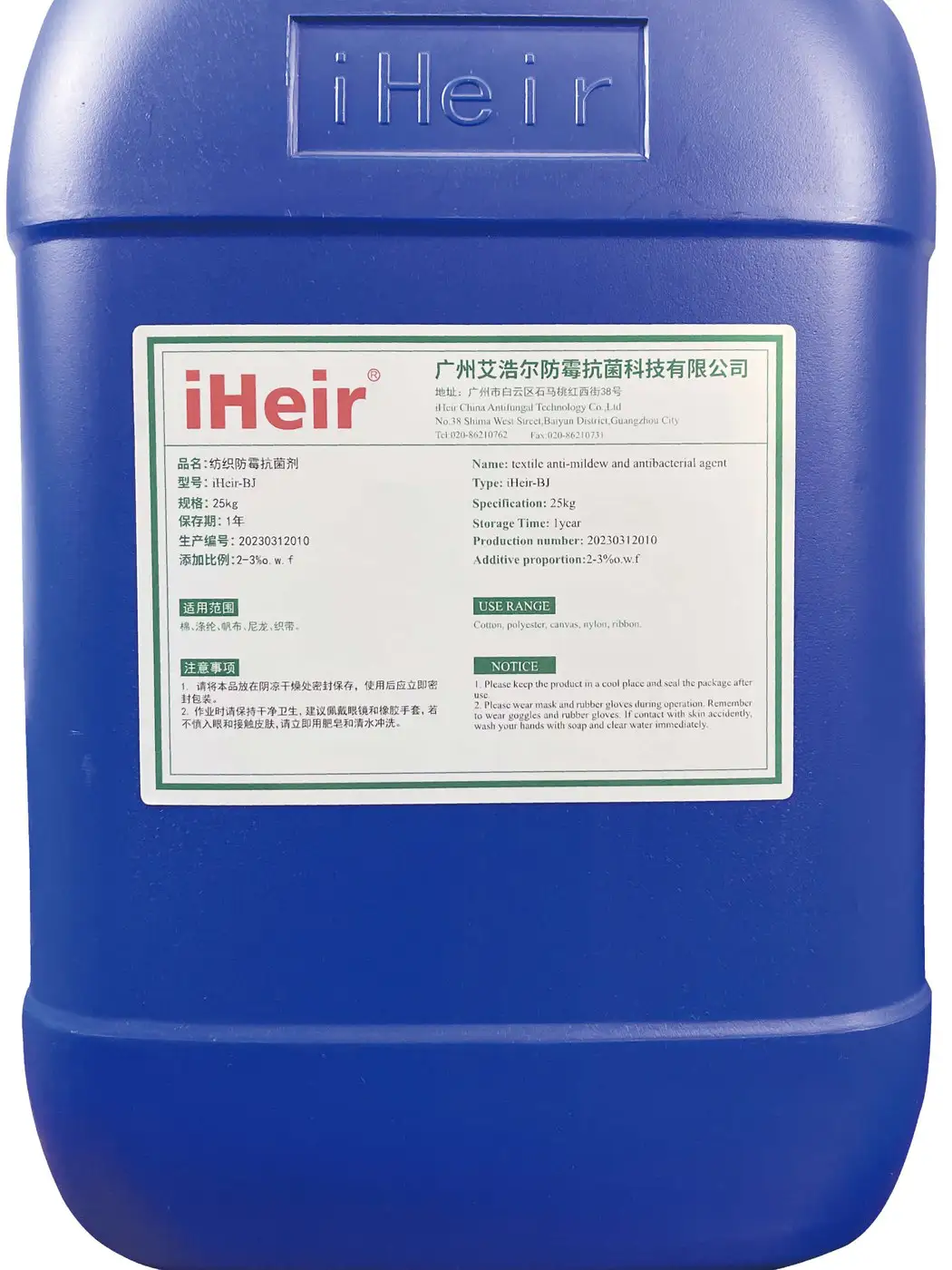
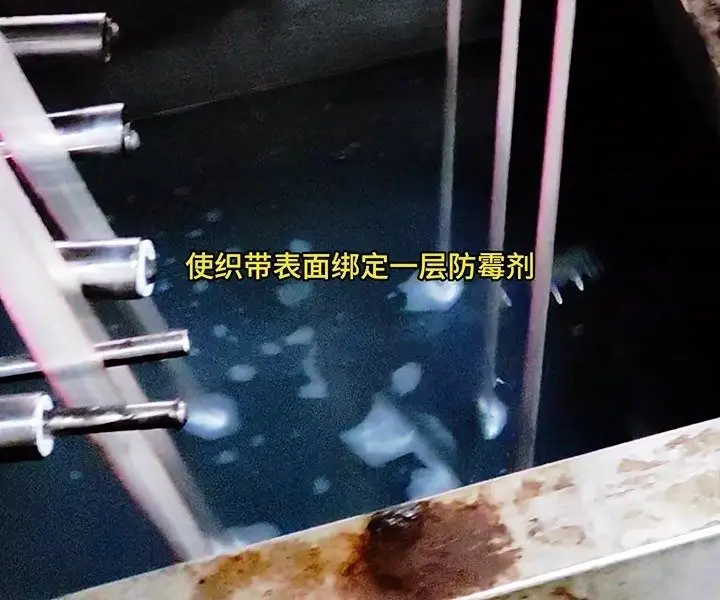
The fibre line is completed before weaving. Make up the treatment liquor with iHeir-BJ textile mildew inhibitor at 2%-3% o.w.f. on the dry weight of the fibre, premixing it with 9-13 times its weight in water and adding it to the bath in portions rather than in one pour. Run the bath at 21-50 degrees and pH 4.5-8.5, with pick-up taken at 70%. The product bonds to the fibre surface to form an antimicrobial layer; it is a non-releasing type, so it is not used up by killing organisms and the layer lasts as long as the article.
Three details decide the result. First, BJ is cationic, so it must not share a bath with an anionic auxiliary, or the emulsion breaks and the treatment fails. Second, the figure is on the dry weight, and the moisture of straw varies, so measure it before the bath and recalculate whenever the blend changes. Third, paper rope takes water faster than straw, so keep the soak short, or over-soaked rope softens and the basket sags.
4. Setting the shape: drying sets the shape, it does not stop mould
Many plants treat drying as a mould-control stage, but the two are different. Drying drives the water out and fixes the shape; it gives the inside of the fibre no antimicrobial ability, and a dried piece that reabsorbs moisture moulds just the same. The agent therefore has to go in at the bath stage and bond with the fibre.
Temperature has to be read together with it. Too high a drying temperature damages the handle and risks breaking down the bonded layer; keep it at 100-170 degrees, and cool the pieces and get them into the store, rather than pushing hot goods into a stack, where warm air condenses on a cooler surface and makes a damp pocket for mould to start in.
5. The finished-goods store and the export container: gas-phase sheets by stack
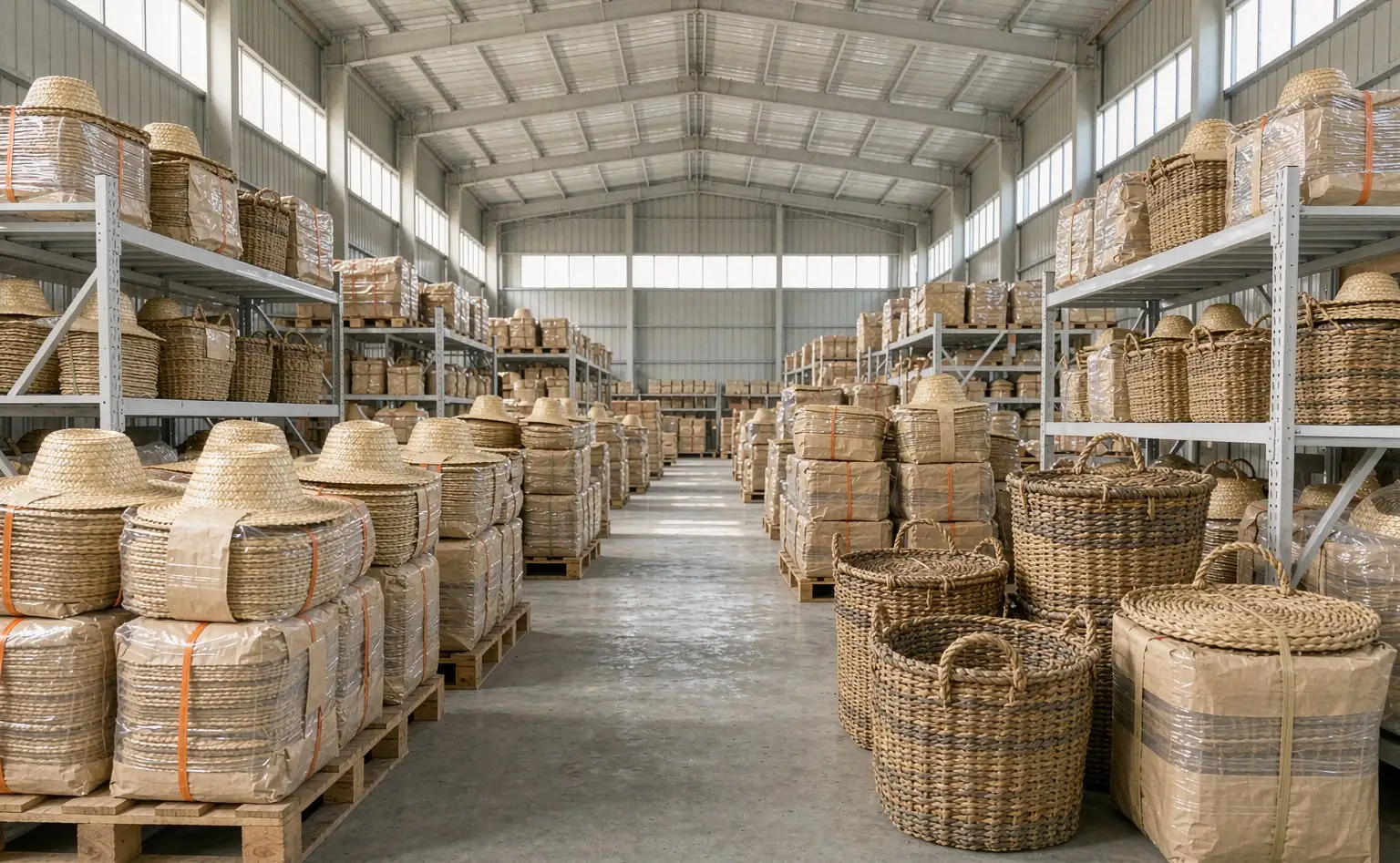
Treating the fibre is not the end; the store is the second line. Grass-weave pieces are stacked tight and air moves poorly through them, so a gas-phase product suits the job: have iHeir-D gas-phase antimicrobial and mould inhibitor made up as sheets or sachets and place them by stack, each carrying 0.1-0.2 gram, so the vapour spreads into the gaps and holds down mould and yeast. See how to choose anti-mould packaging paper for the form.
Three points to watch. First, the sheet has to stay separated from the goods by liner paper, not pressed onto the weave. Second, it works on the air in the space, so the pack has to be reasonably closed; left open it does nothing. Third, iHeir-D can fade some dye-sensitive materials slightly, so run a compatibility test at three times the normal loading on a new colourway first.
6. Questions that come up: how much, what may share a bath, and spraying after weaving
Can a spray after weaving make up for it? It reaches the surface only, and rubbing and handling take that layer off, so the piece is unprotected; the treatment has to go in with the fibre at the bath.
Can straw and paper rope share one figure? Both can run a bath at 2%-3% o.w.f., but the soak time has to be set apart, because the same bath for the same time over-soaks paper rope and under-treats straw.
Can extra loading make up for a low bath temperature? No. A bath below 21 degrees affects the adsorption and bonding of iHeir-BJ, a process condition rather than a concentration problem; extra loading only raises cost.
Two dosing points carry the work: the fibre takes its protection at the bath before weaving (iHeir-BJ at 2%-3% o.w.f., bath 21-50 degrees, pH 4.5-8.5, premixed with 9-13 times its weight in water and added in portions), and the store holds the air in the core of the stack with iHeir-D sheets at 0.1-0.2 gram per sheet. Test the long-term growth by a method such as GB/T 24346 or ASTM G21 and hold a complete sample per batch. Samples and TDS sheets are available for a trial on your own line.


